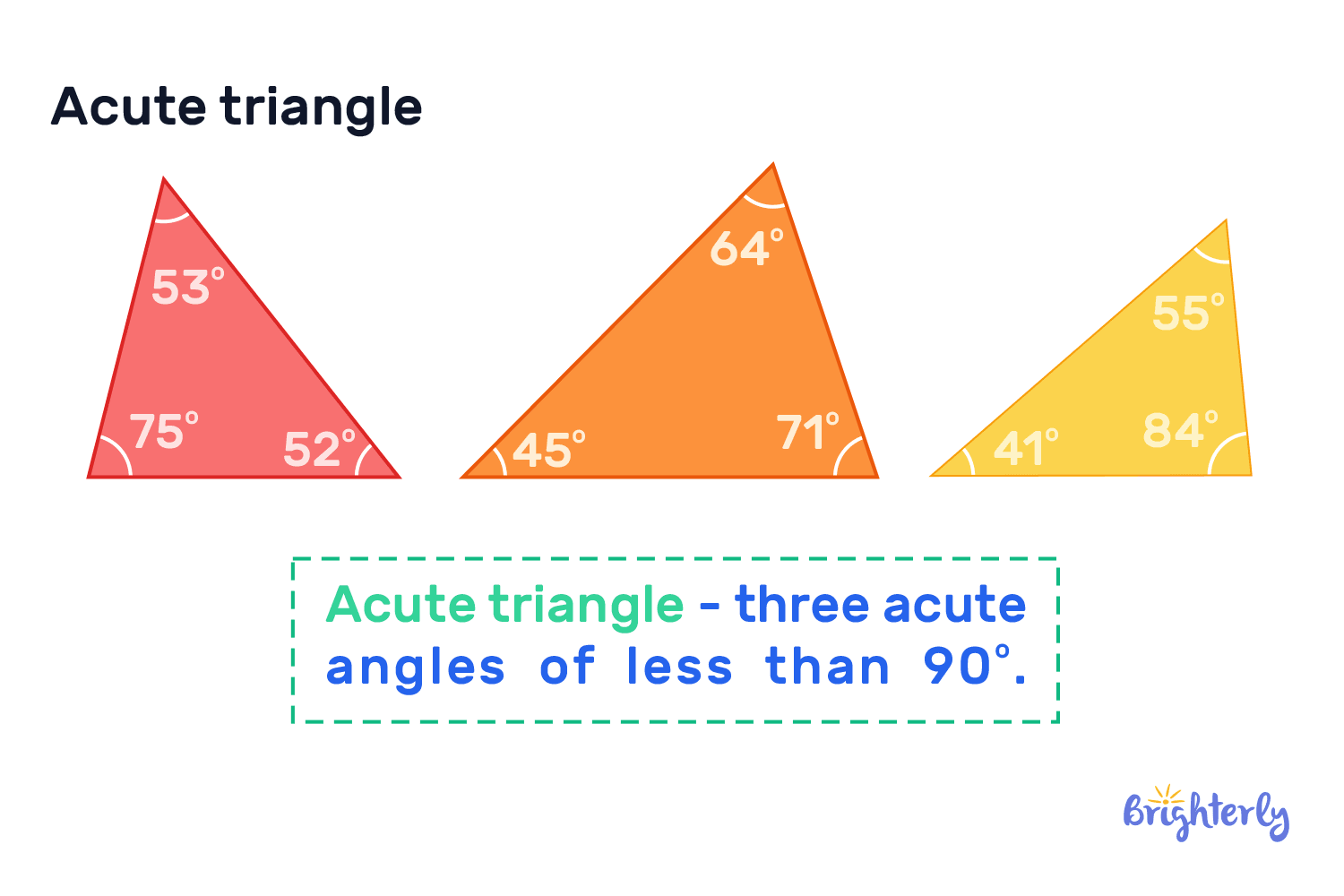
In professional design, an acute angle—any angle measuring less than 90 degrees—functions as a high-energy visual tool used to convey speed, precision, and dynamism. These sharp, pointed shapes create a sense of direction and tension, making them essential for branding that seeks to appear "cutting-edge" or architecture that breaks from traditional box-like constraints.
To understand the acute angle is to understand the language of movement. Unlike the stability of a 90-degree right angle or the passive openness of an obtuse angle, the acute angle is aggressive. It pierces the surrounding space, forcing the viewer’s eye to follow its point. In the design landscape of 2026, where digital interfaces and physical environments are increasingly interactive, the mastery of sharp geometry is no longer just an aesthetic choice; it is a functional necessity for guiding human behavior and emotional response.
The Psychology of the Sharp Edge: Perception and Emotion
The human brain is evolutionarily hardwired to respond to sharp objects. Historically, sharp edges in nature—thorns, teeth, or jagged rocks—signaled potential danger. In a modern design context, this primal reaction is synthesized into feelings of excitement, alertness, or "edginess." When a designer utilizes acute angles, they are intentionally tapping into this heightened state of awareness.
Threat vs. Innovation
Research in neuro-aesthetics suggests that people generally prefer curved objects over sharp ones because curves are perceived as safe. However, in branding and industrial design, "safety" is not always the goal. An acute angle suggests a breakthrough. It represents a "point" of view or a "sharp" mind. This is why high-performance industries—such as aerospace, cybersecurity, and luxury sports cars—rely heavily on acute geometry. The angle suggests that the product can "cut" through resistance, whether that resistance is air, data encryption, or market competition.
Directional Force and Movement
Every acute angle acts as an arrow. The smaller the angle, the more intense the perceived velocity. In graphic design, placing an acute triangle on a horizontal axis creates an immediate sense of forward motion. This is the fundamental logic behind the "Play" button symbol. By 2026, as motion design becomes the standard for even static-looking interfaces, these "vectors of intent" are used to decrease cognitive load by showing users exactly where to look or click next.
Acute Angles in Graphic Design and Branding
In the realm of visual identity, the acute angle is the hallmark of the disruptor. Think of the world’s most recognizable logos; many rely on the tension created by angles less than 90 degrees to maintain a sense of "active" presence.
Typography and Logomarks
The Nike "Swoosh" is essentially a fluid acute angle. The Adidas three-stripes are cut at angles to suggest a mountain or a staircase. In 2026, we see a resurgence in "sharp" typography, moving away from the soft, rounded "startup" fonts of the late 2010s. Modern typefaces often incorporate acute "serifs" or "ink traps" that give the text a high-definition, technical feel. These sharp junctions are particularly effective in digital displays where they help maintain legibility at small scales by preventing "blooming" of pixels at the corners.
Creating Visual Hierarchy
Designers use acute angles to break the "grid." Most layouts are based on a series of rectangles. By introducing a diagonal line that creates an acute corner, a designer can instantly draw the eye to a Call to Action (CTA) or a hero image. This technique, often called "diagonal scanning," disrupts the standard F-pattern reading habit, forcing the user to engage more deeply with the content.
Architectural Deconstructivism and the Acute Form
Architecture provides perhaps the most dramatic stage for acute angles. The movement known as Deconstructivism, championed by figures like Zaha Hadid and Daniel Libeskind, fundamentally challenged the "right-angle" orthodoxy of the 20th century.
Spatial Dynamics and Impact
Acute angles in architecture create "dynamic instability." A building with walls that meet at 60 degrees instead of 90 degrees feels as though it is in motion. This is frequently used in museums, concert halls, and corporate headquarters for tech giants to symbolize innovation. However, these angles present significant engineering and interior design challenges.
- Dead Space: An acute corner in a room is often difficult to furnish. Standard rectangular furniture cannot fit into a 45-degree corner, leading to what architects call "lost square footage."
- Structural Stress: In 2026 building standards, sharp corners require specialized reinforcement to handle wind loads and seismic activity, as stress tends to concentrate at the vertex of the angle.
- Acoustics: Sharp angles reflect sound differently than flat surfaces, which can be used to either "trap" noise in a specific area or diffuse it to prevent echoes in large halls.
The 2026 Trend: The "Sharp" Green Building
Current architectural trends are integrating acute angles with sustainable "biophilic" design. Instead of purely jagged glass, we see "shards" of green space—triangular balconies and angled solar arrays that maximize sun exposure based on the building's specific geographic coordinates.
Industrial and Product Design: Performance and Precision
In product design, the acute angle is synonymous with high-end engineering. From the sleek lines of a smartphone to the aerodynamic body of a drone, sharp geometry serves both form and function.
Automotive Design and Aerodynamics
The "wedge" shape is the classic example of acute angles in automotive history, perfected by brands like Lamborghini and Lotus. An acute front-end angle reduces the drag coefficient, allowing the vehicle to slice through the air. In the 2026 electric vehicle (EV) market, this is critical for battery efficiency. Every degree of "sharpness" in the vehicle's silhouette is a calculated trade-off between interior cabin space and the range the car can travel on a single charge.
Consumer Electronics and "Gamer" Aesthetics
For over a decade, the "gaming" hardware niche (laptops, mice, keyboards) has used acute angles to signal power. This aesthetic, often paired with RGB lighting, uses sharp, aggressive corners to differentiate high-performance machines from "boring" office equipment. However, in 2026, we are seeing a shift toward "Soft-Tech"—where acute angles are used sparingly as accents on otherwise ergonomic, rounded forms, creating a balance between "precision" and "comfort."
Technical Comparison: Acute vs. Other Angles in Design
To choose the right geometry, a designer must compare the functional and emotional output of different angle types.
| Angle Type | Degree Range | Emotional Association | Common Use Case |
|---|---|---|---|
| Acute | < 90° | Aggressive, fast, precise, tense | Sports branding, aerodynamics, directional UI |
| Right | 90° | Stable, trustworthy, formal, rigid | Corporate architecture, grid layouts, windows |
| Obtuse | > 90° | Welcoming, open, passive, relaxed | Furniture design, "friendly" sans-serif fonts |
| Reflex | > 180° | Complex, encircling, unconventional | Abstract art, specialized mechanical parts |
The "Acute Angle Effect" in UI/UX Design
In User Experience (UX) design, the acute angle is a "signifier." It tells the user that an action is possible or that information flows in a certain direction.
- Accordions and Dropdowns: The "chevron" (an acute angle) is the universal symbol for "expand." Because it looks like a point, it signals that there is something "under" or "inside" the current view.
- Navigation Anchors: Using triangular, acute shapes at the bottom of a screen can nudge users to scroll down. The point of the triangle acts as a physical weight, pulling the eye downward.
- Alerts and Warnings: Many "Caution" icons use a triangle (containing three acute angles) because the sharp corners demand more cognitive attention than a circle or a square.
Accessibility and the "Safety" Fillet
A significant consideration for 2026 design standards is physical safety and digital accessibility. In industrial design, a perfectly sharp acute angle is often a "shear hazard." Designers frequently apply a "fillet" (a slight rounding) to the vertex. This maintains the visual energy of the acute angle while making the object safe to touch. In digital UI, overly sharp angles can sometimes feel "hostile" to users with certain visual sensitivities, leading to the "Squircle" trend—a hybrid of a square and a circle that uses acute-leaning math but with softened corners.
Common Mistakes When Designing with Acute Angles
While powerful, acute angles are easily misused. Over-reliance on sharp geometry can lead to "visual fatigue," where the viewer feels overwhelmed or "pricked" by the design.
- Overcrowding: Placing too many acute angles near each other creates "visual noise." The eye doesn't know which "point" to follow, leading to confusion rather than direction.
- Ignoring the "Point": An acute angle must point at something. If a sharp triangle in a layout points toward a blank space or away from the product, it misdirects the user’s attention.
- Poor Contrast: Sharp angles require high contrast to be effective. If the vertex of an angle is blurred by low-resolution graphics or poor color choices, it loses its "sharpness" and simply looks like a mistake.
Frequently Asked Questions
How do acute angles affect the "feel" of a room in interior design?
Acute angles create "movement" in a room. They can make a small space feel longer if the angles point toward the far wall. However, they can also make a room feel restless or "sharp." Designers often balance acute-angled furniture with soft textiles (rugs, curtains) to prevent the space from feeling uninviting.
Are sharp angles currently "in style" for 2026?
Yes, but with a caveat. We are seeing a "Neo-Geometric" trend where sharp, acute angles are used as precise accents within organic, flowing shapes. This is a move away from the purely "boxy" minimalism of the past decade toward something more expressive and technical.
Why are acute angles used in luxury brand logos?
Luxury brands often want to convey "exclusivity" and "sharpness." An acute angle feels more "difficult" and "refined" than a simple circle. It suggests a brand that is at the "cutting edge" of fashion or technology, catering to an audience that values precision over general appeal.
Is there a mathematical benefit to using acute angles in construction?
In specific cases, such as triangular trusses, acute angles provide incredible structural integrity with minimal material. This "triangulation" is the basis for most bridges and skyscrapers, as it distributes weight more efficiently than right-angled frames.
Can acute angles improve website conversion rates?
They can, if used as "directional cues." An acute angle (like an arrow or a slanted background section) that points toward a "Buy Now" button can statistically increase the likelihood of a user clicking that button by physically guiding their eye to the target.
Strategic Recommendation for Designers
When working with acute angles in 2026, the key is intentionality. Do not use a sharp angle simply because it looks modern; use it because you need to inject energy, speed, or direction into a composition. If your project requires a sense of peace, stability, or community, minimize the use of acute geometry in favor of right angles and curves.
For branding projects, test your sharp-angled logos at small sizes to ensure the "points" don't disappear. For physical product design, always consider the "touch-point" ergonomics—ensure that where a hand meets the object, the acute angle is softened just enough to be comfortable without losing its visual edge. By balancing the biological "threat" response with modern aesthetic precision, you can create designs that are both striking and functional.