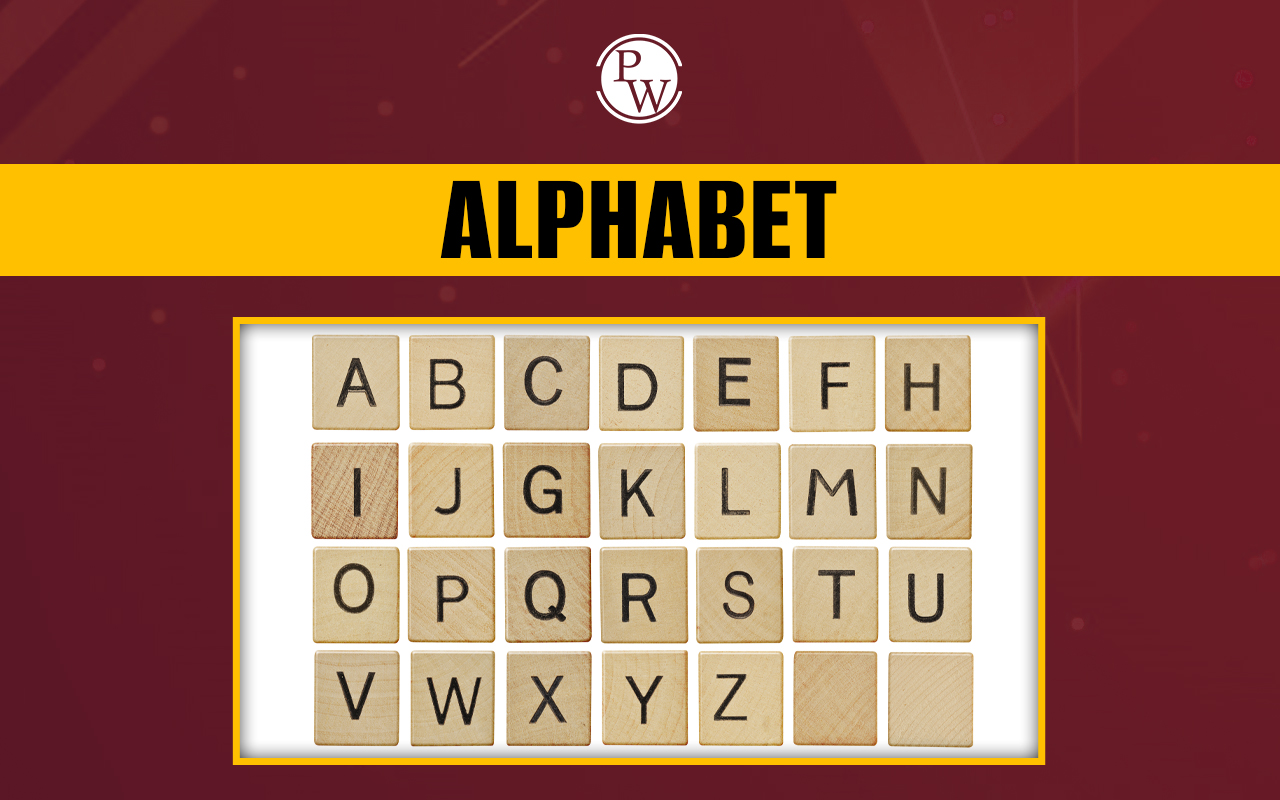
The sixth letter of the Latin alphabet is F, a versatile consonant with a rich history rooted in ancient Phoenician symbols, unique phonetic classifications, and a surprising frequency in everyday language. This exploration details the origins, structural mechanics, statistical distribution, and linguistic impact of the letter F.
The Evolutionary Journey: From Waw to F
To understand the modern sixth letter, one must trace its roots back through millennia of linguistic evolution. The letter F did not originate in the Latin alphabet as an independent creation; rather, it evolved through a series of adaptations across Mediterranean civilizations.
The Phoenician and Greek Foundations
The lineage of F begins with the ancient Phoenician alphabet, where the sixth symbol was called waw. The waw character represented a hook or peg shape and sounded like a "w" or "u" vowel sound. When the ancient Greeks adopted the Phoenician writing system around the 8th century BCE, they adapted waw into a symbol they called digamma, which literally meant "double gamma" because its stacked horizontal bars resembled two capital Greek gamma letters ($\Gamma$) placed one on top of the other.
The digamma represented the voiced labial-velar approximant sound, similar to a "w." However, as the Greek dialects evolved, the sound fell out of use in Attic Greek and many other regional dialects. Consequently, the digamma character was dropped from the standard Greek alphabet used for writing literary texts, though it survived as a numeral representing the number six.
The Etruscan and Roman Adoption
Before disappearing entirely in standard Greek, the Phoenician-derived character was transmitted to the Etruscan civilization in the Italian peninsula. The Etruscan language possessed a voiceless labiodental fricative sound—the crisp "f" sound heard today—which their existing alphabet lacked. To represent this sound, the Etruscans briefly used a combination of symbols, including a precursor to the letter H, before settling on a form resembling the digamma or a figure-eight.
When the Romans adopted the Etruscan alphabet to write Latin, they initially used the digamma symbol with its Etruscan "f" sound. However, during the early classical period, Latin speakers used both the letter F and the letter V (which served double duty for both vowel and consonant "u" and "w" sounds) to manage distinct phonetic needs. Over centuries of scribal practice and standardization, the form of the letter F stabilized into the vertical stem with two horizontal right-facing arms that modern readers recognize today.
Phonetic Mechanics: How the Human Vocal Tract Produces F
In modern phonetics, the letter F represents a specific sound classified by its manner and place of articulation. Understanding how the human vocal apparatus produces this sound reveals why it is common across numerous language families.
The sound associated with F is a voiceless labiodental fricative. Breaking down this linguistic terminology clarifies the physical mechanics involved:
- Voiceless: The vocal cords do not vibrate while making the sound. The airflow passes freely through the larynx without engaging vocal cord oscillation. This can be tested by placing a hand on the throat while alternating between a prolonged "fff" sound and a voiced "vvv" sound.
- Labiodental: The articulators involved are the lower lip (labio) and the upper teeth (dental).
- Fricative: The manner of articulation involves constricting the airflow to create audible friction as air passes through a narrow channel.
| Phonetic Feature | Description for F | Contrastive Example |
|---|---|---|
| Place of Articulation | Labiodental (Lower lip to upper teeth) | Bilabial for P/B (Both lips) |
| Manner of Articulation | Fricative (Continuous turbulent airflow) | Plosive for P/B (Complete blockage and release) |
| Voicing | Voiceless (No vocal cord vibration) | Voiced for V (Vocal cords vibrate) |
This combination of features makes F an easily sustainable consonant that can be prolonged indefinitely as long as breath lasts, setting it apart from stop consonants like P or T.
Statistical Frequency and Typographical Oddities
Within English text and typographic design, the sixth letter exhibits distinct statistical and structural characteristics that linguists and cryptographers study closely.
Frequency in Written English
While vowels like E and A dominate letter frequency charts, F occupies a modest position in standard English corpora. On average, F accounts for approximately 2.23% of all letters used in standard English text, placing it comfortably in the middle tier of consonant frequencies—more common than V, W, or Z, but significantly less frequent than T, N, or S.
Despite its moderate overall frequency, F plays a critical role in high-frequency function words such as for, from, if, of, off, and first. In specialized technical or scientific vocabularies, the frequency of F spikes due to root words derived from Latin and Greek, such as formation, frequency, and fraction.
Typographical Features and Capitalization
In typography, the capital letter F is classified as a sans-serif or serif capital with a two-bar baseline structure. It shares structural symmetry with the letter E, differing only by the removal of the bottom horizontal stroke.
- Ascender: In lowercase typography, f is one of the few letters that features both an ascender (rising above the x-height) and a curved terminal or crossbar.
- Ligatures: Historically, the letter F was frequently involved in typographic ligatures—combined glyphs used by scribes and early printers to save space and prevent adjacent metal sorts from colliding. The most notable examples include
fi,fl,ff,ffi, andffl. While digital typesetting and Unicode render these as separate characters by default, high-end typography engines still substitute them with distinct ligature glyphs for aesthetic flow.
The Letter F in Science, Measurement, and Culture
Beyond its grammatical role in words, the sixth letter serves as a foundational symbol across various scientific, mathematical, and cultural domains.
Scientific and Mathematical Symbols
- Fahrenheit ($^\circ$F): Named after the German physicist Daniel Gabriel Fahrenheit, this temperature scale sets the freezing point of water at 32 degrees and the boiling point at 212 degrees under standard atmospheric pressure.
- Farad (F): The SI derived unit of electrical capacitance, named in honor of the English physicist and chemist Michael Faraday. One farad represents the capacity to store one coulomb of electrical charge per volt of electrical potential.
- Fluorine (F): In the periodic table of elements, F stands for fluorine, a highly reactive, pale yellow halogen gas with atomic number 9.
- Focal Length (f): In optics, lowercase $f$ denotes the focal length of a lens or curved mirror, representing the distance over which initially parallel rays converge.
Cultural and Idiomatic Uses
In educational grading systems used primarily in English-speaking countries, an "F" grade traditionally denotes a failing mark, standing for "Fail." This convention became widespread in American universities and high schools during the late 19th and early 20th centuries as grading systems shifted from percentages to letter tiers (A, B, C, D, F).
In popular culture and internet terminology, the letter F gained a unique ritualistic status derived from the 2014 video game Call of Duty: Advanced Warfare, where players were prompted to "Press F to pay respects" during a virtual funeral scene. This moment spawned a widespread internet meme where typing a single "F" signifies mourning, sympathy, or acknowledgment of a misfortune across social media platforms and gaming streams.
Common Questions Answered
Why did the Greek alphabet drop the letter that became F?
The ancient Greek letter digamma fell out of use because the sound it represented ("w") naturally disappeared from the spoken dialects of Ionic and Attic Greek over time. As the language evolved, speakers no longer pronounced the sound, rendering the symbol unnecessary for spelling. Consequently, it was omitted from the classical Greek alphabet, though its numerical value of six was retained.
Is F considered a loud or soft consonant in phonetics?
Phonetically, F is classified as a voiceless fricative, meaning it lacks vocal cord vibration and relies entirely on breath friction. While it produces a sharp, hissing sound that can easily cut through background noise, phoneticians measure consonant intensity by acoustic energy rather than perceived volume. F is generally considered a low-energy consonant compared to vowels or voiced plosives.
How does the frequency of F compare to other letters in English?
F ranks near the middle of the English alphabet in terms of corpus frequency, appearing in roughly 2.23% of standard English text. It is more common than letters like G, P, W, Y, B, V, K, J, X, Q, and Z, but less frequent than high-usage letters like E, T, A, O, I, N, S, H, R, D, and L.
Why is F used as the symbol for fluorine?
In chemical nomenclature, element symbols are typically derived from the element's English, Latin, or Greek name. Fluorine comes from the Latin root fluere, meaning "to flow," because fluorspar was historically used as a flux in metal smelting. The single-letter symbol F was assigned to fluorine in the modern periodic table to provide an unambiguous, universally recognized identifier.
What is the origin of the phrase "press F to pay respects"?
The phrase originated from a prompt in the 2014 first-person shooter video game Call of Duty: Advanced Warfare. During a cinematic sequence depicting a military funeral, PC players were instructed on-screen to press the F key on their keyboards to interact with the casket. The melodrama of the prompt in a mainstream action game struck players as humorous, leading to its adoption as an internet meme for expressing condolences.
Practical Guidance and Next Actions
For those studying linguistics, typography, or the history of writing systems, examining the evolution of the sixth letter offers valuable insight into how human communication adapts over time. To deepen your understanding of alphabetic history and phonetics:
- Examine Primary Sources: Consult historical linguistic texts detailing the transition from Phoenician waw to Etruscan and Latin scripts to see physical epigraphic evidence.
- Explore Phonetic Charts: Practice producing minimal pairs (such as fan versus van or fat versus vat) to physically experience the distinction between voiceless and voiced labiodental fricatives.
- Analyze Typography: Observe how different font families render the ascender and crossbar of the lowercase f in professional print media and digital interfaces.