Navigating the process of securing an auto insurance quote can often feel like sorting through a maze of conflicting information, industry jargon, and half-truths. When evaluating options from major carriers like Progressive, drivers frequently encounter misconceptions regarding how pricing is calculated, what factors influence eligibility, and how digital tools interact with final rates. Understanding the realities behind these common assumptions helps consumers make informed financial choices, optimize their coverage selections, and avoid costly surprises when their policy documents finally arrive.
Insurance pricing is governed by complex mathematical models, state-specific regulations, and individual risk profiles. Because the market relies heavily on data aggregation and underwriting algorithms, myths circulate easily among drivers looking for quick explanations for rate fluctuations or quoting requirements. To demystify this process, it is necessary to examine how quotes transition into active policies, the actual weight assigned to specific variables, and the true role of online estimation tools in the modern insurance landscape.
Myth 1: An Online Quote Is a Binding Contract and Final Price
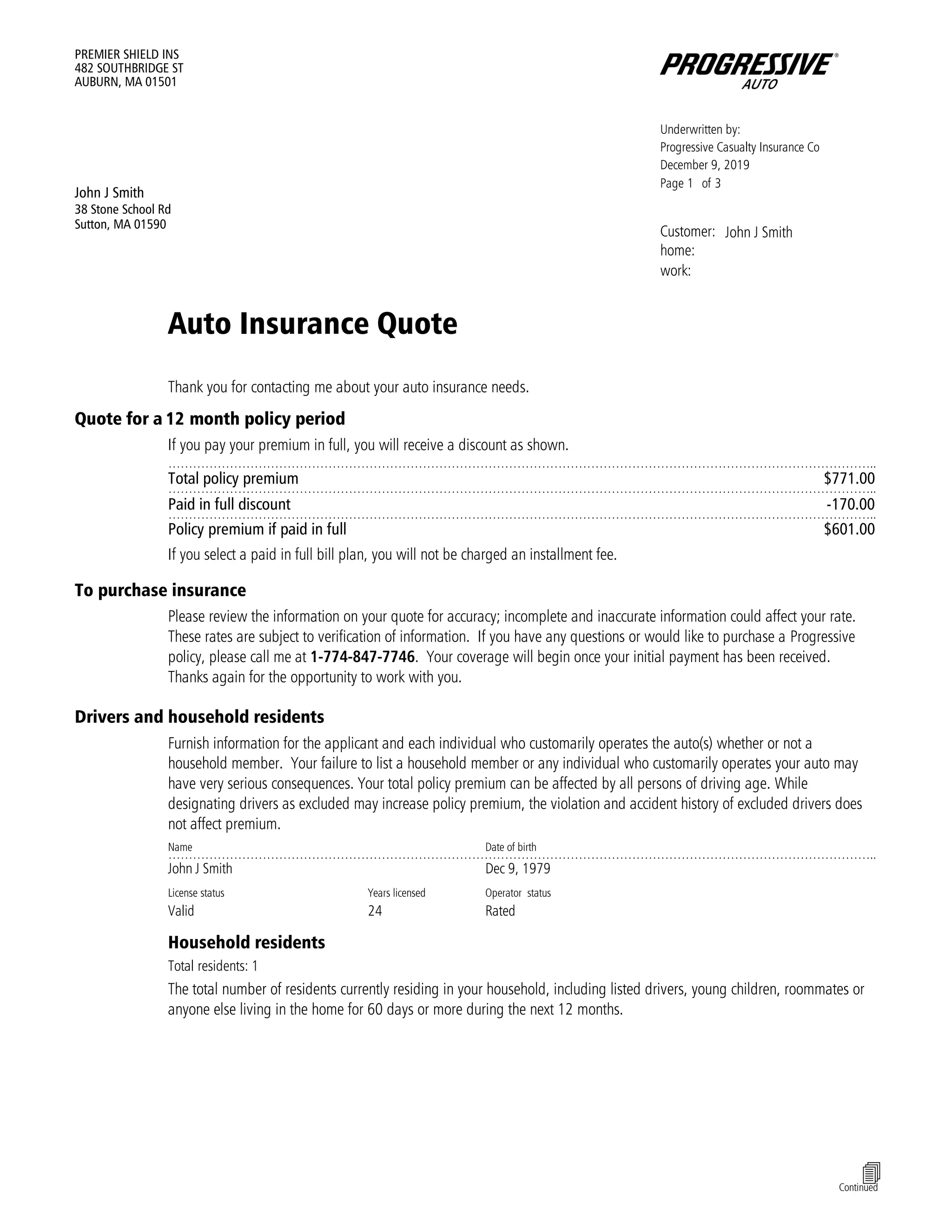
One of the most persistent misconceptions among consumers is that completing an online form to generate a Progressive auto insurance quote secures a legally binding price that cannot change. Many drivers assume that the numbers displayed on their computer screen or mobile device represent a fixed financial commitment, akin to checking out with a retail item online. In reality, an initial online quote is an estimate rather than a final contract.
The Underwriting and Verification Process
When a consumer inputs data into an online quoting engine, the system calculates an initial premium based entirely on self-reported information. While this provides a reliable baseline for comparison, insurance companies must verify the accuracy of the data before issuing a final policy. Underwriting rules require carriers to cross-reference consumer inputs with official third-party databases.
- Motor Vehicle Records (MVR): Insurers check state Department of Motor Vehicles databases to confirm driving history, accidents, and traffic violations. Discrepancies between self-reported records and official records directly impact the final rate.
- Comprehensive Loss Underwriting Exchange (CUE): This database tracks past insurance claims history over a multi-year period. If prior claims surface that were not disclosed during the quoting phase, the premium will adjust accordingly.
- Credit-Based Insurance Scores: In states where permitted by law, carriers pull credit information to help determine risk. Variations in credit history from what was estimated or reported can shift the final price upward or downward.
Why Initial Estimates Shift
Because insurance pricing is dynamic and tied directly to verified risk metrics, any variance between the preliminary information provided by the customer and the official records retrieved by the insurer will cause the quote to update. This mechanism protects both the insurer and the policyholder by ensuring that rates accurately reflect actual statistical risk rather than mistaken or omitted data points. Consumers should view an online quote as a highly accurate preview rather than an unalterable guarantee.
Myth 2: Minimum State Liability Coverage Always Offers the Best Value
Another widespread belief is that selecting the absolute minimum liability limits required by a state represents the smartest financial strategy for getting the cheapest Progressive auto insurance quote. While reducing coverage limits invariably lowers the immediate price of the premium, this approach frequently exposes drivers to severe financial vulnerability in the event of an accident.
Understanding State Minimums vs. Total Protection
State-mandated minimum liability limits are established by individual legislatures to ensure drivers carry a baseline level of financial responsibility. However, these limits were often written decades ago and have failed to keep pace with modern vehicle replacement costs, rising medical expenses, and escalating legal judgments.
| Coverage Type | State Minimum Limits (Typical) | Recommended / Asset-Protecting |
|---|---|---|
| Bodily Injury (Per Person / Accident) | $25,000 / $50,000 | $100,000 / $300,000 |
| Property Damage | $10,000 - $25,000 | $50,000 - $100,000 |
| Comprehensive & Collision | Optional (Often excluded on older vehicles) | Essential for financed cars or vehicles of significant value |
| Uninsured/Underinsured Motorist | Often optional or waiver-only | Highly recommended to match bodily injury limits |
When a driver causes an accident that exceeds state minimum liability limits, they become personally liable for the remaining balance. This financial exposure can result in wage garnishment, asset seizure, or legal judgments that far outweigh any initial savings achieved by choosing bare-minimum coverage.
The Hidden Costs of Skimping on Comprehensive and Collision
Drivers of older vehicles frequently debate whether to drop comprehensive and collision coverages to secure a lower quote. While dropping these coverages makes sense if the cost of the insurance outweighs the total cash value of the car, doing so leaves the owner entirely unprotected if they experience a single-vehicle accident, tree damage, theft, or weather-related destruction. Balancing the cost of the quote against personal financial risk is a critical step that extends far beyond chasing the lowest possible dollar figure on a screen.
Myth 3: Telematics Programs Like Snapshot Automatically Raise Your Rates
Many drivers avoid exploring usage-based insurance programs—such as Progressive's Snapshot program—during the quoting process because they believe the device or mobile application is designed primarily to monitor driving habits for the purpose of increasing their rates. This myth discourages policyholders from taking advantage of personalized pricing models that reward safe driving behavior.
How Usage-Based Insurance Works
Programs like Snapshot track specific driving metrics over a designated monitoring period. Rather than serving as a penalty mechanism, these tools are built to segment risk more accurately than traditional demographic factors alone. The primary data points evaluated include:
- Speed of Acceleration and Hard Braking: Sudden decelerations and rapid accelerations indicate aggressive driving patterns.
- Time of Day: Driving during high-risk overnight hours (typically between midnight and 4:00 AM) correlates with higher accident statistics.
- Phone Distraction: Newer mobile-based tracking applications can measure interactions with a smartphone while the vehicle is in motion, discouraging distracted driving.
The Reality of Discounts and Surcharges
While it is true that extreme driving habits in certain states can result in a rate adjustment or surcharge upon renewal, the vast majority of participants maintain their initial discount or see savings. Drivers who exhibit defensive habits—such as smooth braking, moderate speeds, and low overall mileage—frequently realize substantial reductions compared to standard rating tables. Quoting engines allow customers to evaluate the estimated introductory discount before committing to the program, providing transparency into potential savings.
Practical Steps for Obtaining an Accurate Progressive Auto Insurance Quote
Securing an accurate, competitive quote requires preparation, attention to detail, and a clear understanding of how insurance companies evaluate risk. By following a structured approach, consumers can ensure their preliminary estimates align closely with their final policy pricing.
- Gather Necessary Documentation: Collect current policy declarations pages, driver's license numbers for all household drivers, and Vehicle Identification Numbers (VINs) for all automobiles to be insured.
- Audit Your Driving History: Request a copy of your motor vehicle record to verify that past violations or accidents are accurately understood, allowing you to anticipate how underwriters will view your profile.
- Evaluate Coverage Needs Based on Assets: Select liability limits that reflect your net worth and protect your personal assets rather than merely selecting the state-mandated minimums.
- Explore Available Discounts: Input accurate information regarding safety features, anti-theft devices, homeowner status, paperless billing, and bundling options to maximize upfront savings.
- Review and Adjust Deductibles: Test different deductible levels (such as raising comprehensive and collision deductibles from $500 to $1,000) to find a comfortable balance between monthly premium costs and out-of-pocket exposure in a claim scenario.
Frequently Asked Questions
Does getting an auto insurance quote hurt my credit score?
No. When Progressive or other major insurance carriers generate an initial quote, they typically perform what is known as a "soft credit inquiry." Unlike a hard inquiry associated with loans or credit cards, a soft inquiry has zero impact on your credit score and is not visible to other financial institutions.
Can I get an accurate quote without providing my Social Security Number?
Yes, it is often possible to receive a preliminary quote with basic information such as your name, address, and vehicle details. However, to receive a binding, fully verified price, carriers usually require a Social Security Number to pull official motor vehicle and claims history records accurately.
How long is an auto insurance quote valid?
Insurance quotes are subject to change because underwriting factors, state regulations, and actuarial tables update regularly. Typically, an online quote remains valid for 30 to 60 days, though significant changes in your driving record, address, or vehicle status during that window will require a requote.
What is the difference between liability coverage and full coverage?
Liability coverage pays for injuries and property damage you cause to others, whereas "full coverage" is an industry term typically referring to a combination of liability, collision, and comprehensive insurance, which protects your own vehicle against damage regardless of fault.
Are quotes generated online more expensive than quotes from a local agent?
No. Insurance carriers use centralized rating algorithms and state-approved rate filings, meaning the price for a specific risk profile remains consistent whether you generate the estimate through the website, speak with a customer service representative, or work with an independent local agent.
Conclusion and Next Actions
Dispelling common myths about getting a Progressive auto insurance quote empowers consumers to approach the marketplace with clarity and confidence. By recognizing that online estimates require underwriting verification, evaluating coverage limits beyond basic state minimums, and understanding the true function of telematics programs, drivers can make sound decisions tailored to their specific financial and safety needs. To take the next step, gather your essential vehicle and driver information, run a comparative quote on the official Progressive platform, and review your coverage selections against your actual asset protection requirements.