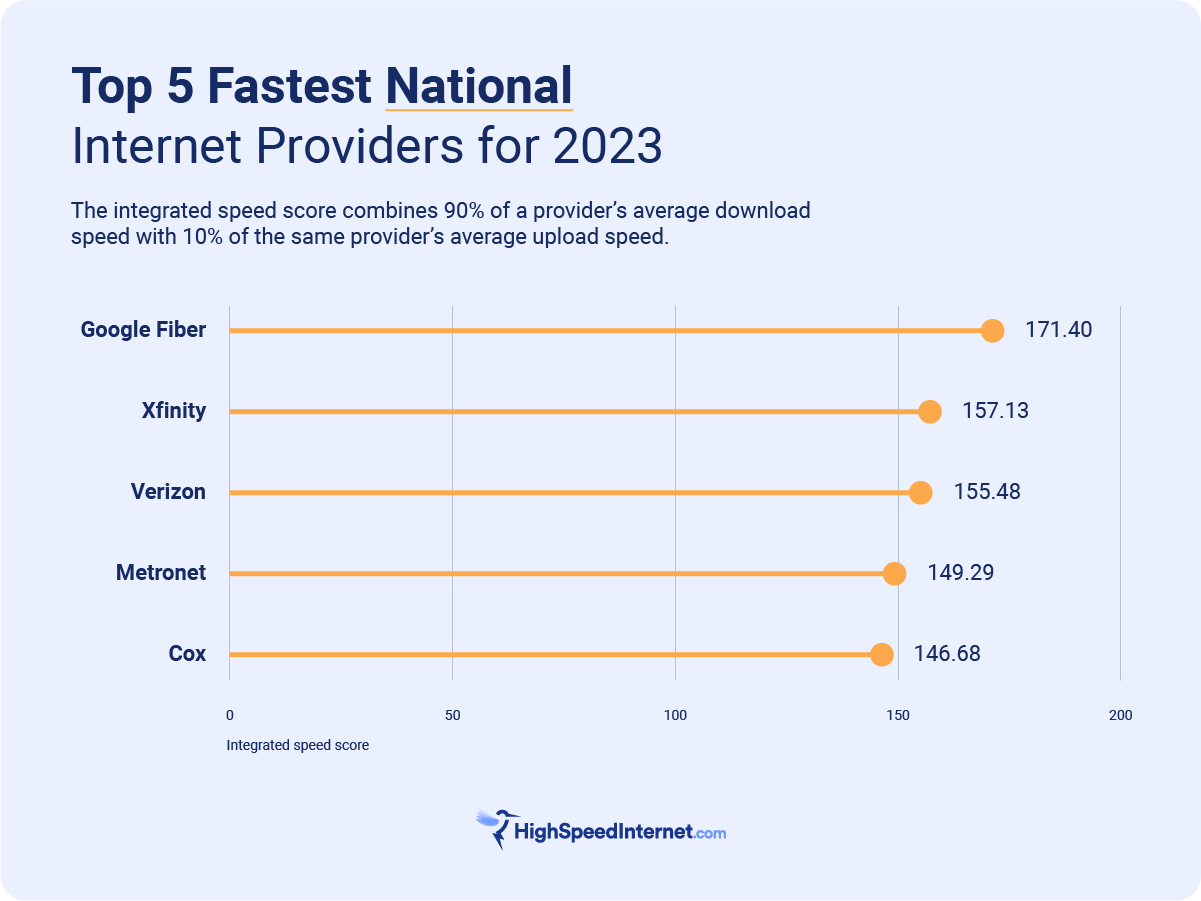
In 2026, the best internet providers in Colorado are Quantum Fiber, Xfinity, and Google Fiber. Quantum Fiber leads for pure value and symmetrical speeds, Xfinity offers the most comprehensive coverage across the Front Range and mountains, and Google Fiber remains the gold standard for customer satisfaction in select metropolitan areas like Denver and Lakewood.
Selecting the right internet service provider (ISP) in Colorado is more complex than in many other states due to the dramatic topographical shift between the high plains and the Rocky Mountains. By 2026, the digital landscape in the Centennial State has matured significantly, driven by massive infrastructure investments from the federal BEAD (Broadband Equity, Access, and Deployment) program and aggressive private fiber rollouts. Whether you are a remote professional in a Boulder tech hub or a family in the sprawling suburbs of Colorado Springs, the choice of provider dictates your daily productivity and entertainment quality.
1. Quantum Fiber: The Best Overall Value and Performance
Quantum Fiber, a brand under the Lumen Technologies umbrella (formerly CenturyLink), has established itself as the premier choice for Colorado residents seeking high-speed, reliable fiber-optic internet without the complications of traditional cable contracts. As of 2026, their network has expanded deeply into the Denver metro area, Fort Collins, and parts of the Western Slope.
Technical Superiority of Fiber-Optic Infrastructure
Quantum Fiber utilizes a 100% fiber-optic network directly to the home (FTTP). Unlike hybrid-fiber coaxial (HFC) networks used by cable companies, Quantum provides symmetrical speeds. This means your upload speed is just as fast as your download speed. For Colorado's significant population of remote workers and content creators, this is a critical feature. In 2026, typical plans range from 500 Mbps to 8 Gbps in select neighborhoods.
The low latency—often under 10ms—makes Quantum Fiber the preferred choice for competitive gaming and seamless 4K video conferencing. Furthermore, fiber-optic lines are less susceptible to the electromagnetic interference that can plague older copper-based systems during Colorado's intense summer lightning storms or heavy winter snowfalls.
Pricing and Contract Transparency
One of the primary reasons Quantum Fiber ranks at the top is its simplified billing structure. By 2026, the company has doubled down on its "no-contract" model. Residents are not tethered to two-year agreements, and there are no data caps. This "unlimited" approach is essential in an era where the average household consumes over 600 GB of data monthly due to high-definition streaming and smart home devices.
Availability Challenges
The primary drawback of Quantum Fiber remains its footprint. While it is dominant in urban centers, it has not yet reached every rural pocket of the state. If you live in a newer development in Douglas County or a revitalized area of downtown Denver, you likely have access. However, older neighborhoods may still be waiting for the underground line boring to be completed.
2. Xfinity: The Best for Availability and Bundled Services
Xfinity, the consumer arm of Comcast, remains the most widely available high-speed internet provider in Colorado. From the northern border in Greeley down to Pueblo, and stretching into mountain towns like Silverthorne and Eagle, Xfinity’s infrastructure is ubiquitous.
The Evolution of the X-Class Network
By 2026, Xfinity has largely completed its transition to DOCSIS 4.0 technology across most of Colorado. This upgrade, often marketed as the "X-Class" or "10G" network, allows Xfinity to offer speeds that rival fiber-optic performance over traditional cable lines. While many older cable plans suffered from "asymmetrical" speeds (fast downloads but slow uploads), Xfinity’s mid-split and high-split upgrades in 2025 have significantly boosted upload speeds to meet the demands of modern users.
The Ecosystem Advantage
Xfinity’s greatest strength is its ability to bundle services. For Colorado residents who still value traditional linear television (especially for local sports like the Colorado Rockies or Denver Nuggets via regional sports networks) or who want to save on mobile phone bills, Xfinity offers significant "multi-product" discounts. Their Xfinity Mobile service, which leverages Verizon’s LTE/5G towers and Xfinity’s millions of Wi-Fi hotspots, is often included at a steep discount for internet subscribers.
Reliability and the "Storm-Ready" Feature
Given Colorado’s volatile weather, Xfinity introduced "Storm-Ready WiFi," which includes a cellular backup. If a winter blizzard knocks out the physical cable line, the gateway automatically switches to a 5G cellular connection, keeping the home network online. This level of redundancy is a major selling point for residents in areas prone to power fluctuations or line damage from falling tree branches.
3. Google Fiber: The Best for Simplicity and Customer Satisfaction
Google Fiber (and its sister service, Google Fiber Webpass) has a smaller footprint in Colorado compared to the other two, but where it is available—primarily Denver, Lakewood, and Westminster—it is almost universally considered the top choice.
The "Google Effect" on Speed
Google Fiber was the catalyst for the "Gigabit Revolution," and in 2026, they continue to push the envelope. They offer straightforward tiers: 1-Gig, 2-Gig, 5-Gig, and 8-Gig. There are no "introductory prices" that jump after 12 months; the price you sign up for is generally the price you keep. This transparency has earned them the highest Net Promoter Scores (NPS) in the Colorado ISP market.
Professional Installation and Hardware
Google Fiber’s installation process is notoriously clean. They provide high-end Wi-Fi 6E or Wi-Fi 7 routers at no extra cost, ensuring that the multi-gigabit speeds reaching the house actually translate to the devices inside. In Colorado’s multi-story "townhome" style developments, Google Fiber’s mesh-ready hardware is particularly effective at eliminating dead zones without requiring the customer to purchase expensive third-party equipment.
Limited Geography
The "Catch-22" of Google Fiber is that it is incredibly difficult to get if you aren't in a specifically targeted municipality. Their expansion relies on "micro-trenching" technology, which is faster than traditional methods but still requires specific city permits that not all Colorado municipalities have granted. If you are moving to the Denver area, checking for Google Fiber availability should be a high priority during your home search.
Comparative Analysis of Colorado's Top Providers
To help you decide which provider fits your specific needs, the following table summarizes the key metrics for 2026.
| Feature | Quantum Fiber | Xfinity | Google Fiber |
|---|---|---|---|
| Primary Tech | 100% Fiber (FTTP) | Cable (DOCSIS 4.0) | 100% Fiber (FTTP) |
| Max Download | 8 Gbps | 2 Gbps+ | 8 Gbps |
| Max Upload | 8 Gbps (Symmetrical) | 200 Mbps - 1 Gbps | 8 Gbps (Symmetrical) |
| Data Caps | None | Varies (Unlimited available) | None |
| Contract | No Contract | Optional (Term discounts) | No Contract |
| Best For | Power users & Gamers | Families & Bundlers | Minimalists & Speed Seekers |
| CO Coverage | Urban/Suburban Centers | Statewide (High) | Denver Metro (Limited) |
Factors Influencing Internet Quality in Colorado
The Impact of Topography
Colorado’s terrain is a significant hurdle for ISP infrastructure. In the Denver Basin and the Eastern Plains, laying fiber is relatively straightforward. However, in the foothills and the high mountains (zones like Evergreen, Conifer, or the Roaring Fork Valley), the cost of burying cable in granite is astronomical. This is why Xfinity often remains the only high-speed "wired" option in mountain towns, as they have legacy infrastructure that is continuously upgraded, whereas fiber providers may find the cost-to-entry too high.
The Role of the Colorado Broadband Office
The Colorado Broadband Office (CBO) has been instrumental in 2025 and 2026 in directing funds to "unserved" and "underserved" areas. When choosing a provider, it is worth checking the FCC National Broadband Map to see if your specific address has recently been upgraded via these state-sponsored initiatives. Many local cooperatives in rural Colorado are also beginning to offer fiber services that rival the big three mentioned here.
How to Choose Based on Your User Profile
The Remote Professional
If you spend your day on Zoom, uploading large files to AWS or Creative Cloud, and managing a smart office, Quantum Fiber is your best bet. The symmetrical upload speeds are non-negotiable for high-bandwidth professional tasks. The lack of a contract also provides flexibility if your employment situation changes.
The Large Suburban Family
For a household with multiple teenagers streaming Netflix, playing Fortnite, and parents working from home, Xfinity offers the most robust reliability. Their "Storm-Ready" backup and extensive Wi-Fi hotspot network mean that even if the main line has an issue, the household stays connected. Furthermore, the ability to bundle mobile and home security can lead to significant monthly savings for a large family budget.
The Urban Tech Enthusiast
If you live in a Denver loft or a Lakewood condo and want the "best of the best" with zero headaches, Google Fiber is the winner. Their customer service is responsive, their billing is static, and the hardware provided is top-tier. It is the "set it and forget it" choice for those who want ultra-fast speeds without the typical corporate ISP friction.
Common Pitfalls to Avoid When Selecting an ISP in Colorado
- Ignoring Upload Speeds: Many providers advertise "Gigabit" speeds but only refer to the download side. If you are a content creator or use cloud backups, an asymmetrical connection (e.g., 1000 Mbps down / 35 Mbps up) will feel sluggish.
- Overlooking Equipment Fees: Some providers in Colorado still charge $15–$25 per month for router rentals. Over three years, that is $900. Always check if you can use your own modem/router or if the provider includes it for free (like Google Fiber).
- Data Cap Surprises: While most high-speed plans in 2026 have moved away from caps, some Xfinity tiers in the Western region may still have a 1.2 TB limit unless you pay for an "Unlimited" add-on. For a 4K-streaming household, 1.2 TB can be exceeded easily.
Frequently Asked Questions
Is fiber internet available in the Colorado mountains?
As of 2026, fiber availability in the mountains is increasing but remains spotty. Major resorts like Aspen, Vail, and Breckenridge have high-speed fiber backbones, but residential fiber depends on local municipal projects. For most mountain residents, Xfinity (cable) or Starlink (satellite) remain the primary high-speed options.
How does Colorado's weather affect internet speed?
Wired connections like Quantum Fiber and Xfinity are generally unaffected by snow or wind unless a physical line is downed. However, fixed wireless and satellite providers (like Starlink) can experience "rain fade" or signal degradation during heavy blizzards. Fiber is the most "weather-proof" technology available in the state.
Can I get 10-Gig internet in Colorado?
By 2026, several providers, including Quantum Fiber and Google Fiber, have begun trialing 10-Gig or 8-Gig services in select Denver neighborhoods. However, for most residential users, the hardware required to actually use 10-Gig speeds (like 10Gbps Ethernet cards and Cat6a/7 cabling) is not yet standard, making 1-Gig or 2-Gig the practical ceiling for most.
What is the cheapest internet provider in Colorado?
T-Mobile Home Internet and Verizon 5G Home Internet often offer the lowest "entry-level" pricing, typically around $50 per month. However, for wired service, Xfinity frequently runs "Connect" or "Essential" plans for $25–$35 for the first year, though these come with significantly lower speeds (75–100 Mbps).
Do I need to buy my own router?
If you use Xfinity, buying your own DOCSIS 3.1 or 4.0 modem and a high-quality Wi-Fi 7 router can save you money in the long run. For Quantum Fiber and Google Fiber, the provided equipment is usually high-quality and included in the price, making it less necessary to purchase your own.
The Verdict
For the vast majority of Colorado residents in 2026, Quantum Fiber is the definitive winner. It offers the perfect intersection of high-speed symmetrical performance, transparent pricing, and modern infrastructure. It avoids the "introductory rate" traps of traditional cable and provides a future-proof connection that can handle the increasing data demands of the next decade.
If Quantum Fiber is not yet available at your specific address, Xfinity is the most reliable fallback, providing massive coverage and the best bundling options for those who want to consolidate their home utility bills. Google Fiber remains an elite, "if you can get it" option that serves as the benchmark for how internet service should be delivered: fast, simple, and fair.
Before making a final decision, always verify the specific speeds available at your exact street address, as performance can vary significantly from one block to the next in Colorado's rapidly evolving digital landscape.