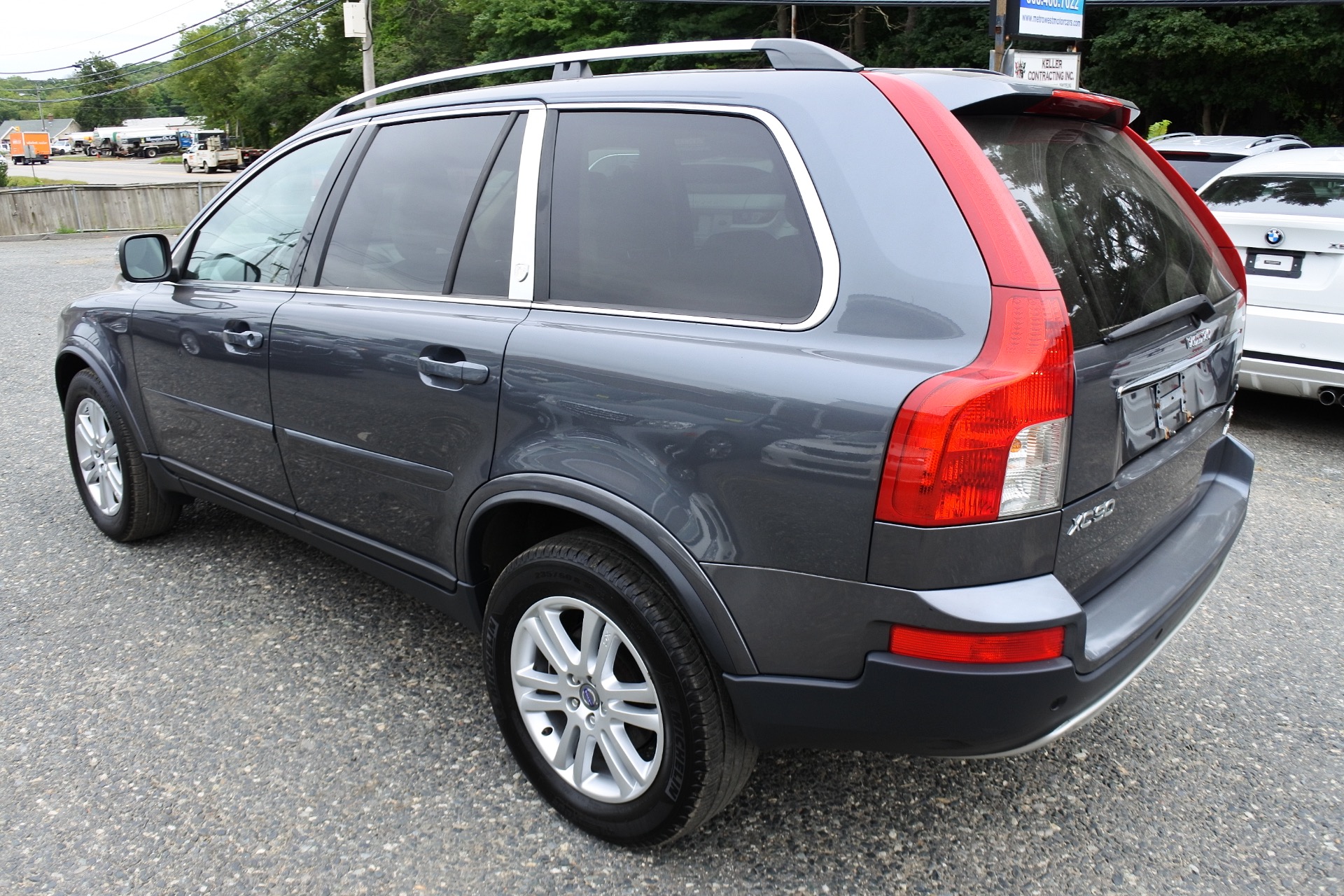
The 2008 Volvo XC90 features three distinct engine options depending on the trim level: a 3.2-liter inline-6 producing 235 horsepower, a 4.4-liter V8 generating 311 horsepower, and a 2.5-liter turbocharged inline-5 (available in international or specific regional markets, though North America primarily saw the 3.2 and V8 variants for that model year). These power plants define the vehicle's driving dynamics, towing capacity, and fuel economy.
Understanding the powertrain configurations of the 2008 Volvo XC90 requires looking past a single figure. Because Volvo offered multiple engine architectures during this model year, prospective buyers, restorers, and automotive enthusiasts must examine displacement, induction type, transmission pairings, and drivetrain layouts to understand how horsepower translates into real-world performance. This guide breaks down the exact performance specifications, mechanical traits, and driving characteristics of every engine offered in the 2008 Volvo XC90 lineup.
Evolution of the XC90 Powertrain in 2008
By 2008, Volvo’s mid-size luxury SUV was well-established in the global market. To stay competitive against European and domestic rivals, Volvo updated its engine lineup significantly over earlier model years. The older 2.5-liter turbocharged 5-cylinder engine (often designated as the 2.5T) was largely phased out in core markets like the United States in favor of a smoother, more modern naturally aspirated inline-6.
This mechanical shift altered the baseline horsepower of the vehicle while altering the power delivery curve. Instead of relying on low-end turbo boost, the newer 3.2-liter engine delivered linear power suited for comfortable family cruising. Meanwhile, the Yamaha-derived V8 remained the flagship option for drivers demanding maximum towing capability and swift acceleration. Evaluating 2008 Volvo XC90 horsepower means analyzing these two primary engine architectures—the 3.2L I6 and the 4.4L V8—alongside their transmission systems and all-wheel-drive configurations.
The 3.2-Liter Inline-6 Engine Specifications
The standard engine for the 2008 Volvo XC90 3.2 and 3.2 R-Design models is a naturally aspirated 3.2-liter inline-6 engine. Designed to be remarkably compact despite its cylinder count, this engine was mounted transversely in the engine bay to maximize cabin space and frontal crash protection crumple zones.
- Horsepower: 235 hp at 6,200 RPM
- Torque: 236 lb-ft (320 Nm) at 3,200 RPM
- Valvetrain: Dual Overhead Cam (DOHC) with Variable Valve Timing (VVT) and Cam Profile Switching (CPS)
- Transmission: 6-speed Geartronic automatic transmission
This engine utilizes an innovative accessory drive system mounted on the side and rear of the engine block rather than the front, allowing for a shorter overall engine length. While 235 horsepower is modest for a heavy three-row luxury SUV tipping the scales at over 4,500 pounds, the Cam Profile Switching technology helps optimize valve lift to provide a broad torque band.
In daily driving, the 3.2-liter engine feels adequate for city commuting and highway cruising. However, because it lacks forced induction, drivers must rev the engine higher into the tachometer to execute swift passing maneuvers or climb steep grades with a full load of passengers.
The 4.4-Liter V8 Engine Specifications
For buyers seeking substantial performance, the 2008 Volvo XC90 V8 (available in trims like the V8 Sport and V8 Luxury) introduces an exclusive power plant developed in collaboration with Yamaha. This 4.4-liter V8 is an engineering marvel recognized for its compactness, lightweight aluminum construction, and distinctive exhaust note.
- Horsepower: 311 hp at 5,850 RPM
- Torque: 325 lb-ft (441 Nm) at 3,950 RPM
- Valvetrain: Dual Overhead Cam per bank, 4 valves per cylinder with VVT
- Transmission: 6-speed Geartronic automatic transmission (specifically strengthened to handle higher torque loads)
The Yamaha-built V8 elevates the XC90's character entirely. Pumping out 311 horsepower, the vehicle achieves a 0 to 60 mph sprint in approximately 7.0 to 7.3 seconds—a notable improvement over the inline-6 variant. The torque curve is exceptionally flat, delivering strong pull right off the line and making highway passing effortless, even when the vehicle is fully loaded with cargo and towing a trailer.
Comparative Engine Overview
To directly evaluate the performance metrics, fuel economy estimates, and capabilities of the 2008 Volvo XC90 engines, the table below outlines the core specifications side by side.
| Engine Type | Displacement | Horsepower | Torque | Transmission | Drivetrain | Towing Capacity |
|---|---|---|---|---|---|---|
| Inline-6 | 3.2 Liters | 235 hp @ 6,200 RPM | 236 lb-ft @ 3,200 RPM | 6-speed automatic | FWD or AWD | 3,968 lbs (1,800 kg) |
| V8 | 4.4 Liters | 311 hp @ 5,850 RPM | 325 lb-ft @ 3,950 RPM | 6-speed automatic | AWD (Standard) | 5,000 lbs (2,268 kg) |
Transmission Pairings and Drivetrain Impact
Horsepower figures only tell part of the story; how that power reaches the pavement depends entirely on the transmission and all-wheel-drive (AWD) systems. For the 2008 model year, Volvo paired all XC90 engines with a responsive 6-speed Geartronic automatic transmission featuring a manual shift mode.
The 3.2-liter engine was available with either front-wheel drive (FWD) or an electronically controlled Instant Traction all-wheel-drive system utilizing a Haldex clutch. Front-wheel-drive variants offer slightly better fuel efficiency and reduced mechanical complexity, while AWD variants distribute power dynamically to the wheels with the best grip, enhancing stability in rain, snow, and loose gravel.
The V8 engine was coupled exclusively with the all-wheel-drive system. Because of the V8's significantly higher torque output, Volvo utilized a robust bevel gear and rear differential setup. Over time, maintaining the Haldex AWD system—including fluid and filter changes every 40,000 to 50,000 miles—remains critical to ensuring the engine's 311 horsepower transfers reliably to all four wheels without slippage.
Real-World Performance and Driving Dynamics
While laboratory horsepower ratings provide a baseline, how the 2008 Volvo XC90 behaves on the road dictates the ownership experience. Both engine options prioritize ride comfort, stability, and straight-line composure over aggressive sports car handling.
The 3.2 Experience
Drivers of the 3.2-liter model will notice a relaxed, smooth acceleration profile. The throttle mapping is calibrated for progressive, jerk-free takeoffs, making it easy to drive smoothly in stop-and-go traffic. When merging onto fast-moving interstates, the transmission kicks down promptly, but the engine works audibly harder to maintain rapid acceleration under heavy loads.
The V8 Experience
The V8 model transforms the XC90 into a muscular highway cruiser. The exhaust emits a low, muted growl under acceleration that reminds occupants of its Yamaha heritage. Power is instantly accessible across the rev range, reducing driver fatigue during long journeys or mountainous driving. The stiffer suspension tuning found on V8 Sport trims further complements the engine's output, offering flatter cornering at the expense of a slightly firmer ride over potholes.
Fuel Economy and Operating Costs
Higher horsepower inevitably demands more fuel. When assessing the 2008 Volvo XC90, owners must balance performance against fuel consumption, particularly in real-world driving conditions.
- 3.2L Inline-6 (AWD): EPA estimates historically rated this configuration around 14 mpg city / 20 mpg highway.
- 4.4L V8 (AWD): EPA estimates rated the V8 variant around 13 mpg city / 19 mpg highway.
Both engines require premium unleaded gasoline (91 octane or higher) to achieve their advertised horsepower figures safely and prevent engine knock under load. Maintenance costs also scale with the powertrain complexity; the V8 requires more labor-intensive service procedures due to its tight packaging in the engine bay, whereas the 3.2-liter offers slightly more accessible service points for routine maintenance items like spark plugs and ignition coils.
Frequently Asked Questions
What is the horsepower of a 2008 Volvo XC90 V8?
The 2008 Volvo XC90 V8 produces 311 horsepower at 5,850 RPM and 325 lb-ft of torque, powered by a 4.4-liter Yamaha-designed engine paired exclusively with all-wheel drive.
Can the 2008 Volvo XC90 tow a heavy trailer?
Yes, towing capacity varies by engine. Models equipped with the 4.4L V8 can tow up to 5,000 pounds when properly equipped, while the 3.2L inline-6 models are rated for a maximum towing capacity of approximately 3,968 pounds.
Do all 2008 Volvo XC90 models have all-wheel drive?
No. The 3.2-liter inline-6 model was available in both front-wheel drive (FWD) and all-wheel drive (AWD) configurations. The 4.4-liter V8 model came standard with all-wheel drive.
What kind of fuel does the 2008 Volvo XC90 require?
Volvo recommends premium unleaded gasoline (91 octane or higher) for both the 3.2L and V8 engines to ensure optimal performance, fuel efficiency, and protection against engine pre-detonation.
How fast is the 2008 Volvo XC90 V8 from 0 to 60 mph?
Equipped with the 311-horsepower V8 engine, the XC90 accelerates from 0 to 60 mph in approximately 7.0 to 7.3 seconds, making it one of the faster three-row luxury SUVs of its era.
Conclusion and Next Actions
Selecting a 2008 Volvo XC90 depends on balancing your performance expectations with daily driving requirements. If your priority is relaxed family transport and slightly easier routine maintenance, the 235-horsepower 3.2-liter inline-6 provides adequate capability. If you require maximum towing capacity, rapid highway passing, and a more engaging exhaust note, tracking down a well-maintained 311-horsepower V8 model is the ideal choice. Before purchasing or servicing an XC90 from this era, always request a comprehensive maintenance history verifying regular fluid changes for the transmission and all-wheel-drive system to ensure reliable long-term performance.