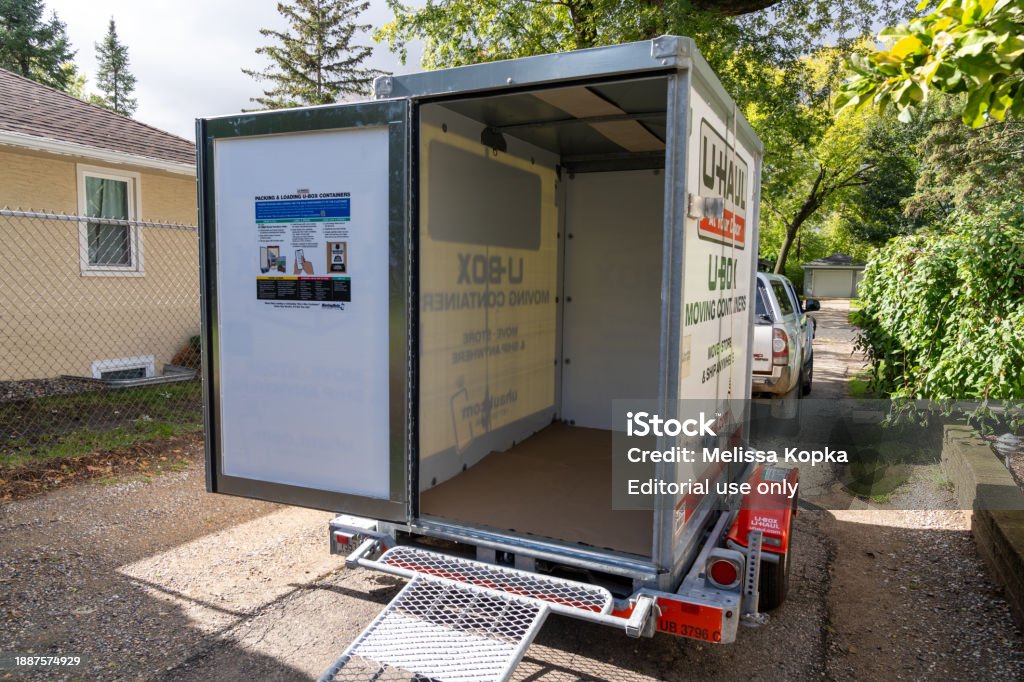
Determining whether portable storage containers like PODS (Portable On Demand Storage) are cheaper than a traditional U-Haul truck rental depends entirely on the distance of your move, the duration of your transition, and your willingness to handle manual labor. Generally, U-Haul is the more cost-effective choice for local, short-duration moves, while PODS provides greater flexibility and value for long-distance relocations that require temporary storage.
Understanding the Cost Structures
To evaluate the true price difference between a container service and a truck rental, you must first recognize the fundamental shift in how these companies charge for their services. They are not competing on the same logistical model.
U-Haul operates on a vehicle rental model. You are paying primarily for the utility of the truck itself. Your costs include the base daily rental fee, a per-mile charge, fuel consumption, and insurance protection. Crucially, the cost is compressed into a short window of time—usually a few days—because the truck must be returned to the rental depot to remain profitable.
PODS and similar containerized shipping services operate on a logistics and storage model. You are paying for the container rental, the transportation of the container, and, frequently, the rental of the space where the container sits—either on your property or in a secure warehouse facility. The cost structure is decoupled from the driving distance in terms of daily wear and tear, but it is heavily dependent on the duration of your storage needs.
The Financial Variables of Truck Rentals
When you choose a U-Haul, your expenses are predictable but high-intensity. The "sticker price" for a local move might appear significantly lower than a container service, but that number is often misleading.
- Fuel Costs: Moving trucks are significantly less fuel-efficient than standard passenger vehicles. A heavy-duty box truck can easily consume fuel at a rate of 8 to 12 miles per gallon. For a long-distance move, fuel surcharges can add hundreds of dollars to the final receipt.
- Per-Mile Charges: While U-Haul may advertise low daily rates for local moves, the per-mile fee is the hidden driver of costs. If your new home is further than initially estimated, or if you need to make multiple trips, your costs increase linearly with every mile driven.
- Insurance and Liability: U-Haul offers several tiers of damage protection. Skipping these leaves you personally liable for the full cost of the truck in the event of an accident or theft, which represents a significant financial risk.
- Hidden Logistics Costs: You must account for the cost of parking a massive vehicle in both your origin and destination, potential tolls for heavy commercial vehicles, and the cost of food and lodging if a long-distance move takes longer than expected due to the slow speed of a loaded truck.
The Financial Variables of PODS
PODS and similar competitors (such as U-Pack or 1-800-PACK-RAT) offer a different set of expenses. The benefit here is the elimination of driving-related costs and the flexibility of timing.
- Delivery and Pick-up Fees: You pay a flat fee for the delivery of the empty container and a separate fee for the transport of the filled container to your new location. These are generally fixed regardless of how many items you pack inside.
- Monthly Rental Fees: This is where the pricing diverges from a truck. You are paying for the container to sit at your location. If you need 30 days to pack or unpack at your own pace, you are paying for that duration.
- Labor Optimization: Because you do not need to drive the truck, you avoid the cost of moving insurance for the vehicle. However, you often end up hiring professional labor to load the containers, as they are not "one-day" events.
- Storage Convenience: If there is a gap between when you move out of your old house and into your new one, a PODS container can be moved to a storage facility. Trying to replicate this with a U-Haul would require unloading the truck into a storage unit and then reloading it later, effectively doubling your labor costs.
Comparative Analysis: When is One Cheaper?
| Feature | U-Haul (Truck Rental) | PODS (Container Service) |
|---|---|---|
| Local Moves (< 50 miles) | Usually cheaper | More expensive due to delivery fees |
| Long-Distance Moves | Cheaper if you drive yourself | Often competitive/cheaper for large homes |
| Storage Needs | Expensive (requires extra handling) | Highly efficient (built-in storage) |
| Labor | DIY required | DIY or professional loading |
| Timeframe | Restricted (daily/weekly) | Flexible (monthly rental) |
Analyzing the "Invisible" Costs of Moving
When deciding which service is cheaper, you must account for the value of your own labor and the potential for property damage.
U-Haul requires you to be the driver. Navigating a 26-foot box truck through residential streets is not only stressful but poses a risk of property damage. If you clip a low-hanging tree branch or scrape a parked car, your deductible and insurance premiums will negate any savings you achieved by choosing a truck over a professional container service.
Conversely, PODS eliminates the risk of driving accidents entirely. However, the containers require a level, paved surface for placement. If you live in an apartment complex or a city with strict street parking regulations, you may face permit costs or local fines for placing a container on the street. These costs are rarely highlighted in initial quotes but are essential for a fair price comparison.
Evaluating Your Specific Scenario
The Short-Distance Local Move
If you are moving within the same city and have a flexible schedule, the U-Haul is almost always cheaper. You can pick up the truck in the morning, load it, move your items, and return the truck by the evening. You avoid multiple days of rental fees, and the per-mile cost is negligible over a short distance.
The Long-Distance Relocation
If you are moving across state lines, the pricing structure changes. A U-Haul rental includes a set number of days and miles. Exceeding these limits leads to expensive daily overage fees. Furthermore, you are responsible for the truck's maintenance, fuel, and potential breakdown costs along the way. In this scenario, PODS offers a fixed cost for transportation that often ends up being comparable to, or cheaper than, the total cost of fuel, tolls, hotel stays, and the daily rental rates of a moving truck for the same duration.
The Transitional Move
If you are moving from one home to another and there is a time gap—for example, you need to be out of your apartment by the 30th but cannot move into your new house until the 15th of the next month—the "cheaper" option is definitely the container service. Attempting to use a U-Haul for long-term storage is financially inefficient because you are forced to pay for a dormant truck or pay for the labor and time to unload your items into a storage unit and move them again later.
Avoiding Common Mistakes That Inflate Costs
Regardless of whether you choose PODS or U-Haul, many consumers inadvertently increase their costs through poor planning.
- Underestimating Space: This is the most common mistake. Choosing a truck or container that is too small forces you to make a second trip or rent an additional unit, which often doubles the cost of the move. Always consult the capacity guides provided by the company based on your square footage.
- Ignoring Permits: In many cities, placing a container on the street requires a municipal permit. Failure to secure this can result in heavy fines that immediately wipe out the price advantage of a container service.
- Overlooking Packing Materials: The cost of moving blankets, straps, packing tape, and boxes is often excluded from base quotes. These items can add $200–$500 to your total project cost.
Frequently Asked Questions
Does PODS include moving insurance? No, PODS does not provide insurance for your contents. They offer "Content Protection" options that provide coverage in the event of damage to your items while they are in transit or storage. You should check with your existing home or renters insurance provider, as many policies cover your belongings while in transit.
Is it cheaper to hire movers or use PODS? Hiring professional movers is generally the most expensive option, but it covers both the transportation and the labor. PODS is a mid-range solution that requires you to do the labor or hire separate, independent loading crews. If you calculate the cost of hiring labor plus the cost of the PODS container, it may approach the cost of a full-service moving company.
Can I load a U-Haul at my own pace? Technically, yes, if you rent the truck for multiple days. However, you will be paying the daily rental rate for the entire time the truck is parked in your driveway. This is rarely cost-effective compared to the monthly rental fee of a container.
Do I need a special license to drive a large U-Haul? No. In the United States, U-Haul trucks are categorized as non-commercial vehicles, and you do not need a commercial driver’s license (CDL) to operate the largest models they offer. However, their size makes them significantly harder to navigate than standard passenger vehicles.
Are there hidden fees in PODS quotes? While PODS is generally transparent, the primary variable is the delivery and pick-up fee, which can fluctuate based on local demand and proximity to their warehouse. Always request a "total" quote that includes all delivery, transportation, and potential fuel surcharges before committing to a contract.
Final Recommendation
To decide which is cheaper for your specific situation, perform this simple audit:
- Calculate the Total Time: If your move is a same-day or two-day event, choose U-Haul. If your move requires more than three days or involves a storage gap, choose a container service like PODS.
- Assess Your Driving Comfort: If you are uncomfortable driving large vehicles or your route involves difficult terrain or city traffic, the intangible cost savings of not driving a truck—avoiding stress and potential accidents—favor using a container service.
- Compare Quotes: Request a binding quote from both a container service and a U-Haul outlet for the exact same timeframe. Ensure the U-Haul quote includes the estimated fuel cost and the insurance coverage, as these are mandatory components of a "real" cost comparison.
For most individuals, if the distance is local and the move is immediate, U-Haul remains the lower-cost provider. If the move is long-distance or requires storage, the container model provided by services like PODS often presents the superior value proposition by eliminating the hidden costs of truck ownership and operational risks.