Generally, capital gains on houses are taxable, but the vast majority of homeowners qualify for a significant tax exclusion. Under Section 121 of the Internal Revenue Code, individuals can exclude up to $250,000—and married couples filing jointly up to $500,000—of profit from the sale of their primary residence, provided they meet specific ownership and use requirements.
Selling a home is often the largest financial transaction a person will undertake. In 2026, with property values having seen significant shifts over the last decade, understanding the tax implications of a sale is critical for preserving your home equity. While the "profit" from a sale is technically a capital gain, the U.S. tax code provides generous provisions that allow most families to walk away without paying a cent to the IRS. However, if you are selling a second home, an investment property, or a primary residence where the gain exceeds the federal limits, you must understand how the tax is calculated, reported, and potentially mitigated.
The Fundamentals of Capital Gains on Residential Property
A capital gain occurs when you sell an asset for more than its "basis," which is generally the price you paid for it. For real estate, this gain is categorized by the IRS as either short-term or long-term.
Short-Term vs. Long-Term Gains
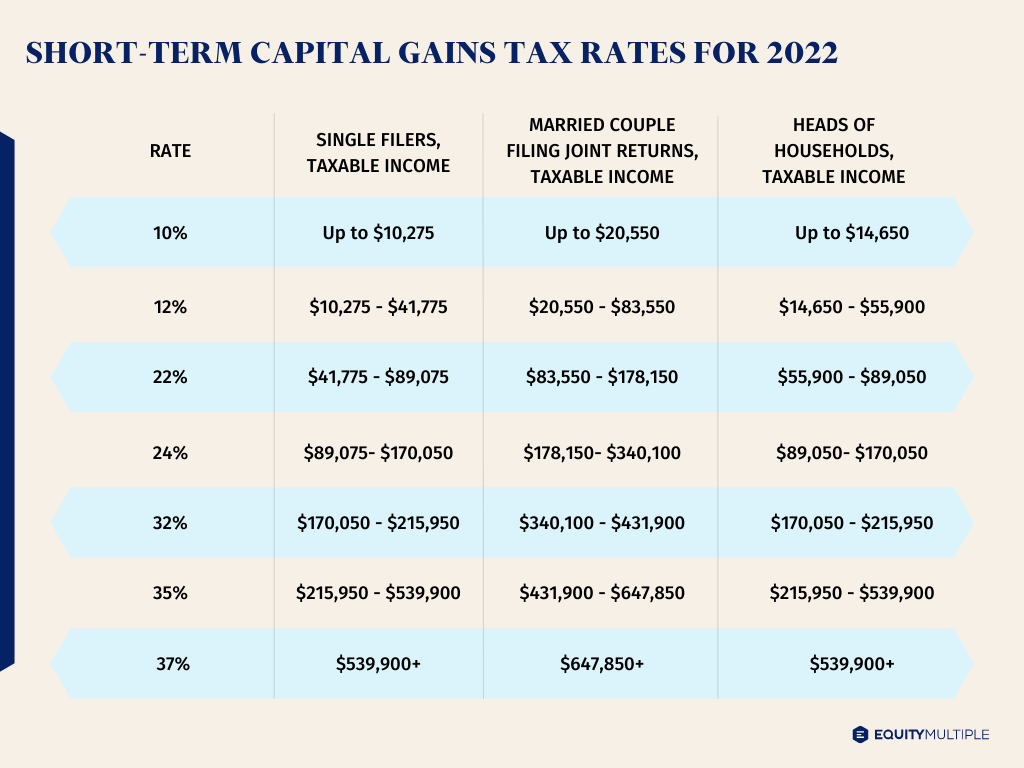
If you own a house for one year or less before selling it, any profit is considered a short-term capital gain. These gains are taxed at your ordinary income tax rate, which can be as high as 37% depending on your total income in 2026. This is common for "house flippers" who buy, renovate, and sell within a tight window.
Conversely, if you own the property for more than one year, the profit is a long-term capital gain. Long-term rates are significantly lower than ordinary income rates, typically 0%, 15%, or 20%, depending on your taxable income level. For most middle-income earners, the 15% rate is the standard.
Why Real Estate is Treated Differently
Unlike stocks or bonds, real estate is often a primary necessity. The IRS recognizes this through Section 121, which aims to promote homeownership stability by allowing people to move between primary residences without being penalized by heavy taxation on their accumulated equity.
The Section 121 Exclusion: Your Primary Shield
To avoid paying taxes on the sale of your house, you must meet the "Eligibility Test." This is not an all-or-nothing requirement; there are nuances that can allow for partial exclusions. In 2026, the criteria remain centered on how you used the property during the five years leading up to the sale.
The Ownership and Use Tests
To qualify for the full $250,000 (single) or $500,000 (married) exclusion, you must satisfy two primary conditions:
- Ownership Test: You must have owned the home for at least two years out of the five years ending on the date of the sale.
- Use Test: You must have lived in the home as your main residence for at least two years (730 days) out of that same five-year period.
The two years do not need to be consecutive. You could live in the house for one year, rent it out for two, and then move back in for another year before selling. As long as you hit the 24-month mark within a 60-month window, you satisfy the requirement.
The "Once Every Two Years" Rule
You can generally only claim the Section 121 exclusion once every two years. If you sold another home and excluded the gain within the 24 months prior to your current sale, you may be ineligible for the exclusion on the new sale, even if you meet the ownership and use tests. This prevents individuals from turning home-selling into a tax-free high-frequency business.
Calculating Your Taxable Gain: The Role of Adjusted Basis
Many homeowners incorrectly assume that "profit" is simply the sale price minus the original purchase price. For tax purposes, the IRS uses the Adjusted Basis, which can significantly reduce your taxable gain.
Determining the Cost Basis
The starting point is the price you paid for the home. However, you can add "settlement fees" or closing costs incurred during the purchase, such as title insurance, legal fees, and recording fees. You cannot include costs related to obtaining a mortgage, such as points or credit report fees.
Capital Improvements vs. Repairs
This is the most critical area for tax planning. A capital improvement adds value to your home, prolongs its useful life, or adapts it to new uses. These costs are added to your basis, which lowers your taxable profit. A repair, however, merely maintains the home in good condition and cannot be added to the basis.
| Category | Example (Adds to Basis) | Non-Example (Maintenance/Repair) |
|---|---|---|
| Additions | Building a new deck or garage | Power washing the siding |
| Systems | Installing a new HVAC or security system | Fixing a leak in the AC unit |
| Exterior | Replacing the entire roof or all windows | Replacing a few broken shingles |
| Interior | Full kitchen remodel or new flooring | Painting a bedroom or fixing a door |
| Landscaping | Installing a sprinkler system or new fence | Mowing the lawn or pruning trees |
By keeping meticulous records of every major renovation, you can increase your adjusted basis. If you bought a house for $400,000 and spent $100,000 on a legal addition, your basis is now $500,000. If you sell it for $800,000, your gain is $300,000 rather than $400,000. If you are a married couple, that $300,000 gain is entirely covered by the $500,000 exclusion.
Exceptions and Partial Exclusions
Life is unpredictable, and the IRS provides "safe harbors" for people who are forced to sell their primary residence before hitting the two-year mark. If you sell due to a change in employment, health issues, or "unforeseen circumstances," you may qualify for a partial exclusion.
Job Relocation
If your new place of work is at least 50 miles farther from your home than your old workplace was, you can often claim a prorated exclusion. For example, if you lived in the house for only one year (50% of the required time) before moving for work, you could potentially exclude 50% of the maximum amount ($125,000 for single filers).
Health and Unforeseen Circumstances
This applies if the sale is primarily motivated by a doctor's recommendation for a change of residence to treat a specific medical condition or to provide care for a family member. Unforeseen circumstances include events like divorce, multiple births from a single pregnancy, or the destruction of the home in a natural disaster.
Military Service Members
Active-duty members of the Uniformed Services, Foreign Service, or intelligence community have a special advantage. They can choose to "suspend" the five-year test period for up to 10 years while on qualified official extended duty. This allows service members to maintain the "primary residence" status for tax purposes even if they are stationed elsewhere for a decade.
When the House is Not a Primary Residence
The tax-free benefits of Section 121 do not apply to investment properties or second homes (vacation homes). If you sell a property that was not your main residence, you will likely owe capital gains tax on the entire profit.
Investment Property and Depreciation Recapture
If you rented out a house, you likely claimed depreciation deductions on your taxes over the years. When you sell, the IRS requires you to "recapture" that depreciation. This portion of the gain is taxed at a flat rate of 25%, regardless of your other long-term capital gains rates. This is a common trap for investors who focus only on the appreciation of the property and forget about the tax liability created by previous deductions.
Second Homes
A vacation home is considered a personal-use asset. While you cannot deduct losses on the sale of a second home, you must pay capital gains tax on the profits. Some homeowners try to convert a second home into a primary residence by moving into it for two years before selling. While this is legal, the Housing Assistance Tax Act of 2008 introduced rules that limit the exclusion based on "non-qualified use" (the time the property was held as a second home or rental before it became a primary residence).
The Net Investment Income Tax (NIIT)
For high-income earners in 2026, there is an additional tax to consider: the Net Investment Income Tax (NIIT). This is a 3.8% tax that applies to the lesser of your net investment income or the amount by which your modified adjusted gross income (MAGI) exceeds certain thresholds ($200,000 for individuals, $250,000 for married filing jointly).
If your gain on a home sale exceeds the $250,000/$500,000 exclusion, the excess gain is considered investment income. This could trigger the 3.8% NIIT on top of the 15% or 20% capital gains tax, making the effective federal rate as high as 23.8%.
Reporting the Sale to the IRS
When you close the sale of a house, the title company or escrow agent will typically issue a Form 1099-S (Proceeds From Real Estate Transactions) if the gain is not clearly excludable. Even if you don't receive a 1099-S, you are responsible for reporting the sale if the gain exceeds your exclusion limit.
- Schedule D (Form 1040): This is where you report your capital gains and losses for the year.
- Form 8949: This form provides the details of the transaction, including the date acquired, date sold, proceeds, and basis.
If you meet all the requirements for the Section 121 exclusion and your gain is below the limit, you generally do not need to report the sale on your tax return at all, unless you received a 1099-S.
Frequently Asked Questions
Do I have to pay taxes on a house I inherited?
When you inherit a house, you receive a "step-up in basis." This means your basis in the property is the fair market value of the home at the time of the previous owner's death, rather than what they originally paid for it. If you sell the house shortly after inheriting it, there is often little to no capital gain to tax.
Can I deduct a loss on the sale of my house?
No. While the IRS taxes the gains on a personal residence, it does not allow you to deduct a loss. Only losses on investment or business properties are tax-deductible. If you sell your primary home for less than your adjusted basis, the loss is considered a personal expense.
What happens if I use part of my home for business?
If you have a home office that you used exclusively for business, the rules get more complex. You cannot exclude the portion of the gain attributable to the business use if that office was in a separate structure. Furthermore, any depreciation you claimed for the home office after May 6, 1997, must be recaptured and taxed at the 25% rate.
Does the exclusion cover state taxes?
Most states follow federal guidelines and allow the same $250,000/$500,000 exclusion. However, some states (like Pennsylvania or California) may have different rules or specific filing requirements. Always check your local state department of revenue guidelines for residential property sales.
Is the exclusion adjusted for inflation?
In 2026, the $250,000 and $500,000 limits remain static as they are not currently indexed for inflation in the federal tax code. This means that as home prices rise, more homeowners may find their gains exceeding the exclusion limits, particularly in high-cost-of-living areas.
Practical Recommendations for Homeowners
To ensure you are prepared for the tax implications of selling your house, take the following steps:
- Centralize Your Records: Keep a digital folder of your original closing disclosure, title insurance receipts, and—most importantly—invoices for capital improvements.
- Monitor Your Timeline: If you are approaching the two-year mark of residency, avoid closing the sale even a few days early. The IRS is strict about the 730-day requirement.
- Evaluate the "Basis" Before Listing: Work with a tax professional to calculate your estimated adjusted basis before you set your listing price. This helps you understand exactly what your "net" walk-away amount will be.
- Consider a 1031 Exchange for Investment Property: If you are selling an investment house rather than a primary residence, look into a Section 1031 Exchange, which allows you to defer capital gains tax by reinvesting the proceeds into a "like-kind" property.