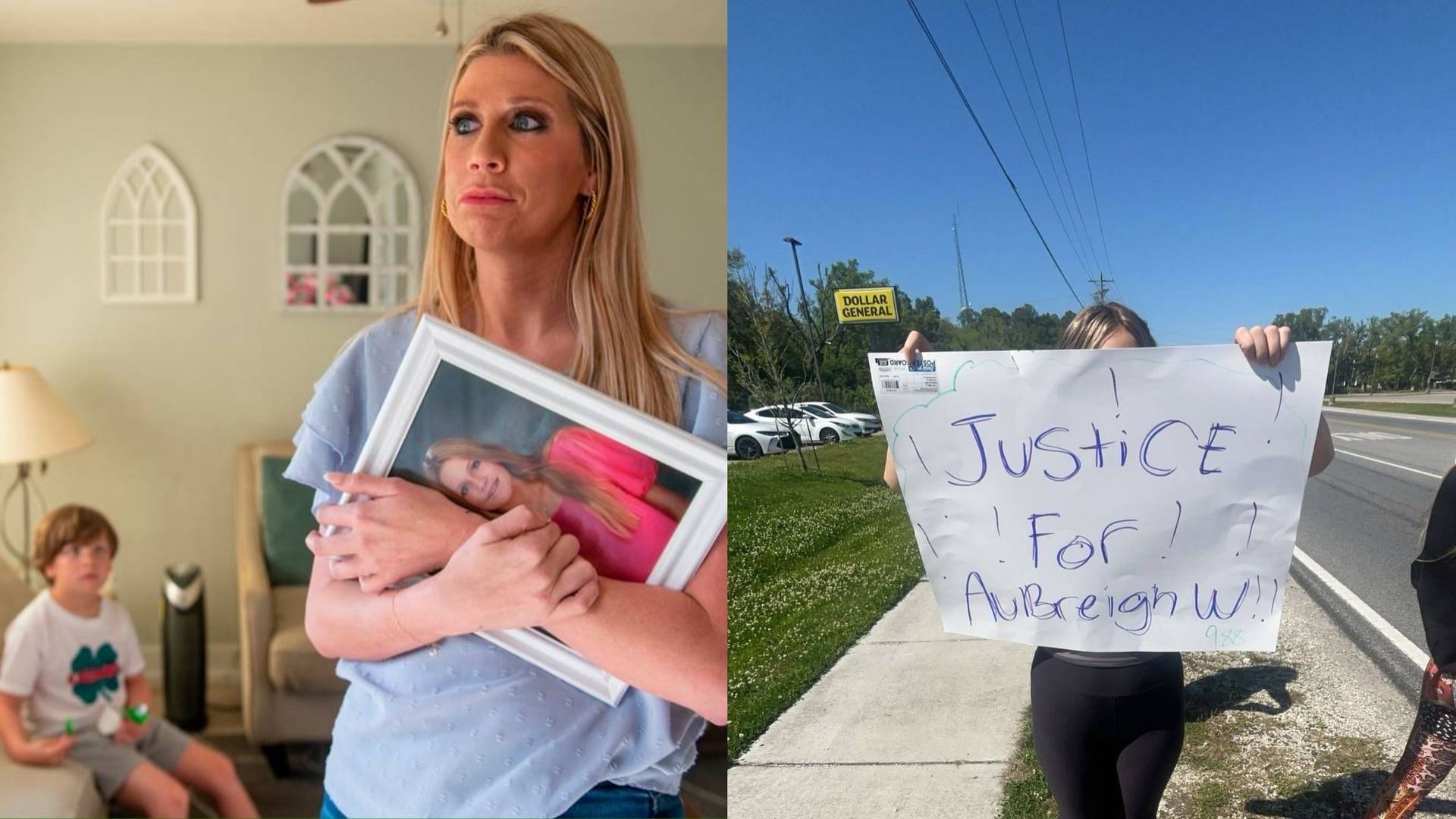
The Aubreigh Wyatt case centers on the legal, constitutional, and social aftermath following the suicide of 13-year-old Aubreigh Wyatt in Ocean Springs, Mississippi, in September 2023. The tragedy led to a high-profile civil suit in Jackson County Chancery Court filed against her mother, Heather Wyatt, by parents of teenagers accused of bullying Aubreigh. The legal proceedings highlighted critical issues regarding social media harassment, public defamation, and First Amendment protections.
Disclaimer: This article provides objective analysis of public court filings, legal precedents, and documented media reporting. It does not constitute formal legal or psychological advice. Families navigating cyberbullying or mental health crises should consult licensed professionals or legal counsel.
Chronology of Events: From Local Tragedy to Viral Legal Battle
In September 2023, eighth-grade student Aubreigh Wyatt died by suicide in Ocean Springs, Mississippi. In the months following her death, her mother, Heather Wyatt, turned to digital platforms—most prominently TikTok and Instagram—to process her grief, share memories of Aubreigh, and raise public awareness about the devastating impacts of middle school cyberbullying and peer mental health challenges.
Through these social media posts, the narrative quickly gained global traction under hashtags such as #JusticeForAubreigh. Millions of viewers followed Heather Wyatt’s posts, which detailed allegations of systemic online harassment, verbal abuse, and bullying that Aubreigh suffered prior to her death. Although Heather Wyatt’s early posts largely refrained from explicitly naming individual minor children, internet users began identifying local teenagers alleged to be involved.
By mid-2024, the public discourse escalated from online advocacy to intense real-world conflict. Family members of the accused teens reported receiving widespread online threats, harassment, doxxing, and local business interference. This backlash prompted a formal legal response in Jackson County Chancery Court, converting a tragic loss into one of the most widely followed civil legal disputes surrounding social media liability and speech rights.
The Civil Defamation Lawsuit: Arguments and Allegations
In July 2024, the parents of four minor children named in public allegations filed a civil suit against Heather Wyatt in the Jackson County Chancery Court. The suit alleged that Heather Wyatt’s social media campaign crossed the boundary from protected personal grief and general anti-bullying advocacy into actionable tortious conduct.
Key Legal Issues Raised in the Litigation:
- Plaintiffs (Parents of Accused Minors):
- Defamation per se & Slander
- Intentional Infliction of Emotional Distress (IIED)
- Tortious Interference with Business / Public Privacy
- Request for Emergency Injunction (Gag Order)
- Defendant (Heather Wyatt):
- First Amendment Protections (Free Speech / Public Concern)
- Absence of Explicit Naming / Malice
- Truthful Expression of Personal Experience & Grief
The Plaintiffs' Legal Claims
The plaintiffs argued that Heather Wyatt explicitly or implicitly encouraged her social media followers to target, harass, and dox their minor children. Key assertions in the complaint included:
- Defamation and Libel: Allegations that false statements regarding the minors' direct responsibility for Aubreigh’s death caused reputational harm.
- Intentional Infliction of Emotional Distress (IIED): Arguments that the continuous online campaigns subjected minor children to severe mental anguish, death threats, and safety concerns.
- Tortious Interference: Claims that the viral campaign disrupted the plaintiffs' personal employment, local business operations, and minor children's education.
- Injunction Demands: An immediate request for court intervention to halt all related online postings and force the removal of existing content.
The Defense Position
Defense counsel for Heather Wyatt countered that her public communications fell squarely under protected speech guaranteed by the First Amendment. Primary arguments raised by the defense included:
- Absence of Direct Identification: Demonstrating that initial posts did not explicitly publish the names or private addresses of the minor children, and that independent third parties on the internet conducted their own doxxing.
- Protection of Opinion and Advocacy: Asserting that raising awareness about cyberbullying and sharing personal experience with suicide loss constitutes a matter of significant public interest.
- Prohibition on Prior Restrain: Arguing that sweeping injunctions against future speech constitute unconstitutional censorship prior to a final decision on the merits.
Chancery Court Rulings and Constitutional Questions
The legal case escalated significantly when Chancery Court Judge Nathan Farmer issued a temporary restraining order (TRO) requiring Heather Wyatt to temporarily suspend her social media accounts, including her TikTok profile containing over one million followers.
The Temporary Injunction and Public Backlash
The court’s decision to mandate a temporary shutdown of Heather Wyatt’s accounts aimed to preserve status quo and mitigate further online threats directed toward minor children. However, the order immediately drew national legal debate regarding the doctrine of prior restraint.
Prior restraint refers to a court order or administrative directive that prohibits speech before it takes place. Under long-standing constitutional jurisprudence established by the Supreme Court of the United States, judicial orders that censor future speech carry a heavy presumption against their constitutionality.
Prior Restraint Standard in Civil Litigation:
- High Burden of Proof: Plaintiff must prove speech will cause immediate, irreparable harm.
- Narrow Tailoring: Injunctions must be narrowly targeted to specific defamatory content, not complete platform bans.
- Constitutional Balancing: First Amendment rights vs. protection of minor safety and privacy.
Modification of the Gag Order
Following legal motions filed on behalf of Heather Wyatt and widespread criticism from constitutional scholars, the strict social media prohibition underwent judicial review. The court subsequently clarified and modified the terms, moving away from a total platform blackout toward specific restrictions against posting material that names, identifies, or targets the involved minor children directly.
This procedural evolution highlighted the legal difficulties state courts face when attempting to enforce traditional civil remedies within the context of viral social media algorithms and decentralized internet communities.
Key Dimensions of the Aubreigh Wyatt Case
To understand the legal mechanics of this case, it is helpful to break down the primary claims, governing laws, and court considerations.
| Legal Dimension | Plaintiff Position | Defendant Position | Legal Benchmark / Statute |
|---|---|---|---|
| Defamation & Slander | Claims online posts falsely implicated minors in a crime or act leading to death. | Content constituted protected personal experience, grief expression, and public opinion. | Mississippi Code § 95-1-1 (Action for Slander/Libel); New York Times Co. v. Sullivan standards. |
| First Amendment Rights | Argues speech inciting targeted harassment and severe emotional distress is not protected. | Asserts absolute right to speak publicly on cyberbullying and loss without prior restraint. | U.S. Constitution, Amend. I; Doctrine against prior restraint (Near v. Minnesota). |
| Injunctive Relief (Gag Order) | Sought total platform shutdown to protect minor children from ongoing doxxing. | Opposed total shutdown as overbroad censorship; advocated narrow restriction if any. | Mississippi Rules of Civil Procedure (Rule 65) regarding Preliminary Injunctions. |
| Parental Liability | Asserted parent failed to mitigate viral harm caused by her platform reach. | Denied liability for independent actions of millions of third-party internet users. | Common law tort principles regarding vicarious liability and direct involvement. |
| Minor Privacy | Claims minor children require court protection from public harassment campaigns. | Maintained focus was systemic anti-bullying awareness, not targeting individuals. | Uniform Chancery Court Rules protecting minor identities in judicial filings. |
Broader Implications for Legal Precedent, Schools, and Social Media
The Aubreigh Wyatt case reflects a broader national trend in which tragic events involving youth cyberbullying move from school disciplinary offices directly into state civil courts. The legal and social consequences extend across several key areas:
1. Parental Civil Liability for Minor Behavior
A persistent legal question raised by cyberbullying disputes is the extent to which parents can be held civilly or criminally liable for their children’s digital behavior. While many states have enacted parental responsibility statutes holding parents financially liable for intentional property damage or torts committed by minor children, applying these statutes to digital harassment remains complex.
Courts evaluating parental liability look for specific factors:
- Direct knowledge of the minor's ongoing harassment or cyberbullying.
- Failure to exercise reasonable control over access to electronic devices after notice.
- Active encouragement or participation in the digital harassment campaign.
2. Social Media Algorithms and Decentralized Vigilantism
A central challenge in the Wyatt litigation is the concept of "crowdsourced harassment." When an individual post goes viral, social media algorithms amplify the content to millions of users globally. Even when an original poster does not explicitly call for harassment or publish private personal details, internet sleuths frequently organize independently to dox targets.
Legal systems struggle to assign direct tort liability to an original poster for the illegal actions of third-party platform users, unless explicit incitement can be proven under legal standards established in cases such as Brandenburg v. Ohio.
3. School District Responsibilities and Anti-Bullying Policies
Under Mississippi statutory frameworks—specifically Mississippi Code § 37-11-67 (the Mississippi Bullying Prevention Act)—public school districts are legally required to maintain anti-bullying policies, report documented incidents, and provide intervention procedures.
However, when bullying occurs off-campus through personal cell phones and private social media applications, school authorities face legal jurisdictional limits. Federal civil rights frameworks, including Title VI and Title IX, hold institutions accountable only when harassment creates a hostile educational environment on school grounds or within school-sponsored programs.
Practical Protocols for Addressing Severe Cyberbullying
For parents, educators, and community members facing severe peer harassment, the legal lessons drawn from cases like Aubreigh Wyatt's underscore the critical importance of early, structured, and legally actionable documentation.
Step-by-Step Response Protocol for Severe Cyberbullying:
- Preserve Evidentiary Metadata (Screenshots, URLs, Timestamps)
- Submit Formal Written Notice to School Administrators
- Report Harassment directly to Digital Platform Safety Teams
- File Police Reports for Threatening or Explicit Content
- Seek Legal Counsel regarding Restraining Orders or Civil Remedies
1. Systematic Evidence Preservation
Digital content can be deleted, modified, or set to private within seconds. To build a valid evidentiary record for law enforcement, school administrative hearings, or civil proceedings:
- Capture full-screen screenshots that display the date, time, account handles, and exact text or images.
- Record direct web address URLs for specific posts, threads, or user profiles.
- Export complete digital chat logs and audio/video files in original format rather than screen-recording secondary devices.
- Maintain a chronological log documenting the impact on the victim's health, attendance, and educational performance.
2. Formally Engaging School Leadership
When submitting complaints to middle or high school administrators, generic verbal notifications are rarely sufficient to trigger formal administrative investigations.
- Submit complaints in writing directly to the principal, school district superintendent, and Title IX/Civil Rights compliance coordinator.
- Explicitly reference the state anti-bullying statute and school district code of conduct.
- Request a written safety plan outlining specific measures to separate the targeted student from alleged perpetrators during school hours.
3. Utilizing Legal Protective Measures
If bullying includes explicit death threats, extortion, stalking, or non-consensual distribution of intimate images:
- Contact local law enforcement immediately to file a formal incident report.
- Consult family law or civil litigation attorneys regarding Civil Protection Orders or Harassment Restraining Orders against the perpetrators or their legal guardians.
- Avoid engaging in public social media exchanges or publishing unverified personal information online, which can complicate subsequent civil litigation or criminal charges.
Frequently Asked Questions
What is the central legal dispute in the Aubreigh Wyatt case?
The central legal dispute involves a civil lawsuit filed in Mississippi by the parents of four minor teenagers against Heather Wyatt, mother of the late Aubreigh Wyatt. The plaintiffs allege defamation, intentional infliction of emotional distress, and tortious interference resulting from social media posts about cyberbullying. Heather Wyatt maintains that her speech is protected under the First Amendment as personal grief and anti-bullying advocacy.
Why did a judge issue a gag order shutting down Heather Wyatt's social media accounts?
In July 2024, Chancery Court Judge Nathan Farmer issued a temporary order requiring the suspension of Heather Wyatt’s primary social media profiles. The temporary order was intended to stop immediate online harassment, threats, and doxxing directed at the minor children named by internet users. The order was subsequently modified following constitutional challenges regarding prior restraint.
How does the First Amendment apply to cyberbullying cases on social media?
The First Amendment protects a wide range of public speech, including grief expression, personal opinions, and anti-bullying advocacy. However, speech that crosses into direct defamation, true threats, incitement to imminent lawless action, or actionable harassment loses constitutional protection. Courts must carefully balance free speech rights against the imperative to prevent harm to private individuals and minor children.
Can parents be held legally responsible if their child bullies someone online?
Yes, under certain legal conditions. Parents can face civil liability if plaintiffs prove negligence—such as demonstrating the parent had direct knowledge of their child's severe harassment, failed to exercise reasonable control over electronic devices, or actively participated in or encouraged the tortious behavior. State laws vary significantly regarding parental financial liability limits for minor torts.
What state laws govern cyberbullying in Mississippi?
Cyberbullying in Mississippi is addressed through Mississippi Code § 37-11-67 (the Mississippi Bullying Prevention Act), which mandates that public school districts adopt anti-bullying policies, complaint procedures, and disciplinary actions. Severe online harassment involving direct threats, stalking, or extortion may also violate state criminal statutes under Mississippi Code § 97-29-45 regarding harassing electronic communications.
Recommended Actions for Digital Safety and Legal Compliance
Navigating the intersection of youth social media use, peer conflict, and civil liability requires proactive and deliberate strategies:
- Implement Digital Supervision for Minors: Parents should maintain direct visibility into social media applications utilized by young teenagers, utilizing built-in platform safety settings, monitoring tools, and established rules regarding online communication.
- Prioritize Evidence Over Public Posting: Families experiencing severe cyberbullying should focus efforts on securing formal evidence and seeking local law enforcement or judicial protection before escalating matters on public social media channels.
- Engage Professional Support Services: In cases involving severe peer harassment or grief, immediately engage licensed mental health professionals. For crisis situations, contact national support helplines such as the Suicide & Crisis Lifeline by calling or texting 988.