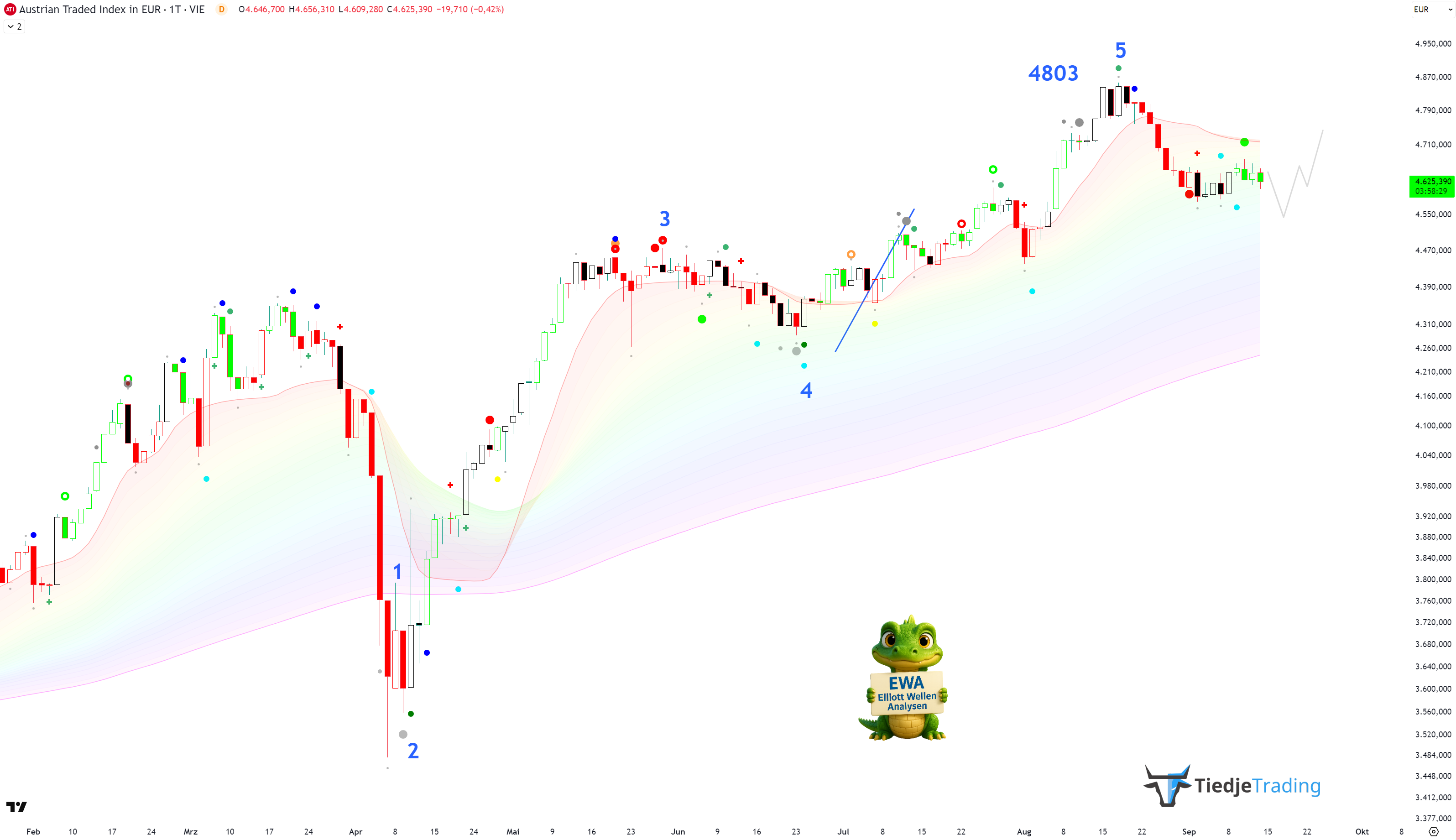
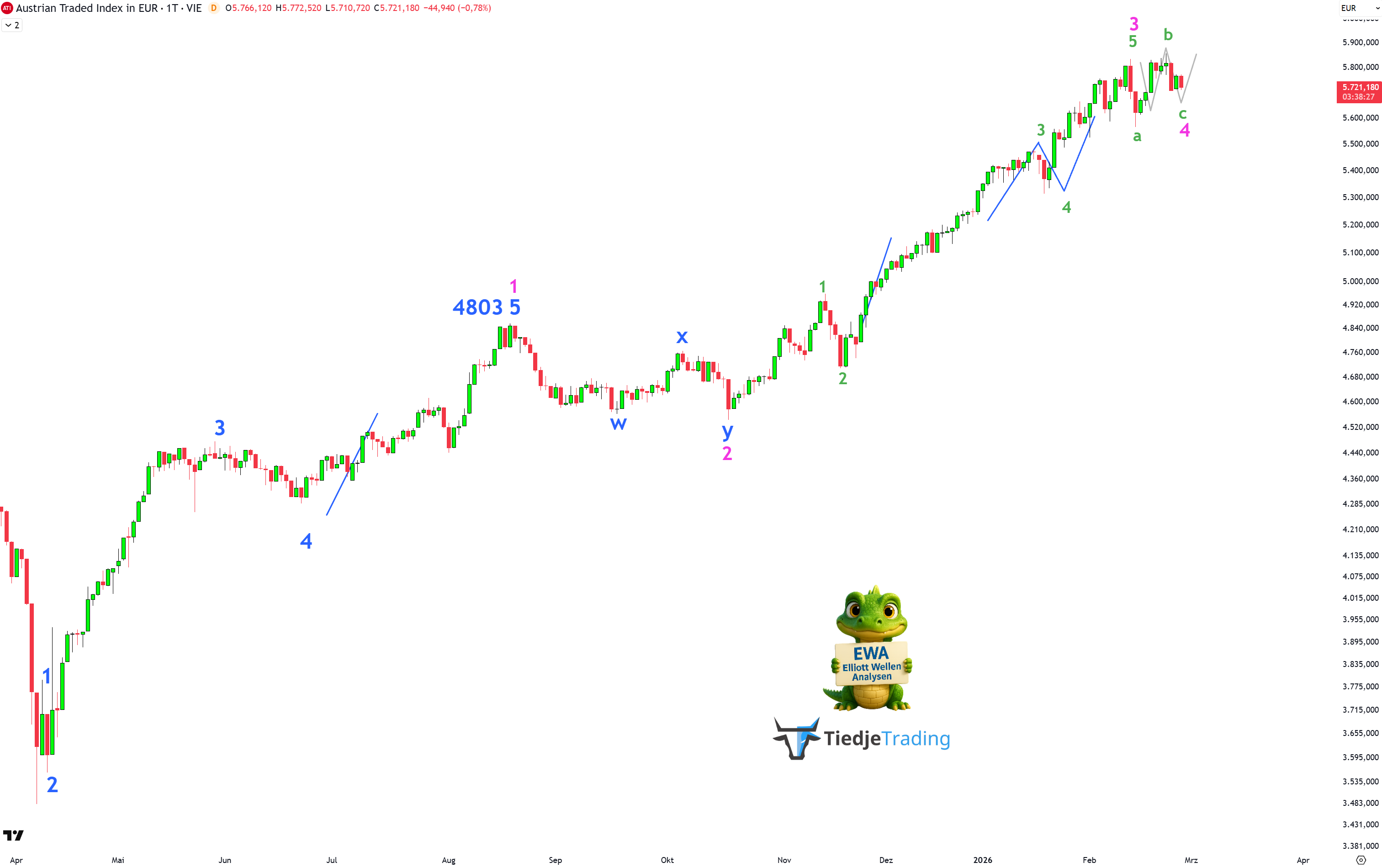
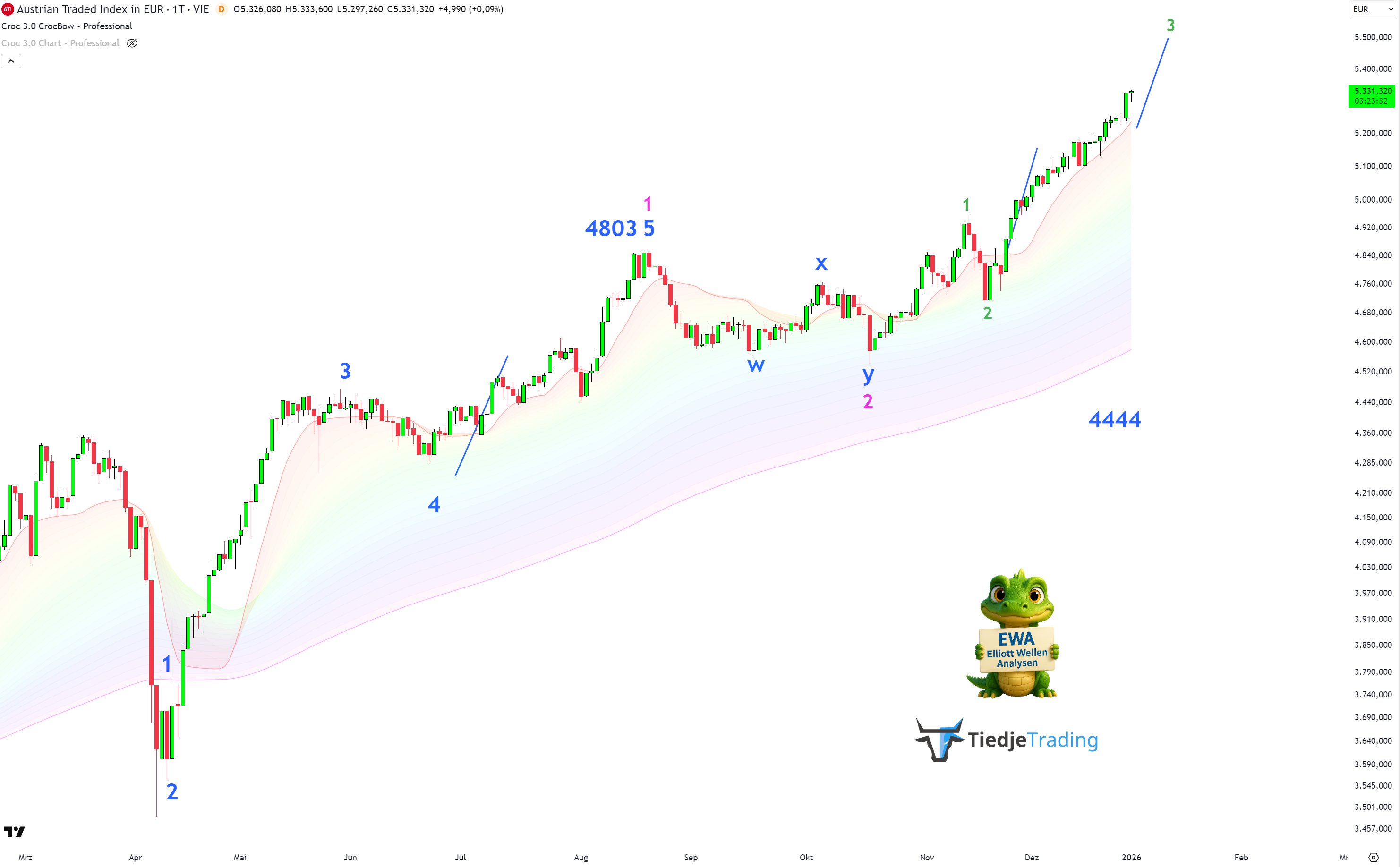
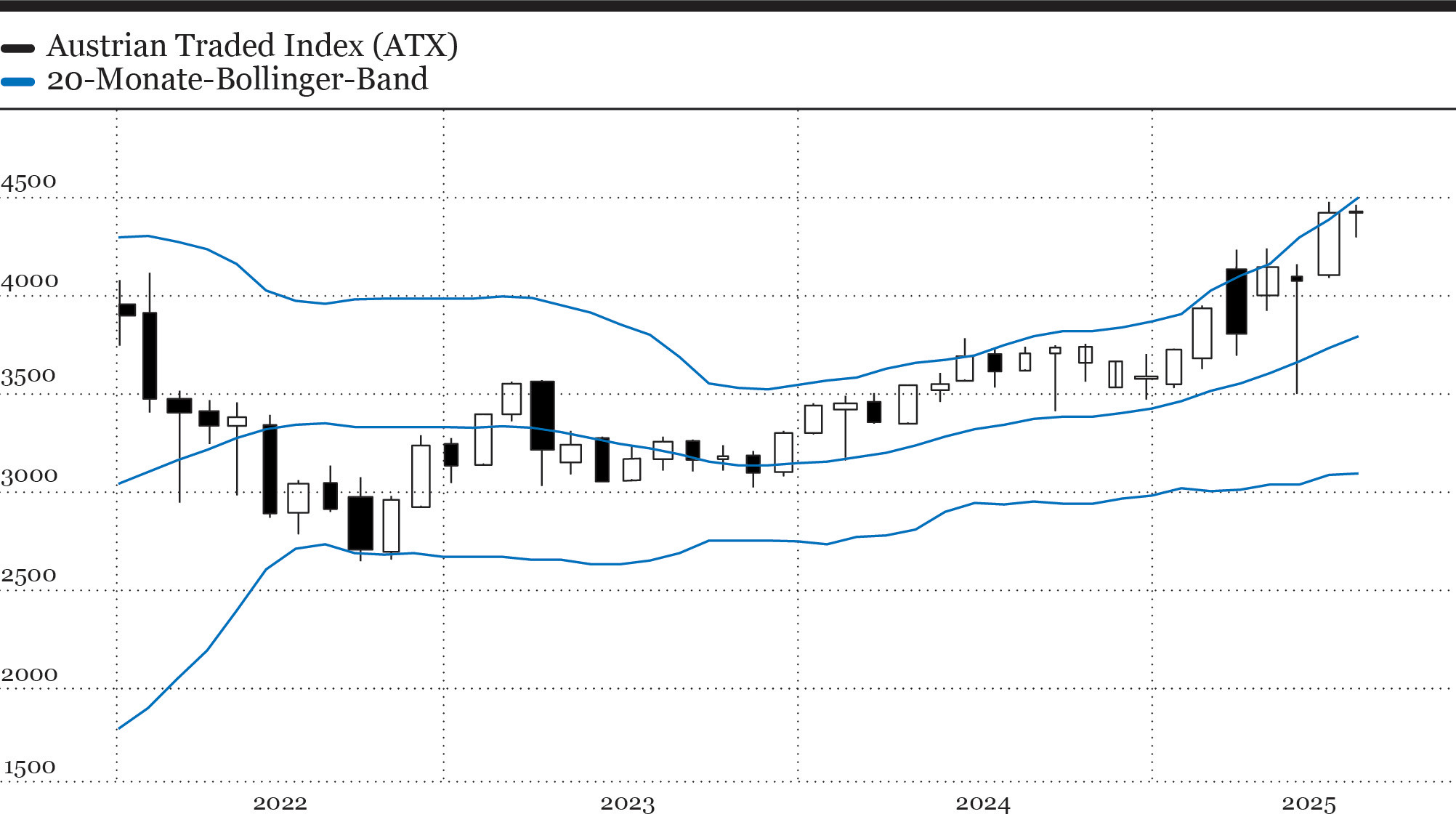
The ATX (Austrian Traded Index) is the primary benchmark stock market index of Austria, tracking the real-time price performance of the 20 largest and most liquid stocks listed on the Prime Market of the Wiener Börse (Vienna Stock Exchange). Weighted by free-float market capitalization with a 20% single-stock weighting cap, it serves as the key barometer for the Austrian equity market.
What Is the ATX Index? Definition and Market Role
The ATX—officially known as the Austrian Traded Index—represents the core blue-chip equity segment of the Austrian financial system. Launched on January 2, 1991, by the Wiener Börse, the index was set to an initial base value of 1,000 index points. It measures the aggregate equity price movements of Austria's top corporate issuers, offering financial institutions, asset managers, and individual investors an objective gauge of country-specific equity returns.
Unlike broader indices that encompass hundreds of small- and mid-cap companies, the ATX focuses exclusively on the top tier of liquidity and size. The component stocks are drawn from the Prime Market, the highest listing segment of the Vienna Stock Exchange, which imposes strict transparency and financial reporting standards beyond statutory minimums, including mandatory IFRS financial reporting and bilingual corporate disclosures.
Historically, the ATX serves a dual role in European finance. Locally, it acts as the primary benchmark for domestic pension funds, mutual funds, and retail investment products. Internationally, because many major Austrian corporations maintain substantial operations, banking networks, and manufacturing footprints across Central, Eastern, and Southeastern Europe (CEE/SEE), the ATX is widely analyzed as an economic proxy for trade and financial activity across the broader Danube and CEE regions.
Mechanics of Calculation: Formula, Free Float, and Weighting Rules
The ATX is calculated continuously in real time during standard trading hours on the Xetra Vienna trading platform. To maintain neutrality and prevent market distortions, the index relies on a systematic, rules-based methodology published and maintained by the Wiener Börse Index Committee.
Free-Float Capitalization Weighting
The ATX uses a free-float market capitalization weighting methodology. Rather than counting all outstanding shares issued by a corporation, the index accounts only for shares available for public trading (the free float).
Strategic shareholdings—such as equity stakes held by governments, founding families, cross-corporate holdings, or lock-up blocks exceeding 5% of total share capital—are excluded from the index weight calculation. The free-float factor for each constituent stock is expressed as a percentage, rounded to standard bands established by the exchange (e.g., 10%, 20%, 30%, up to 100%).
$$M_{cap, i} = P_i \times N_i \times FF_i$$
Where:
- $P_i$ is the current trading price of constituent $i$.
- $N_i$ is the total number of issued shares for constituent $i$.
- $FF_i$ is the official free-float factor assigned to constituent $i$.
The Weight Capping Limit (20% Threshold)
To prevent a single massive corporation from exerting disproportionate control over the index's movement, the ATX implements a strict 20% capping rule.
During regular index review and adjustment procedures, no individual company is permitted to hold a weighting higher than 20% of the total index market capitalization. If a company's free-float market cap exceeds 20% at the review date, a capping factor ($Cap_i$) is calculated to artificially scale down its effective share count in the index equation. Between review dates, market price fluctuations may temporarily push a constituent's weight slightly above 20%, but the balance is restored during the subsequent rebalancing cycle.
Laspeyres Index Formula Mechanics
The ATX is calculated using a modified Laspeyres index formula, which measures the relative price movement of a defined basket of securities compared to a baseline period, adjusted for capital changes:
$$ATX_t = \frac{\sum_{i=1}^{20} (P_{i,t} \times N_{i,t} \times FF_{i,t} \times Cap_{i,t})}{D_t}$$
Where:
- $ATX_t$ is the index level at time $t$.
- $P_{i,t}$ is the current price of stock $i$ at time $t$.
- $N_{i,t}$ is the number of shares of stock $i$ at time $t$.
- $FF_{i,t}$ is the free-float factor of stock $i$.
- $Cap_{i,t}$ is the capping factor applied to stock $i$.
- $D_t$ is the index divisor at time $t$.
The divisor ($D_t$) plays a critical operational role. It ensures that non-market corporate events—such as capital increases, rights issues, spin-offs, stock splits, or adjustments to constituent listings—do not cause artificial jumps or drops in the index value. When a capital structure change occurs, the exchange recalibrates the divisor so that the index level remains seamless immediately before and after the corporate action.
ATX Price Index vs. ATX Total Return (ATX TR)
The standard, universally quoted ATX is a price index (capital price index). In a price index, cash dividend payments made by constituent companies are excluded from the index calculation. On the ex-dividend date of a component stock, the price drop caused by the cash payout naturally reduces the individual stock's price, which in turn creates a slight downward drag on the standard ATX index level.
To provide a complete picture of total investment yields, the Wiener Börse simultaneously calculates and publishes the ATX Total Return (ATX TR).
- ATX Index Family
- ATX (Price Index)
- Reflects capital growth
- Drops on ex-dividend dates
- Standard benchmark price
- ATX TR (Total Return)
- Reinvests net dividends
- Eliminates dividend drag
- Measures true performance
- ATX (Price Index)
- Dividend Reinvestment: The ATX TR assumes that all cash dividends paid out by constituent firms are immediately reinvested back into the index portfolio according to component weights on the ex-dividend date.
- Performance Measurement: Because Austrian equities historically offer robust dividend yields—often averaging between 3% and 5% annually across sector leaders—the ATX TR shows significantly higher cumulative long-term values than the standard price-only ATX.
- Institutional Relevance: Institutional asset managers comparing active portfolio performance typically benchmark against the ATX TR to account for the total return generated by both share price appreciation and distribution yields.
Disclaimer: Financial data and index structures described herein reflect established rules and methodologies. This analysis is provided strictly for educational and informational purposes and does not constitute financial, legal, or investment advice.
Composition Rules: Selection Criteria and Review Schedule
The membership of the ATX is not static. The Wiener Börse Index Committee maintains rigorous rules governing entry, exit, and weight recalculation to ensure the index accurately reflects Austria's corporate landscape.
Eligibility and Quantitative Selection Metrics
To qualify for inclusion in the ATX, a security must first be listed on the Prime Market segment of the Vienna Stock Exchange. Stocks are evaluated using a strict quantitative ranking based on two criteria weighted equally:
- Free-Float Stock Turnover: The total trading volume (liquidity) of the security on the Xetra Vienna execution platform over the preceding 12 months.
- Free-Float Market Capitalization: The total market value of the company's freely tradable shares.
The exchange maintains an official watchlist ranking all Prime Market securities according to these parameters. The top 20 securities on the combined liquidity and market cap ranking earn places in the index.
Regular Review Cycles and Buffer Rules
Index reviews are conducted on a scheduled basis:
- Composition Review (Semi-Annual): The actual list of 20 constituent companies is formally reviewed twice a year, in March and September. Any changes to index composition take effect on the trading day following the third Friday of the review month.
- Parameter & Free-Float Review (Quarterly): Free-float factors, total share counts, and individual weight caps (the 20% limit) are updated quarterly in March, June, September, and December.
To prevent high turnover and unnecessary transaction expenses for index-tracking funds, the exchange enforces buffer rules (also known as inclusion and exclusion thresholds):
- Automatic Inclusion: A non-constituent stock ranked 16th or higher on the watchlist automatically replaces the lowest-ranked existing constituent.
- Automatic Exclusion: An existing constituent that drops to rank 25 or lower on the watchlist is automatically removed and replaced by the highest-ranked non-constituent.
Corporate Actions and Extraordinary Adjustments
When extraordinary corporate events occur between regular review cycles—such as mergers, acquisitions, insolvencies, or de-listings—the Index Committee follows fast-exit procedures. If an ATX constituent is delisted or acquired, it is removed immediately, and the highest-eligible reserve stock from the latest official watchlist is promoted into the index to restore the count to 20 stocks.
Sector Composition and Structural Characteristics
The ATX possesses unique structural characteristics that distinguish it from broader European benchmarks like the Euro Stoxx 50 or Germany's DAX 40. Due to the historical layout of the Austrian corporate sector, the index exhibits strong concentration in cyclical and financial industries.
- ATX Typical Sector Distribution
- Financial Services & Banking (~35-45%)
- Energy, Oil & Utilities (~25-30%)
- Basic Materials & Industrial (~15-20%)
- Real Estate & Construction (~5-10%)
- Consumer & Technology (~2-5%)
Dominant Industry Sectors
- Financial Services: Banking institutions—most notably Erste Group Bank AG, BAWAG Group AG, and Raiffeisen Bank International AG (RBI)—typically represent the single largest sector weight in the index, frequently comprising 35% to 45% of total index value.
- Energy and Public Utilities: Integrated oil and gas provider OMV AG and electricity provider Verbund AG represent major weighting blocks, giving the index strong exposure to commodity prices and European energy infrastructure dynamics.
- Materials, Construction, and Industrials: Heavy industrial, brick production, and engineering firms—such as Voestalpine AG (steel), Wienerberger AG (building materials), and Andritz AG (plant engineering)—provide exposure to global industrial cycles and capital expenditure trends.
- Real Estate: Property investment and development companies like CA Immobilien Anlagen AG have historically held positions within the index, reflecting the regional commercial property landscape.
Structural Strengths and Sensitivities
- Value Orientation: Because tech companies make up a small portion of the Austrian market, the ATX exhibits a classic "value index" profile, offering lower valuation multiples (P/E and P/B ratios) and higher dividend yields than technology-heavy indices.
- CEE Economic Sensitivity: Major constituents generate substantial revenues in Central and Eastern European economies. Consequently, macro headwinds, currency fluctuations, or regulatory shifts in countries such as Hungary, Romania, the Czech Republic, or Poland often impact the ATX directly.
- Concentration Risk: With only 20 components, performance is tightly linked to its top five heavyweights. A significant move in Erste Group or OMV can influence the entire index, even with the 20% weight cap in place.
Summary of ATX Index Technical Specifications
The following table summarizes the key operational, structural, and technical rules governing the Austrian Traded Index:
| Parameter / Specification | Details & Rules |
|---|---|
| Official Name | Austrian Traded Index (ATX) |
| Index Operator / Calculation Agent | Wiener Börse AG (Vienna Stock Exchange) |
| Base Date & Base Value | January 2, 1991 = 1,000 Index Points |
| Number of Components | Exactly 20 constituent stocks |
| Eligible Universe | Prime Market equity segment of Wiener Börse |
| Weighting Methodology | Free-float market capitalization weighted |
| Single Stock Cap | 20% maximum weight threshold per constituent at review |
| Calculation Types | Price Index (Standard ATX) & Total Return (ATX TR) |
| Calculation Frequency | Real-time calculation during exchange trading hours |
| Composition Review | Semi-annual (March and September) |
| Parameter / Weight Review | Quarterly (March, June, September, December) |
| Selection Criteria | 50% Free-Float Market Cap + 50% Free-Float Turnover |
| Currency of Calculation | Euro (EUR) |
Financial Instruments and Investment Applications
Because an index is a financial calculation rather than a direct asset, market participants access the ATX through a range of derivative contracts and investment vehicles designed to track its performance.
- ATX Benchmark Index
- Exchange-Traded Funds (ETFs)
- Physical replication
- Low tracking error
- Passive retail access
- Index Futures & Options (Eurex)
- Institutional hedging
- Speculative exposure
- Cash-settled derivatives
- Structured Certificates
- Discount notes
- Bonus certificates
- Capital protection
- Exchange-Traded Funds (ETFs)
Index Derivatives and ETFs
- Exchange-Traded Funds (ETFs): Asset managers issue passive ETFs designed to replicate the ATX or ATX TR by purchasing the underlying 20 constituent shares according to their exact index weightings. These instruments allow institutional and retail investors to gain diversified exposure to Austrian equities through a single ticker.
- Index Futures and Options: Financial derivatives linked to the ATX are traded on international derivatives exchanges, such as Eurex. These contracts enable institutional investors to hedge existing Austrian stock portfolios against short-term market downturns or establish leveraged positions on market trends.
- Structured Products and Certificates: European retail banks issue structured financial products—such as bonus certificates, discount certificates, and capital-protected notes—linked directly to the performance of the ATX price index.
Risks and Analytical Considerations
Investors analyzing or trading the ATX must account for several specific operational factors:
- Liquidity Variances: While top components like Erste Group or OMV exhibit deep liquidity, smaller constituents near the bottom of the top 20 list have lower daily share trading volumes. Larger institutional trades in these stocks can cause temporary price slippage.
- FX Exposure to CEE Currencies: Although all ATX components report and trade in Euros (EUR), underlying corporate revenues are frequently earned in non-EUR currencies across Eastern Europe (such as the Hungarian Forint, Czech Koruna, or Polish Zloty). Foreign currency fluctuations against the Euro directly impact earnings across key financial and industrial constituents.
Frequently Asked Questions (FAQs)
What is the primary difference between the ATX and the ATX TR?
strategies depend on which version of the index is referenced. The standard ATX is a pure price index that reflects only stock price appreciation and excludes cash dividend payouts, causing natural dips on ex-dividend dates. The ATX TR (Total Return) assumes all corporate dividend payments are immediately reinvested into the index constituents, reflecting total investment performance.
How often are the stocks inside the ATX changed?
The constituent composition of the ATX is officially evaluated twice per year, in March and September. However, free-float factors, share counts, and individual stock weighting caps (the 20% limit) are rebalanced quarterly in March, June, September, and December. Extraordinary reviews can occur outside this schedule if a constituent undergoes a merger, acquisition, or de-listing.
Why is the single-stock weight capped at 20% in the ATX?
The 20% capping rule prevents single large issuers from dominating the index's performance. Without a cap, a massive price movement in one top market-cap stock could skew the entire index, reducing its effectiveness as a broad market benchmark.
What segment of the exchange do ATX stocks come from?
All ATX constituents must be listed on the Prime Market of the Wiener Börse. The Prime Market imposes enhanced transparency rules beyond general exchange listings, requiring companies to adhere to IFRS accounting standards, release quarterly financial reports, and publish mandatory corporate news in both German and English.
Does the ATX include small- and mid-cap Austrian companies?
No, the standard ATX strictly tracks the 20 largest and most liquid stock issues. Investors seeking exposure to small- and mid-cap Austrian equities typically monitor extended index families published by the exchange, such as the ATX Prime (which covers all equities listed in the Prime Market segment) or the ATX Five (which tracks only the top 5 blue-chip giants).
Summary and Practical Next Steps
Understanding the mechanics of the ATX is essential for evaluating Austrian equity valuations, managing portfolio risk, or allocating capital within European markets.
To conduct further analysis or monitor the ATX systematically:
- Track Real-Time Composition: Consult the official market data feeds provided by the Wiener Börse to monitor current constituent rankings, free-float factors, and upcoming index review schedules.
- Match Benchmarks to Objectives: Use the ATX TR when evaluating total portfolio returns or comparing active fund manager performance against the market, while using the standard ATX Price Index for analyzing pure technical price action or evaluating structured certificate payoffs.
- Evaluate Sector Concentrations: Account for the heavy concentration in banking, energy, and industrial materials when building broader multi-asset portfolios, ensuring that country allocation decisions reflect these underlying sector and geographic exposures.