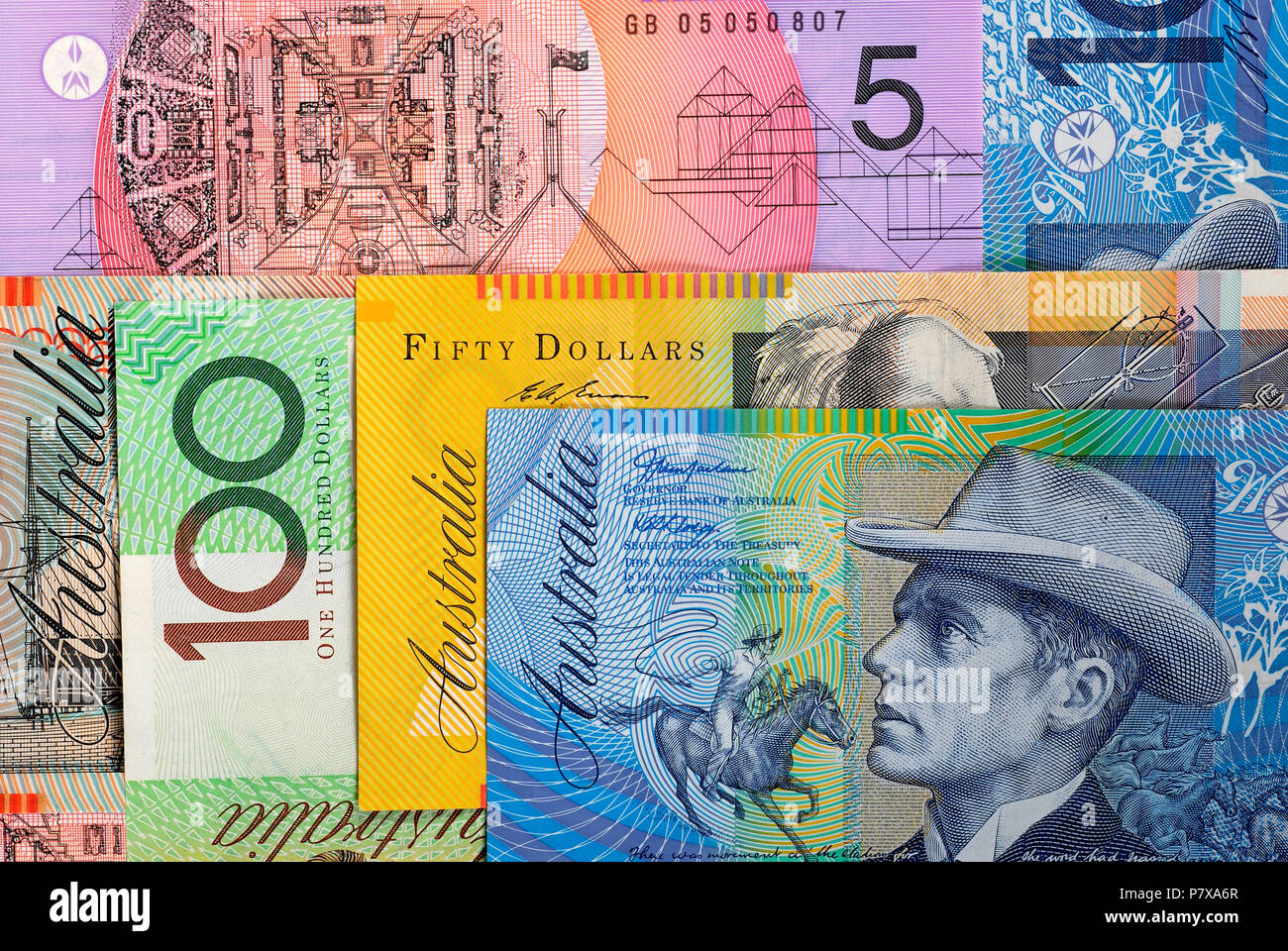
The Australian Dollar (currency code AUD, symbol $) is Australia's official currency, issued and regulated by the Reserve Bank of Australia (RBA). Operating under a free-floating exchange rate system, the currency's foreign exchange value is determined by global market supply and demand, influenced primarily by international trade terms, commodity export prices, interest rate differentials, and global macroeconomic conditions.
Anatomy of Australian Money: Polymer Technology and Coinage
Australia's physical currency consists of high-tech polymer banknotes and precision-minted metallic coins. The physical cash system is managed jointly by the Reserve Bank of Australia (which oversees banknote design, issuing, and structural security) and the Royal Australian Mint (which produces all circulating coins on behalf of the Commonwealth Government).
AUSTRALIAN CURRENCY ARCHITECTURE
| BANKNOTES (RBA) | COINS (RAM) |
|---|---|
| Polymer Substrate / Tactile Dots | Cupronickel & Aluminium Bronze |
| $5, $10, $20, $50, $100 | 5c, 10c, 20c, 50c, $1, $2 |
Polymer Banknotes: Security and Engineering Innovation
Australia revolutionized physical currency in 1988 by developing the world's first commercial polymer banknotes in partnership with the Commonwealth Scientific and Industrial Research Organisation (CSIRO). By 1996, Australia had completely converted its paper currency to synthetic polymer (polypropylene substrate). This innovation dramatically extended banknote lifespan, reduced production waste, and created advanced anti-counterfeiting capabilities.
The current "Next Generation Banknote" (NGB) series features multi-layered security engineering:
- Top-to-Bottom Clear Windows: A transparent vertical window running entirely through the note containing embedded dynamic optical features, such as flying birds that change color and reversing 3D numeric elements.
- Tactile Features: Raised bumps along the long edges of each denomination assist vision-impaired individuals in identifying note values independently (e.g., one bump for $5, two bumps for $10, up to five bumps for $100).
- Microprinting and Fluorescent Ink: Extremely small text readable only under magnification, alongside micro-patterns that glow under ultra-violet (UV) lighting conditions.
- Native Flora and Fauna: Each note highlights specific Australian native plants and birds alongside historical figures, rendering the note visually distinct while serving as a cultural showcase.
Decimal Coinage Structure
Australia transitioned from the imperial system (Pounds, Shillings, and Pence) to decimal currency on 14 February 1966. Coins are minted at the Royal Australian Mint in Canberra:
- Base Denominations (5c, 10c, 20c, 50c): Minted from a cupronickel alloy (75% copper, 25% nickel). The 50-cent coin is notable for its dodecagonal (12-sided) shape, introduced in 1969 to eliminate confusion with the round 20-cent coin.
- High-Value Denominations ($1 and $2): Introduced in 1984 and 1988 respectively to replace lower-denomination paper notes. They are composed of aluminium bronze (92% copper, 6% aluminium, 2% nickel), giving them a distinct gold color and heavier weight.
- Phased-Out Coins: The 1-cent and 2-cent copper coins were withdrawn from circulation between 1990 and 1992 due to rising production costs relative to their purchasing power. Cash transactions in Australia are rounded to the nearest 5 cents according to standard Swedish rounding principles, while electronic transactions remain exact to the cent.
The Central Bank: Who Controls the Australian Dollar?
The central authority overseeing Australia's monetary framework is the Reserve Bank of Australia (RBA), established under the Reserve Bank Act 1959. The RBA operates with statutory independence to execute monetary policy, maintain financial system stability, and manage the national payment infrastructure.
RESERVE BANK OF AUSTRALIA (RBA) MANDATE
- Price Stability (Maintain Consumer Inflation between 2-3%)
- Full Employment (Support Sustainable Economic Growth)
- Economic Prosperity & Welfare of the Australian People
The Inflation-Targeting Framework
The core operational objective of the RBA is to achieve an average consumer price inflation rate of 2 to 3 percent over the medium term. By keeping inflation within this target band, the RBA preserves the internal purchasing power of the Australian dollar while allowing enough flexibility for economic expansion.
When inflation trends above the target range, the central bank tightens monetary policy by increasing borrowing costs. Conversely, when the economy slows or inflation dips below target, the central bank lowers interest rates to stimulate spending and investment.
How the Cash Rate Mechanism Works
The primary tool used by the RBA to control monetary conditions is the Cash Rate Target. This is the interest rate charged on overnight, unsecured loans between commercial banks operating within the Australian banking system.
- Exchange Settlement (ES) Accounts: Commercial banks maintain ES accounts directly with the RBA to settle daily payment obligations between one another.
- Open Market Operations: The RBA manages liquidity in the financial system by buying or selling domestic government securities (repos and bonds). By adjusting the aggregate supply of ES funds, the RBA keeps the actual market cash rate aligned with its announced target.
- Interest Rate Transmission: Changes in the official cash rate ripple through the broader economy:
- Variable Mortgage Rates: Banks adjust retail home loan rates to match funding costs.
- Savings and Deposit Rates: Interest paid on consumer bank balances shifts accordingly.
- Business Credit: Borrowing costs for commercial expansion contract or expand.
- Exchange Rate Channels: Higher relative cash rates tend to attract international capital, strengthening the exchange rate of the AUD.
The Floating Currency System: How the AUD Value is Determined
Unlike currencies pegged to foreign assets or fixed baskets, the Australian dollar is a free-floating currency. Its price relative to other world currencies fluctuates constantly based on international foreign exchange market dynamics.
Historical Evolution of the AUD Exchange System
Prior to its current float, Australia experimented with several exchange rate regimes:
- 1901–1931: Pegged directly to the British Pound Sterling (GBP) under the historic gold standard.
- 1971–1974: Pegged to the United States Dollar (USD) following the collapse of the Bretton Woods fixed-rate system.
- 1974–1983: Managed under a crawling peg tied to a trade-weighted basket of foreign currencies (the Trade-Weighted Index, or TWI).
- December 1983: Prime Minister Bob Hawke and Treasurer Paul Keating officially floated the Australian dollar. This eliminated capital controls and permitted market forces to set the currency's value.
Floating the AUD served as a structural economic shock absorber. When global commodity demand drops, a depreciating AUD makes Australian exports cheaper overseas and reduces domestic demand for imports, helping buffer the domestic economy from external economic crises.
- GLOBAL CAPITAL & TRADE FLOWS
- AUD DEMAND
- Export Sales
- Foreign Capital
- High Yields
- AUD SUPPLY
- Import Payments
- Foreign Assets
- Dividend Payouts
- AUD EXCHANGE RATE EQUILIBRIUM
- AUD DEMAND
Market Liquidity and International Standing
Despite Australia representing approximately 1.5% of global GDP, the AUD is consistently among the most heavily traded currencies globally on foreign exchange (FX) markets, typically ranking alongside the USD, EUR, JPY, GBP, and CAD.
The AUD's outsized foreign exchange liquidity is driven by several macroeconomic attributes:
- Fully convertible currency backed by stable democratic institutions and strong legal frameworks.
- Deep financial markets and transparent regulation by the Australian Securities and Investments Commission (ASIC) and the Australian Prudential Regulation Authority (APRA).
- Active participation by international institutional investors trading commodity-linked debt and sovereign bonds.
- Time-zone placement bridging the gap between North American market closes and European market opens.
Key Macroeconomic Factors Driving the Value of the AUD
Because the Australian dollar is market-determined, its exchange rate against currencies like the USD, EUR, and JPY fluctuates daily. The value of the AUD is governed by four macroeconomic drivers.
PRIMARY AUD VALUE DRIVERS
| Commodity Prices | Interest Spread | China Economic Growth & Industrial Production Data | Market Risk Sentiment |
|---|---|---|---|
| (Iron Ore, Coal, LNG, Agriculture) | (RBA vs. Fed/ECB Yield Spreads) | ("Risk-On") |
1. Commodity Terms of Trade ("Commodity Currency")
Australia is a net exporter of industrial raw materials and energy resources. Key commodity exports include iron ore, metallurgical and thermal coal, liquefied natural gas (LNG), gold, copper, and agricultural products (wheat, beef, wool).
When global market demand drives commodity prices higher, foreign buyers must convert foreign currencies into AUD to clear transaction obligations with Australian mining and energy exporters. This net buying pressure increases demand for AUD, appreciating its market value. Conversely, sharp declines in bulk commodity pricing depress Australia’s terms of trade, putting downward pressure on the currency.
2. Relative Interest Rate Differentials
Capital flows globally toward higher risk-adjusted yields. The spread between Australian sovereign bond yields (determined largely by the RBA’s monetary stance) and foreign bond yields (such as U.S. Treasuries set by the Federal Reserve) directly impacts currency valuation.
- Positive Yield Spread: If Australian interest rates are significantly higher than U.S. rates, international investors buy AUD-denominated fixed income assets to secure higher interest returns, elevating the AUD's spot exchange rate.
- Negative Yield Spread: If foreign interest rates rise above domestic yields, institutional funds exit AUD positions to pursue yield elsewhere, pressuring the currency downward.
3. China’s Economic Health and Import Demand
China is Australia's largest bilateral merchandise trading partner. Demand from Chinese manufacturing, real estate construction, and infrastructure development directly dictates Australian bulk commodity export volumes. Positive economic data from Beijing (such as expanding purchasing managers' indexes or infrastructure spending) generally translates to immediate upward momentum for the AUD on foreign exchange trading desks.
4. Global Market Risk Sentiment ("Risk-On" vs. "Risk-Off")
In foreign exchange markets, the Australian dollar acts as a high-beta, risk-sensitive currency. During periods of global economic expansion, geopolitical calm, and rising equity markets ("risk-on" environments), investors favor the AUD to capture growth potential.
However, during market crises, global recessions, or heightened geopolitical conflict ("risk-off" environments), international capital flees risk-sensitive currencies in favor of traditional capital havens, such as the US Dollar (USD), Swiss Franc (CHF), or Japanese Yen (JPY), causing the AUD to depreciate.
Technical Specifications: Australian Money Breakdown
The structural attributes of physical AUD coins and polymer currency notes in current circulation demonstrate how design meets financial utility:
| Denomination | Material / Composition | Dominant Color | Key Visual / Historical Feature | Primary Security Element |
|---|---|---|---|---|
| 5 Cents | 75% Copper, 25% Nickel | Silver | Echidna / Monarch portrait | Milled edge, micro-relief details |
| 10 Cents | 75% Copper, 25% Nickel | Silver | Lyrebird / Monarch portrait | Precision edge milling |
| 20 Cents | 75% Copper, 25% Nickel | Silver | Platypus / Monarch portrait | Smooth edge, heavy weight profile |
| 50 Cents | 75% Copper, 25% Nickel | Silver | Australian Coat of Arms | 12-sided (dodecagonal) shape |
| $1 Coin | 92% Cu, 6% Al, 2% Ni | Gold | Five Kangaroos design | Intermittent milled edge pattern |
| $2 Coin | 92% Cu, 6% Al, 2% Ni | Gold | Gweagal Aboriginal Elder / Southern Cross | Micro-engraved initial elements |
| $5 Note | Polypropylene Substrate | Mauve / Purple | Queen Elizabeth II & Parliament / Eastern Spinebill | Top-to-bottom clear window, flying bird |
| $10 Note | Polypropylene Substrate | Blue | AB 'Banjo' Paterson & Mary Gilmore / Bramble Wattle | Microprint poems, tactile single dot |
| $20 Note | Polypropylene Substrate | Red / Orange | Mary Reibey & Rev. John Flynn / Native Fuchsia | Reversing 3D numeric value elements |
| $50 Note | Polypropylene Substrate | Yellow / Gold | David Unaipon & Edith Cowan / Black Swan | Microprinted building architectural plans |
| $100 Note | Polypropylene Substrate | Green | Dame Nellie Melba & Sir John Monash / Wattle | Dynamic 3D fan feature, clear window |
Banking, Digital Payments, and Australia's Payment Landscape
Physical cash represents a shrinking proportion of everyday consumer transactions across Australia. The domestic economy relies on highly centralized, real-time digital payment infrastructure supervised by the RBA and financial network regulators.
AUSTRALIAN DIGITAL PAYMENTS ARCHITECTURE
- New Payments Platform (NPP) - Real-time account-to-account
- PayID System - Phone number / Email address alias routing
- Osko Payment Protocol - Instant domestic funds settlement
- EFTPOS & Digital Wallets - Contactless point-of-sale network
Real-Time Financial Settlement: NPP and PayID
Australia’s banking sector operates on the New Payments Platform (NPP), an open-access infrastructure launched in 2018. The NPP enables instant, 24/7/365 bank transfers between participating financial institutions.
- PayID: Allows users to link an easy-to-remember alias—such as a mobile phone number, email address, or Australian Business Number (ABN)—directly to their bank account, removing the requirement to share traditional Bank State Branch (BSB) and account numbers.
- Osko: A payment service powered by the NPP that executes funds transfers almost instantaneously, eliminating multi-day clearing delays common in legacy bank systems.
Cashless Economy Trends and Cash Access Obligations
While Australia has shifted rapidly toward digital payments (via tap-and-go cards, smartphones, and wearables), physical currency remains legal tender under the Currency Act 1965. However, private businesses are not legally forced to accept physical cash for transactions unless specific contract terms dictate otherwise, provided customers are informed of accepted payment methods before entering into a purchase agreement.
To maintain public confidence in cash access, the RBA monitors wholesale cash distribution systems, ensuring regional and remote communities retain access to physical banknotes and coins through bank branches and nationwide ATM networks.
Central Bank Digital Currency (CBDC) Research
The Reserve Bank of Australia conducts ongoing research into a potential wholesale and retail Central Bank Digital Currency (CBDC), referred to tentatively in pilot frameworks as an "eAUD". Unlike decentralized cryptocurrencies or commercial bank deposits, an eAUD would represent a direct digital liability of the RBA, offering a risk-free digital currency alternative for programmable payments and wholesale financial settlement systems.
Practical Guidance: Handling AUD for Consumers, Travelers, and Investors
Understanding how the Australian dollar operates helps consumers, international travelers, and commercial entities make informed financial choices.
PRACTICAL AUD STRATEGIES
- Travelers: Decline Dynamic Currency Conversion (DCC) at terminals
- Businesses: Utilize forward contracts for foreign exchange risk
- Transfers: Use peer-to-peer FX providers over standard bank wire
Foreign Exchange Strategies for Travelers
- Avoid Dynamic Currency Conversion (DCC): When using foreign debit or credit cards at Australian point-of-sale (POS) terminals or ATMs, merchants may offer to charge the card in your home currency instead of AUD. Always choose to be billed in local currency (AUD). DCC rates include steep merchant exchange markups compared to wholesale bank rates.
- Fee-Free International Cards: Utilize travel cards or digital banking accounts that apply the real-time interbank foreign exchange rate without added transaction surcharges.
International Money Transfers to and from Australia
Transferring capital into or out of AUD via traditional retail banks often incurs substantial transaction costs, including hidden exchange rate markups (spreads) ranging from 2% to 4% above the mid-market rate. Using specialized, regulated non-bank payment services or peer-to-peer foreign exchange platforms significantly reduces transfer friction by granting access to exchange rates closer to the true interbank rate.
Managing Currency Exposure for Australian Businesses
Importers and exporters operating in Australia encounter direct exchange rate risk due to AUD volatility.
- Importers: A weakening AUD raises the domestic landed cost of foreign goods, narrowing profit margins unless retail prices increase. Importers frequently purchase forward contracts to lock in fixed FX rates for upcoming shipments.
- Exporters: A weaker AUD makes Australian goods cheaper and more competitive in overseas markets, boosting export volumes. Exporters can utilize currency hedging tools to protect profit margins against sudden AUD spikes.
Frequently Asked Questions
Why is the Australian dollar called a commodity currency?
The AUD is termed a commodity currency because Australia's economic performance and trade balance depend heavily on raw material exports like iron ore, coal, natural gas, and agricultural goods. Changes in global commodity prices directly influence foreign demand for AUD, causing the currency’s exchange rate to move in tandem with commodity markets.
Who controls the issuance of Australian banknotes and coins?
Banknote issuance, structural security, and design are managed directly by the Reserve Bank of Australia (RBA), with notes printed by Note Printing Australia. Metallic coinage is minted and distributed by the Royal Australian Mint, operating under the federal Department of the Treasury.
Does Australia have a central bank digital currency (CBDC)?
Australia does not currently have a publicly circulating Central Bank Digital Currency (eAUD). However, the Reserve Bank of Australia conducts research and institutional pilot programs to assess the feasibility, technical infrastructure, and economic benefits of introducing a wholesale or retail CBDC.
How does the RBA cash rate impact mortgage payments?
When the RBA increases its official cash rate target, commercial banks face higher funding costs in overnight money markets. Banks generally pass these costs on to retail consumers by raising variable mortgage interest rates, increasing monthly home loan repayments across the domestic banking system.
What happens to physical cash transactions under Swedish rounding?
Since 1-cent and 2-cent coins were removed from circulation, physical cash purchases in Australia are rounded to the nearest 5-cent increment. Prices ending in 1 or 2 cents round down to 0; 3 or 4 cents round up to 5; 6 or 7 cents round down to 5; and 8 or 9 cents round up to 10. Electronic payments are settled to the exact cent without rounding.
Conclusion and Recommended Next Actions
The Australian Dollar functions as an open, market-driven financial medium backed by clear monetary targets, advanced polymer currency engineering, and modern payment networks. Its float provides economic flexibility, shielding domestic industries from external market shifts while giving international traders a liquid, risk-sensitive currency asset.
Key Next Steps for Financial Management
- Monitor RBA Announcements: Track monetary policy updates and cash rate announcements published on the official Reserve Bank of Australia portal to anticipate adjustments in interest rates and currency movements.
- Audit International Payment Costs: If you regularly process foreign currency transactions, compare your bank's currency conversion spreads against independent foreign exchange providers to lower transfer overhead.
- Protect Business Cash Flows: Australian businesses buying or selling goods overseas should evaluate currency risk management options—such as forward exchange contracts—with a qualified financial advisor to protect operating margins from foreign exchange shifts.
Disclaimer: This guide is provided for educational and informational purposes only and does not constitute formal financial, investment, or legal advice. Foreign exchange trading and financial management involve risk; consult a certified financial planner or financial advisor before making significant financial decisions.