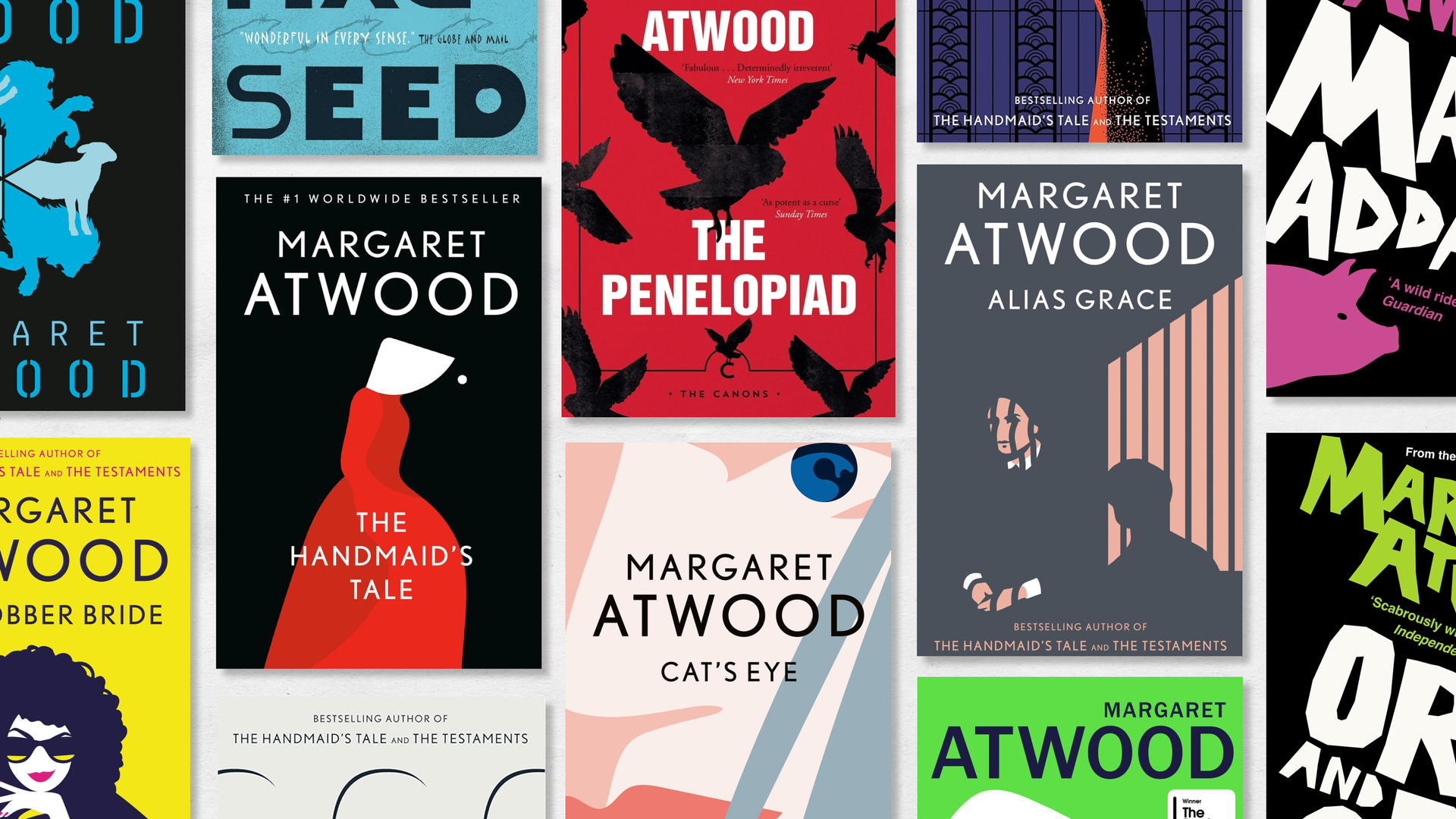
Navigating the extensive bibliography of Margaret Atwood requires deciding whether to read her standalone novels chronologically or focus on her specific series, such as the Handmaid's Tale duology or the MaddAddam trilogy. Reading her works in publication order reveals how her commentary on gender, environmental collapse, and dystopian power dynamics evolved across six decades of literature.
How to Approach Margaret Atwood’s Bibliography
Margaret Atwood is one of the most prolific and celebrated authors in contemporary English literature. With a career spanning over six decades, her oeuvre encompasses speculative fiction, historical fiction, psychological drama, literary criticism, poetry, and graphic novels. For new readers and long-time fans alike, deciding where to start—and in what sequence to proceed—can present a literary challenge.
Atwood’s catalog is structured into two main categories: standalone literary novels and distinct multi-book series. While her standalone novels can be enjoyed independently without prior knowledge of her other works, her connected series require a specific sequential approach to fully grasp character arcs and world-building logic. Additionally, her short story collections and non-fiction essays provide crucial intellectual context for the central themes found in her fiction.
When structuring a reading plan for Atwood's books, readers generally follow one of three approaches:
- Publication Order: Reading her fiction chronologically from The Edible Woman (1969) onward. This method illustrates Atwood’s artistic evolution from modern literary satire to complex historical and speculative fiction.
- Series-First Order: Completing her acclaimed dystopian narratives—the Handmaid's Tale duology and the MaddAddam trilogy—before exploring her standalone psychological and historical works.
- Thematic Exploration: Grouping books by core sub-genres, such as her historical retellings (Alias Grace, The Penelopiad) or her modern satires (Lady Oracle, The Heart Goes Last).
Reading Margaret Atwood’s Novels in Publication Order
For readers who wish to experience Atwood’s literary career as it unfolded, reading her complete sequence of long-form fiction chronologically provides deep insight into her narrative development. Across seventeen major novels, Atwood repeatedly explores motifs of female agency, corporate overreach, surveillance, and ecological disaster.
1. The Edible Woman (1969)
Atwood’s debut novel follows Marian MacAlpin, a young woman working in market research whose life takes an unsettling turn following her engagement. As societal pressure to conform builds, Marian finds herself unable to eat food, starting with meat and expanding to vegetables, internalizing the feeling of being symbolically consumed by the expectations of others.
2. Surfacing (1972)
Set in the Canadian wilderness, Surfacing explores themes of national identity, technological intrusion, and psychological isolation. A unnamed female protagonist returns to her childhood island home in search of her missing father, embarking on a harrowing journey into her own buried past and environmental alienation.
3. Lady Oracle (1976)
A dark comedy and parody of Gothic romance novels, Lady Oracle tells the story of Joan Foster, a secretive writer who fakes her own death to escape her romantic, personal, and financial entanglements. The novel probes the construction of female identity and the burdens of public perception.
4. Life Before Man (1979)
Shifting to a tightly focused domestic drama set in Toronto, Life Before Man details the deteriorating marriage of Elizabeth and Nate, along with the life of Nate's lover, Lesje. Set against the backdrop of the Royal Ontario Museum, the book uses paleontological metaphors to examine emotional stasis and human extinction.
5. Bodily Harm (1981)
In Bodily Harm, lifestyle journalist Rennie Wilford travels to a small Caribbean island following a traumatic personal crisis. Expecting a restful retreat, she is instead drawn into political revolution, corruption, and violence, forcing her to confront her role as a passive observer of world events.
6. The Handmaid's Tale (1985)
Atwood’s defining speculative novel introduces the totalitarian regime of Gilead, a teocratic dictatorship established in the former United States. Narrated by Offred, a Handmaid forced into reproductive servitude, the novel examines power, oppression, religious fundamentalism, and the fragility of civil rights.
7. Cat's Eye (1988)
A vivid exploration of childhood cruelty and memory, Cat's Eye features Elaine Risley, an painter who returns to Toronto for a retrospective of her art. There, she reflects on her formative, intensely toxic childhood friendship with a girl named Cordelia, analyzing how childhood dynamics shape adult identity.
8. The Robber Bride (1993)
Set in contemporary Toronto, this novel centers on three women—Tony, Charis, and Roz—who share a common history with Zenia, a ruthless, manipulative woman who stole their partners and disrupted their lives. When Zenia mysteriously reappears after being presumed dead, the three friends must confront their lingering traumas.
9. Alias Grace (1996)
Based on the notorious 1843 murders of Thomas Kinnear and his housekeeper Nancy Montgomery in Upper Canada, Alias Grace presents a fictionalized account of Grace Marks, a servant girl convicted for her involvement in the crimes. Through conversations between Grace and an alienist (psychiatrist), Dr. Simon Jordan, Atwood explores truth, madness, and gender bias in criminal justice.
10. The Blind Assassin (2000)
Winner of the Booker Prize, The Blind Assassin employs a sophisticated narrative structure featuring a novel-within-a-novel. Narrated by elderly Iris Chase Griffen, the story weaves together her family history in early 20th-century Canada with excerpts from a science fiction manuscript published under her deceased sister Laura’s name.
11. Oryx and Crake (2003)
The opening volume of the MaddAddam trilogy presents a post-apocalyptic world through the eyes of Snowman, formerly known as Jimmy. As he cares for the genetically engineered "Crakers," Jimmy recalls the corporate greed, bioengineering experiments, and personal betrayals that led to the collapse of human civilization.
12. The Penelopiad (2005)
Published as part of the Canongate Myth Series, The Penelopiad retells Homer’s Odyssey from the perspective of Penelope, along with a chorus of her twelve hanged maids. The novella gives voice to characters marginalized in classical mythology, questioning traditional heroic narratives.
13. The Year of the Flood (2009)
Running parallel to the timeline of Oryx and Crake, this novel focuses on God’s Gardeners, a eco-religious group preparing for the "Waterless Flood." Through the perspectives of Toby and Ren, Atwood expands her vision of corporate control and environmental degradation.
14. MaddAddam (2013)
The conclusion to the trilogy brings together the survivors of the bioengineered plague. Human survivors and the naive Crakers must learn to co-exist, form a community, and defend themselves against remaining corporate mercenaries in a transformed world.
15. The Heart Goes Last (2015)
Originating as a serialized digital release, this satirical speculative novel takes place in a near-future economic collapse. Desperate couples sign up for the Positron Project, alternating monthly between living as comfortable citizens and serving as prisoners in a corporate-run prison system.
16. Hag-Seed (2016)
Contributed to the Hogarth Shakespeare project, Hag-Seed is a modern retelling of The Tempest. Felix, a theater director ousted from his festival post, takes a job teaching literature in a correctional institution, using a staging of The Tempest with inmates to orchestrate revenge against those who betrayed him.
17. The Testaments (2019)
Set fifteen years after the events of The Handmaid's Tale, this co-winner of the 2019 Booker Prize features the interconnected testimonies of three women: Aunt Lydia, a powerful Gilead official; Agnes, a young woman raised in Gilead; and Daisy, a Canadian teenager who learns of her direct link to the regime.
Margaret Atwood Series Reading Orders
While most of Atwood's books are standalone titles, her multi-volume series require specific sequencing to preserve dramatic reveals and understand complex continuity.
- THE HANDMAID'S TALE DUOLOGY
- The Handmaid's Tale (1985)
- The Testaments (2019)
The Handmaid’s Tale Series Order
Although published 34 years apart, the two novels comprising the Gilead narrative form a cohesive duology.
- The Handmaid's Tale (1985) – Introduces the establishing mechanics of Gilead, the institutionalization of Handmaids, and Offred's immediate battle for identity.
- The Testaments (2019) – Expands the scope internationally and internally, revealing the institutional rot, structural flaws, and ultimate collapse of Gilead through Aunt Lydia and two younger protagonists.
Recommended Reading Sequence: Read in publication order (The Handmaid's Tale followed by The Testaments). The Testaments relies heavily on the foundation laid in the first novel and contains major spoilers regarding Gilead’s internal mechanics and historical outcome.
- MADDADDAM TRILOGY
- Parallel Timeline:
- Oryx and Crake (2003)
- The Year of the Flood (2009)
- MaddAddam (2013)
- Parallel Timeline:
The MaddAddam Trilogy Order
The MaddAddam trilogy explores a speculative world ruined by bioengineering, corporate rule, and catastrophic viral outbreak.
- Oryx and Crake (2003) – Follows Snowman (Jimmy) post-apocalypse, while flashing back to his friendship with the brilliant scientist Crake and the enigmatic Oryx.
- The Year of the Flood (2009) – Covers the exact same timeframe before and during the plague, but from the viewpoint of two female members of an eco-religious cult (God's Gardeners).
- MaddAddam (2013) – Picks up directly where both previous novels converge, merging the narrative threads into a unified finale.
Recommended Reading Sequence: Begin with Oryx and Crake, proceed to The Year of the Flood, and conclude with MaddAddam. While The Year of the Flood can technically be read simultaneously or first due to its parallel timeline, Oryx and Crake provides the vital world-building groundwork regarding the corporate compounds and bioengineering technology.
The Angel Catbird Graphic Novel Series
Co-created with artist Johnnie Christmas, this three-part graphic novel series presents an homage to mid-century pulp comics while raising awareness for bird conservation.
- Angel Catbird, Vol. 1 (2016)
- Angel Catbird, Vol. 2 (2017)
- Angel Catbird, Vol. 3 (2017)
Recommended Reading Sequence: Read strictly sequentially from Volume 1 through Volume 3, as the graphic novels form a single, continuous story arc.
Major Short Story Collections in Order
Atwood’s short fiction is central to her bibliography, often serving as a testing ground for structural techniques and narrative motifs expanded in her novels.
| Collection Title | Publication Year | Key Focus / Characteristics |
|---|---|---|
| Dancing Girls | 1977 | Stories focusing on urban alienation, displacement, and gender conflict. |
| Murder in the Dark | 1983 | Short prose poems, fables, and micro-fiction on power and language. |
| Bluebeard's Egg | 1983 | Examinations of middle-class relationships, fidelity, and betrayal. |
| Wilderness Tips | 1991 | Set against Canadian landscapes; themes of aging, regret, and shifting culture. |
| Good Bones | 1992 | Feminist retellings of fairy tales, myths, and pop-culture tropes. |
| Moral Disorder | 2006 | Interconnected short stories following a single female character over decades. |
| Stone Mattress | 2014 | "Tales of revenge" dealing with aging protagonists, crime, and justice. |
| Old Babes in the Wood | 2023 | Reflections on marriage, grief, mortality, and technological life. |
Essential Non-Fiction Works by Margaret Atwood
Atwood’s non-fiction provides critical context for her creative choices, revealing her analytical approach to literature, ecology, and economics.
- Survival: A Thematic Guide to Canadian Literature (1972): A landmark work of literary criticism defining the central motif of Canadian literature as victimhood and survival against harsh environments.
- Strange Things: The Malevolent North in Canadian Literature (1995): A collection of lectures examining Canadian culture’s fascination with the wilderness, cannibalism, and lost expeditions.
- Payback: Debt and the Shadow Side of Wealth (2008): An examination of debt as a cultural, religious, and ecological concept, adapted for the CBC Massey Lectures.
- In Other Worlds: SF and the Human Imagination (2011): Atwood’s exploration of science fiction, speculative fiction, and utopian/dystopian narratives, clarifying her distinction between hard sci-fi and speculative fiction.
- Burning Questions: Essays and Occasional Pieces 2004–2021 (2022): A collection of essays addressing climate change, political instability, free speech, and literary craft in the 21st century.
Comprehensive Summary of Margaret Atwood's Major Novels
The table below outlines Margaret Atwood’s long-form fiction, highlighting publication dates, narrative classifications, and core thematic focus areas.
| Book Title | Year | Genre / Classification | Core Themes & Subject Matter |
|---|---|---|---|
| The Edible Woman | 1969 | Literary Fiction / Satire | Identity loss, gender roles, consumer culture |
| Surfacing | 1972 | Psychological Fiction | Wilderness, national identity, trauma |
| Lady Oracle | 1976 | Comic Satire / Metafiction | Dual lives, gothic tropes, societal expectations |
| Life Before Man | 1979 | Contemporary Drama | Domestic decay, emotional stasis, evolution |
| Bodily Harm | 1981 | Political / Psychological Fiction | Voyeurism, post-colonial politics, personal responsibility |
| The Handmaid's Tale | 1985 | Dystopian / Speculative Fiction | Totalitarianism, reproductive rights, surveillance |
| Cat's Eye | 1988 | Autobiographical Fiction | Childhood bullying, memory, female relationships |
| The Robber Bride | 1993 | Psychological Drama | Female antagonism, friendship, narrative control |
| Alias Grace | 1996 | Historical Fiction | Class, true crime, madness, Victorian morality |
| The Blind Assassin | 2000 | Historical / Science Fiction | Sisterhood, historical secrets, pulp fiction |
| Oryx and Crake | 2003 | Speculative / Post-Apocalyptic | Genetic engineering, bio-ethics, corporate greed |
| The Penelopiad | 2005 | Mythological Retelling | Mythic revisionism, female voice, class disparity |
| The Year of the Flood | 2009 | Speculative / Post-Apocalyptic | Eco-religion, survival, corporate surveillance |
| MaddAddam | 2013 | Speculative / Post-Apocalyptic | Community rebuilding, myth-making, co-existence |
| The Heart Goes Last | 2015 | Dystopian Satire | Privatized prisons, economic inequality, desire |
| Hag-Seed | 2016 | Literary Adaptation | Shakespeare, incarceration, revenge and forgiveness |
| The Testaments | 2019 | Dystopian / Speculative Fiction | Resistance, institutional decay, political collapse |
The Best Starting Points for New Atwood Readers
Because Atwood’s literary style ranges from realist period pieces to speculative dystopias, the best starting book depends heavily on a reader's individual preferences.
For Fans of Speculative & Dystopian Fiction
Start with The Handmaid's Tale (1985) or Oryx and Crake (2003). Both showcase Atwood’s mastery of building believable, terrifying near-future societies rooted entirely in real-world human history and current technological trends. Atwood famously adheres to a rule in her speculative works: she includes no technologies or atrocities that have not already occurred in recorded human history.
For Fans of Historical & Mystery Fiction
Start with Alias Grace (1996) or The Blind Assassin (2000). These works demonstrate her meticulous historical research and intricate framing devices, weaving complex timelines together with rich detail.
For Fans of Character Studies & Satire
Start with Cat's Eye (1988) or The Edible Woman (1969). These titles present razor-sharp psychological insight into modern relationships, social expectations, and personal memory without speculative or historical framing.
Frequently Asked Questions
Can you read The Testaments without reading The Handmaid's Tale first?
While The Testaments can be understood on its own due to its distinct protagonists, reading The Handmaid's Tale first is highly recommended. The Testaments builds upon the foundation, terminology, and historical setup of Gilead established in the original novel, making the resolution significantly more impactful for readers familiar with the first book.
Is the MaddAddam trilogy closely connected, or can the books be read as standalones?
Oryx and Crake and The Year of the Flood cover parallel events from different perspectives and can technically be read independently. However, MaddAddam acts as a direct narrative sequel to both books and requires context from both preceding novels to understand the plot, character dynamics, and world resolution.
What is the difference between speculative fiction and science fiction according to Margaret Atwood?
Atwood defines science fiction as depicting events, technologies, and scenarios that have not yet occurred and rely on non-existent technology (such as starships or alien contact). In contrast, she defines speculative fiction—such as The Handmaid's Tale and Oryx and Crake—as depicting scenarios using technologies and social practices already present in real-world history or current development.
What order should I read Margaret Atwood’s poetry collections in?
Atwood’s poetry collections, starting with Double Persephone (1961) and The Circle Game (1966) up through Dearly (2020), are independent works. They are best read chronologically by publication date to observe how her poetic voice, engagement with nature, and themes of mortality evolved alongside her prose writing.
Are Margaret Atwood's retellings (The Penelopiad, Hag-Seed) part of a broader series?
No, The Penelopiad and Hag-Seed are independent standalone works contributed to multi-author publishing initiatives. The Penelopiad was written for the Canongate Myth Series, while Hag-Seed was created for the Hogarth Shakespeare Project. Neither requires prior familiarity with Atwood’s other fiction.
Final Reading Recommendations
To get the most out of Margaret Atwood's extensive catalog, structure your reading journey based on your specific goals:
- For the most famous experience: Read The Handmaid's Tale, followed immediately by The Testaments.
- For a deep dive into speculative world-building: Read the MaddAddam trilogy in order (Oryx and Crake, The Year of the Flood, MaddAddam).
- For her highest literary achievements: Read her Booker Prize winners, The Blind Assassin and The Testaments, alongside her historical masterpiece Alias Grace.
Following publication order remains the most reliable path for those seeking to understand Atwood's broader contribution to modern literature and her evolving perspective on modern society.