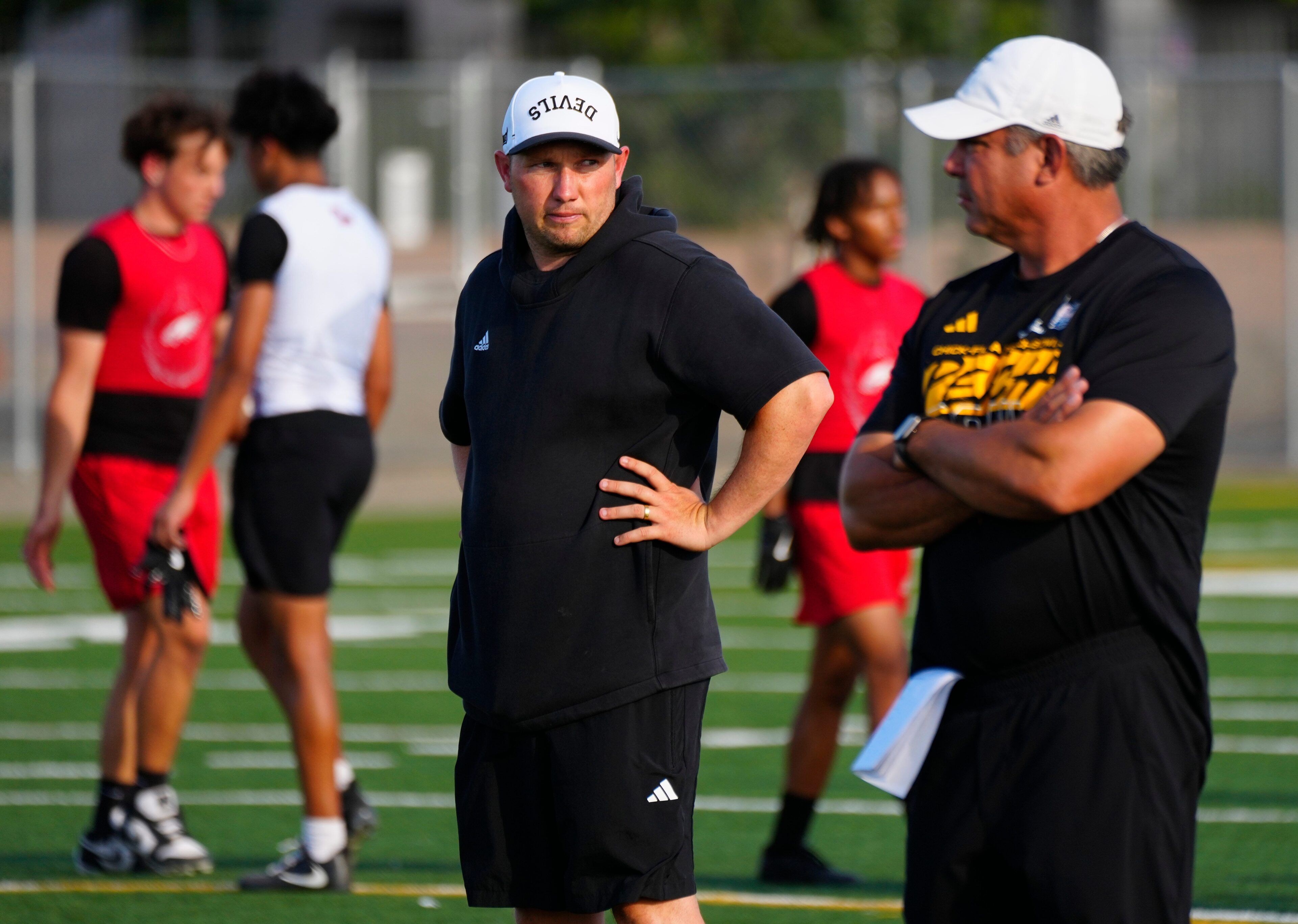
Arizona State University (ASU) football history is defined by the legendary 21-year tenure of Frank Kush, followed by decades of searching for consistent national relevance. While coaches like Bruce Snyder and John Cooper delivered iconic Rose Bowl moments, the program has frequently cycled through leadership in pursuit of balancing Valley expectations with the evolving landscape of collegiate athletics.
The Architect of Sun Devil Football: The Frank Kush Era (1958–1979)
To understand the local perspective on Arizona State football, one must begin with Frank Kush. Before Kush, ASU (then Arizona State College) was a respectable regional program. By the time he departed in 1979, he had transformed the Sun Devils into a national powerhouse and facilitated the school’s transition into the Pac-10 Conference.
Kush was known for a brand of physical discipline that is rarely seen in the modern era. His "Camp Tontozona" retreats in the Payson mountains became the stuff of local legend—and athlete nightmares. The grueling practices in the thin mountain air established a culture of toughness that defined the program for two decades. Under Kush, the Sun Devils achieved an astonishing 176-54-1 record. His 1975 team, which finished 12-0 and defeated Nebraska in the Fiesta Bowl, remains the benchmark for perfection in Tempe.
From a local standpoint, Kush wasn't just a coach; he was the man who put Phoenix on the sporting map. His dismissal in 1979 following a controversy involving a player began a long period of "turnovers" in the coaching office, as the university struggled to find a successor who could command the same level of authority and success.
Transition and the Rose Bowl Breakthrough: Cooper and Snyder
Following the Kush era, the program entered the 1980s with a mix of high expectations and growing pains in the Pac-10. John Cooper (1985–1987) provided a brief but spectacular spark. In 1986, Cooper led the Sun Devils to their first-ever Pac-10 title and a subsequent Rose Bowl victory over Michigan. For Valley fans, this was the ultimate validation; ASU had arrived in the "Granddaddy of Them All." However, Cooper’s departure for Ohio State after only three seasons left a bitter taste locally, reinforcing the fear that ASU was a "stepping stone" job.
The 1990s brought Bruce Snyder (1992–2000), a coach whose legacy is inextricably linked to the most emotional period in Sun Devil history. Snyder’s 1996 team was a juggernaut, led by quarterback Jake "The Snake" Plummer and the legendary Pat Tillman. That team went 11-0 in the regular season, including a historic 19-0 shutout of top-ranked Nebraska that snapped the Cornhuskers' 26-game winning streak.
While the 1997 Rose Bowl ended in a heartbreaking last-minute loss to Ohio State, the Snyder era is remembered as the last time ASU felt like a true national championship contender. Locally, Snyder is revered for his ability to recruit "undervalued" talent and develop a roster that reflected the gritty, underdog spirit of the Phoenix desert. His eventually forced exit in 2000 marked the beginning of a more volatile period of coaching "triumphs and turnovers."
The Search for Consistency: Koetter, Erickson, and Graham
The turn of the millennium saw ASU hire Dirk Koetter (2001–2006). Koetter brought a high-flying, pass-heavy offense that was exciting to watch but often lacked the defensive steel required to win the Pac-10. While he led the team to several bowl games, the inability to beat rivals or win big games led to his dismissal.
The university then pivoted to a "proven winner" in Dennis Erickson (2007–2011). Erickson’s first year was a triumph—a 10-win season and a share of the conference title. However, the success was short-lived. Discipline issues and a decline in recruiting led to a rapid slide into mediocrity. Local sentiment during this time shifted toward frustration; fans felt the program was underachieving given the fertile recruiting grounds of Southern California and the growing talent pool in Arizona.
Todd Graham (2012–2017) arrived with a "High Octane" philosophy and a rigid emphasis on discipline. Graham’s tenure was a rollercoaster of extreme triumphs and frustrating plateaus. He secured back-to-back 10-win seasons in 2013 and 2014, including a Pac-12 South Division title. Graham’s "Stomp the Bus" mantra and aggressive defensive schemes resonated initially, but his penchant for "program hopping" in his past made it difficult for some locals to fully embrace him until the wins piled up. When the defense began to falter in his final years, the university decided to move in a radical new direction.
The "New Leadership Model" and the Herm Edwards Era
In 2018, ASU made national headlines by hiring former NFL coach and ESPN analyst Herm Edwards. The university announced a "pro-model" structure, where Edwards would act more as a CEO while specialized coordinators handled the X’s and O’s. Initially, the "Herm Train" brought a surge of energy and high-profile recruiting wins. Edwards’ charisma made him a local favorite, and the program appeared to be stabilizing with a string of winning seasons and bowl appearances.
However, the "triumph" of the NFL model was overshadowed by a massive NCAA investigation into recruiting violations during the COVID-19 dead period. This turnover was particularly painful for the local community. As assistant coaches resigned and top talent entered the transfer portal, the program’s foundation crumbled. Edwards’ departure early in the 2022 season marked the end of one of the most polarizing experiments in college football history.
The Local Homecoming: Kenny Dillingham and the Big 12 Era
By 2023, the university recognized a need to return to its roots. They hired Kenny Dillingham, a Scottsdale native and ASU alumnus who, at the time, was the youngest head coach in Power Five football. Dillingham’s hiring was a calculated move to heal the rift between the program and the local community.
As of 2026, Dillingham has navigated the program through its most significant structural change: the move from the collapsed Pac-12 to the Big 12 Conference in 2024. The local perspective on Dillingham remains largely optimistic, viewing him as a "Sun Devil for life" who understands the unique challenges of recruiting in the NIL (Name, Image, and Likeness) era while respecting the traditions established by Kush and Snyder. His focus on "Activating the Valley" has revitalized local attendance and donor engagement, even as the team works to find its footing in a new, Midwest-centric conference.
Summary of Major ASU Coaching Eras
| Coach | Tenure | Record (W-L-T) | Primary Achievement/Legacy |
|---|---|---|---|
| Frank Kush | 1958–1979 | 176–54–1 | Built the program; 1975 undefeated season; Move to Pac-10. |
| John Cooper | 1985–1987 | 25–9–2 | 1987 Rose Bowl Victory; First Pac-10 Championship. |
| Bruce Snyder | 1992–2000 | 58–45 | 1996 Undefeated regular season; Rose Bowl appearance; Pat Tillman era. |
| Dirk Koetter | 2001–2006 | 40–34 | Modernized the offense; established "Quarterback U" reputation. |
| Todd Graham | 2012–2017 | 46–32 | Back-to-back 10-win seasons; Pac-12 South Title (2013). |
| Herm Edwards | 2018–2022 | 26–20 | Implemented the "Pro Model"; marred by NCAA investigations. |
| Kenny Dillingham | 2023–Present | (Ongoing) | Led the transition to the Big 12; focused on local recruiting. |
Local Traditions and Coaching Challenges
The history of coaching at ASU cannot be separated from the unique environment of Tempe. Every coach has had to contend with several factors that define the "Sun Devil experience":
- The Heat Factor: Early-season games in September often see kickoff temperatures exceeding 100 degrees. Coaches like Kush used this as a weapon, conditioning players to outlast opponents in the "Inferno." Modern coaches must balance this with player safety and hydration technology.
- The Southern California Connection: Historically, ASU’s success has been tied to its ability to pull talent away from USC and UCLA. When a coach loses this pipeline, the program typically suffers a turnover.
- The Territorial Cup: The rivalry with the University of Arizona is one of the oldest and most heated in the country. For a local fan, a coach’s record against the Wildcats can often outweigh their overall record. Dennis Erickson’s decline was accelerated by losses in this series, while coaches like Graham solidified their status by dominating it.
- Camp Tontozona: While the intensity has varied, the tradition of taking the team to the mountains for fall camp remains a vital touchstone. It is the bridge between the Kush era and the current generation.
Analysis of Coaching Turnovers
The "turnovers" in ASU's history often stem from a misalignment between university administration and the coaching staff regarding the program's ceiling. Arizona State is often described as a "sleeping giant." With a massive student body, a thriving metropolitan area, and world-class facilities, the expectation is consistent Top 25 rankings.
When a coach fails to meet this—or when off-field issues like those seen in the late 70s or the early 2020s arise—the local community is quick to demand change. However, this frequent turnover has sometimes hindered the long-term stability needed to compete with the likes of Oregon or Utah. The move to the Big 12 in 2024 represented a reset button, allowing the coaching staff to redefine what success looks like in a conference where every Saturday is a physical battle.
Frequently Asked Questions
Who is the most successful coach in ASU history?
Frank Kush is statistically and culturally the most successful coach in ASU history. His 176 wins are more than double those of the next closest coach. He led the program through its transition to a major conference and established the physical identity that still defines Sun Devil football to many long-time residents of the Valley.
Why did the "NFL Model" under Herm Edwards fail?
While the model initially saw success in recruiting, it struggled with administrative oversight. The "CEO" approach left gaps in compliance, leading to the NCAA investigation regarding recruiting during the COVID-19 dead period. Furthermore, the lack of traditional collegiate coaching experience among some staff members made it difficult to adapt to the rapidly changing landscape of the transfer portal and NIL.
What was the significance of the 1996 season under Bruce Snyder?
The 1996 season is the gold standard for modern ASU football. The team went undefeated in the regular season, beat #1 Nebraska, and came within minutes of winning a National Championship in the Rose Bowl. It solidified the legacies of Jake Plummer and Pat Tillman and proved that ASU could compete at the highest level of the sport.
How has the move to the Big 12 affected coaching requirements?
The transition to the Big 12 (effective 2024) changed the recruiting and tactical profile for ASU coaches. The Big 12 is known for high-scoring offenses but also features many programs in cold-weather or rural environments. ASU coaches must now build rosters that can handle the physical variety of the Big 12 while maintaining the speed advantage typically associated with Arizona programs.
What is the significance of "Camp Tontozona" for new coaches?
For a local perspective, a coach who embraces Camp Tontozona is seen as respecting the program's history. It is a vital public relations tool and a team-bonding exercise that connects the current roster to the legendary teams of Frank Kush. Coaches who have tried to move away from it often face pushback from alumni and local media.
Next Actions for Fans and Historians
To truly appreciate the depth of Arizona State football history, fans should visit the Pat Tillman Veterans Center on campus or attend a game at Mountain America Stadium to see the Ring of Honor. Monitoring the progress of the current coaching staff through official university updates and local sports outlets like the Arizona Republic or ASU Source will provide the most current perspective on whether the program is currently in a phase of triumph or preparing for its next turnover.