In Arizona, Uninsured Motorist (UM) and Underinsured Motorist (UIM) coverage is considered "portable," meaning the protection generally follows the individual rather than a specific vehicle. Because the state views this coverage as a personal protection for the insured party against financially irresponsible drivers, it extends to the named insured and resident family members whether they are in their own vehicle, a friend's car, or walking as a pedestrian.
Understanding the Legal Framework of UM/UIM in Arizona
To comprehend why Arizona uninsured motorist coverage extends to all vehicles (and situations), one must first look at the governing statutes and the intent of the legislature. Under Arizona Revised Statutes (A.R.S.) § 20-259.01, every insurer writing automobile liability policies in the state is required to offer both Uninsured Motorist (UM) and Underinsured Motorist (UIM) coverage in writing.
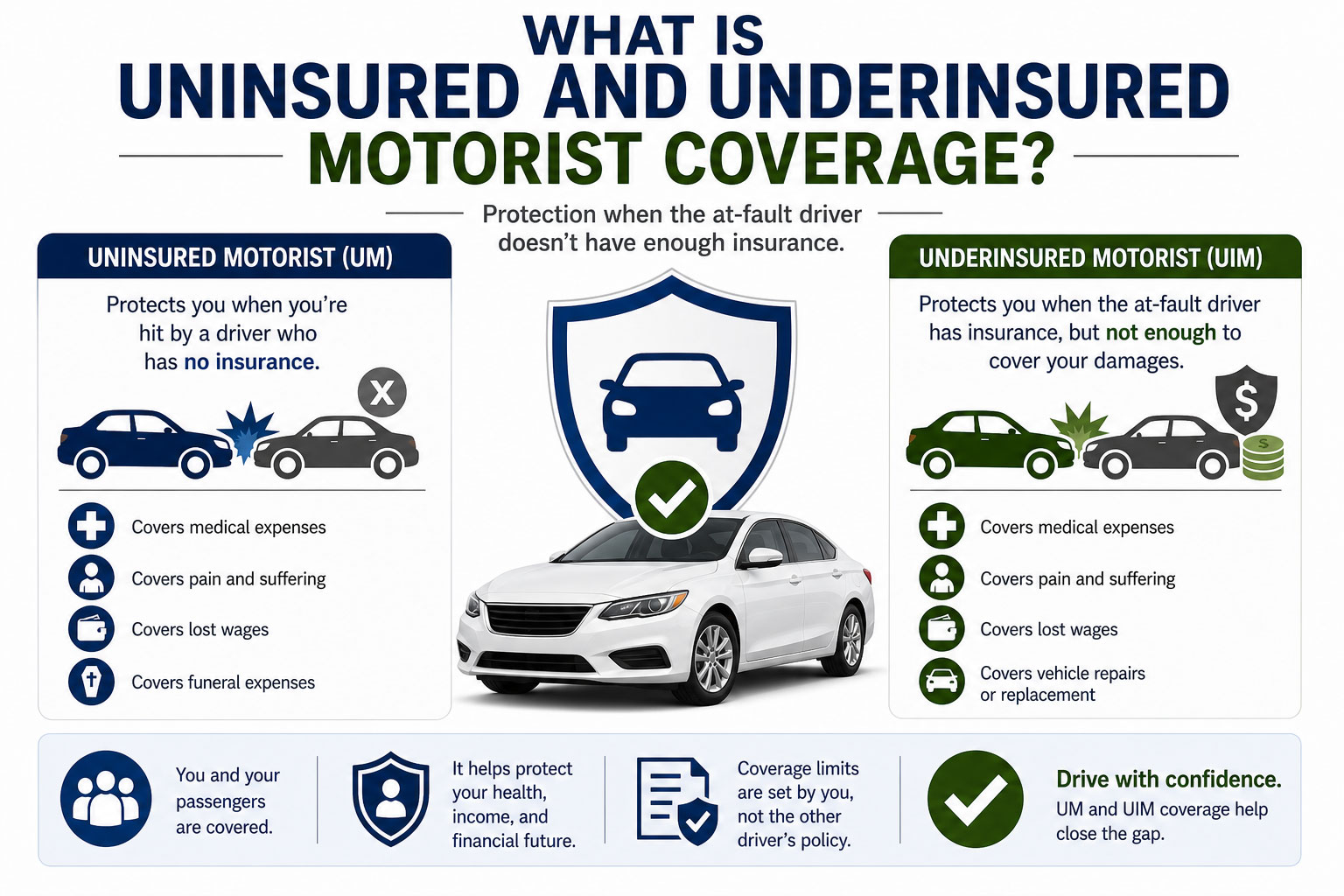
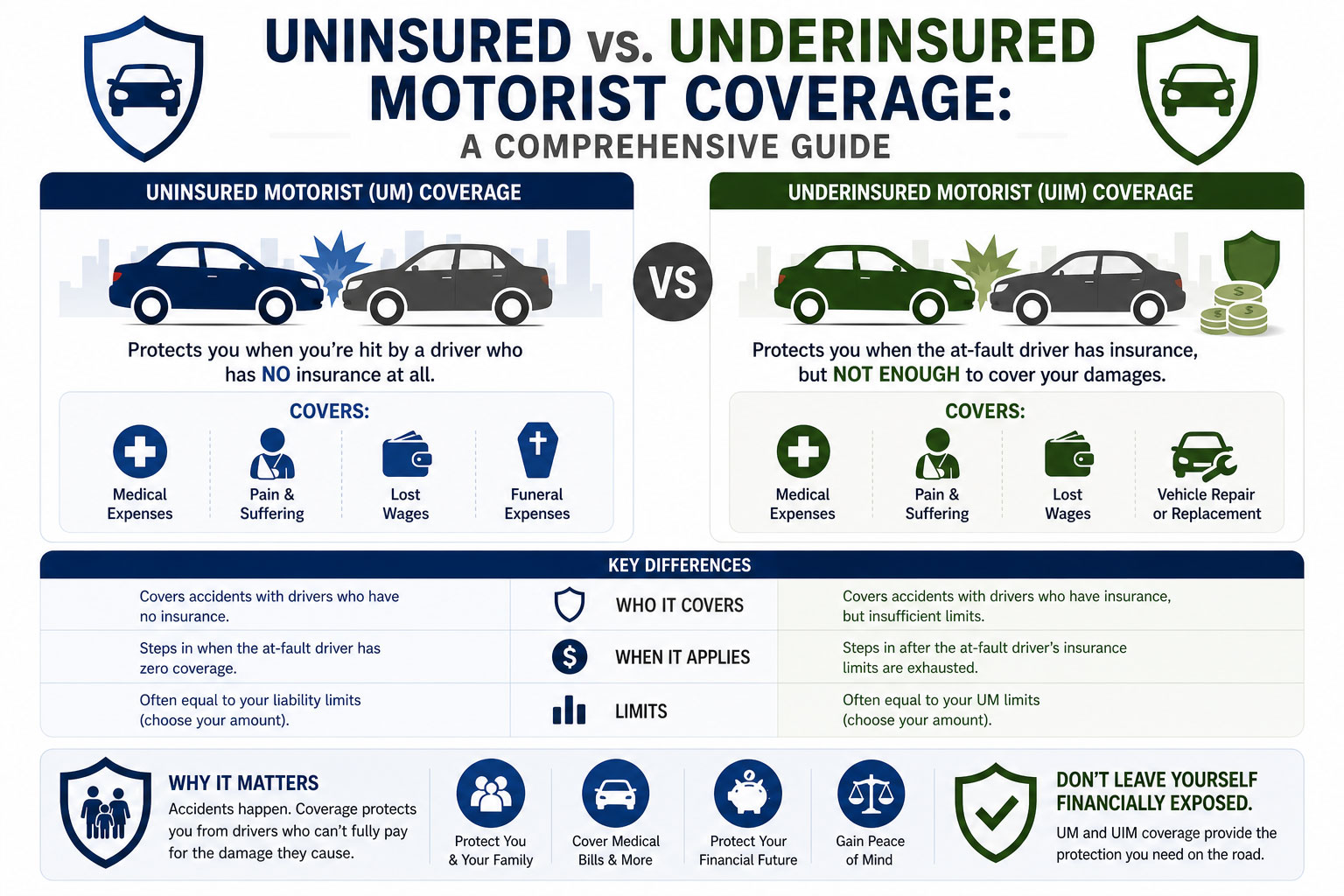
UM coverage applies when you are involved in an accident with a driver who has no insurance at all or in cases of a hit-and-run where the driver cannot be identified. UIM coverage applies when the at-fault driver has insurance, but their liability limits are insufficient to cover the full extent of your medical bills, lost wages, and pain and suffering.
The primary purpose of these statutes is to provide a "safety net" for Arizona citizens. Because the state has a high rate of motorists driving without insurance—frequently estimated between 10% and 15%—the courts have historically interpreted these laws broadly to protect victims. This broad interpretation is the foundation for the "portability" of the coverage.
The Principle of Portability: Why Coverage Follows the Person
The most critical concept in Arizona insurance law regarding UM and UIM is that the coverage is "personal." Unlike liability insurance, which is often tied to the specific vehicle listed on the declarations page to protect against damages that the vehicle might cause to others, UM/UIM is designed to protect the "insured person" from external harm.
Coverage for the Named Insured and Resident Relatives
If you have a policy that includes UM/UIM coverage, that coverage extends to you regardless of where you are. This means:
- Other Owned Vehicles: If you own two cars but only have UM/UIM on one policy, there are complex legal arguments regarding whether it covers you in the second car, though typically, insurers require each vehicle to be covered. However, the protection often follows you if you are a passenger in someone else's vehicle.
- Non-Owned Vehicles: If you are riding in a friend's car, a taxi, a rideshare (like Uber or Lyft), or a rental car, your personal Arizona UM/UIM coverage acts as a primary or secondary layer of protection if that vehicle is hit by an uninsured driver.
- Pedestrian and Bicycle Accidents: If you are struck by an uninsured vehicle while walking your dog or riding a bicycle, your own auto insurance policy's UM coverage applies. The law views this as a motor vehicle accident impacting the insured, triggering the policy benefits.
Defining "Resident Relatives"
Arizona law typically extends this portability to "resident relatives." This generally includes anyone related by blood, marriage, or adoption who lives in the same household. This is a vital distinction because it means a teenager living at home is protected by their parents' UM/UIM policy even if they are riding in a friend’s car or walking to school. In 2026, as multi-generational housing remains common in Arizona, this "household" definition continues to be a major factor in claims litigation.
The "Owned-But-Uninsured" Exclusion and Arizona Case Law
For years, a major point of contention in Arizona was the "owned-but-uninsured" exclusion. Insurance companies frequently included language in policies stating that UM/UIM coverage would not apply if the insured was injured while operating a vehicle they owned but did not insure under that specific policy.
Historically, the Arizona Supreme Court has been skeptical of these exclusions. In the landmark case Higgins v. Fireman’s Fund Insurance Co., and subsequent rulings, the courts established that because UM/UIM coverage is intended to protect the person, an insurer cannot easily strip that coverage away simply because the person was in a different vehicle they owned.
However, the legislature amended A.R.S. § 20-259.01 to allow certain limitations. As of 2026, while the coverage is still largely portable, insurers are permitted to limit coverage to the vehicle specifically insured if the policyholder has chosen not to purchase coverage for their other vehicles. This highlights the importance of ensuring that every vehicle in a household is properly listed on a policy to avoid "gap" periods during a claim.
Anti-Stacking Provisions in Arizona
"Stacking" refers to the practice of combining coverage limits from multiple vehicles or multiple policies to increase the total payout for a single accident. For example, if you have two vehicles with $50,000 in UM coverage each, stacking would allow you to access $100,000.
Arizona law regarding stacking is nuanced. Under A.R.S. § 20-259.01(H), insurers are allowed to include "anti-stacking" language in their policies. This means that if you have multiple vehicles insured under the same policy, or even multiple policies with the same company, the insurer can legally limit you to the coverage amount of a single vehicle.
To be enforceable, the anti-stacking provision must be clear and unambiguous. If the policy language is confusing, Arizona courts often rule in favor of the policyholder, allowing the stacking of benefits. When evaluating your coverage in 2026, it is essential to check if your premiums reflect a multi-car discount that explicitly includes an anti-stacking waiver.
Scenarios Where Arizona UM/UIM Coverage Extends
To better understand how this portability works in practice, consider the following table which outlines common scenarios and how your Arizona UM/UIM policy typically responds:
| Scenario | Coverage Status | Explanation |
|---|---|---|
| Driving your insured vehicle | Covered | The primary vehicle listed on your policy is fully protected. |
| Passenger in a friend's car | Covered | Your UM/UIM follows you as a person to provide excess coverage. |
| Struck as a pedestrian | Covered | UM/UIM acts as "accident insurance" for vehicle-related injuries. |
| Riding a bicycle | Covered | Similar to pedestrian status; the policy covers vehicle-related harm. |
| Driving a rental car | Covered | Your personal policy typically extends UM/UIM to temporary rentals. |
| Using a rideshare (Uber/Lyft) | Covered | Your policy can fill the gap if the rideshare's UM limits are low. |
| Borrowing a neighbor's truck | Covered | Permissive use of a non-owned vehicle is usually protected. |
Why "Full Coverage" is a Misnomer in Arizona
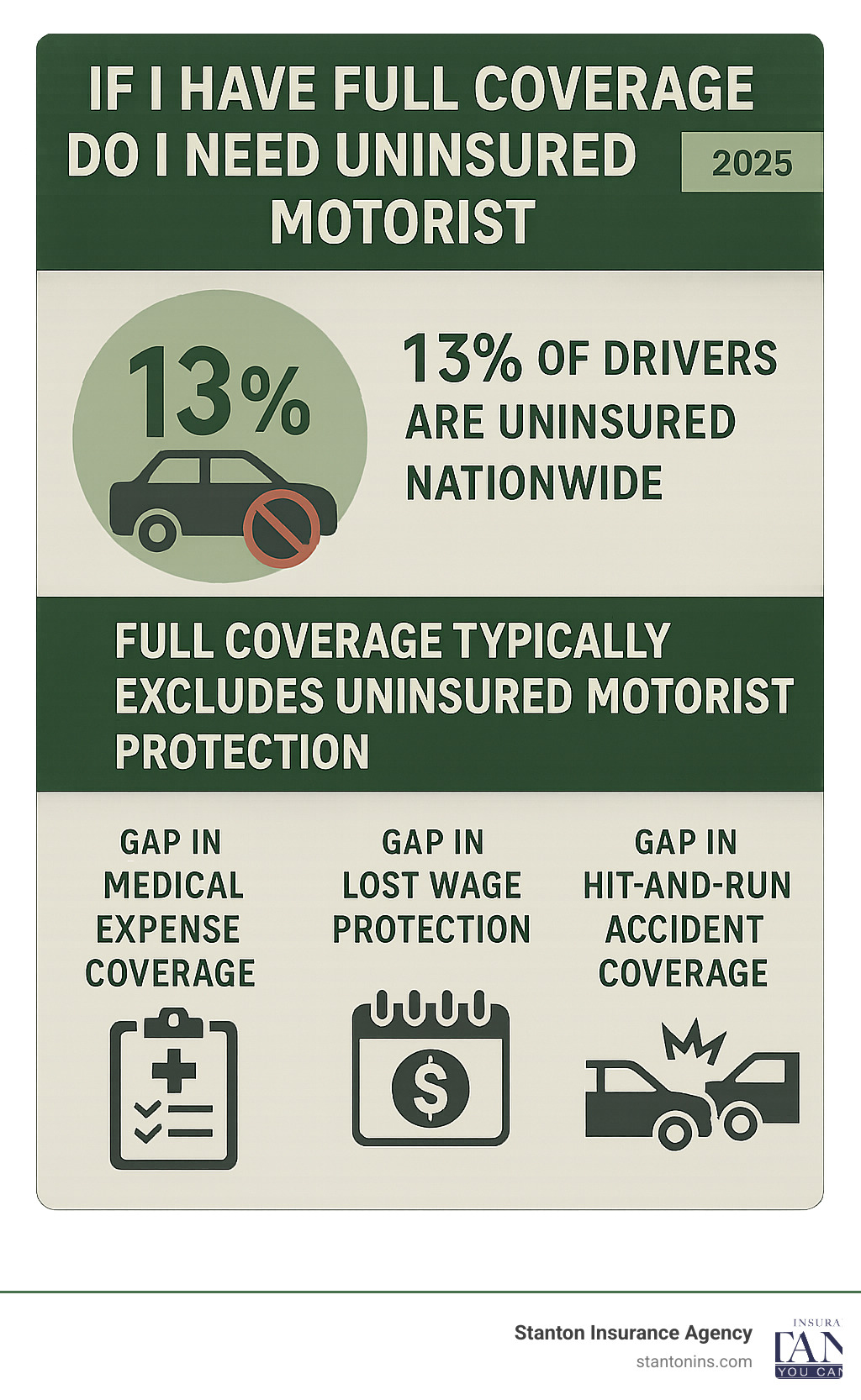
Many Arizona drivers believe they have "full coverage" if they meet the state's minimum liability requirements. However, in 2026, the minimum liability limits in Arizona remain relatively low compared to the rising costs of medical care. "Full coverage" typically refers only to liability, collision, and comprehensive insurance—it does not automatically include UM or UIM unless you specifically select them.
Because Arizona is an "at-fault" state, if you are hit by someone else, you must look to their insurance for compensation. If they have no insurance, or if you are the victim of a hit-and-run, your liability coverage will do nothing for you. Your collision coverage will fix your car (minus your deductible), but it will not pay for your surgery, physical therapy, or lost income. This is why the portability of UM/UIM is so vital; it is the only part of your policy that pays you for your bodily injuries when the other party cannot.
How to Verify and Optimize Your Coverage in 2026
Given the complexity of portability and the potential for anti-stacking exclusions, Arizona residents should perform a policy audit annually.
- Review the Declarations Page: This page lists the vehicles and the specific limits for UM and UIM. Ensure these limits match your Bodily Injury Liability limits. Many people mistakenly carry high liability to protect others but low UM/UIM to protect themselves.
- Check for the UM/UIM Selection/Rejection Form: In Arizona, an insurer must have a signed form on file if you chose limits lower than your liability limits or if you rejected the coverage entirely. If the insurer cannot produce this signed form after an accident, the law may "write" the coverage into your policy at the liability limit level.
- Confirm Household Members: Ensure all licensed drivers and resident relatives are known to the insurer. While the coverage is portable to resident relatives, failing to disclose a resident driver can sometimes lead to claims denials based on "material misrepresentation."
- Evaluate Umbrella Policies: If you have an umbrella policy, check if it includes an "Umbrella UM/UIM" endorsement. Standard umbrella policies often only provide excess liability (protecting you if you are sued), not excess UM/UIM (protecting you if you are hit).
Filing a UM/UIM Claim in Arizona: Practical Steps
If you are involved in an accident where the at-fault party is uninsured or underinsured, the process for accessing your portable coverage involves several specific steps:
1. Identify the At-Fault Party's Limits
You must first establish that the other driver is uninsured or that their insurance is insufficient. If it is a hit-and-run, you must generally report the incident to the police immediately to satisfy policy requirements for a UM claim.
2. The "Consent to Settle" Requirement
In UIM cases, if the at-fault driver has some insurance, you cannot simply settle with them and then go to your own insurance company. Most Arizona policies require you to obtain "consent to settle" from your own UIM carrier before finalizing a deal with the at-fault driver's insurer. Failure to do this can void your UIM coverage because it interferes with your insurer's subrogation rights (their right to sue the at-fault driver to pay them back).
3. Arbitration vs. Litigation
Many Arizona insurance policies contain a clause requiring UM/UIM disputes to be settled through binding arbitration rather than a jury trial. This can speed up the process but also changes the strategy your legal counsel might use.
Common Mistakes with Portable Coverage
Despite the legal protections in Arizona, policyholders often make errors that jeopardize their ability to use their coverage across all vehicles:
- Assuming the "Other" Car has Insurance: Never assume that because you are a passenger in a friend's car, they have high UM/UIM limits. If they have no UM/UIM, you must rely entirely on your own portable policy.
- Rejecting Coverage to Save Money: The cost of UM/UIM is typically a small fraction of the total premium. In 2026, with the average ER visit costing thousands of dollars, rejecting this coverage is a significant financial risk.
- Failing to Update the Household Status: If a child moves back home or a relative moves in, they should be added to the policy or at least noted, to ensure the portability of the UM/UIM coverage clearly applies to them.
Frequently Asked Questions
Does Arizona UM coverage cover my car or just my body?
Uninsured Motorist (UM) coverage in Arizona is divided into two types: UM Bodily Injury (UMBI) and UM Property Damage (UMPD). UMBI is the most common and is highly portable, following your person to cover medical bills and pain and suffering. UMPD covers the damage to your vehicle if you do not have collision coverage. However, most people with "full coverage" use their collision insurance for vehicle repairs and their UMBI for medical issues.
If I am hit by an uninsured driver while in a rental car, whose insurance pays?
Usually, your personal Arizona auto insurance is the primary source of UM coverage if you have it on your policy. If you purchased the supplemental insurance offered by the rental car company, that would typically pay first, and your personal policy would act as secondary or "excess" coverage.
Can my insurance company raise my rates if I file a UM claim in Arizona?
Under A.R.S. § 20-263, Arizona insurers are prohibited from increasing your premium for a claim where you were not at fault. Since UM and UIM claims, by definition, require another party to be at fault, filing a claim for these benefits should not result in a "surcharge" or rate hike, provided you were truly not the cause of the accident.
Does UM/UIM coverage apply to motorcycles in Arizona?
Yes, but motorcycle policies are separate. If you are injured on your motorcycle, you generally cannot use the UM/UIM coverage from your car policy unless the language specifically allows it (which is rare). You must ensure that your specific motorcycle policy has its own UM/UIM limits.
What happens if a hit-and-run driver is never found?
In Arizona, hit-and-run accidents are treated as Uninsured Motorist claims. You are covered as long as there is "physical contact" between the vehicles or, in some cases, clear evidence that the unidentified vehicle caused the accident (such as a witness). Your coverage will follow you whether you were in your car or crossing the street.
Practical Recommendation for Arizona Drivers
To ensure you are fully protected by the portability of Arizona’s insurance laws in 2026, you should maintain UM and UIM limits that are equal to your liability limits. For example, if you carry $100,000/$300,000 in liability to protect your assets from lawsuits, you should carry the same $100,000/$300,000 in UM/UIM to protect your own health and financial stability.
Always confirm that your resident relatives are listed on your policy documents to avoid any ambiguity regarding household status during a claim. By treating UM/UIM as "personal protection" rather than "car insurance," you can drive, walk, or ride through Arizona with the confidence that your safety net follows you wherever you go.