Arizona State University (ASU) sports in 2026 operate at the intersection of a massive conference realignment, the maturation of Name, Image, and Likeness (NIL) ecosystems, and a campus-wide commitment to "The New American University" model. As a core member of the Big 12 Conference, ASU athletics focuses on balancing fiscal sustainability with elite national competitiveness across 26 varsity programs.
The Cultural and Structural Shift: From the Pac-12 to the Big 12
To understand Arizona State University sports in context, one must first recognize the seismic shift that occurred in the mid-2020s. For over 40 years, ASU was defined by its membership in the Pac-12 Conference. The move to the Big 12 Conference, which became official in August 2024, fundamentally altered the university's athletic identity. By 2026, this transition has moved past the "adjustment phase" into a settled reality.
The context of this move was driven by media rights stability and the need for a national footprint. While the Pac-12 was rooted in West Coast culture and "After Dark" late-night broadcasts, the Big 12 offers a sprawling geographic reach from Florida to Arizona. For the Sun Devils, this has meant developing new rivalries with programs like UCF, Cincinnati, and West Virginia, while preserving the essential Territorial Cup rivalry with the University of Arizona.
Economically, the Big 12 membership provides ASU with a more predictable revenue stream from the conference’s television contracts with ESPN and FOX. This financial backbone is critical as the university navigates the ongoing evolution of the "House v. NCAA" settlement and the potential for direct revenue sharing with student-athletes.
Football in Context: The Dillingham Era and Recruiting Philosophy
Arizona State football serves as the primary economic engine and branding vehicle for the athletic department. Under the leadership of Head Coach Kenny Dillingham, the program has embraced a "pro-style" approach to college management. In the 2026 context, ASU football is defined by its aggressive use of the Transfer Portal and a heavy emphasis on local "Valley" recruiting.
Dillingham, an ASU alumnus, has positioned the program as the "home team" for the Phoenix metropolitan area, one of the fastest-growing regions in the United States. The context of ASU football is no longer just about winning the conference; it is about building a sustainable roster in an era where player mobility is at an all-time high.
Tactical Evolution and Staffing
The coaching staff has focused on high-tempo offensive schemes and a defensive philosophy built on versatility—essential traits for competing in the offensively potent Big 12. By 2026, the program has integrated advanced data analytics into every facet of the game, from in-game decision-making to player recovery protocols. This alignment with the university’s broader "Innovation" brand is a key selling point for recruits who are looking for a forward-thinking athletic experience.
The Power of Olympic Sports: Beyond the Gridiron
While football and basketball often dominate the headlines, the true "context" of ASU sports includes its status as a powerhouse in Olympic and non-revenue sports. Arizona State consistently ranks highly in the Learfield Directors' Cup, which measures the overall success of collegiate athletic departments across all sports.
- Swimming and Diving: Following the legendary tenure of Bob Bowman and the historic performance of Leon Marchand, the ASU swim program remains a global destination for elite talent. The infrastructure at the Mona Plummer Aquatic Center provides a training ground that rivals many national Olympic facilities.
- Wrestling: ASU has maintained its position as a top-tier program in the Big 12, a conference that is arguably the strongest in the nation for collegiate wrestling. The context here is one of high-level toughness and a recruitment pipeline that taps into the Midwest and Western regions.
- Golf: With the Thunderbirds Golf Complex and access to world-class courses in Scottsdale and Phoenix, the men's and women's golf teams are perennial national title contenders.
- Ice Hockey: Since moving into the state-of-the-art Mullett Arena, ASU Hockey has transitioned from a club-level curiosity to a legitimate Division I force, proving that "desert hockey" is a viable and thriving market.
Facility Modernization and the Novus Innovation Corridor
Arizona State University sports cannot be discussed without mentioning the physical transformation of the Tempe campus. The Novus Innovation Corridor, a multi-phase urban development project, utilizes university land to create a mix of office, residential, and retail spaces. The revenue generated from this land-use strategy is directly reinvested into athletic facilities.
Mountain America Stadium
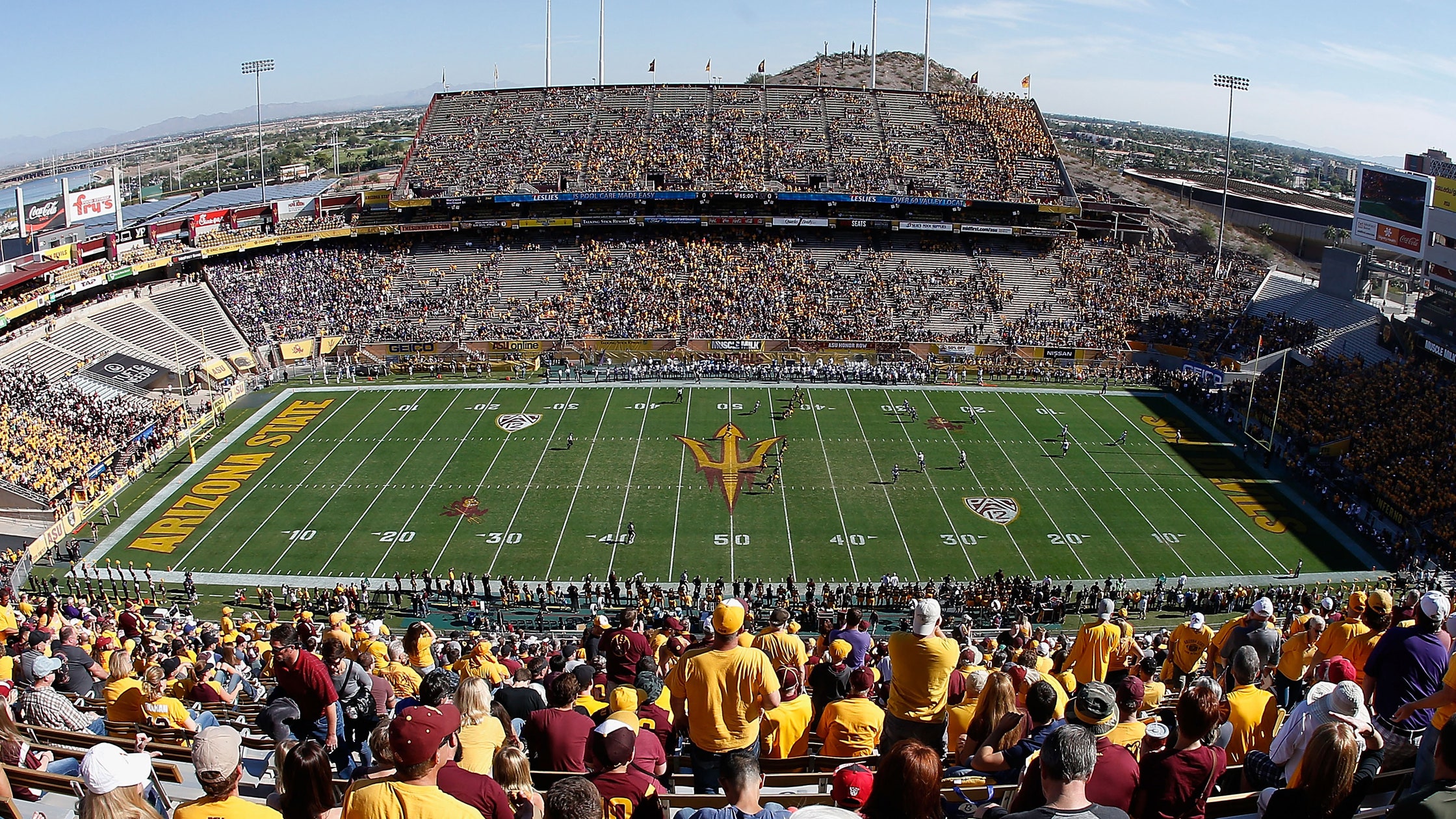
The home of Sun Devil Football, Mountain America Stadium, has undergone significant renovations to enhance the "fan experience." In 2026, the stadium serves as more than just a venue for six or seven Saturdays a year. It is a community hub, hosting concerts, festivals, and corporate events. The integration of high-end hospitality suites and improved concourse technology reflects the professionalization of the collegiate sports environment.
Mullett Arena and the Multi-Purpose Model
Mullett Arena represents a unique case study in facility management. By hosting both ASU hockey and (temporarily) professional NHL games in previous years, the arena proved that small-capacity, high-intensity venues could be more profitable and atmosphere-driven than massive, half-empty coliseums. This "boutique" approach to sports venues has become a hallmark of the ASU athletic strategy.
The Business of Sports: NIL and the Sun Angel Collective
In 2026, Name, Image, and Likeness (NIL) is the lifeblood of competitive athletics. ASU's context in this space is defined by the Sun Angel Collective, a third-party organization that facilitates NIL opportunities for Sun Devil athletes.
ASU has leveraged its location in the Phoenix market—the 11th largest media market in the U.S.—to provide athletes with unique branding opportunities. Unlike programs in small college towns, ASU athletes have access to major tech firms, real estate giants, and national retailers headquartered in the Valley. This provides a "city-school" advantage that the athletic department uses to counteract the massive donor pools of traditional "blue blood" programs in the South and Midwest.
| Feature | Description | Impact on Student-Athletes |
|---|---|---|
| Market Access | Phoenix Metro Area (6M+ people) | Higher volume of local endorsement deals and internships. |
| NIL Infrastructure | Sun Angel Collective & Altius Sports | Comprehensive financial literacy and brand management support. |
| Conference Exposure | Big 12 Network (ESPN/FOX) | National visibility across multiple time zones. |
| Academic Alignment | Global Futures Laboratory / Barrett | Integration of athletic career with "life after sports" education. |
Academic Excellence and the Student-Athlete Experience
A critical piece of the ASU sports context is the university's insistence on the "student" portion of the student-athlete equation. Under President Michael Crow, the university has reached record-high Graduation Success Rates (GSR).
The Sun Devil Athletics Academic Center provides mandatory tutoring, career counseling, and mental health resources. In 2026, the emphasis has shifted toward "professional readiness," acknowledging that while few athletes will turn professional in their sport, all will eventually enter the workforce. The "Sun Devil Way" emphasizes leadership, community service, and global citizenship, ensuring that the athletic department remains an asset to the university's academic mission rather than a siloed entity.
Challenges and Considerations for the Future
Despite the successes, the context of ASU sports includes significant challenges. The "arms race" in facility spending and the rising costs of travel in a geographically diverse Big 12 put pressure on the athletic budget.
- Travel Logistics: Sending a volleyball team or a softball team from Tempe to Morgantown, West Virginia, or Orlando, Florida, requires sophisticated scheduling and increased travel budgets.
- Roster Retention: The 2026 landscape of the transfer portal means that coaches must "re-recruit" their own rosters every offseason. Maintaining team chemistry in a "free agent" culture is a constant struggle.
- Title IX Compliance: As revenue-sharing models evolve, ASU must ensure that it remains strictly compliant with Title IX, providing equitable opportunities and resources for female athletes in a shifting financial landscape.
Summary of Program Health by Segment
To accurately gauge Arizona State University sports in context, we must look at the specific trajectories of the major programs as of 2026:
- Men’s Basketball: Competing in the Big 12—widely considered the toughest basketball conference in history—ASU has focused on recruiting high-ceiling guards and versatile wings. The "Desert Financial Arena" remains a focal point for renovations to keep pace with conference peers.
- Baseball and Softball: Both programs continue to lean on the rich history of Sun Devil Diamond and Farrington Stadium. The context here is a "return to glory," as both programs strive to recapture the national championship heights of the 1970s, 80s, and 90s.
- Beach Volleyball: Capitalizing on the Arizona climate, this has become one of the fastest-growing programs on campus, attracting top talent from California and internationally.
Frequently Asked Questions
How has the Big 12 move affected ASU's traditional rivalries?
The primary rivalry with the University of Arizona remains intact, as both schools moved to the Big 12 together. However, traditional matchups with UCLA, USC, and Stanford have been replaced by annual games against programs like Texas Tech, Oklahoma State, and Baylor. This has shifted the "context" from a West Coast focus to a more Midwestern and Southern competitive landscape.
What is the primary source of NIL funding for ASU athletes?
The Sun Angel Collective is the primary vehicle for fan and booster-led NIL contributions. Additionally, many athletes secure individual deals with local businesses in the Phoenix area, ranging from car dealerships to tech startups located in the Novus Innovation Corridor.
Is Arizona State University a "Football School" or a "Basketball School"?
Contextually, ASU is a comprehensive athletic department. While football is the largest revenue generator, the university’s identity is more closely tied to its "Olympic" success in sports like swimming, golf, and wrestling. The university markets itself as a top-tier destination for all student-athletes, regardless of their sport.
How can fans attend games and support Sun Devil athletics in 2026?
Fans can purchase tickets through the official Sun Devil Athletics website. The university has moved entirely to digital ticketing and has implemented "dynamic pricing" for high-demand Big 12 matchups. Support also comes through donations to the Sun Devil Club, which funds scholarships and facility upgrades.
What role does "Innovation" play in ASU sports?
Innovation is the core brand of Arizona State University. In sports, this manifests through the use of wearable technology for injury prevention, the "Novus" real estate model for funding, and the early adoption of advanced media streaming platforms to reach a global alumni base.
Recommendations for Stakeholders
For students, alumni, and prospective athletes, engaging with Arizona State University sports in 2026 requires an understanding of the university's "forward-looking" philosophy.
- Prospective Athletes: Focus on programs that offer a clear path to both NIL opportunities and degree completion. ASU’s location and the "Barrett, The Honors College" option provide a unique competitive advantage.
- Alumni and Donors: Support should be directed toward the Sun Devil Club or specific NIL collectives to ensure the university remains competitive in the high-stakes Big 12 environment.
- Fans: Embrace the new geography of the Big 12. While the travel for away games is longer, the quality of competition—especially in basketball and football—has never been higher.
ASU sports in 2026 is a resilient and evolving ecosystem. By leveraging its unique geography, innovative business models, and a commitment to broad-based athletic excellence, Arizona State has successfully navigated the most turbulent era in the history of college sports, emerging as a stable and formidable member of the national athletic landscape.