In Arizona, self-employed individuals operating as sole proprietors or partners are generally not required to carry workers’ compensation insurance for themselves, though they may elect to do so. However, if your business is incorporated and you receive a W2 wage as an owner-employee, Arizona law typically classifies you as an employee, necessitating mandatory coverage.
Understanding the intersection of self-employment and W2 status is critical for Arizona business owners in 2026. The Industrial Commission of Arizona (ICA) enforces strict regulations regarding who must be covered, and navigating these rules requires a clear distinction between your legal business structure and your tax classification. Whether you are a solo freelancer, an independent contractor, or the officer of a small S-Corporation paying yourself a salary, workers' compensation provides a "no-fault" system that protects both the business and the individual from the financial ruin associated with workplace injuries.
The Legal Landscape of Workers’ Compensation in Arizona
Arizona’s workers' compensation system is governed by the Arizona Workers’ Compensation Act (A.R.S. § 23-901 et seq.). As of 2026, the fundamental principle remains that any employer who employs at least one worker—whether full-time, part-time, or a family member—is required to provide workers’ compensation insurance. The primary purpose is to ensure that employees receive medical care and partial wage replacement if they are injured on the job, while simultaneously protecting employers from civil lawsuits related to those injuries.
For the self-employed, the requirement hinges entirely on legal entity structure. Arizona law distinguishes between "owners" and "employees." In a sole proprietorship or a general partnership, the owners are the business; they are not employees of themselves. Consequently, the state does not force these individuals to insure themselves. However, the moment that self-employed person hires their first employee, the legal mandate triggers for that employee, even if the owner remains excluded from the policy.
Disambiguating Self-Employment and W2 Status
The phrase "self-employment W2" often refers to individuals who own their own business (self-employed in the colloquial sense) but operate as a corporation, such as an S-Corp or C-Corp. For tax purposes, these individuals are required by the IRS to pay themselves a "reasonable salary" via a W2.
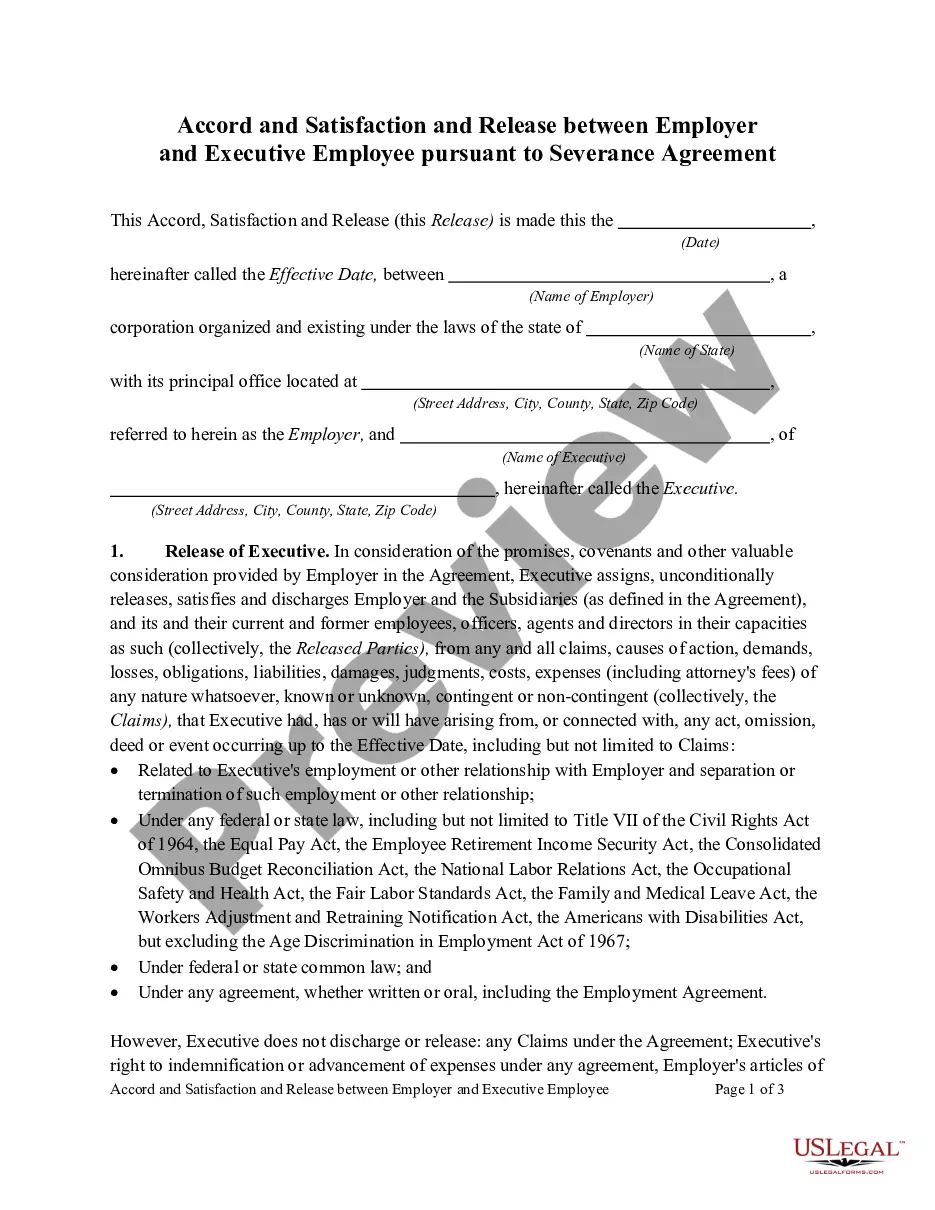
In the eyes of the Industrial Commission of Arizona, once you move from a "draw" (taking money out of the business as an owner) to a "W2 salary" (receiving a paycheck as an employee of your corporation), your status shifts. As a corporate officer who performs labor for the corporation, you are legally an employee. Under Arizona law, corporate officers are included in the definition of "employee" unless they specifically opt out through a formal waiver process, provided they meet specific ownership criteria.
The Role of the S-Corporation
Many Arizona professionals transition to S-Corp status to save on self-employment taxes. While this provides tax advantages, it increases administrative requirements. In 2026, if you are an S-Corp owner-employee in Arizona, you must either:
- Purchase a workers’ compensation policy that includes yourself as a covered employee.
- File a specific rejection of coverage if you are a qualifying officer (usually requiring at least a 10% ownership stake in certain contexts, though rules vary by carrier and specific corporate bylaws).
Mandatory vs. Elective Coverage: Who Needs What?
Deciding whether to carry coverage involves weighing legal mandates against personal risk management. Even if you are not legally required to carry insurance, doing so might be a prerequisite for securing contracts.
Sole Proprietors and Partners
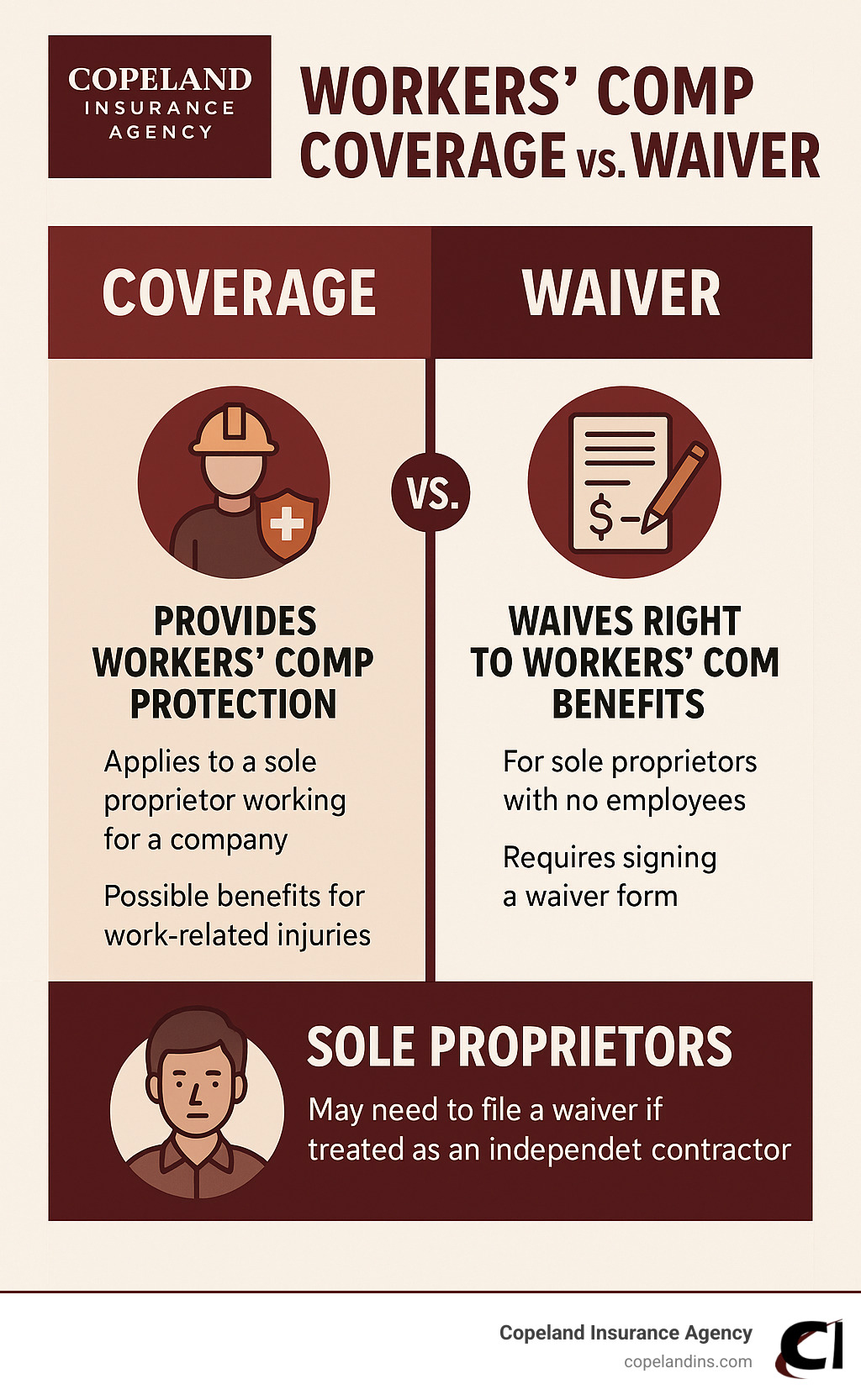
If you operate as a sole proprietor or in a partnership, you are excluded from the Act by default. You can, however, "elect" to be covered. This involves notifying an insurance carrier that you wish to be treated as an employee for the purposes of the policy. This is common for self-employed individuals in high-risk trades, such as roofing or electrical work, where health insurance might not cover "work-related" injuries.
Corporate Officers and LLC Members
For LLCs, the rules are similar to partnerships if the LLC is member-managed. However, if the LLC elects to be taxed as a corporation and pays W2 wages, the members may be viewed as employees. Corporate officers are the most scrutinized group. In Arizona, if you are a corporate officer of a business that has other employees, you are automatically included in the workers’ comp requirements unless you file a written rejection of coverage with both the insurance carrier and the ICA.
| Business Structure | W2 Wages? | Requirement for Owner | Requirement for Employees |
|---|---|---|---|
| Sole Proprietor | No (Owner Draw) | Elective (Optional) | Mandatory (if 1+ hired) |
| Partnership | No (Distributions) | Elective (Optional) | Mandatory (if 1+ hired) |
| S-Corp / C-Corp | Yes (Salary) | Mandatory (unless waived) | Mandatory |
| LLC (Member Managed) | No (Distributions) | Elective (Optional) | Mandatory (if 1+ hired) |
| LLC (Corp Election) | Yes (Salary) | Mandatory (unless waived) | Mandatory |
The "Independent Contractor" Pitfall in Arizona
Many self-employed individuals in Arizona operate as independent contractors. However, simply signing a contract that says you are an "independent contractor" does not exempt the hiring entity from providing workers' compensation if the ICA determines an employer-employee relationship exists.
Arizona uses the "Right to Control" test. If the hiring entity controls how, when, and where you work, provides your tools, or pays you an hourly wage rather than a flat fee for a result, you may be legally classified as an employee. In 2026, the ICA continues to look past the label of "self-employed" to the reality of the working relationship. If you are a W2 employee of your own corporation, you are essentially "loaning" your services to clients, and your own corporation must provide the coverage to protect both you and the client.
Costs and Premium Calculation for Self-Employed W2 Earners
If you are a self-employed individual who must (or chooses to) carry workers' compensation, your premiums are determined by two primary factors: your NCCI (National Council on Compensation Insurance) classification code and your total payroll.
Classification Codes
Every job type is assigned a four-digit code based on the risk associated with that work. A self-employed software developer (Code 8810 - Clerical) will pay significantly less than a self-employed landscaper (Code 0042). In Arizona, these rates are updated annually.
Payroll Basis
For a W2 owner-employee, the premium is calculated based on your annual W2 earnings. However, Arizona and the NCCI set "minimum" and "maximum" payroll amounts for corporate officers. Even if you only pay yourself a $20,000 salary to keep taxes low, the insurance carrier might use a "minimum officer payroll" (for example, $52,000) to calculate your premium. Conversely, if you earn $300,000, the premium is usually capped at a maximum payroll limit set by the state.
Benefits of Carrying Coverage When Not Required
While the legal mandate is the primary driver for W2 business owners, there are strategic reasons for a self-employed person to opt-in even if they are a sole proprietor.
- Contractual Compliance: Many General Contractors (GCs) or government agencies in Arizona will not allow a self-employed sub-contractor onto a job site without a certificate of insurance (COI) for workers' compensation. Even if you are legally exempt, the GC’s insurance carrier may charge the GC for your exposure if you don't have your own policy.
- Gap in Health Insurance: Many private health insurance policies explicitly exclude coverage for injuries sustained while performing work for profit. If a self-employed carpenter falls off a ladder and doesn't have workers' comp, they may find their health insurer denies the claim, leaving them with 100% of the medical bills.
- Disability Benefits: Workers' comp provides a disability benefit (usually 66 and 2/3% of the average monthly wage in Arizona) that health insurance does not. This acts as a vital safety net for those who are the sole breadwinners of their business.
How to Obtain Coverage in Arizona
As of 2026, Arizona remains a "competitive" state, meaning you can purchase insurance from private carriers or the state-funded "carrier of last resort," CopperPoint Mutual Insurance (formerly the State Compensation Fund).
- Contact an Independent Agent: Seek an agent who specializes in Arizona commercial lines. They can shop your NCCI code across multiple carriers like Travelers, The Hartford, or CopperPoint.
- Provide Payroll Estimates: You will need to provide your projected W2 earnings for the year.
- Officer Exemptions: If you are an officer of a corporation and wish to be excluded to save on premiums, ensure the agent provides the specific ICA "Rejection of Coverage" form. This must be signed and filed correctly; otherwise, you may be charged for the coverage during a year-end audit.
- The Audit Process: Most workers' comp policies are "estimated." At the end of the policy year, the carrier will perform an audit of your W2s and payroll records to ensure the premium paid matches the actual risk.
Consequences of Non-Compliance
Operating a business in Arizona that requires workers' compensation without having a policy is a serious offense. The ICA's Special Fund Division monitors business registrations and payroll data.
- Civil Penalties: Fines can start at $1,000 for a first offense and escalate significantly for subsequent violations.
- Stop-Work Orders: The state has the authority to shut down your operations until proof of insurance is provided.
- Personal Liability: If you are a W2 owner-employee of an uninsured corporation and you get injured, the corporation is still liable for your medical bills and lost wages. If the corporation cannot pay, the ICA’s Special Fund may pay the claim and then sue you personally (piercing the corporate veil) to recover the costs, plus a 10% penalty.
Frequently Asked Questions
Can I use my health insurance instead of workers' compensation in Arizona?
While you can use health insurance for medical treatment, most health insurance policies have exclusions for work-related injuries. Furthermore, health insurance does not provide the "exclusive remedy" protection that workers' comp offers, which prevents employees (or yourself, in a corporate structure) from suing the business for negligence. Health insurance also does not provide wage replacement for time lost due to injury.
I am the only employee of my S-Corp; do I still need it?
Yes, in Arizona, if you are a corporate officer receiving a W2, you are an employee. While you can technically file a waiver to exclude yourself from coverage, many small business owners choose to remain covered for the medical and disability benefits. If you do not file a waiver and have no policy, you are in violation of state law.
How do I prove I’m self-employed and exempt to a client?
If you are a sole proprietor with no employees, you can provide a "Sole Proprietor Waiver" or an "Independent Contractor Agreement" that references A.R.S. § 23-902. However, many clients will still require you to carry a "ghost policy"—a workers' compensation policy that has a $0 payroll for employees but provides you with a certificate of insurance to meet contractual obligations.
What is a "Ghost Policy"?
A "ghost policy" is a common term for a minimum-premium workers' compensation policy where the owner is excluded, and there are no other employees. It provides a Certificate of Insurance showing the business has a policy in place. This is often used by self-employed individuals to satisfy the requirements of a hiring contractor who refuses to work with uninsured subs.
Does Arizona require workers' comp for 1099 contractors?
No, the law does not require you to provide workers' comp for legitimate 1099 independent contractors. However, if the ICA determines the contractor is actually an employee based on the "right to control," you will be held liable for their coverage and any injuries they sustain. It is often safer to require 1099 contractors to carry their own coverage.
Final Recommendation for Arizona Business Owners
For self-employed individuals in Arizona during 2026, the transition to a W2 payroll structure should never be done without consulting both a tax professional and an insurance advisor. If you operate as a corporation (S-Corp or C-Corp) and pay yourself a W2 wage, you should assume that workers' compensation is mandatory unless you have a documented and filed rejection of coverage. Even if you are a sole proprietor and exempt by law, the risk of a work-related injury being denied by your primary health insurer makes elective workers' compensation coverage a prudent investment for long-term financial stability.