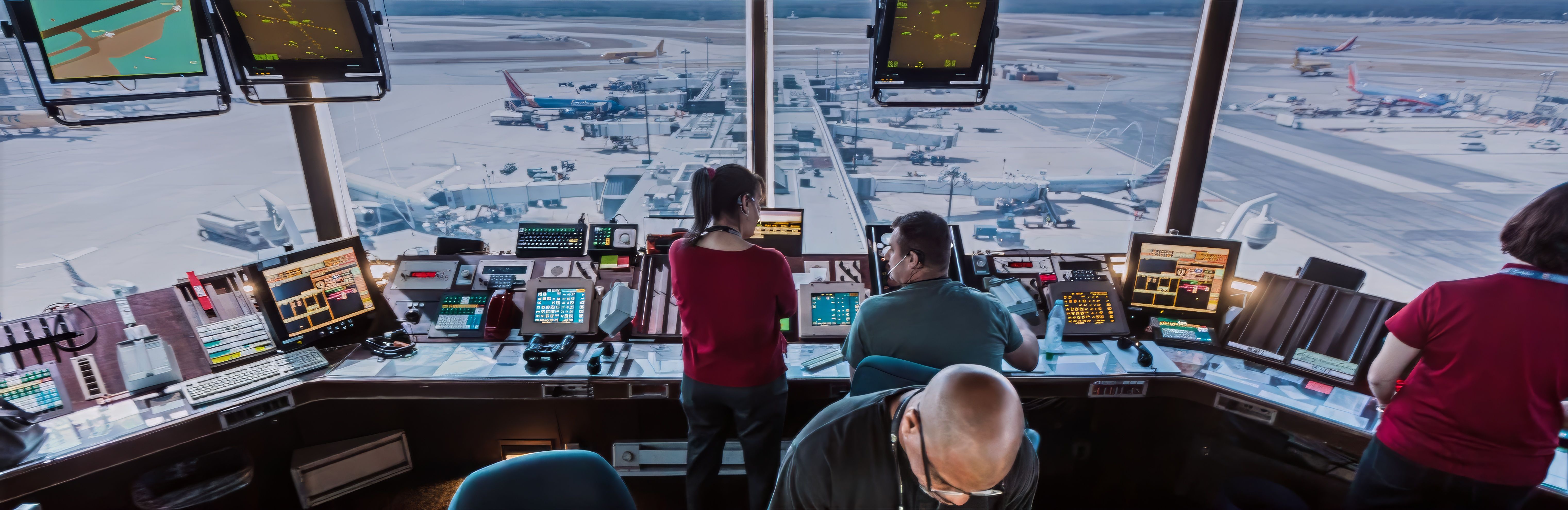
Air traffic controller talk, officially known as aviation phraseology or radiotelephony, is a specialized, highly standardized language used by pilots and controllers to ensure safety and efficiency. It utilizes a specific phonetic alphabet, distinct number pronunciations, and precise terminology to eliminate ambiguity and overcome the limitations of radio communication quality.
In the high-stakes environment of global aviation, a single misunderstood word can lead to catastrophic consequences. As of 2026, despite the increasing integration of digital data link communications (such as Controller-Pilot Data Link Communications or CPDLC), voice communication remains the primary and most critical method for managing aircraft in real-time. This specialized "talk" is not merely jargon; it is a meticulously designed tool used by the International Civil Aviation Organization (ICAO) and national regulators like the Federal Aviation Administration (FAA) to maintain separation and order in the skies.
The Foundation of Aviation Phraseology: Why Standardization Matters
The primary goal of air traffic controller talk is the elimination of ambiguity. In everyday conversation, humans rely heavily on context, body language, and vocal inflection. In the cockpit or the radar room, these cues are absent. Radio transmissions can be marred by static, "stepping" (when two people talk at once), or language barriers.
Standardization ensures that every participant in the National Airspace System (NAS) and international airspace understands exactly what is being requested or instructed. By using a limited and predefined set of words, the cognitive load on both the pilot and the controller is reduced. They are trained to listen for specific "trigger" words that signify a command, a query, or a warning. This predictability is the bedrock of aviation safety, allowing for rapid processing of information even during high-workload phases of flight, such as takeoff or landing.
Furthermore, the global nature of aviation means a pilot from Japan might be communicating with a controller in Brazil. English is the international language of aviation, but "aviation English" is a subset that prioritizes clarity over nuance. Standard phraseology bridges the gap between different levels of English proficiency, ensuring that the essential meaning of a message is never lost in translation.
The NATO Phonetic Alphabet
To prevent confusion between letters that sound similar—such as 'B', 'C', 'D', and 'E'—aviation uses the NATO Phonetic Alphabet. Each letter is replaced by a distinct word that is difficult to mistake for another, even through heavy interference.
In 2026, this alphabet remains the universal standard across all civilian and military aviation. Whether a pilot is stating their aircraft registration (callsign) or a controller is giving a taxiway instruction, these words are used exclusively.
| Letter | Word | Letter | Word | Letter | Word |
|---|---|---|---|---|---|
| A | Alpha | J | Juliet | S | Sierra |
| B | Bravo | K | Kilo | T | Tango |
| C | Charlie | L | Lima | U | Uniform |
| D | Delta | M | Mike | V | Victor |
| E | Echo | N | November | W | Whiskey |
| F | Foxtrot | O | Oscar | X | X-ray |
| G | Golf | P | Papa | Y | Yankee |
| H | Hotel | Q | Quebec | Z | Zulu |
| I | India | R | Romeo |
Numerical Pronunciation and Altitudes
Numbers are just as critical as letters. In air traffic controller talk, numbers are often spoken digit-by-digit to avoid the confusion between "sixty" and "sixteen." However, there are specific pronunciations designed to be more easily heard over the radio.
- Zero: Pronounced "ZE-RO."
- Three: Pronounced "TREE" (to avoid the 'th' sound which can be lost).
- Five: Pronounced "FIFE" (with a hard 'f' to distinguish it from 'fire').
- Nine: Pronounced "NINER" (to distinguish it from the German word for "no" or the number five).
When discussing altitudes, the phrasing changes based on whether the aircraft is above or below a certain height. Below the "Transition Altitude" (which varies by country, but is 18,000 feet in the United States), altitudes are spoken in hundreds and thousands. For example, 4,500 feet is spoken as "Four thousand five hundred."
Above the transition altitude, pilots use "Flight Levels." Flight Level 330 (FL330) represents 33,000 feet at a standard atmospheric pressure setting. This ensures all aircraft in the high-altitude environment are using the same reference point, preventing collisions caused by varying local pressure settings.
Essential ATC Terms and Their Meanings
The vocabulary of ATC is concise. Each word has a specific legal and operational definition. Misusing these terms can lead to pilot deviations or dangerous situations.
Roger vs. Wilco
One of the most common mistakes made by the general public is the interchangeable use of "Roger" and "Wilco." In aviation, they are distinct:
- Roger: This means "I have received all of your last transmission." It does not mean "yes" or "I will comply." It simply acknowledges receipt.
- Wilco: A contraction of "Will Comply." It means "I have received your message, I understand it, and I will carry out the instruction." You should never say "Roger Wilco," as it is redundant.
Affirmative and Negative
Because "Yes" and "No" are short and can be easily clipped or missed in a radio transmission, aviation uses Affirmative (or simply Affirm in many regions) and Negative. These multi-syllable words are much harder to misinterpret.
Line Up and Wait
Used when a controller wants a pilot to taxi onto the departure runway and stop, but not take off yet. This was previously known in the US as "Position and Hold," but was changed to the international ICAO standard "Line Up and Wait" to harmonize global operations and reduce runway incursions.
Clearances: Cleared for the Option
A common phrase in flight training, "Cleared for the option" gives the pilot the choice to perform a touch-and-go, a full-stop landing, a low approach, or a missed approach. It provides flexibility for students and instructors while maintaining a single block of cleared airspace.
The Four-Step Communication Loop
Effective air traffic controller talk relies on a closed-loop communication system. This process, known as the "Read-back/Hear-back" loop, is designed to catch errors before they manifest as physical mistakes in the sky.
- The Transmission: The controller provides an instruction (e.g., "United 123, climb and maintain Flight Level 240").
- The Read-back: The pilot repeats the essential parts of the instruction back to the controller, followed by their callsign ("Climb and maintain Flight Level 240, United 123").
- The Hear-back: The controller listens to the pilot’s read-back to ensure it matches the original instruction.
- Correction: If the pilot says "Flight Level 250" instead of "240," the controller must immediately intervene with "United 123, Negative, climb and maintain Flight Level 240."
If a pilot fails to read back a critical instruction—such as a heading, altitude, or transponder code—the controller will prompt them to "read back" to confirm the message was understood correctly.
Emergency Phrases: Mayday and Pan-Pan
When things go wrong, air traffic controller talk shifts into emergency protocols. There are two levels of emergency calls, both derived from French terms.
- Mayday: (From m'aider, "help me"). This signifies a distress condition. It is used when there is a threat of "grave and imminent danger" and the aircraft requires immediate assistance. Once a "Mayday" is declared, that aircraft has absolute priority over all other traffic.
- Pan-Pan: (From panne, "breakdown"). This signifies an urgency condition. It is used when there is a safety concern regarding the aircraft or a person on board, but there is no immediate danger to the flight’s continued existence (e.g., a sick passenger or a non-critical mechanical failure).
In both cases, the pilot should state the nature of the problem, their intentions, and the number of "souls on board" (the total number of people, including crew).
Regional Differences: FAA vs. ICAO
While the world strives for total harmonization, subtle differences remain between the standards used by the Federal Aviation Administration in the United States and the ICAO standards used throughout most of the rest of the world.
For example, the word Decimal is used internationally to denote a decimal point in a frequency (e.g., "121 decimal 5"). In the United States, pilots and controllers often use the word Point ("121 point 5").
Another difference involves altimeter settings. In the US, these are given in inches of mercury (e.g., "Altimeter 29.92"). In Europe and much of the world, they are given in hectopascals (e.g., "QNH 1013"). Pilots flying transoceanically must be adept at switching their mindset and vocabulary as they cross these jurisdictional boundaries.
Practical Comparison of Standard Phraseology
The following table highlights the difference between common English and the precise "ATC talk" required in aviation.
| Common Language | ATC Phraseology | Purpose of Change |
|---|---|---|
| "What?" | Say Again | "What" is too short and can sound like other words. |
| "I'll do that." | Wilco | Explicitly states "Will Comply" with no room for doubt. |
| "Yes." | Affirmative / Affirm | Harder to lose in static than a one-syllable "Yes." |
| "Wait a second." | Stand By | Standardized way to tell the other party to wait for a response. |
| "Tell me if you heard this." | Acknowledge | Formal request for the receiver to confirm receipt. |
| "I'm going to start now." | Commencing | Specifically used for starting a procedure or approach. |
| "The runway is clear for you." | Cleared to Land | A specific legal authorization for a specific action. |
How to Learn and Master the Language
For those entering the aviation industry in 2026, mastering air traffic controller talk is a core part of flight training. It is typically learned through a combination of:
- Written Study: Reviewing official documents like the FAA's Aeronautical Information Manual (AIM) or ICAO Annex 10.
- Simulation: Using online flight simulation networks like VATSIM or IVAO, where enthusiasts practice real-world phraseology in a virtual environment.
- Immersion: Listening to live ATC feeds through services like LiveATC.net to hear how controllers manage real-world traffic flows.
- Chair Flying: Pilots often sit in a quiet room and practice speaking the phrases aloud while imagining the flight sequences to build muscle memory.
Frequently Asked Questions
Why do pilots say "Heavy" after their callsign?
The term "Heavy" is used for aircraft with a maximum takeoff weight of 300,000 pounds or more. It serves as a warning to other pilots and controllers that the aircraft produces significant "wake turbulence"—powerful vortices trailing from the wingtips that can flip smaller aircraft.
Is "Over and Out" used in air traffic controller talk?
No. In real aviation, "Over" means "I have finished talking and am waiting for your reply," while "Out" means "I have finished talking and do not expect a reply." Since you are either waiting for a reply or ending the conversation, saying both is a logical contradiction. In practice, most pilots simply end their transmission with their callsign.
What is a "Squawk" code?
A "Squawk" code is a four-digit number assigned by a controller that a pilot enters into their transponder. This allows the controller's radar screen to identify the specific aircraft and its altitude. Specific codes exist for emergencies: 7700 for a general emergency, 7600 for radio failure, and 7500 for a hijacking (unlawful interference).
What does "Blocked" mean on the radio?
If two pilots transmit at the exact same time, their signals interfere, resulting in a loud squeal or garbled noise known as a "heterodyne." A controller or another pilot will say "Blocked" to let the callers know that neither message was received and they need to re-transmit.
How do controllers handle pilots with thick accents?
Standard phraseology is the primary defense. By sticking strictly to the prescribed words, the "what" of the message is predictable even if the "how" is difficult to understand. If communication fails, controllers may use slower speech, request the pilot to "spell phonetically," or use digital data link (CPDLC) if the aircraft is so equipped.
Next Steps for Improving Communication
Whether you are a student pilot or an aviation enthusiast, the best way to master air traffic controller talk is through consistent, disciplined practice. Focus on brevity; if a word isn't necessary to convey your location, identification, or intention, leave it out. For those looking to verify their skills, consulting the ICAO Radiotelephony Manual (Doc 9432) provides the global standard for all professional communications.