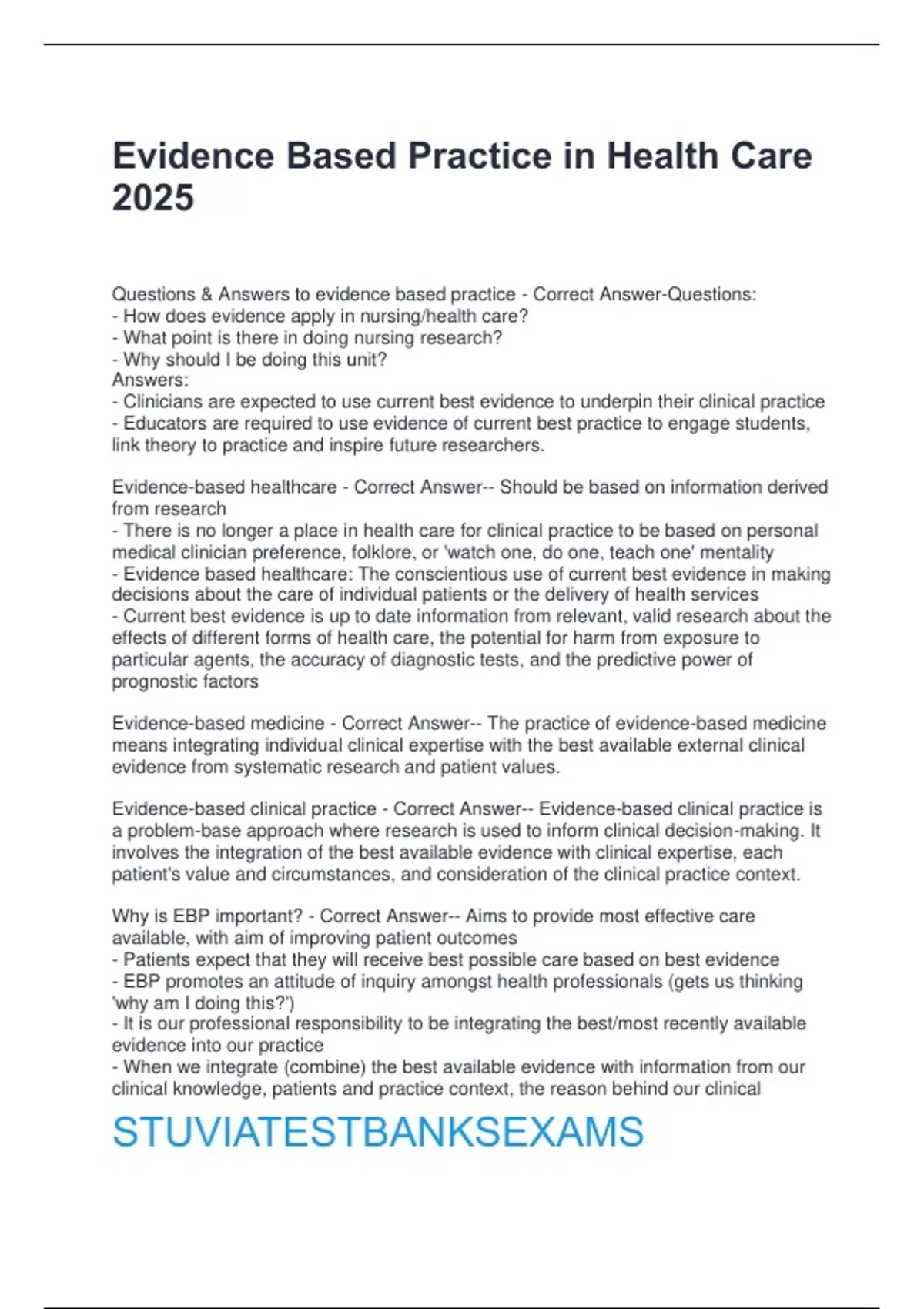
Accelerated health care models optimize delivery and innovation by integrating rapid regulatory pathways with advanced data analytics. However, maintaining patient safety requires that these "fast-track" systems remain anchored in rigorous clinical evidence. Without a foundation of "evidence first," speed risks compromising efficacy, leading to medical errors and systemic distrust.
The landscape of modern medicine in 2026 is defined by a relentless drive for efficiency. Whether through the rapid deployment of gene therapies, the integration of generative AI in clinical decision support, or the use of decentralized clinical trials (DCTs), the industry is moving faster than ever. Yet, the governing principle remains unchanged: acceleration is only as valuable as the evidence supporting it. To understand why "accelerated health care requires evidence first," we must examine the mechanisms that balance urgency with clinical validity, ensuring that "faster" does not translate to "riskier."
The Core Conflict: Urgency vs. Validation
The demand for accelerated health care often stems from unmet medical needs. Patients with terminal illnesses, rare genetic disorders, or those caught in the midst of emerging public health threats cannot afford the traditional 10-to-12-year window for drug or device development. This urgency created the impetus for regulatory frameworks designed to shave years off the timeline.
However, the history of medicine is littered with examples of "fast" solutions that lacked sufficient evidence. When evidence is treated as an afterthought, the consequences range from minor side effects to catastrophic public health failures. The mandate for "evidence first" acts as a safety valve. It ensures that while the process of gathering data can be streamlined, the quality and threshold of that data remain non-negotiable. In 2026, this means moving away from simply "doing things faster" and toward "doing things smarter" through better data architecture.
Defining Accelerated Pathways in 2026
In the current year, accelerated pathways are no longer exceptions; they are standard operating procedures for high-impact interventions. These pathways include:
- Fast Track Designation: For drugs that treat serious conditions and fill an unmet medical need.
- Breakthrough Therapy: For treatments that show substantial improvement over existing therapies early in clinical testing.
- Accelerated Approval: Allowing drugs for serious conditions to be approved based on a surrogate endpoint (a marker that predicts clinical benefit but is not itself a measure of clinical benefit).
- Priority Review: Reducing the regulatory review time from ten months to six months.
Each of these requires a "heavy lift" of evidence early in the cycle. The "evidence first" approach shifts the burden of proof to the pre-market phase while emphasizing rigorous post-market surveillance to fill any remaining data gaps.
The Pillars of Evidence in an Accelerated Framework
To achieve a state where health care can be both accelerated and safe, three primary pillars of evidence must be established. These pillars provide the structural integrity needed to support rapid innovation.
1. High-Fidelity Pre-Clinical Modeling
Before a human subject is ever involved, accelerated health care relies on advanced modeling to predict outcomes. In 2026, In Silico trials—simulations conducted on computers using biological data—have become a prerequisite for fast-tracking. By using "Digital Twins" (virtual representations of a patient's physiology), researchers can identify potential toxicities or efficacy failures before a physical trial begins. This provides the "evidence first" baseline that allows regulators to approve early-phase human testing with greater confidence.
2. Real-World Evidence (RWE) and Real-World Data (RWD)
Traditional Randomized Controlled Trials (RCTs) are the "gold standard," but they are slow and often lack diversity. Accelerated health care utilizes RWE to supplement RCT data. RWD includes information from electronic health records (EHRs), wearable devices, and insurance claims.
The "evidence first" requirement in this context means ensuring that RWD is "fit for purpose." This involves:
- Data Accrual: Ensuring the data is representative of the actual patient population.
- Data Integrity: Verifying that the data has not been corrupted or biased by the collection method.
- Analytical Rigor: Using standardized protocols to ensure that conclusions drawn from RWD are as reliable as those from a controlled lab environment.
3. Adaptive Trial Designs
An accelerated framework often uses adaptive trial designs, which allow for modifications to the trial (such as dosage adjustments or sample size changes) after it has started, based on interim data. While this speeds up the process, it requires a strict "evidence first" protocol. Every modification must be triggered by pre-defined statistical evidence, preventing researchers from "chasing a result" and ensuring the scientific integrity of the study remains intact.
Comparing Traditional and Accelerated Evidence Frameworks
The following table outlines the fundamental differences between the legacy approach to clinical evidence and the modern accelerated "evidence first" model used in 2026.
| Feature | Traditional Health Care Model | Accelerated "Evidence First" Model |
|---|---|---|
| Primary Goal | Exhaustive validation before any market entry. | Rapid entry for high-need areas with ongoing validation. |
| Data Sources | Strictly controlled RCTs. | Combined RCTs, RWE, and In Silico modeling. |
| Trial Structure | Linear (Phase I, II, III). | Overlapping phases and adaptive designs. |
| Risk Management | Front-loaded (Pre-approval). | Balanced (Pre-approval + Intensive Post-market). |
| Time to Market | 10–12 Years. | 3–6 Years (depending on designation). |
| Evidence Threshold | Statistically significant clinical endpoints. | Validated surrogate endpoints with confirmatory trials. |
| Role of AI | Minimal; mostly for data cleaning. | Integral; used for predictive modeling and recruitment. |
The Role of AI in Evidence Generation
As of 2026, Artificial Intelligence (AI) has moved from a speculative tool to the primary engine behind accelerated evidence generation. However, the "evidence first" rule applies to the AI itself. "Black box" algorithms—those that provide an output without a clear, explainable pathway—are increasingly rejected by regulatory bodies like the FDA and EMA.
Explainable AI (XAI) is now a requirement. For an accelerated health care solution to be accepted, the developer must provide evidence that the AI's logic is sound and free from algorithmic bias. For instance, if an AI predicts that a certain patient population will respond better to an accelerated cancer drug, the "evidence first" mandate requires proof that this prediction isn't based on socio-economic proxies or skewed data sets.
Furthermore, AI-driven Pharmacovigilance allows for the real-time monitoring of accelerated drugs once they hit the market. By scanning millions of patient records and social media reports, AI can identify adverse events years before they would be caught by traditional reporting systems. This "post-market evidence" is the safety net that makes pre-market acceleration ethical.
Ethical Considerations: The "Right to Try" vs. The "Duty to Protect"
The "evidence first" philosophy is essentially an ethical compromise. On one side is the "Right to Try" movement, which argues that terminally ill patients should have access to experimental treatments even if the evidence is incomplete. On the other side is the regulatory "Duty to Protect," which seeks to prevent the public from being used as guinea pigs for ineffective or harmful products.
In 2026, this tension is managed through Transparency and Informed Consent. Accelerated health care requires that patients are clearly informed about the "strength" of the evidence. If a drug was approved via an accelerated pathway based on surrogate endpoints, that fact must be disclosed. Evidence, therefore, is not just a regulatory requirement; it is a tool for patient autonomy.
Challenges to the "Evidence First" Mandate
Despite the technological advancements of 2026, several challenges threaten the integrity of accelerated health care.
The "Evidence Gap" in Small Populations
For ultra-rare diseases, there may only be a handful of patients worldwide. Generating statistically significant evidence is nearly impossible. In these cases, "evidence first" evolves into "evidence-informed" clinical judgment, where a combination of natural history studies and single-patient "N-of-1" trials provide the necessary data.
Data Silos and Interoperability
Acceleration requires the free flow of data between hospitals, research institutions, and regulators. If data is trapped in proprietary silos, the evidence cannot be aggregated quickly enough to support acceleration. The push for Global Data Standards (such as FHIR - Fast Healthcare Interoperability Resources) remains a critical hurdle for maintaining the "evidence first" standard.
Financial Pressures
Developing evidence is expensive. There is a constant temptation for companies to cut corners in the evidence-gathering phase to reach the market sooner and begin recouping investments. Robust regulatory oversight and public-private partnerships are necessary to ensure that financial incentives do not override scientific rigor.
Prerequisites for Implementing an Accelerated Evidence Strategy
For organizations looking to adopt an accelerated health care model, certain prerequisites must be met to satisfy the "evidence first" requirement:
- Digital Maturity: Implementation of end-to-end digital data capture from the laboratory to the clinic.
- Regulatory Literacy: A deep understanding of the current FDA Accelerated Approval Program or EMA's PRIME pathways.
- Statistical Expertise: Access to biostatisticians capable of designing and defending adaptive trials and Bayesian models.
- Post-Market Infrastructure: The ability to track and report real-world outcomes for years after the initial rollout.
Frequently Asked Questions
Does "accelerated" mean the FDA is lowering its standards?
No, the FDA (and other global regulators) maintains that the "standard of evidence" for safety remains the same. What changes is the type of evidence and the timing of its delivery. For example, instead of waiting for a 5-year survival rate (clinical endpoint), a drug might be approved based on its ability to shrink a tumor (surrogate endpoint), provided the company completes follow-up studies to confirm the survival benefit.
How does "evidence first" affect the cost of health care?
Initially, generating high-quality evidence for accelerated pathways can be more expensive due to the need for advanced technology and real-time monitoring. However, in the long term, it reduces costs by identifying ineffective treatments earlier (the "fail fast" principle) and by getting life-saving therapies to patients sooner, reducing long-term hospitalizations and morbidity.
Can AI-generated evidence be trusted?
AI-generated evidence is trusted only when it is validated through "Ground Truth" data. This means the AI's predictions are compared against actual clinical outcomes in a subset of patients. In 2026, regulatory bodies require "Algorithm Transparency," meaning developers must show how the AI reached its conclusions to ensure no bias or error is present.
What happens if a drug is accelerated and then found to be unsafe?
This is the "fail-safe" mechanism of the "evidence first" model. If post-market evidence (Phase IV trials or RWE) shows that a drug is unsafe or does not provide the predicted benefit, the regulatory body can—and does—withdraw the approval. In 2026, these withdrawals are more efficient because real-time monitoring identifies issues much faster than in previous decades.
Who is responsible for gathering evidence after a drug is accelerated?
The responsibility primarily lies with the manufacturer (the sponsor). They are legally required to conduct "confirmatory trials." Failure to complete these trials or providing unsatisfactory evidence can result in significant fines, loss of marketing authorization, and legal liability.
Strategic Recommendations for Stakeholders
To thrive in an era where accelerated health care requires evidence first, stakeholders should take the following actions:
- For Developers: Invest in Digital Twin technology and RWE platforms early in the R&D cycle. Do not treat evidence as a hurdle to be cleared, but as the primary value proposition of your product.
- For Clinicians: Stay informed about the specific pathways through which new treatments are approved. Understand the difference between "proven clinical benefit" and "benefit predicted by surrogate markers" to better advise patients.
- For Policymakers: Support legislation that incentivizes the sharing of anonymized health data. The faster evidence can be aggregated across populations, the safer and more effective accelerated pathways will become.
- For Patients: Engage with patient advocacy groups that work with regulators. Patient-reported outcomes are an increasingly vital part of the "evidence first" framework, giving those directly affected a voice in the validation process.
The future of medicine is undeniably fast. By ensuring that every leap forward is grounded in a "evidence first" philosophy, we can ensure that the acceleration of health care leads to better outcomes, not just faster ones.