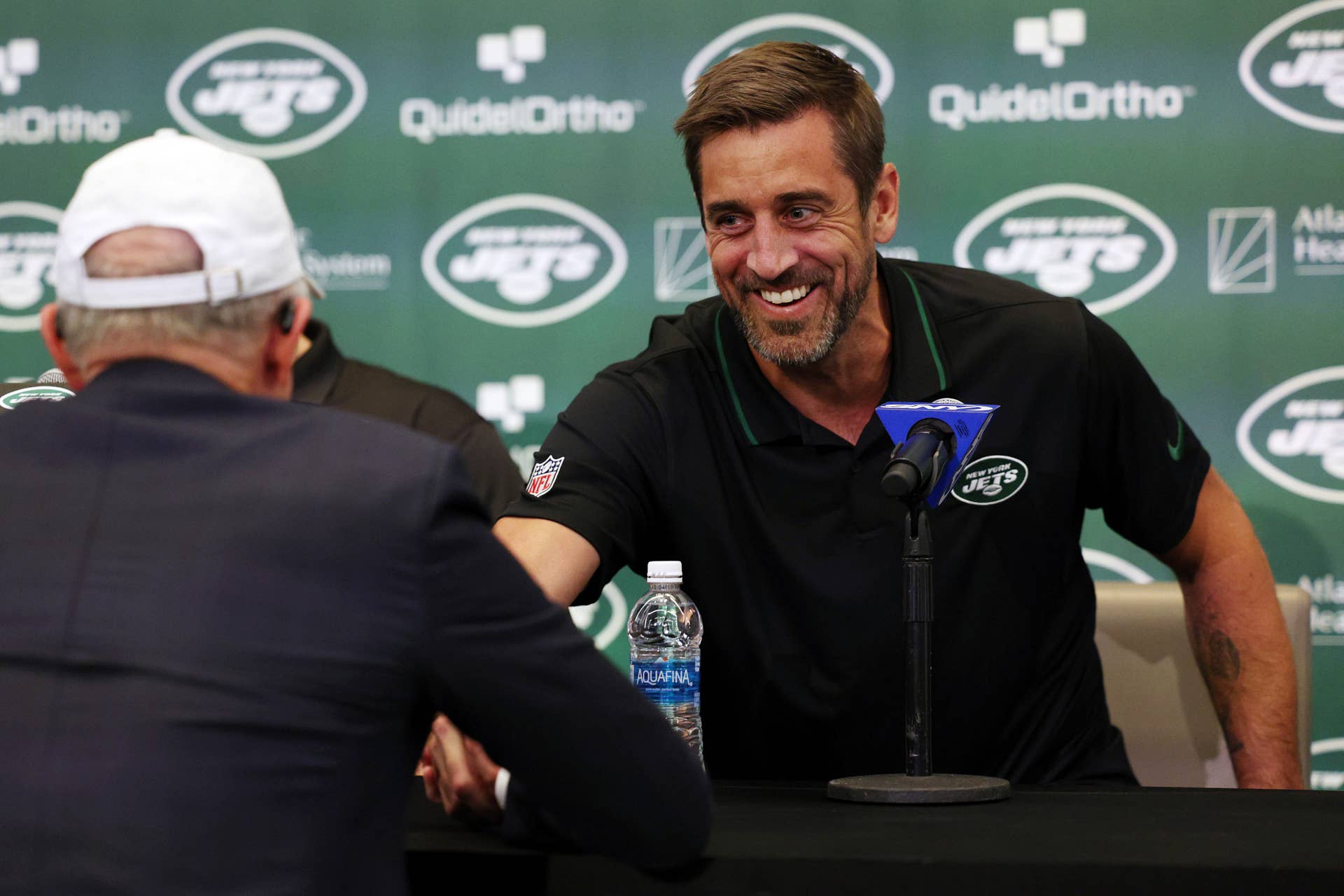
On April 26, 2023, the National Football League (NFL) underwent a significant roster transformation when veteran quarterback Aaron Rodgers officially joined the New York Jets. This move followed months of intense media speculation and negotiations between the Jets and the Green Bay Packers, culminating in a complex trade agreement that effectively signaled the end of Rodgers’ 18-year tenure in Green Bay and established him as the centerpiece of the Jets’ pursuit of a championship.
The transition of Aaron Rodgers to the New York Jets was one of the most high-profile player acquisitions in modern NFL history. For the Jets, the move represented an aggressive shift in strategy, aiming to bridge the gap between a roster filled with young talent and the immediate need for veteran leadership at the most critical position on the field. For Rodgers, the trade offered a fresh start in the media capital of the world, providing a chance to replicate the success he achieved during his tenure in Wisconsin with a new organization hungry for postseason relevance.
Pre-Trade Context and the Negotiation Landscape
Understanding the significance of the April 26, 2023, arrival requires looking at the landscape of the 2023 offseason. By early 2023, rumors had circulated regarding Rodgers' future. Following the conclusion of the 2022 NFL season, it became increasingly clear that both the Packers and Rodgers were prepared for a change. The Packers were looking to move forward with Jordan Love, who had been drafted in 2020 as Rodgers' eventual successor, while Rodgers expressed interest in seeking an environment that could offer a new challenge.
The negotiation period was prolonged and public. Because Rodgers was under contract with the Packers, the Jets could not simply sign him as a free agent; they were required to negotiate a trade package. Throughout March and April 2023, the two teams finalized the terms of the exchange, balancing the value of draft capital with the immediate impact a future Hall of Fame quarterback would bring to the Jets' offense.
The formal transaction involved multiple draft picks, reflecting the high market value placed on a four-time NFL Most Valuable Player (MVP) award winner. The trade specifics finalized on that spring date in 2023 included the Jets receiving Rodgers, the Packers' 15th overall pick in the 2023 draft, and a 2023 fifth-round pick. In exchange, the Green Bay Packers received the Jets' 13th overall pick, a 2023 second-round pick, a 2023 sixth-round pick, and a conditional 2024 second-round pick that would escalate to a first-round pick based on specific playing time benchmarks.
Immediate Organizational Impact
The arrival of Aaron Rodgers on April 26, 2023, fundamentally altered the expectations for the New York Jets franchise. Historically, the team had struggled to find consistent stability at the quarterback position for over a decade. By acquiring a player of Rodgers’ caliber, the organization signaled an "all-in" approach to its 2023 season.
The impact was felt across several levels of the organization:
- Roster Morale: The addition of a veteran leader with Super Bowl experience provided an immediate boost to the locker room. Younger players, particularly on the offensive side of the ball, were suddenly working alongside a mentor who had set the standard for quarterback play for nearly two decades.
- Media and Fan Attention: The news cycle surrounding the Jets saw an unprecedented increase in engagement. Ticket sales, jersey demand, and television ratings expectations spiked, reflecting the massive public interest surrounding the star's new chapter in New York.
- Coaching Strategy: Head coach Robert Saleh and offensive coordinator Nathaniel Hackett—who had a pre-existing relationship with Rodgers from their time together in Green Bay—gained a significant strategic advantage. The playbook was quickly adapted to integrate the nuances of Rodgers’ preferred passing concepts, shifting the offense toward a more vertical and reading-heavy style.
Comparison of Team Dynamics Before and After the Trade
The following table provides a breakdown of the organizational shift as it stood following the completion of the trade during the 2023 offseason.
| Feature | Pre-April 2023 | Post-April 2023 |
|---|---|---|
| Quarterback Leadership | Inexperienced/Rotating | Four-time MVP Veteran |
| Playoff Expectations | Developing/Hopeful | High (Championship Contender) |
| Draft Strategy | Focus on long-term growth | Win-now aggressiveness |
| Coaching Focus | System implementation | Execution and nuance |
| League Perception | Rebuilding phase | Contender status |
Operational Challenges and Tactical Integration
Integrating a veteran like Rodgers into a new system is never a simple plug-and-play scenario. Even with his familiarity with Nathaniel Hackett’s system, the adjustment required significant synchronization with wide receivers and tight ends who had not worked with him previously. Throughout the OTAs (Organized Team Activities) and training camp following his arrival, the primary focus was on establishing timing and communication.
One of the most critical aspects of the transition was the intellectual burden placed on the skill-position players. Rodgers is known for his ability to read defenses at the line of scrimmage and adjust protections or routes in real-time. This required a steep learning curve for the younger offensive players to ensure they were on the same page as the veteran signal-caller during complex defensive looks.
Furthermore, the team had to manage the high expectations that accompanied his arrival. The pressure of playing in the New York market is distinct due to the intensity of the local media and the scrutiny of a fan base that had not seen a Super Bowl appearance since 1969. The organization had to balance the excitement of the trade with the necessity of building team chemistry, ensuring that the focus remained on the grind of the 17-game regular season rather than the surrounding headlines.
Legacy and Historical Context
The date April 26, 2023, serves as a major turning point in NFL history. It is rare for a player of Rodgers' status to move teams so late in their career. Historically, elite quarterbacks often remain with their original franchises until retirement, with few exceptions such as Peyton Manning or Tom Brady. Rodgers joining the Jets placed him in that exclusive group of legendary players who chose to write their final chapters in new cities.
Beyond the numbers and statistics, the move highlighted the modern trend of veteran quarterback movement as a mechanism for rapid team improvement. For the Jets, the goal was to leverage Rodgers’ expertise to elevate the entire roster. The trade solidified the team's position as a focal point of the NFL’s 2023 narrative, regardless of the eventual outcomes on the field.
Frequently Asked Questions
Why was the trade finalized on April 26, 2023? The date was chosen as the trade was finalized just days before the 2023 NFL Draft. This timing was strategic, as it allowed both the Jets and the Packers to finalize their draft capital exchange before the start of the draft proceedings, ensuring each team could execute their personnel plans with their newly acquired picks.
Did Aaron Rodgers need to learn a new playbook with the Jets? While the core concepts of the offensive system were already familiar to him due to his past work with Nathaniel Hackett, every team has its own unique terminology and variations. Rodgers had to learn the specific language and adjustments unique to the Jets, which differed from the specific implementation he utilized during his time in Green Bay.
What was the condition attached to the 2024 draft pick in the trade? The trade involved a conditional 2024 second-round pick from the Jets to the Packers. The condition was tied to the amount of playing time Rodgers logged during the 2023 season. If Rodgers played at least 65% of the team's offensive snaps, the pick would elevate to a first-round selection.
How did this move affect the Jets' salary cap? The Jets inherited a veteran contract, which required significant salary cap management. This meant the team had to restructure existing deals and carefully manage their spending throughout the 2023 season to maintain compliance with NFL salary cap regulations while surrounding Rodgers with the necessary talent to compete.
What happens to this historical timeline as of 2026? As of 2026, the events of April 26, 2023, remain a documented milestone in NFL history. The trade is viewed as a definitive moment that shifted the strategic trajectory of the New York Jets and concluded the primary era of the Green Bay Packers’ historic quarterback lineage.
Recommendation for Further Research
For those looking to understand the full breadth of the trade’s impact, it is recommended to review the official transaction logs from the NFL’s media portal. These documents provide the precise terms of the player and draft-pick exchanges. Additionally, analyzing the post-trade press conferences from April 2023 offers valuable insight into the organizational vision established by team leadership at the time of the announcement. Understanding these official records provides the most accurate foundation for assessing the historical weight of the move.