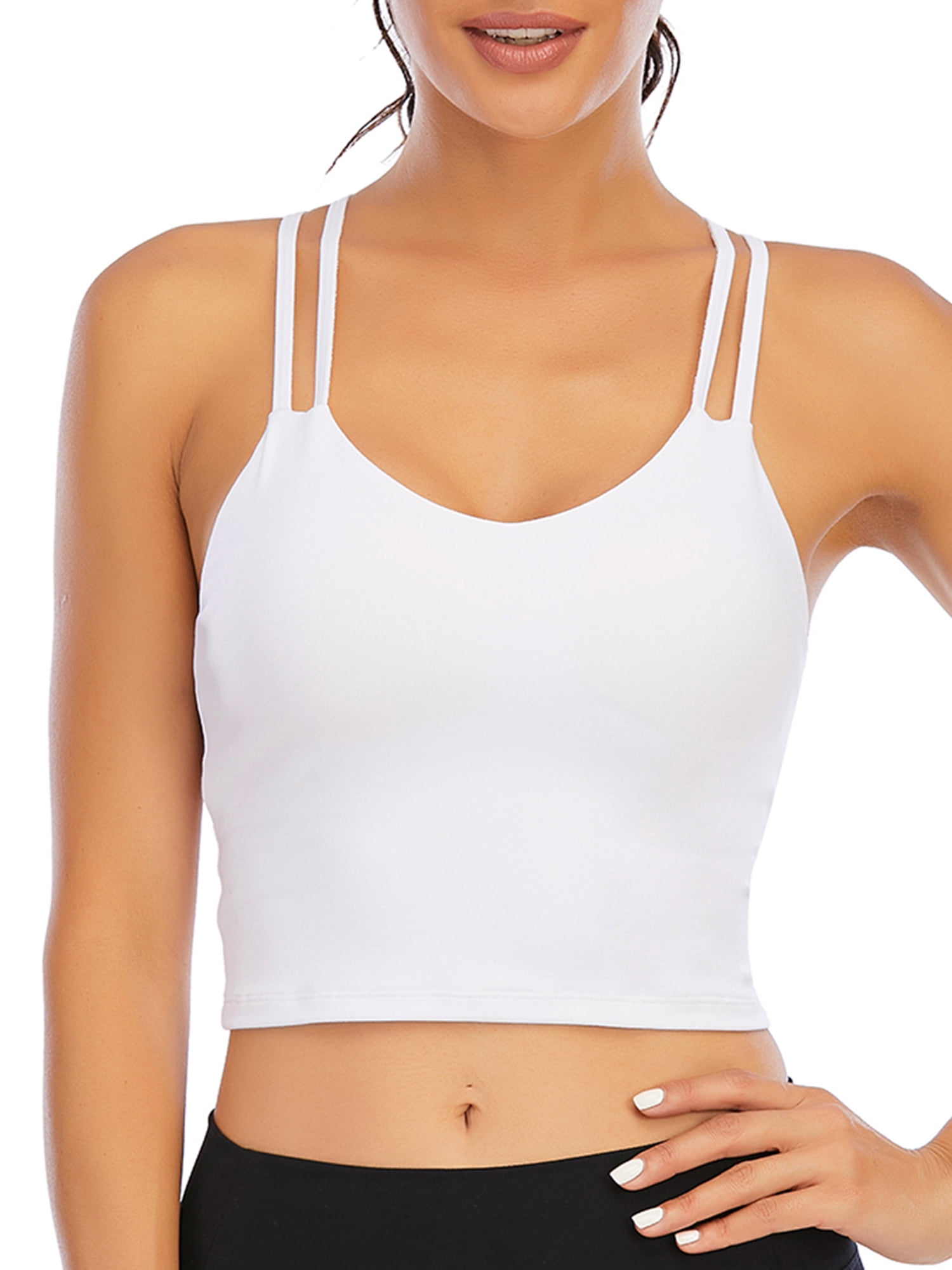
Sport tops with built-in bras offer a streamlined, two-in-one solution that combines the coverage of a traditional athletic tank with the structural support of an internal bra. These garments utilize integrated compression bands or molded cups to stabilize breast tissue during movement, reducing friction and simplifying your workout wardrobe for activities ranging from yoga to high-intensity training.
The Evolution of Integrated Athletic Support
For decades, the standard approach to athletic wear involved layering a technical t-shirt or tank top over a separate sports bra. While functional, this often led to issues with strap slippage, excessive heat retention from overlapping fabrics, and aesthetic "clashing" between different garment lines. As we move through 2026, the engineering behind integrated support has reached a pinnacle where the "shelf bra" of the past—which offered little more than a thin layer of elastic—has been replaced by sophisticated internal architectures.
Modern sport tops with built-in bras are now designed using biomechanical mapping. Manufacturers analyze how breast tissue moves in a figure-eight pattern during exercise and build internal suspension systems to counteract this motion. By using bonded seams rather than traditional stitching, these tops minimize "chafe points," particularly under the arms and across the ribcage. Furthermore, the integration allows for a more cohesive moisture-management system, as sweat is wicked away from the skin and through the outer layer more efficiently than when passing through two distinct garments.
1. The High-Impact Encapsulation Racerback
For athletes engaging in running, plyometrics, or high-intensity interval training (HIIT), the high-impact racerback with encapsulated cups is the gold standard. Unlike simple compression tops that press the tissue against the chest wall, encapsulation tops feature individual internal cups that support each breast separately.
The technical advantage of this design lies in its ability to manage vertical and lateral displacement. In 2026, many of these tops utilize high-density foam or 3D-knitted spacers within the built-in bra to provide structure without adding significant weight. The racerback silhouette is functional rather than just fashionable; it anchors the top to the center of the back, allowing for a full range of motion in the scapula (shoulder blades) while preventing the straps from sliding down during vigorous movements.
2. The Seamless Longline Yoga Tank
The longline tank has become a staple in the yoga and Pilates community. This style typically extends to the natural waist or just above the navel, providing extra core coverage and stability. The built-in bra in these tops is usually seamless, utilizing a circular knit construction that eliminates the need for side seams.
From a technical perspective, these tops rely on graduated compression. The knit is tighter around the under-bust area to act as a supportive band, while the fabric over the chest is more flexible to allow for deep diaphragmatic breathing. In 2026, materials like recycled nylon blended with high percentages of Lycra® Adaptiv fiber are common, allowing the garment to move with the wearer during complex inversions without riding up or losing its shape.
3. The Molded-Cup Halter Top
Halter-style sport tops are ideal for individuals who find traditional racerback or scoop-neck straps irritating to the trapezius muscles. By redistributing the weight toward the base of the neck and across the shoulders, the halter design offers a different leverage point for support.
The integrated bra in a quality halter top features molded cups that provide a defined shape and prevents the "unibra" look often associated with compression gear. These are particularly effective for medium-impact activities like cycling or power walking. Technical editors often highlight the importance of the "neck closure" in these designs; look for bonded flat-felled seams at the neck to prevent rubbing during long-duration workouts.
4. The Compression Camisole with Internal Power Mesh
For those who prefer a minimalist aesthetic, the compression camisole offers thin straps with a surprisingly robust internal support system. The secret to these tops is the use of "Power Mesh" or "Powernet" linings. This is a high-stretch, high-recovery fabric that provides maximum airflow while maintaining a firm hold.
While thin straps generally imply lower impact support, many 2026 designs incorporate internal stabilizers—non-stretch fabric zones—within the front of the straps to prevent excessive bouncing. These are best suited for A-C cup sizes or for low-impact activities like barre or strength training where the range of arm movement is the primary concern.
5. The High-Neck Defensive Top
High-neck sport tops have surged in popularity due to their superior coverage and "lock-down" feel. The built-in bra in a high-neck top is often reinforced by the outer fabric, creating a double-layered compression effect that is highly effective for activities involving significant forward-leaning (such as mountain biking or certain yoga poses).
The technical depth of these tops often includes laser-cut ventilation holes between the breasts and along the spine to offset the increased heat generated by the higher neckline. The internal bra usually features a wide, brushed-elastic band that sits flat against the skin, preventing the "roll-up" effect that can occur when moving from a standing to a seated position.
6. The Ribbed Performance Crop
Ribbed fabrics are not just an aesthetic choice; the vertical "ribs" add structural integrity and mechanical stretch to the garment. A ribbed sport top with a built-in bra often feels more "held in" than a smooth-finish top because the fabric's texture provides a natural resistance to over-stretching.
The internal construction of these tops frequently utilizes removable perforated pads. These pads provide optional modesty and shaping but are engineered with small holes to ensure that moisture isn't trapped against the skin—a common complaint with older integrated bra designs. For 2026, look for "antimicrobial silver-ion" treatments within the ribbing to manage odor during prolonged wear.
7. The Cross-Back Hybrid Top
The cross-back (or "strappy") hybrid top balances the aesthetics of fashion-forward activewear with the requirements of functional fitness. The multi-strap design at the back isn't just for show; it serves to distribute the weight of the bust across a larger surface area of the back and shoulders.
The built-in bra in these models often features a "J-hook" or adjustable slider system hidden within the straps, allowing the user to customize the tension. This is a critical feature for users whose measurements might fluctuate or who require a tighter fit for certain parts of their workout. The technical challenge here is ensuring the straps don't "dig in," which is why premium brands use bonded, stitch-less strap technology.
Technical Comparison of Sport Top Types
| Top Type | Support Level | Best For | Key Material Feature |
|---|---|---|---|
| High-Impact Racerback | High | Running, HIIT | Encapsulated molded cups |
| Longline Yoga Tank | Low-Medium | Yoga, Pilates | Graduated compression knit |
| Molded-Cup Halter | Medium | Cycling, Hiking | Anatomical shaping |
| Compression Camisole | Low | Strength Training | Internal Power Mesh lining |
| High-Neck Defensive | High | Cross-training | Double-layer compression |
| Ribbed Performance | Medium | General Fitness | Mechanical stretch ribbing |
| Cross-Back Hybrid | Adjustable | Barre, Dance | Multi-point weight distribution |
Material Science and Durability
When selecting a sport top with a built-in bra, the fabric composition is the most critical factor for long-term performance. By 2026, the industry has largely moved away from pure polyester in favor of more sustainable and higher-performing polyamides (Nylon 6,6).
Moisture Wicking vs. Absorbency
A common mistake is confusing soft-touch fabrics (like high-cotton blends) with performance fabrics. Cotton is hydrophilic, meaning it absorbs water and holds it, which leads to a heavy, sagging top during exercise. Professional-grade sport tops use hydrophobic fibers that pull moisture through the weave to the outer surface where it can evaporate. Look for "wicking coefficients" or "dry-time" specifications in product descriptions.
Elasticity and Recovery
The "built-in" nature of these bras means the elastic band is under constant tension. Lower-quality spandex will lose its "recovery" (the ability to return to its original shape) after 20–30 wash cycles. Premium tops utilize branded elastomers like Lycra® or Creora®, which are engineered to withstand the salts and oils in human sweat, as well as the heat of a 2026-standard laundry cycle.
How to Determine the Correct Fit
Finding the right size for a two-in-one top is more complex than sizing a standard shirt. Because the internal bra must be snug to provide support, many users find they need to "size for the bra" rather than the "size for the shirt."
- The Band Test: The most important point of support is the under-bust band. You should be able to fit two fingers under the band comfortably, but no more. If the band moves when you lift your arms, the top is too large.
- Cup Overflow: If you experience "quadra-boob" (tissue spilling over the top of the internal bra), the cup volume is insufficient. This can occur even if the outer tank looks loose.
- Gaping at the Armholes: If there is excess fabric under the arms, the top is either too large or the strap length is too long for your torso.
- The Bounce Test: Always perform a quick jog-in-place or a few jumping jacks in the fitting room. If the movement is painful or distracting, the top is not designed for that impact level.
Frequently Asked Questions
Are built-in bras as supportive as separate sports bras?
For low to medium-impact activities, high-quality built-in bras are often indistinguishable from separate bras in terms of support. However, for high-impact activities (like marathon running) or for those with larger cup sizes (DD+), many technical experts still recommend a dedicated high-impact sports bra. The primary limitation of built-in bras is that the "band" is often attached to the outer garment, which can slightly reduce the absolute tension compared to a standalone bra.
Can I remove the padding in these tops?
Most sport tops with built-in bras feature "removable cups" or pads. These are designed to be removed before washing to prevent them from bunching or losing their shape. In 2026, many manufacturers have switched to "sewn-in" cups that are thin and breathable, eliminating the frustration of pads shifting during a workout.
How should I wash a sport top with a built-in bra?
To preserve the elasticity of the internal bra, you should wash these tops in cold water on a gentle cycle. Avoid fabric softeners at all costs; softeners coat the fibers in a waxy residue that destroys the moisture-wicking properties and can cause the elastic to break down prematurely. Hanging the garments to air-dry is the best way to ensure they maintain their support for years.
Do built-in bras cause more heat buildup?
While it might seem that an extra layer of fabric inside a top would be hotter, the opposite is often true in 2026 designs. Because the internal bra and outer tank are engineered as a single unit, designers can use lighter, more breathable materials and strategically placed mesh zones that wouldn't be possible with two separate garments overlapping haphazardly.
Next Actions for Buyers
When you are ready to purchase, start by identifying your primary activity. If you are a runner, prioritize the High-Impact Racerback or High-Neck Defensive models. If your focus is studio work like yoga or barre, the Longline Yoga Tank or Cross-Back Hybrid will offer the best balance of comfort and style.
Always check the brand's specific size chart, as "Medium" in one brand's built-in bra may correspond to a different cup-and-band measurement in another. If you are between sizes, it is generally better to size down for a firmer hold in the bra, provided the fabric has sufficient 4-way stretch.