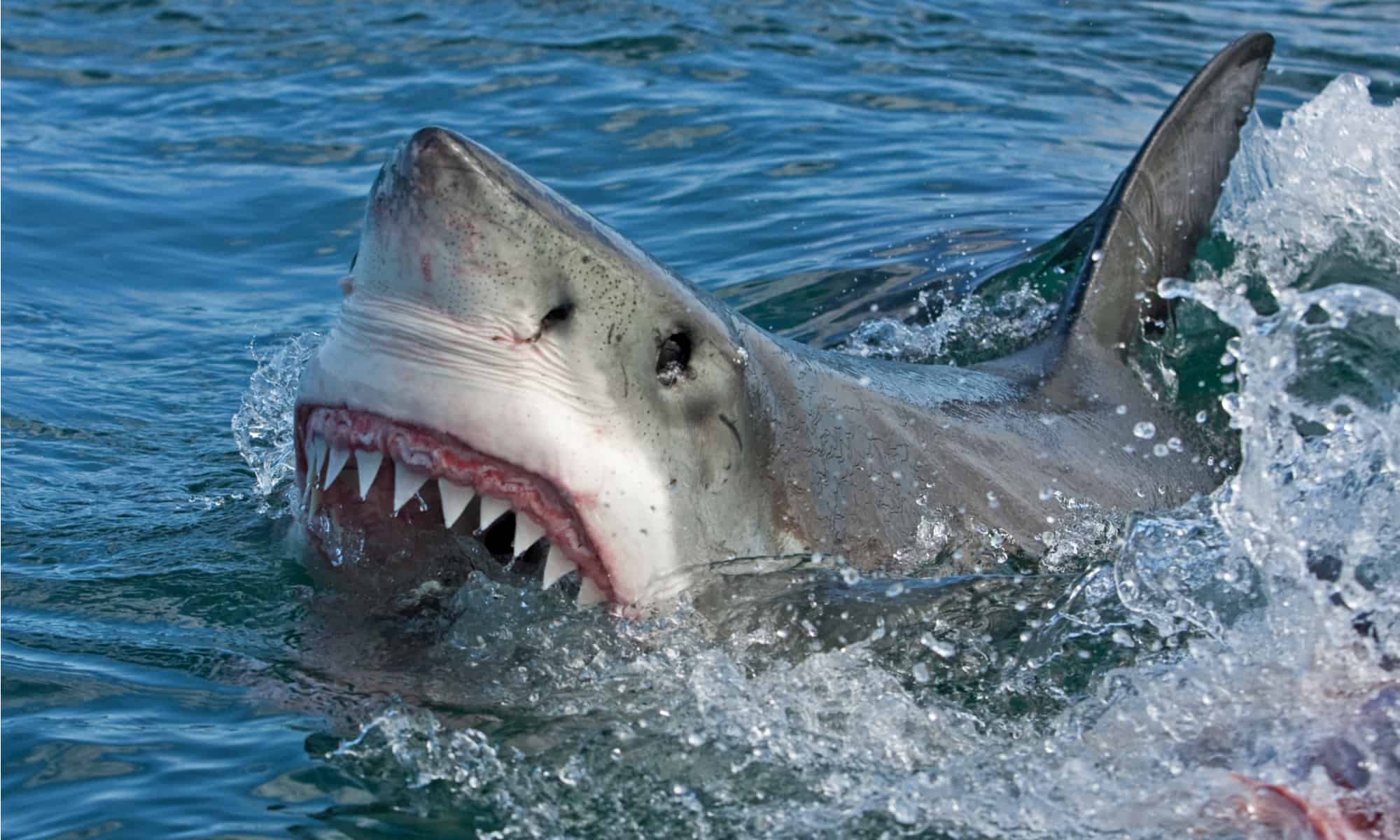
A great white shark measuring a true 30 feet in length is biologically impossible based on current scientific data, marine biology records, and hydrodynamic constraints. While exceptional specimens can approach 20 feet, historical accounts of 30-foot sharks are invariably the result of optical illusions, flawed measurement techniques, or exaggerated folklore.
Marine science relies on verified empirical data to document the maximum size of apex predators in our oceans. As public fascination with colossal marine life continues to thrive through digital media, documentaries, and internet hoaxes, understanding the real biological boundaries of Carcharodon carcharias is essential. This article explores the scientific realities of great white shark sizing, examines historical claims of giant specimens, and breaks down the ecological limits that prevent sharks from reaching lengths of 30 feet.
Biological Limits and Maximum Verified Sizes
To understand why a 30-foot great white shark does not exist, one must examine the physical and biological constraints governing cartilaginous fish. Unlike bony fish or marine mammals, sharks possess skeletons made of cartilage, which is lighter and more flexible than bone but less structurally supportive under extreme gravitational loads when animals transition out of a fully buoyant marine environment.
The largest reliably measured and scientifically verified great white sharks typically cap out at around 19 to 21 feet (approximately 5.8 to 6.4 meters). Famous individuals, such as the heavily studied female shark known as "Deep Blue," encountered off Guadalupe Island, are estimated by experienced marine biologists to be roughly 20 feet long. Even with optimal access to calorie-rich prey sources like elephant seals and sea lions, metabolic and energetic requirements set a strict boundary on how large an ectothermic or semi-endothermic apex predator can grow.
| Metric | Verified Maximums | Historical Claims (Unverified) | Theoretical Biological Limit |
|---|---|---|---|
| Maximum Length | 19 - 21 feet (5.8 - 6.4 m) | 30 - 36 feet (9.1 - 11.0 m) | ~21 - 23 feet (6.4 - 7.0 m) |
| Estimated Weight | 4,000 - 5,000+ lbs | 15,000 - 20,000+ lbs | ~5,500 lbs |
| Verification Status | Confirmed via photogrammetry and tagging | Discredited / Based on faulty eyewitness accounts | Calculated via biomechanical constraints |
Reaching 30 feet would require a proportional increase in mass that would fundamentally alter the shark's hunting efficiency, buoyancy regulation, and caloric intake needs. A great white shark of that scale would weigh well over 10,000 to 15,000 pounds, shifting its ecological niche entirely and creating severe physiological challenges regarding internal organ stress and heat dissipation.
Anatomy of an Optical Illusion: Why Sharks Look Larger Than They Are
The persistent myth of the 30-foot great white shark is largely driven by human perceptual errors and underwater distortion. Water acts as a magnifying medium, making objects appear approximately 25% larger and closer than they actually are to a diver or camera lens. When an observer encounters a large apex predator in its natural habitat, adrenaline, fear, and visual magnification routinely combine to distort estimations.
Furthermore, photographic and cinematic angles play a massive role in exaggerating animal sizes. Using wide-angle lenses close to a subject makes the foreground element—in this case, the shark's head or snout—appear gargantuan relative to the rest of its body or distant background markers.
- Parallax Errors: Estimating length from a boat while looking down at a submerged animal frequently leads to gross overestimations due to the angle of refraction.
- Forced Perspective: Divers positioning themselves slightly behind a shark to make the animal look larger have fueled numerous viral internet images and misleading documentaries.
- The Dead-Shark Effect: When a shark is hauled out of the water onto a beach or a boat deck, gravity alters its posture. Without water supporting its cartilaginous skeleton, the body flattens and stretches, often making a 16-foot specimen look significantly longer to onlookers.
Historical Claims and Famous Misidentifications
Throughout maritime history, sailors, fishermen, and early naturalists have reported encountering monstrous sharks far exceeding modern scientific parameters. The most famous historical case often cited by cryptozoologists and sensationalist media involves specimens from Port Fairy, Australia, and Mediterranean catches from the late 19th and early 20th centuries.
In 1870, an Australian fisherman famously claimed to have captured a great white shark measuring an astounding 36 feet in length. For decades, this claim was repeated in literature until researchers re-examined the historical jaws preserved in the Natural History Museum in London. Detailed anatomical analysis revealed that the Port Fairy shark was actually closer to 13 or 14 feet long. The original measurement was either a typographical error, a deliberate exaggeration by local fishermen seeking fame, or the result of crude measuring techniques applied to a distorted carcass.
Similarly, other historic accounts from the Mediterranean and the coast of California crumbled under scientific scrutiny. When taxidermists and marine historians audited the physical evidence—such as preserved jaws or dried teeth—they consistently found that the size estimates far outstripped the biological reality of the preserved material.
Ecological and Energetic Constraints
Marine apex predators do not grow indefinitely; their growth rates are dictated by energy budgets, prey availability, and metabolic efficiency. Great white sharks are apex predators that rely on ambush tactics, high-speed acceleration, and warm-blooded adaptations (regional heterothermy) to hunt marine mammals.
As a shark grows larger, its surface-area-to-volume ratio changes, impacting how it maintains core body temperatures and secures enough blubber-rich prey to sustain its mass.
- Caloric Demands: A 30-foot great white shark would require an unsustainable volume of high-energy marine mammal prey to survive, potentially destabilizing local seal and sea lion populations in any given territory.
- Maneuverability: Oceanic ecosystems favor hydrodynamic efficiency. An overly massive body would reduce the shark's turning radius and acceleration, rendering it less effective at catching agile prey like fur seals and dolphins.
- Lifespan Limitations: Great white sharks grow relatively slowly, reaching sexual maturity around age 26 for females and 9 to 10 for males. Achieving a length of 30 feet would require an extraordinarily prolonged lifespan subject to environmental hazards, parasites, and food scarcity.
Frequently Asked Questions
What is the largest great white shark ever reliably recorded?
The largest scientifically verified great white sharks measure between 19 and 21 feet long. These exceptional specimens are typically mature females documented in regions with abundant marine mammal populations, such as Guadalupe Island off Mexico and Dyer Island in South Africa.
Why do people keep reporting 30-foot great white sharks?
Reports of 30-foot sharks stem from underwater optical magnification, adrenaline-fueled misjudgments by divers and boaters, distorted camera angles, and historical folklore passed down through generations of maritime storytelling without rigorous scientific verification.
Could a prehistoric shark like the Megalodon grow to 30 feet?
Yes, but the Megalodon (Otodus megalodon) is an entirely different, extinct species of mackerel shark that grew to estimated lengths of 50 to 60 feet. People frequently confuse the maximum sizes of the prehistoric Megalodon with the modern great white shark, even though they belong to separate lineages.
How do scientists accurately measure a great white shark?
Marine biologists use advanced laser photogrammetry, stereo-video systems, and digital imaging markers alongside non-invasive tagging programs to calculate precise lengths without needing to capture or stress the animal.
Are great white sharks still growing throughout their lives?
Like many fish, great white sharks experience indeterminate growth, meaning they continue to grow slowly throughout their adult lives. However, growth rates slow down drastically after sexual maturity, making exponential size leaps into the 30-foot range biologically unfeasible.
Conclusion and Scientific Perspective
While the concept of a 30-foot great white shark captures the human imagination and dominates monster-movie fiction, reality remains firmly grounded in biological limits. The largest verified great white sharks at around 20 feet long are already awe-inspiring, highly evolved apex predators that command respect within marine ecosystems. Relying on verified scientific measurements rather than sensationalized folklore allows us to appreciate the true majesty and ecological vulnerability of Carcharodon carcharias in our modern oceans.