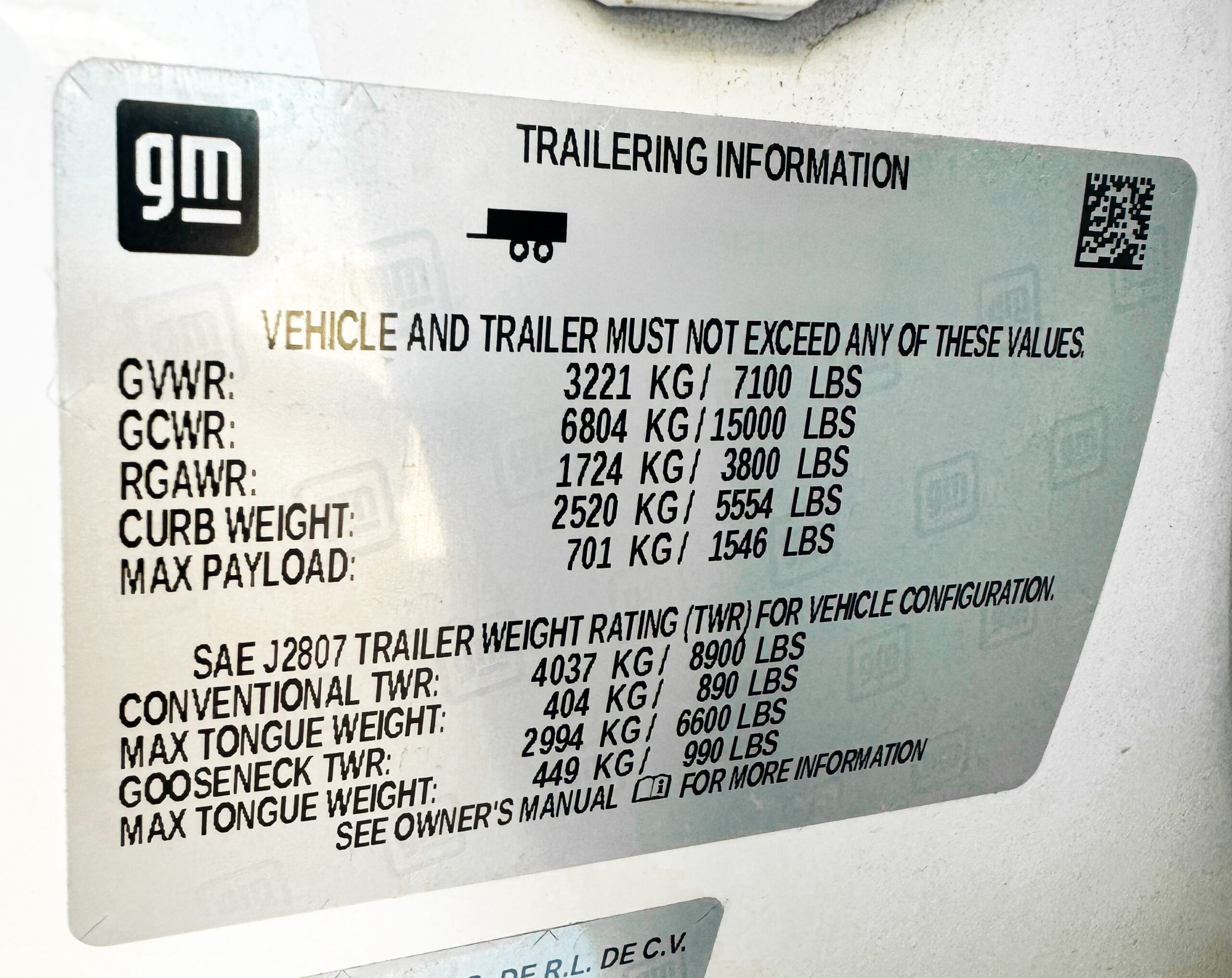
The 2004 Chevrolet Tahoe features a maximum towing capacity ranging from 7,100 to 7,700 pounds when properly equipped. This heavy-duty capability depends heavily on several factory specifications, including the specific engine option (such as the 4.8L or 5.3L Vortec V8), the vehicle's drivetrain configuration (2WD versus 4WD), and, most critically, the rear axle ratio installed at the factory.
Understanding the 2004 Chevrolet Tahoe Platform
The 2004 Chevrolet Tahoe occupies a central position in the GMT800 full-size SUV generation, which ran from the late 1990s through the mid-2006 model year. Built on a robust ladder-type frame derived from the contemporary GMT800 truck platform, the Tahoe bridges the gap between light-duty daily driving comfort and heavy-duty utility. When evaluating the vehicle's towing capacity, it is essential to look past marketing brochures and examine the precise mechanical build sheet of the specific truck in question.
Full-size SUVs of this era were engineered to pull substantial loads—ranging from utility trailers and horse trailers to boats and weekend campers—without sacrificing cabin comfort. However, maximum towing limits are strict engineering boundaries. Exceeding these limits risks overheating the transmission, degrading braking performance, compromising structural stability, and accelerating wear on critical drivetrain components. Understanding how engine power, axle ratios, transmission cooling, and hitch classifications interact is vital for safe trailering.
Key Mechanical Factors Influencing Towing Capacity
A vehicle's towing capacity is not a single static number assigned to an entire model year. Instead, it is the result of a calculated interplay among several distinct mechanical systems. For the 2004 Chevrolet Tahoe, four primary factors dictate how much weight the vehicle can safely pull.
Engine Options: 4.8L vs. 5.3L Vortec V8
The 2004 Tahoe was offered primarily with two V8 engine choices from the reliable Vortec family:
- Vortec 4.8L (LR4) V8: Producing approximately 285 horsepower and 295 lb-ft of torque, this engine serves as the base powerplant. While capable, it generally results in slightly lower maximum towing ratings compared to its larger sibling, particularly when dealing with heavy loads or steep inclines.
- Vortec 5.3L (LM7) V8: Generating 295 horsepower and 330 lb-ft of torque, the 5.3-liter is the most common engine found in 2004 Tahoes. The additional torque lower in the RPM band makes it better suited for sustained towing duties, heavy acceleration from a standstill, and maintaining highway speeds on inclines.
Axle Ratios (Final Drive Ratios)
The rear axle ratio is perhaps the most influential mechanical variable in determining a Tahoe's tow rating. The 2004 model typically came with one of two primary axle ratios:
- 3.42 Axle Ratio: Designed primarily for balanced highway cruising, offering improved fuel economy during unloaded driving. However, it reduces the vehicle's maximum mechanical leverage, resulting in lower maximum tow ratings.
- 3.73 Axle Ratio: Engineered to provide greater mechanical advantage at the wheels. This ratio allows the engine to spin at a slightly higher RPM for a given road speed, putting less strain on the transmission and significantly increasing the vehicle's maximum trailer weight rating.
Drivetrain Configuration (2WD vs. 4WD / AWD)
Weight distribution and drivetrain parasitic loss also play a role. Rear-wheel-drive (2WD) models generally offer slightly higher maximum towing capacities than their four-wheel-drive (4WD) or AutoTrac counterparts. This difference is primarily due to the added weight of the transfer case, front differential, and front drive axles, which consumes a portion of the vehicle's Gross Combined Weight Rating (GCWR).
Suspension and Cooling Packages
Many 2004 Tahoes were equipped with the Z85 Smooth Ride/Handling Suspension or the Z71 Off-Road Suspension Package, while others featured the Z82 Heavy-Duty Trailering Equipment Package. The Z82 package included a platform hitch receiver, a 7-way sealed electrical connector, and an external transmission oil cooler. An external transmission cooler is critical for sustained towing, as excessive heat is the primary cause of automatic transmission failure under heavy loads.
2004 Chevrolet Tahoe Towing Specifications Breakdown
To help owners and prospective buyers determine their exact limits, the following reference table details the estimated maximum towing capacities for the 2004 Chevrolet Tahoe based on official factory documentation and axle configurations.
| Engine Size | Drivetrain | Axle Ratio | Maximum Towing Capacity | Maximum Tongue Weight |
|---|---|---|---|---|
| 4.8L Vortec V8 | 2WD | 3.42 | 6,400 lbs | 640 lbs |
| 4.8L Vortec V8 | 2WD | 3.73 | 7,400 lbs | 740 lbs |
| 4.8L Vortec V8 | 4WD | 3.42 | 6,200 lbs | 620 lbs |
| 4.8L Vortec V8 | 4WD | 3.73 | 7,200 lbs | 720 lbs |
| 5.3L Vortec V8 | 2WD | 3.42 | 6,500 lbs | 650 lbs |
| 5.3L Vortec V8 | 2WD | 3.73 | 7,700 lbs | 770 lbs |
| 5.3L Vortec V8 | 4WD | 3.42 | 6,300 lbs | 630 lbs |
| 5.3L Vortec V8 | 4WD | 3.73 | 7,500 lbs | 750 lbs |
Note: Tongue weight—the downward force exerted on the hitch ball by the trailer coupler—should ideally fall between 10% and 15% of the total loaded trailer weight.
Understanding Weight Ratings: GVWR, GCWR, and Payload
Relying solely on the maximum towing capacity can lead to dangerous overloads. Safe towing requires a clear understanding of four fundamental weight ratings established by General Motors:
- Gross Vehicle Weight Rating (GVWR): The maximum operating weight of the Tahoe itself, including passengers, cargo, fuel, and the tongue weight of the trailer. For a 2004 Tahoe, the GVWR typically ranges from 6,800 to 7,000 pounds.
- Gross Axle Weight Rating (GAWR): The maximum allowable weight that can be supported by a single axle (front or rear). Exceeding the rear GAWR is common when loading heavy cargo into the cargo area while towing.
- Gross Combined Weight Rating (GCWR): The absolute maximum allowable combined weight of the fully loaded Tahoe and the fully loaded trailer. If your GCWR is 13,000 pounds, every pound added to the SUV reduces the maximum weight you can safely pull.
- Payload Capacity: The total weight of all occupants, cargo, and tongue weight that the Tahoe can carry inside and on the vehicle. As passengers and gear are added to the cabin, the available payload—and consequently the allowable trailer tongue weight—decreases.
Verifying Your Specific Tahoe's Specifications
Because factory options varied widely, checking the glove compartment service parts identification sticker (often called the RPO code sticker) is the most reliable way to determine your specific vehicle's capabilities.
- Locate the RPO Sticker: Open the glove box and look for the white sticker containing a long grid of three-character alphanumeric codes.
- Identify the Axle Ratio Code: Look for one of the following codes to determine your rear differential ratio:
- GU6: 3.42 Axle Ratio
- GT4: 3.73 Axle Ratio
- GT5: 4.10 Axle Ratio (rare on standard light-duty Tahoes, more common on Suburban 2500 models)
- Check for Trailering Equipment: Look for the Z82 code, which confirms the presence of factory towing provisions, including the heavy-duty hitch platform and wiring harness.
Essential Equipment for Safe Towing
Pulling a trailer near the upper limits of a 2004 Chevrolet Tahoe requires proper hardware and ongoing maintenance. Neglecting these components can lead to poor handling, brake fade, or catastrophic mechanical failure.
- Receiver Hitch Class: Ensure your hitch receiver is rated for the weight of your trailer. Most factory-installed receivers on the GMT800 platform are Class III or Class IV units, capable of handling weight-carrying and weight-distributing setups.
- Weight-Distributing Hitches: For trailers weighing over 5,000 pounds, a weight-distributing hitch is strongly recommended. This system uses spring bars to leverage tongue weight back onto the front axle of the Tahoe and the trailer axles, restoring proper steering control and braking balance.
- Trailer Brakes: Trailers with a gross weight exceeding 1,500 to 2,000 pounds typically require independent braking systems. Ensure your Tahoe is equipped with a functioning aftermarket electronic trailer brake controller to actuate electric trailer brakes safely.
- Transmission Maintenance: Towing places immense thermal stress on the 4L60E (or 4L65E) 4-speed automatic transmission. Ensure the transmission fluid has been changed regularly, and consider installing an auxiliary transmission temperature gauge to monitor fluid heat during long climbs or hot weather.
Frequently Asked Questions
Can a 2004 Chevrolet Tahoe pull a travel trailer?
Yes, many 2004 Tahoes can pull travel trailers, provided the loaded weight of the travel trailer stays well within your specific configuration's limit (6,200 to 7,700 lbs). Because travel trailers have high wind resistance and bulky profiles, it is wise to stay at least 10% below the maximum tow rating for safe highway travel.
How do I know if my 2004 Tahoe has the towing package?
Check the RPO code sticker inside the glove box for the code Z82. Additionally, a physical inspection will reveal a factory-welded receiver hitch beneath the rear bumper and a 7-way round electrical socket alongside the standard 4-way flat trailer plug.
What causes a Tahoe to sway while towing, and how can I fix it?
Trailer sway is usually caused by insufficient tongue weight (less than 10% of total trailer weight), improper cargo distribution inside the trailer, or excessive speed. Correct this by shifting heavier cargo forward toward the trailer tongue, reducing speed, and utilizing a weight-distributing hitch with integrated sway control.
Is premium fuel required when towing with a 2004 Tahoe?
Regular unleaded (87 octane) gasoline is recommended for standard 4.8L and 5.3L Vortec engines. While the engine computer will automatically adjust timing to prevent damaging knock if heavy loads cause engine strain on hot days, standard 87 octane is fully sufficient for routine towing operations.
Can I upgrade my 2004 Tahoe's axle ratio to tow more?
Yes, changing the ring and pinion gears in the front and rear differentials to a 3.73 or 4.10 ratio will mechanically increase your pulling leverage. However, this is an expensive modification that requires professional installation, and it does not legally change the official Gross Combined Weight Rating established by the manufacturer.
Conclusion and Final Recommendation
The 2004 Chevrolet Tahoe remains a capable and dependable vehicle for towing moderate loads, provided its mechanical boundaries are respected. Before hooking up a trailer, always verify your specific model's axle ratio via the glove box sticker, calculate your total loaded cargo weight to stay within the GVWR and GCWR limits, and inspect all braking, cooling, and hitch systems. Consulting your original owner's manual or a certified professional mechanic will ensure your trailering setup remains safe and reliable on the road.