United States Treasury bonds are exempt from state and local income taxes, but their interest earnings are subject to federal income tax. While investors do not have to pay state or local taxes on this interest income, they must report it on their federal tax returns for the year the interest is earned or received, depending on the chosen accounting method.
Navigating the taxation of government-backed fixed-income securities requires a solid understanding of how federal, state, and local tax laws interact with investment earnings. For individual investors, retirees, and institutional portfolio managers alike, United States Treasury securities—including Treasury bonds (T-bonds), Treasury notes (T-notes), Treasury bills (T-bills), and Treasury Inflation-Protected Securities (TIPS)—form the bedrock of a conservative asset allocation.
Because these instruments are backed by the full faith and credit of the United States government, they are often viewed as safe-haven assets. However, safety does not imply total tax exemption. Evaluating the true net yield of these investments requires looking past the gross interest rate and factoring in federal tax liabilities, capital gains rules, and the unique tax advantages they hold over municipal and corporate bonds.
Understanding the Tax Structure of U.S. Treasury Securities
The United States Department of the Treasury issues several types of marketable debt instruments to finance government operations and manage the national debt. While these securities differ in maturity lengths and interest payment structures, they share a unified tax framework governed by federal law.
Under federal statute, specifically 31 U.S.C. Section 3124, obligations of the United States government are exempt from taxation by a state, municipal, or local government authority. This statutory protection means that state legislatures and local municipalities cannot levy income taxes, franchise taxes, or other forms of taxation on the interest earned from holding Treasury securities.
Conversely, the federal government retains full authority to tax the income generated by its own debt instruments. Consequently, investors must remit federal income tax on the interest payments they receive. This bifurcation creates a distinct tax profile: partial exemption at the sub-federal level combined with full taxation at the federal level.
Federal Income Tax Obligations
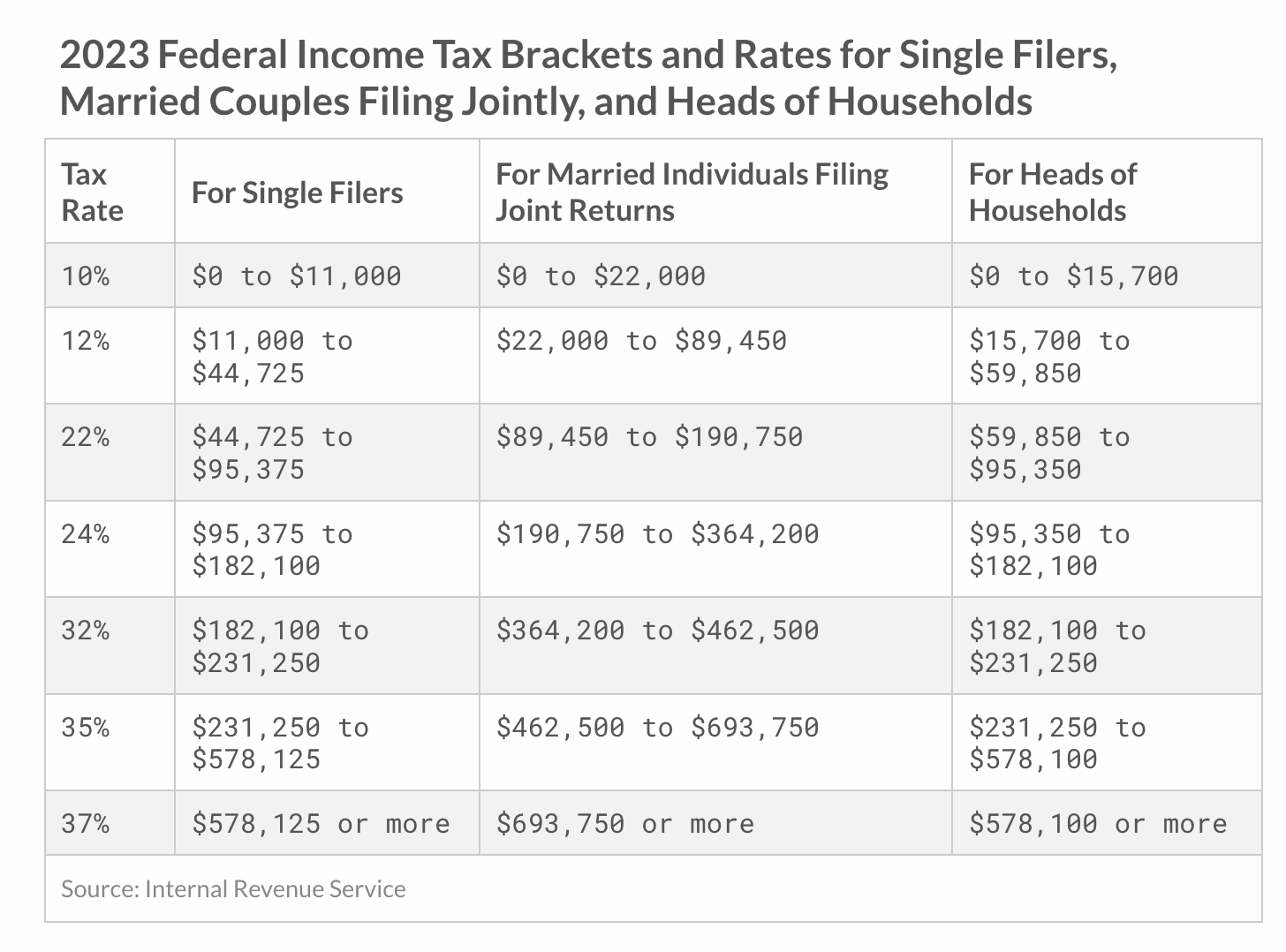
Every dollar of interest earned from Treasury bonds, notes, bills, and TIPS must be reported to the Internal Revenue Service (IRS). For most individual investors, this interest income is reported annually on Schedule B of Form 1040 if the total taxable interest exceeds standard reporting thresholds, and it is ultimately taxed at ordinary income tax rates.
The ordinary income tax rate applied to Treasury interest depends on the investor's overall taxable income and filing status. Because these earnings do not qualify for the preferential tax rates applied to long-term capital gains or qualified dividends, high-income earners may face substantial federal tax burdens on their fixed-income returns.
State and Local Tax Exemptions
The primary tax benefit of holding U.S. Treasury bonds is the complete insulation from state and local income taxes. For investors residing in high-tax jurisdictions—such as California, New York, New Jersey, or Minnesota—this exemption can significantly alter the comparative yield of fixed-income assets.
For example, an investor in a state with a top marginal income tax rate exceeding 10% would see a substantial portion of their corporate bond or municipal bond interest (if out-of-state) eroded by state-level levies. Because Treasury interest is entirely shielded from these state taxes, the effective after-tax yield of a Treasury bond rises relative to corporate bonds offering the exact same nominal interest rate.
| Tax Level | Applicability to U.S. Treasury Interest | Governing Rule or Exemption |
|---|---|---|
| Federal Income Tax | Fully Taxable | Taxed at ordinary income tax rates; reported annually to the IRS. |
| State Income Tax | Fully Exempt | Protected under 31 U.S.C. § 3124; exempt from all state levies. |
| Local / Municipal Tax | Fully Exempt | Protected under 31 U.S.C. § 3124; exempt from city, county, and local taxes. |
Taxation Across Different Treasury Instrument Types
While the broad principle of federal taxation and state exemption applies to all U.S. government debt, the mechanical timing and realization of taxes vary across different instrument categories. Understanding these operational differences ensures accurate tax reporting and prevents unexpected liabilities.
Treasury Bonds and Notes
Treasury bonds (original maturities of 20 or 30 years) and Treasury notes (original maturities of 2 to 10 years) pay interest semi-annually. Investors receive a fixed percentage of the security's par value every six months until maturity.
For tax purposes, this semi-annual coupon payment is treated as taxable interest income in the calendar year the payment is actually received. Investors receive a Form 1099-INT from their brokerage firm or the TreasuryDirect system early in the subsequent calendar year, detailing the exact amount of interest paid during the tax year.
Treasury Bills (T-Bills)
Treasury bills are short-term securities with maturities ranging from four weeks to 52 weeks. Unlike bonds and notes, T-bills do not pay regular semi-annual interest coupons. Instead, they are sold at a discount to their par (face) value.
The investor earns a return by purchasing the bill at a discount (e.g., paying $980 for a $1,000 bill) and receiving the full face value at maturity ($1,000). This difference between the purchase price and the face value is treated as interest income.
For federal tax purposes, this discount is generally recognized when the T-bill matures, is sold, or is otherwise redeemed. Investors must report this "original issue discount" (OID) on their federal tax returns for the year of maturity or disposition, while maintaining the state and local tax exemption on that earnings amount.
Treasury Inflation-Protected Securities (TIPS)
Treasury Inflation-Protected Securities are designed to protect investors against inflation through adjustments to the principal value of the bond. The principal increases with inflation (as measured by the Consumer Price Index) and decreases with deflation.
TIPS pay interest semi-annualy, calculated by applying a fixed coupon rate to the adjusted principal. This creates a unique two-part taxation structure:
- Periodic Interest: The semi-annual coupon payments are taxable as ordinary income at the federal level in the year received.
- Inflation Adjustments to Principal: The annual upward adjustment in the principal value of TIPS is also treated as taxable original issue discount (OID) income in the year the adjustment occurs, even though the investor does not receive cash from this principal increase until the bond matures or is sold.
This requirement to pay taxes on "phantom income"—paper increases in principal that have not been converted to cash—means that holding taxable TIPS in standard brokerage accounts can create a cash-flow mismatch. Many financial planners recommend holding TIPS inside tax-advantaged accounts like Traditional IRAs or Roth IRAs to defer or eliminate these annual tax complications.
Capital Gains and Losses on Secondary Market Transactions
Beyond holding Treasury securities to maturity, investors frequently buy and sell existing bonds on the secondary market prior to their maturity dates. Market fluctuations caused by changing interest rates mean that bonds can be sold at a premium or a discount relative to their purchase price.
When a Treasury bond is sold on the secondary market before maturity, the transaction can trigger a capital gain or capital loss rather than ordinary interest income.
- Capital Gains: If an investor sells a Treasury bond for more than its adjusted purchase price, the profit constitutes a capital gain. If the bond was held for more than one year, it qualifies for long-term capital gains tax rates at the federal level.
- Capital Losses: If the bond is sold for less than its purchase price, the investor realizes a capital loss. These losses can be used to offset capital gains from other investments, and up to $3,000 of excess losses can be deducted against ordinary income per year for individual filers.
Crucially, capital gains realized on the sale of U.S. Treasury securities remain exempt from state and local income taxes, mirroring the protective status applied to direct interest earnings.
Mutual Funds, Exchange-Traded Funds (ETFs), and State Tax Exemptions
Many individual investors do not hold individual Treasury bonds directly; instead, they gain exposure to government debt through mutual funds, exchange-traded funds (ETFs), or target-date retirement funds.
Investing through pooled vehicles introduces specific tax reporting nuances governed by federal tax code regulations and state-level conformity rules.
The 50% Rule and State Tax Exemption Eligibility
When an investor holds a mutual fund or ETF that invests in U.S. Treasury obligations, the dividend distributions derived from those government securities retain their state-tax-exempt status, provided the fund meets specific statutory thresholds.
In many U.S. states, a mutual fund must maintain a minimum percentage—frequently 50% of its total assets—invested in direct U.S. government obligations at the end of each quarter to pass the state tax exemption through to individual shareholders. If the fund meets this threshold, shareholders can exclude the portion of their dividend distributions attributable to U.S. Treasury interest from their state income tax returns.
Managing Form 1099-DIV and State Reporting
Mutual fund and ETF providers issue Form 1099-DIV annually to report dividend distributions. These forms typically include supplemental documentation or footnotes indicating the exact percentage of ordinary dividends derived from U.S. government obligations.
Investors must review these supplementary statements carefully when preparing state tax returns. Because state tax agencies have varying rules regarding percentage thresholds and reporting formats, taxpayers must calculate the exempt portion of fund distributions to claim their allowable deductions accurately.
Strategic Tax Planning with U.S. Treasuries
Incorporating Treasury securities into an overall financial plan involves balancing yield, risk, and tax efficiency. Because tax laws differentiate between federal and state obligations, strategic placement of these assets can optimize after-tax returns.
Account Placement Considerations
The choice of where to hold Treasury securities—taxable brokerage accounts versus tax-advantaged accounts—depends on individual tax brackets and investment horizons:
- Taxable Accounts: High-income earners residing in states with aggressive income tax rates benefit from the state tax exemption on Treasuries, shielding those earnings from state levies that would otherwise apply to corporate bonds or certificates of deposit (CDs).
- Tax-Advantaged Accounts (Traditional IRAs, 401(k)s): Holding TIPS or Treasury bonds inside tax-deferred accounts eliminates the administrative burden of tracking annual OID adjustments on TIPS and defers federal ordinary income tax until withdrawals begin in retirement. However, holding Treasuries in tax-deferred accounts forfeits the unique state tax advantage, as distributions from traditional retirement accounts are generally taxed as ordinary income by states regardless of the underlying asset source.
Comparing Treasuries to Municipal Bonds
Investors seeking tax-free income often weigh U.S. Treasuries against municipal bonds (munis) issued by state and local governments.
- Municipal Bonds: Interest paid by municipal bonds is typically exempt from both federal income taxes and state/local income taxes (if the investor resides in the issuing state). This double-exemption makes munis highly attractive for high-bracket federal taxpayers.
- Treasury Bonds: Interest is exempt from state and local taxes but fully taxable at the federal level.
To determine which offers a better return, investors use the Tax-Equivalent Yield (TEY) formula. This calculation reveals what a taxable bond would need to yield to match the tax-free return of a municipal bond, factoring in the investor's specific federal marginal tax bracket.
Frequently Asked Questions About Treasury Bond Taxation
Are Series EE and Series I savings bonds tax-free?
Series EE and Series I savings bonds share the same state and local tax exemption as marketable Treasury bonds. At the federal level, interest is generally taxable, but taxpayers can choose to defer reporting the interest until the bonds mature, are redeemed, or reach final maturity (up to 30 years). Furthermore, if savings bond proceeds are used to pay for qualified higher education expenses for the taxpayer, spouse, or dependents, the interest may be entirely tax-free at the federal level under the Education Savings Bond Program, subject to income phase-outs.
Do I need to pay federal taxes on Treasury bills if I hold them in a retirement account?
No. If U.S. Treasury bills, notes, bonds, or TIPS are held inside tax-advantaged accounts such as a Traditional IRA, Roth IRA, 401(k), or 403(b), all interest earnings, original issue discounts, and capital gains grow tax-deferred or tax-free depending on the account structure. Consequently, no annual federal tax reporting is required for these earnings within the account.
How do I report Treasury interest on my state tax return?
When filing state income taxes, taxpayers generally start with their federal adjusted gross income (AGI), which includes all taxable interest reported to the IRS. State tax return forms provide specific subtraction lines or modification schedules allowing taxpayers to deduct interest income received from direct U.S. government obligations. Taxpayers should retain their Form 1099-INT and any fund-level tax apportionment statements to substantiate these deductions.
Are Treasury bond earnings subject to the Net Investment Income Tax (NIIT)?
Yes. High-income taxpayers with modified adjusted gross incomes exceeding statutory thresholds ($200,000 for single filers and $250,000 for married couples filing jointly) may be subject to the 3.8% Net Investment Income Tax. Because Treasury bond interest and capital gains meet the definition of net investment income, these earnings can be subject to the NIIT at the federal level, independent of ordinary income tax rates.
What happens to Treasury tax obligations if the bondholder passes away?
When a Treasury bondholder passes away, accrued interest up to the date of death is reported on the decedent's final federal income tax return. Interest earned after the date of death is taxable income to the estate or the designated beneficiary who inherits the securities. Because Treasury bonds receive a step-up in basis for estate tax purposes, unrealized capital gains may be adjusted, though accrued interest maintains its character as income in respect of a decedent (IRD).
Conclusion and Next Actions
United States Treasury bonds occupy a unique position in the tax code: they are fully taxable at the federal level while enjoying a complete statutory exemption from state and local income taxes. This hybrid tax profile makes them particularly valuable for investors seeking capital preservation and income generation while residing in high-tax states.
To maximize net portfolio returns, investors should verify their specific marginal tax brackets, review the tax classification of any mutual funds or ETFs holding government debt, and evaluate whether holding specific instruments—such as TIPS—makes more sense inside taxable or tax-advantaged accounts. Consulting a certified public accountant or qualified financial planner can help ensure accurate reporting and tailored tax optimization.