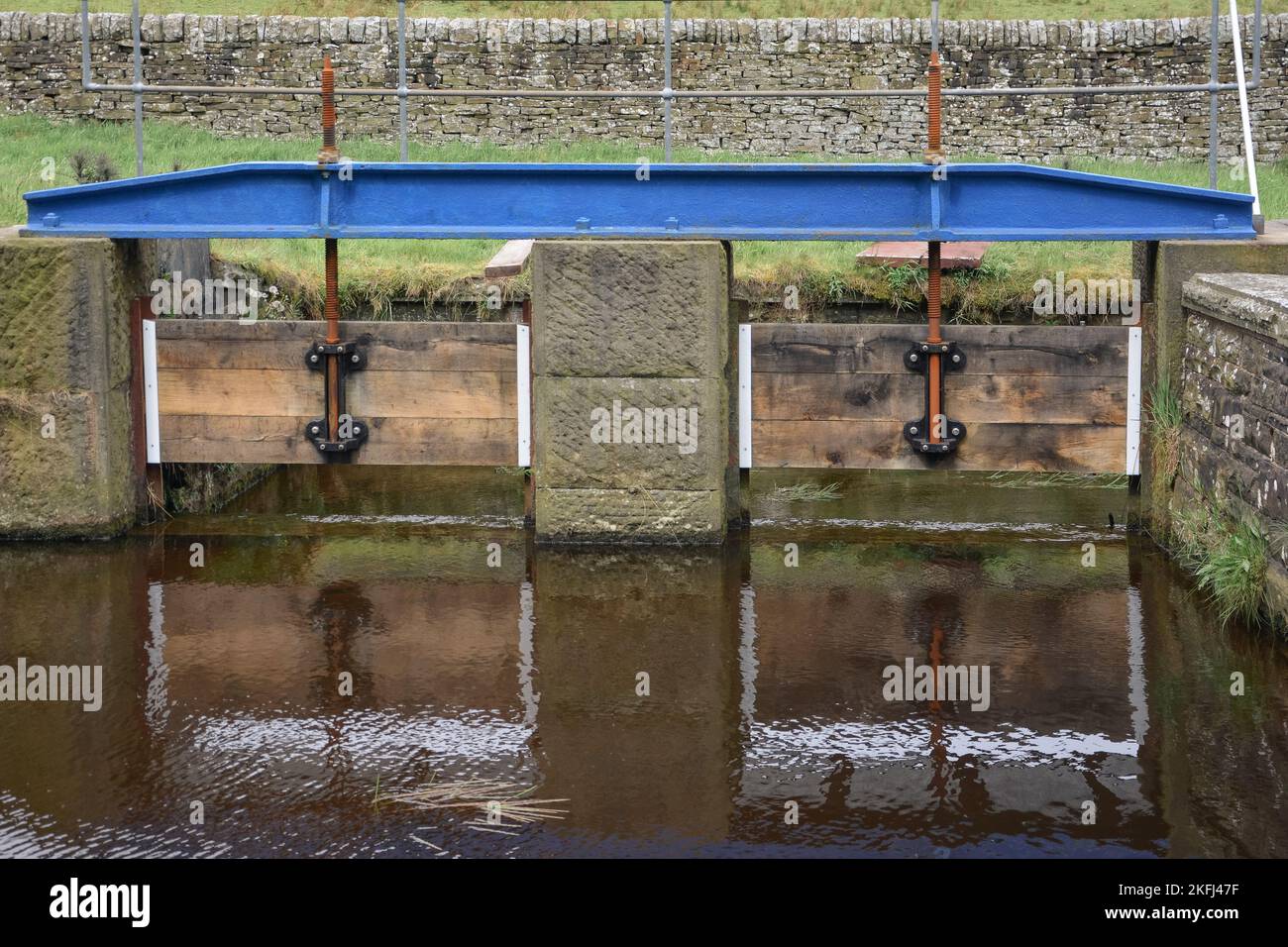
A sluice gate is a movable barrier used to control the flow and level of water in channels, dams, and industrial fluid systems. By sliding vertically or horizontally within a fixed frame, the gate regulates discharge rates, manages flood risks, and facilitates water distribution for irrigation, power generation, and wastewater treatment processes.
A Technical Definition of the Sluice Gate
In the realm of hydraulic engineering, a sluice gate—often referred to as a penstock in certain international markets—is a precision-engineered mechanical device designed to isolate or regulate fluid flow. Unlike a standard valve found in pressurized piping, a sluice gate typically operates in open channels or at the intake/outlet points of reservoirs and tanks.
The fundamental design consists of a "gate leaf" (the moving barrier) and a "guide frame" (the stationary structure). When the leaf is lowered, it creates a watertight seal against the frame, halting the flow of water. When raised, it allows water to pass underneath (undershot flow) or through a designated aperture. In 2026, the engineering standards for these devices have evolved to prioritize high-performance seals and lightweight, corrosion-resistant materials to ensure longevity in increasingly volatile environmental conditions.
The term "sluice" itself originates from the Old French escluse, meaning "to shut out." This etymological root perfectly captures the gate's primary function: providing a definitive barrier against water movement. Whether manually operated via a handwheel or automated through a sophisticated SCADA (Supervisory Control and Data Acquisition) system, the sluice gate remains the backbone of modern water management infrastructure.
The Engineering Mechanics: How Sluice Gates Work
To understand the practical roles of a sluice gate, one must first grasp the physical principles governing its operation. The efficiency of a sluice gate is determined by its ability to withstand hydrostatic pressure while maintaining a reliable seal.
Seating and Unseating Pressure
Engineers categorize sluice gate performance based on the direction of water pressure relative to the gate's mounting.
- Seating Pressure: This occurs when the water pressure pushes the gate leaf against the frame and the seals. This is the ideal operating condition, as the pressure itself helps maintain a tight seal.
- Unseating Pressure: This occurs when the water pressure pushes the gate leaf away from the frame. In these scenarios, the mechanical fasteners and the design of the seals must be significantly more robust to prevent leakage.
Drive Mechanisms
As of 2026, most industrial and municipal sluice gates utilize one of three primary drive systems:
- Manual Actuation: Utilizes a threaded stem and a handwheel or crank. These are common in remote agricultural areas where power is unavailable.
- Electric Actuation: Employs an electric motor and gearbox. This allows for precise positioning and remote operation, which is critical for modern flood management.
- Hydraulic Actuation: Uses pressurized fluid to move the gate leaf. These are typically reserved for very large gates (such as those in massive dams) where the force required to overcome water pressure is immense.
Primary Practical Roles of Sluice Gates
Sluice gates are not merely static pieces of metal; they are dynamic tools used to solve complex water-related challenges. Their roles span across various sectors, from rural farming to high-tech industrial processing.
1. Flood Management and Disaster Mitigation
Perhaps the most critical role of sluice gates in 2026 is their contribution to flood defense. As climate patterns continue to produce more intense precipitation events, the ability to control the volume of water entering urban drainage systems is paramount. Sluice gates act as "gatekeepers" for city canals and rivers. During a storm surge, these gates can be closed to prevent seawater or high river water from backing up into city streets. Conversely, they can be opened to drain excess surface water into larger bodies of water once the peak surge has passed.
2. Agricultural Irrigation and Water Distribution
In many regions, water is a scarce and precious resource. Sluice gates allow for the equitable and efficient distribution of water across vast agricultural landscapes. By installing gates at various points along a primary irrigation canal, water managers can divert specific volumes of water into secondary channels serving different farms. This ensures that crops receive the necessary hydration without wasting the reservoir's supply. Modern gates often incorporate flow meters to provide real-time data on exactly how much water is being discharged.
3. Hydropower Generation
Hydropower remains a cornerstone of the renewable energy transition. Sluice gates play a vital role in the "intake" structures of hydroelectric plants. They control the flow of water into the penstocks that lead to the turbines. By modulating the gate opening, operators can increase or decrease the water velocity and volume, thereby controlling the amount of electricity generated. Furthermore, sluice gates serve as a critical safety feature; in the event of a turbine failure or maintenance requirement, the gates can be slammed shut to isolate the machinery from the massive pressure of the reservoir.
4. Wastewater Treatment and Effluent Control
Within wastewater treatment plants (WWTPs), sluice gates are used to divert sewage and treated effluent through different stages of the treatment process. They allow operators to isolate specific tanks for cleaning or repair without shutting down the entire plant. Because wastewater can be chemically aggressive, gates used in this role are typically manufactured from high-grade stainless steel or high-density polyethylene (HDPE) to resist corrosion and chemical degradation.
5. Navigation and Canal Systems
For inland shipping, sluice gates (specifically those used in locks) are essential for moving vessels between bodies of water at different elevations. While a lock gate is a specific subset of the technology, the principles of the sluice gate—regulating water levels to raise or lower a ship—remain the same. They ensure that canals remain navigable throughout the year, even during dry seasons when natural water levels might otherwise drop too low for commercial traffic.
Critical Types of Sluice Gates and Their Specific Uses
Selecting the correct type of sluice gate depends entirely on the application, the required seal integrity, and the mounting environment.
| Gate Type | Primary Application | Movement Style | Key Advantage |
|---|---|---|---|
| Wall-Mounted Slide Gate | Wastewater tanks, reservoirs | Vertical Sliding | Simple installation on flat concrete walls. |
| Channel-Mounted Gate | Irrigation canals, open flumes | Vertical Sliding | Fits directly into pre-cast grooves in a channel. |
| Radial (Tainter) Gate | Large dam spillways | Rotational Arc | Can handle massive loads with relatively small motors. |
| Flap Gate | Discharge pipes, outfalls | Hinged (Swing) | Prevents backflow automatically without power. |
| Weir Gate (Downward Opening) | Decanting, level control | Vertical (Down) | Allows for precise skimming of the top water layer. |
Radial (Tainter) Gates
Often seen on the tops of major dams, radial gates are curved barriers. Because the curve of the gate is centered on a pivot point, the hydrostatic pressure of the water passes through the pivot, significantly reducing the friction the motor must overcome. This allows for the management of enormous volumes of water with surprising precision.
Flap Gates
The flap gate is the "check valve" of the sluice world. It is hinged at the top and opens only when the pressure from the upstream side is higher than the downstream side. These are commonly used at the end of drainage pipes that empty into the ocean. When the tide comes in, the pressure of the sea pushes the flap shut, preventing saltwater from entering the city’s freshwater drainage system.
Material Selection and Durability Standards
In 2026, the longevity of water infrastructure is a major priority for municipal planners. The materials used in sluice gate construction have moved toward high-durability alloys and composites.
- 316L Stainless Steel: The gold standard for marine and wastewater environments. It offers exceptional resistance to pitting and crevice corrosion.
- Aluminum: Used in smaller, manually operated gates where weight is a concern. Modern aluminum gates are often anodized to improve surface hardness and corrosion resistance.
- Cast Iron: While traditional, modern cast iron gates are often ductile iron, which provides better tensile strength and is less brittle than old-fashioned gray iron.
- HDPE (High-Density Polyethylene): Increasingly popular for flap gates and small slide gates due to its complete immunity to corrosion and lightweight nature.
Standardization bodies such as the American Water Works Association (AWWA) and the International Organization for Standardization (ISO) provide rigorous guidelines (like AWWA C561 or ISO 12266) that dictate the maximum allowable leakage rates. A "zero-leakage" gate is virtually impossible to achieve over decades of use, but high-performance EPDM or Neoprene seals allow modern gates to remain remarkably watertight even under high pressure.
Installation and Maintenance Requirements
A sluice gate's performance is only as good as its installation and the consistency of its maintenance. Proper alignment of the frame is the most critical step; if the frame is even slightly warped during the concrete pouring process, the gate leaf will not seat correctly, leading to significant bypass leakage.
Maintenance Checklist for 2026:
- Stem Lubrication: The threaded stem that raises and lowers the gate must be regularly greased to prevent seizing. In 2026, many stems are encased in "grease tubes" to protect the lubricant from environmental contamination.
- Seal Inspection: Debris such as silt, rocks, or plastic waste can become lodged in the bottom seal (the "sill"). Routine inspections—often performed by ROVs (Remotely Operated Vehicles) in deep water—are necessary to clear these obstructions.
- Actuator Testing: For automated gates, the electrical components and backup batteries must be tested monthly to ensure they will function during a power outage or emergency.
- Cathodic Protection: In saltwater environments, sacrificial anodes are often attached to the gate leaf to prevent galvanic corrosion of the primary metal structure.
Future Trends: Smart Sluice Gates and IoT
As we look at the state of water technology in 2026, the integration of the Internet of Things (IoT) is the most significant advancement in sluice gate design. "Smart gates" are now equipped with sensors that measure water level, flow velocity, and even the mechanical strain on the gate stem.
These sensors feed data into AI-driven models that can predict a flood event hours before it happens. In response, the system can autonomously adjust gate positions across an entire watershed to maximize storage capacity and minimize downstream impact. This level of automation reduces the need for human intervention in dangerous conditions and ensures that water management is proactive rather than reactive.
FAQs
What is the difference between a sluice gate and a floodgate?
While all floodgates are a type of sluice gate, not all sluice gates are floodgates. A sluice gate is a broad category used for any water control (irrigation, industrial, wastewater). A floodgate specifically refers to a gate designed to protect land from being submerged during high-water events like storm surges or river floods.
Can sluice gates be used in saltwater environments?
Yes, but they require specific materials. Standard cast iron will corrode quickly in seawater. For saltwater applications, engineers typically specify 316L stainless steel, Duplex stainless steel, or high-grade aluminum with sacrificial anodes to prevent electrolysis and corrosion.
How do you prevent a sluice gate from freezing?
In cold climates, freezing can jam a sluice gate. Solutions include using "bubble systems" that circulate warmer water from the bottom of the reservoir to the surface near the gate, or installing electric heating elements directly into the guide frames to ensure the seals do not bond to the ice.
Is manual operation still relevant in 2026?
Absolutely. While automation is preferred for efficiency, manual overrides are a mandatory safety requirement for almost all critical infrastructure. In the event of a total grid failure or a cyberattack on a SCADA system, operators must be able to physically move the gate to prevent a catastrophe.
What causes a sluice gate to leak?
The most common causes are debris trapped in the sill, worn-out rubber seals, or a misaligned frame. Over time, "wire-drawing" can also occur, where high-pressure water forces its way through a tiny gap, eventually cutting a permanent groove into the seal or the metal itself.
Final Recommendation for Implementation
When planning a project involving a sluice gate, the first step is to define the maximum static head (the height of the water the gate must hold) and whether the gate will face seating or unseating pressure. For municipal or industrial projects in 2026, it is highly recommended to opt for stainless steel construction and electric actuation with a manual override. Furthermore, ensure that the gate manufacturer provides a certified leakage test report that meets AWWA C561 standards to guarantee long-term efficiency and safety.