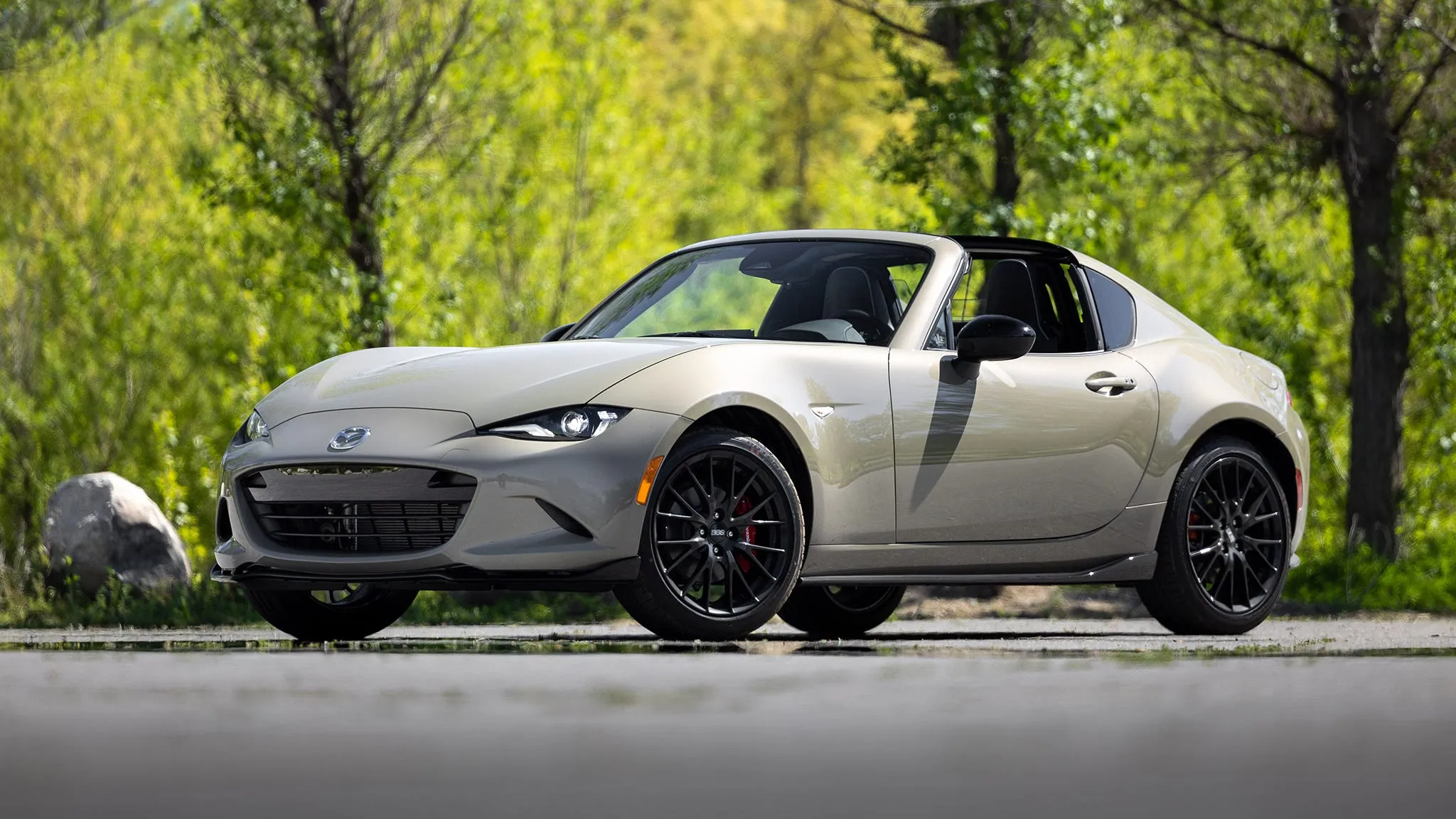
Generally speaking, Mazda Miatas are surprisingly inexpensive to insure compared to other sports cars, primarily due to their low horsepower, lightweight profile, and the demographic profile of the drivers who typically own them. Because insurers look closely at historical accident data, vehicle replacement costs, and engine size when determining risk, the iconic roadster routinely undercuts muscle cars and modern high-performance coupes on monthly insurance premiums.
Evaluating the true cost of insuring a Mazda MX-5 Miata requires looking beyond a simple yes-or-no answer. Auto insurance is heavily influenced by a combination of vehicle specifications, driver history, geographical location, and the specific generation of the car being driven. For prospective buyers and current owners alike, understanding these underwriting factors helps clarify what to expect when shopping for coverage.
Understanding How Auto Insurers Evaluate Sports Cars
When insurance companies evaluate vehicles, they rarely categorize cars based solely on marketing labels like "sports car" or "roadster." Instead, actuaries run calculations based on quantitative metrics: engine displacement, horsepower-to-weight ratios, safety equipment, repair part availability, and historical loss data filed by claims departments.
Traditional sports cars like the Ford Mustang GT or Chevrolet Camaro feature high-horsepower V8 engines that invite aggressive driving, resulting in high frequency and severity of claims. The Mazda Miata takes a fundamentally different engineering approach. Since its debut for the 1990 model year, the Miata has prioritized handling, momentum, and driver engagement over straight-line acceleration.
Consequently, even newer generations of the Miata feature modest four-cylinder engines with relatively low horsepower ratings. This performance profile directly translates to lower risk in the eyes of underwriters. Insurers view the Miata as a vehicle that is less likely to be involved in high-speed, catastrophic loss accidents compared to heavier, high-output vehicles, keeping baseline comprehensive and collision rates manageable.
Insurance Costs Across Generations: NA, NB, NC, and ND
The generation of the Mazda Miata you own or plan to purchase plays a massive role in your insurance premium. Insurers look at the replacement value of the vehicle, the presence of modern safety features, and the likelihood that the car can be repaired economically after an accident.
First-Generation (NA, 1990–1997) and Second-Generation (NB, 1999–2005)
Older Miatas are exceptionally cheap to insure for liability coverage, but owners face a nuanced decision regarding comprehensive and collision. Because these cars have low market values, paying for full coverage often does not make financial sense; if the car is totaled, the payout will be relatively small. Liability-only policies for older Miatas can be remarkably inexpensive, sometimes costing just a few hundred dollars a year depending on the driver's record. However, finding clean, unmodified examples with clean titles is becoming harder, which slightly influences parts availability.
Third-Generation (NC, 2006–2015)
The NC generation introduced a slightly larger body, heavier frame, and stronger engines, including a power retractable hardtop (PRHT) option. Insurers view the NC as a stable, safe daily driver. While comprehensive and collision coverage will be slightly higher than an NA or NB due to higher replacement values and more complex body panels, insurance rates remain well below the average for sports coupes of the same era.
Fourth-Generation (ND, 2016–Present)
As the newest iteration, the ND Miata features modern active safety technology, lightweight structural adhesives, and advanced airbag systems. Insurers favor modern safety features such as blind-spot monitoring, rear cross-traffic alert, and autonomous emergency braking. While the replacement value of an ND Miata is higher than older models, the inclusion of these safety features helps offset potential premium hikes, making the modern Miata very competitive in modern insurance pools.
| Miata Generation | Production Years | Primary Underwriting Considerations | Typical Insurance Cost Impact |
|---|---|---|---|
| NA | 1990–1997 | Low market value, lack of modern safety tech, highly modifiable. | Very low (liability-only is economical). |
| NB | 1999–2005 | Aging fleet, affordable replacement parts, modest power. | Low to moderate. |
| NC | 2006–2015 | Heavier frame, introduction of power hardtop variants. | Moderate, comparable to standard compact sedans. |
| ND | 2016–Present | Advanced safety suites, higher market value, aluminum body panels. | Moderate, offset by high safety ratings. |
Driver Demographics and Historical Loss Data
Vehicle specifications only tell half the story. Insurance underwriters place immense weight on who drives the car. Historical loss data—statistics tracking how often a specific make and model is involved in accidents and how much those claims cost—dictates baseline rates.
Miatas occupy a unique space in automotive culture. While younger drivers occasionally purchase older NA or NB models as affordable entry-level project cars, a vast percentage of Miata owners skew older, consisting of mature adults, driving enthusiasts, and retirees who use the roadsters as weekend cruisers rather than daily commuters. Older drivers with clean records command the lowest possible insurance rates.
Conversely, if an insurance applicant is a teenager or a driver under the age of 25 with a clean record, insuring any vehicle classified as a two-door sports car will trigger higher premiums. Insurers apply statistical risk models that assume younger drivers take more risks. Even so, a young driver insuring a Miata will almost always pay less than they would for a Nissan Z, Subaru BRZ, or a turbocharged muscle car.
The Impact of Modifications and Aftermarket Parts
One of the hidden financial traps of owning a sports car is the temptation to modify it. Miatas are among the most modified vehicles on the planet, with a massive aftermarket ecosystem offering everything from suspension kits and upgraded exhausts to turbochargers and roll bars.
If you modify your Miata, you must notify your insurance provider. Failing to declare modifications can result in claim denials if an accident occurs. Furthermore, standard auto insurance policies only cover factory-standard equipment. If you install $5,000 worth of aftermarket wheels, performance suspension, and engine upgrades, standard insurance will only pay out the book value of a stock vehicle in a total loss scenario unless you purchase specialized endorsement coverage or custom parts and equipment (CPE) coverage.
Adding forced induction (turbochargers or superchargers) to a Miata transforms its performance profile. If an insurance company discovers that a vehicle has been structurally modified to produce significantly more horsepower than factory specifications, they may reclassify the vehicle risk profile or drop coverage entirely. Keeping a Miata stock is the single best way to keep insurance rates low and predictable.
Comparing Miatas to Other Sports Cars and Sedans
To understand whether Miatas are truly affordable to insure, it helps to compare them against common alternatives across the automotive landscape.
When placed next to traditional muscle cars like the Ford Mustang, Chevrolet Camaro, or Dodge Challenger, the Miata is significantly cheaper to insure. Muscle cars feature high-displacement engines and high accident frequency rates among younger demographics, leading to steep premiums. Similarly, Japanese sports coupes like the Nissan Z or Toyota GR Supra command higher insurance rates due to expensive body panels, high horsepower, and higher repair costs.
Interestingly, insuring a Mazda Miata is often comparable to, or even slightly cheaper than, insuring a standard four-door family sedan or compact car driven by an average commuter. Because insurance companies evaluate risk by looking at the total claims payout history of a model, the Miata's stellar safety ratings, low weight, and moderate power output place it in a very favorable bracket.
Strategies to Lower Your Miata Insurance Premium
Even though Miatas are inherently affordable to insure, drivers can take proactive steps to reduce their monthly out-of-pocket expenses even further:
- Opt for Liability-Only on Older Models: If you drive an NA or NB Miata worth less than a few thousand dollars, paying for comprehensive and collision coverage may cost more than the car is actually worth over a couple of years. Dropping physical damage coverage on older vehicles drastically reduces premiums.
- Bundle Policies: Most major insurance carriers offer substantial discounts if you bundle your auto insurance with homeowners insurance, renters insurance, or policies for additional vehicles.
- Maintain a Clean Driving Record: Speeding tickets, at-fault accidents, and driving under the influence violations are the primary drivers of high insurance costs. Defensive driving courses can sometimes remove points from your license and yield direct insurance discounts.
- Increase Your Deductibles: If you choose to carry comprehensive and collision coverage on an NC or ND Miata, raising your deductible from $500 to $1,000 will immediately lower your monthly premium, provided you have the savings set aside to cover that deductible in an emergency.
- Utilize Low-Mileage Discounts: Because many Miata owners store their cars during winter months or drive them strictly as weekend pleasure vehicles, enrolling in a low-mileage program or a pay-per-mile insurance policy can result in massive savings.
Frequently Asked Questions
Are Miatas more expensive to insure than a regular sedan?
Not necessarily. While a Miata is a two-door sports car, its low horsepower, lightweight design, and favorable demographic safety profile mean its insurance rates are often comparable to—or even lower than—standard compact sedans driven by average commuters.
Does the type of Miata top (soft top vs. hard top) affect insurance costs?
Yes, minor differences can exist. Power retractable hardtop (PRHT) models or RF (Retractable Fastback) models feature more complex mechanical roof mechanisms and expensive body panels compared to traditional manual soft tops, which can slightly increase comprehensive repair costs and premiums.
Can I get classic or agreed-value insurance for older Miatas?
Older first-generation (NA) Miatas are increasingly entering the classic and collector car market. If your Miata is well-maintained, stock, and driven limited miles annually, you may qualify for specialized classic car insurance with an agreed-value policy, which is often much cheaper than standard daily-driver insurance.
How does vehicle modification affect my Miata insurance rate?
Cosmetic modifications rarely impact rates, but performance upgrades such as turbochargers, superchargers, or nitrous systems increase risk. Failing to report significant engine modifications can lead to claim denials, while declaring them may result in higher rates or specialized underwriting requirements.
Are insurance rates higher for teenage drivers in a Miata?
Yes. Like any vehicle, insuring a young or inexperienced driver under the age of 25 will be expensive in a Miata. However, because the car lacks the massive horsepower of traditional muscle cars, the rates for a young driver in a Miata are still generally lower than they would be in a comparable performance coupe.
Conclusion and Next Actions
Insuring a Mazda Miata is remarkably affordable when compared to almost any other vehicle bearing the sports car label. Thanks to modest engine outputs, sensible engineering, and a driver demographic that skews older and more cautious, the Miata avoids the punitive insurance penalties that plague high-horsepower muscle cars and modern performance coupes.
Before purchasing a Miata or renewing your current policy, take time to request multiple quotes from competing insurance providers. Be completely transparent about whether the vehicle will be used as a daily commuter or a weekend toy, and inquire about low-mileage programs if you plan to keep your annual mileage low. By maintaining a clean driving record and keeping modifications minimal, you can enjoy one of the world's greatest sports car experiences without breaking the bank on monthly insurance payments.