The Detroit Zoo is home to more than 2,000 animals representing over 200 species, ranging from massive polar bears and majestic giraffes to delicate butterflies and rare amphibians. These animals are housed within 125 acres of naturalistic habitats designed to prioritize animal welfare, conservation research, and immersive visitor education.
Located in Royal Oak, Michigan, the Detroit Zoo is a world-renowned facility managed by the Detroit Zoological Society (DZS). As of 2026, it remains a leader in "landscape immersion" exhibitry, where barriers are hidden and animals reside in environments that closely mimic their native ecosystems. For visitors planning a trip, understanding the layout of these habitats and the specific behaviors of the animals is essential for a rewarding experience.
The Arctic Ring of Life: Polar Bears and Seals
The Arctic Ring of Life is one of the most iconic habitats for animals in the Detroit Zoo. Spanning over four acres, it is one of the largest and most sophisticated polar bear facilities in North America. This exhibit is designed to provide a "tundra-to-sea" experience, moving from open grassy areas to a massive aquatic environment.
Polar Bear Behavior and Viewing
The stars of this habitat are the polar bears, including well-known residents such as Nuka and Suka. The exhibit features a 70-foot-long clear tunnel—the Frederick and Barbara Erb Polar Passage—which allows visitors to walk "underwater" while polar bears and seals swim overhead. In 2026, this remains a primary draw for photographers and wildlife enthusiasts.
Polar bears are most active in the morning and during cooler weather. Because the Detroit Zoo prioritizes animal choice, the bears have access to behind-the-scenes areas and may not always be visible in the main yard. The habitat includes "chilled ice" features and deep salt-water pools to ensure the bears can maintain their natural thermoregulation even during Michigan summers.
Harbor and Gray Seals
Sharing the Arctic Ring of Life (though separated by clear barriers for safety) are the harbor seals and gray seals. These agile marine mammals are frequently seen performing "porpoising" maneuvers in their 300,000-gallon pool. The Detroit Zoo often takes in rescued seals that cannot be released back into the wild, providing them with lifelong care and medical supervision.
Polk Penguin Conservation Center
The Polk Penguin Conservation Center is a landmark architectural feat shaped like a massive iceberg. It houses more than 75 penguins representing five distinct species: King, Gentoo, Macaroni, Rockhopper, and Adelie.
The Deep Dive Experience
The centerpiece of the penguin habitat is a 326,000-gallon, 25-foot-deep aquatic area. Visitors can observe the penguins from two underwater galleries. These birds are incredibly fast and graceful in the water, contrasting sharply with their waddling gait on land.
- King Penguins: Identifiable by their large size and bright orange patches on their necks.
- Rockhopper Penguins: Famous for the yellow crests of feathers on their heads and their tendency to "hop" over rocks.
- Gentoo Penguins: The fastest underwater swimmers among the species here, recognizable by the white "bonnet" marking on their heads.
The center utilizes advanced life-support systems to keep the water at a constant 37 degrees Fahrenheit and simulates the natural light cycles of the Antarctic, which is crucial for the birds' breeding and molting seasons.
Great Apes of Harambee and Primates
The Detroit Zoo has a long-standing reputation for its care of great apes, specifically chimpanzees and gorillas. The Great Apes of Harambee is a four-acre indoor/outdoor habitat that allows these highly intelligent animals to live in complex social groups.
Chimpanzee Social Structures
The chimpanzee troop at the Detroit Zoo is one of the largest in a U.S. zoo. These primates are provided with a variety of enrichment tools—such as artificial "termite mounds" filled with honey or mustard—to encourage natural foraging behaviors. Observers can often witness grooming sessions, which are vital for maintaining social bonds within the troop.
Western Lowland Gorillas
The gorilla habitat is designed with lush vegetation, climbing structures, and private nesting areas. The gorillas are often seen lounging in the sun or interacting with the younger members of the troop. The zoo participates in the Species Survival Plan (SSP), a program by the Association of Zoos and Aquariums (AZA) to ensure the genetic diversity and sustainability of endangered species like the Western lowland gorilla.
The National Amphibian Conservation Center (Amphibiville)
Often referred to as "Amphibiville," the National Amphibian Conservation Center is a two-acre site dedicated to the world’s most threatened group of animals. When it opened, it was the first major facility of its kind, and it remains a global leader in amphibian research.
The center houses a vast array of frogs, toads, salamanders, and caecilians. Highlights include:
- Japanese Giant Salamanders: These can grow up to five feet long and are rare to see in captivity.
- Poison Dart Frogs: Vibrant, jewel-toned frogs that utilize bright colors as a warning to predators in the wild.
- Panamanian Golden Frogs: A species that is extinct in the wild but thrives at the Detroit Zoo through dedicated breeding programs.
The facility focuses heavily on the "Chytrid" fungus crisis, which has devastated amphibian populations globally. The zoo’s work here is not just for display; it is a critical laboratory for saving species from total extinction.
African Grasslands and Large Mammals
The African Grasslands section of the zoo covers a massive territory on the southern end of the park. It is designed to represent the vast savannas of East and South Africa.
Giraffes and Zebras
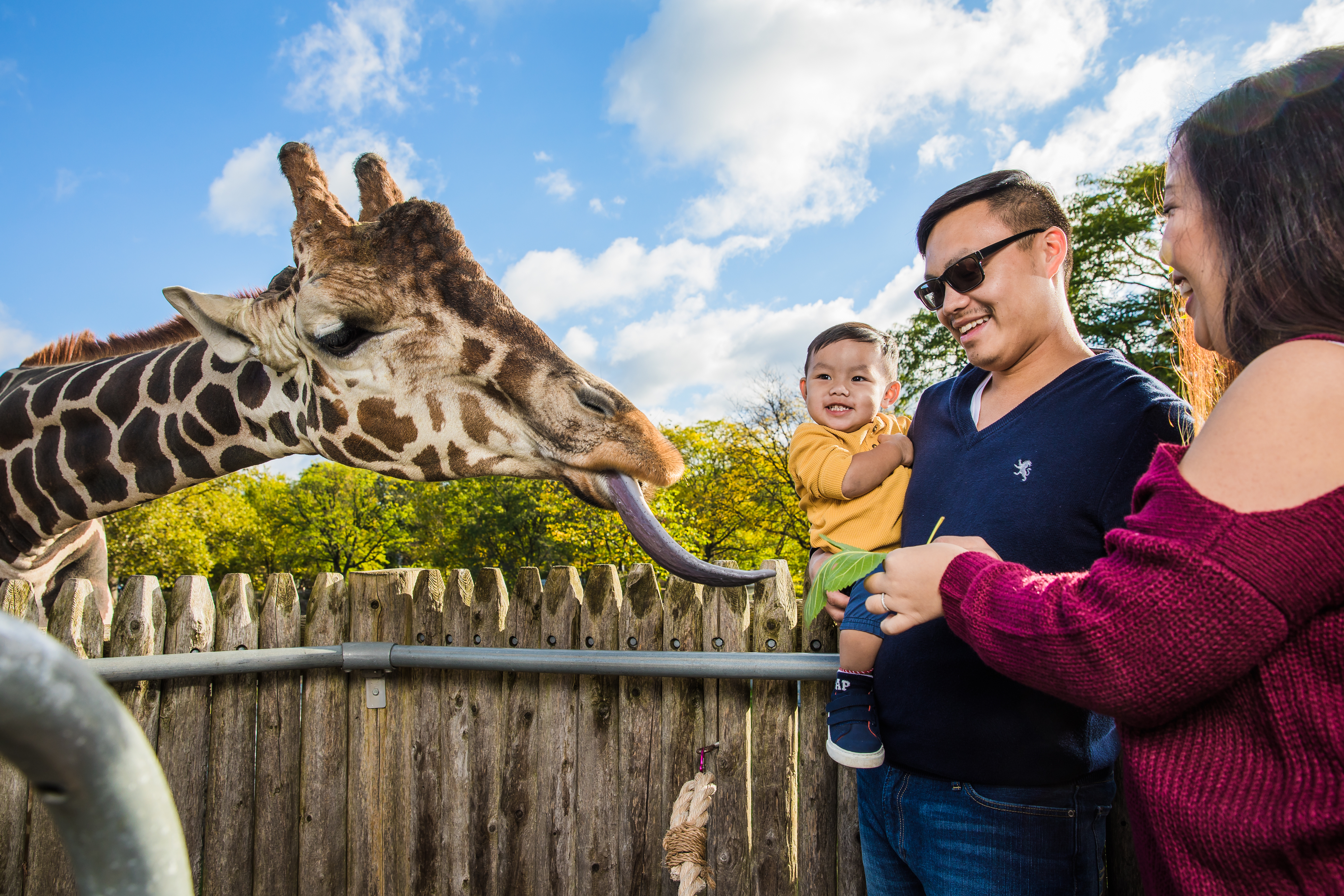
The Reticulated Giraffes at the Detroit Zoo are among the most popular animals. Visitors can often purchase tickets for the Giraffe Encounter, which allows them to hand-feed these giants from an elevated platform. Sharing the nearby space are the Grevy’s Zebras, the largest and most endangered species of zebra, characterized by their narrow stripes and large ears.
Lions and Rhinos
The African Grasslands also include habitats for:
- African Lions: Often heard roaring across the zoo grounds, the lions reside in a habitat with large rock outcroppings (kopjes) that allow them to survey their "pride lands."
- Southern White Rhinoceros: These massive herbivores are part of a critical conservation effort. The zoo provides them with expansive wallowing areas, which are essential for their skin health.
Australian Outback Adventure
The Australian Outback Adventure offers a unique "walk-through" experience. In this two-acre habitat, visitors walk along a path with no physical barriers between them and the animals.
- Red Kangaroos and Wallabies: These marsupials are free to roam across the path. Visitors are instructed to stay on the designated walkway, but the animals often come within inches of the guests.
- Emus: The large, flightless birds are also present in this area, often seen foraging near the kangaroo mobs.
This habitat is particularly active in the early morning when the kangaroos are most likely to be seen "boxing" or grazing.
Comparative Overview of Major Detroit Zoo Habitats
| Habitat Name | Key Animal Species | Primary Feature | Best Viewing Time |
|---|---|---|---|
| Arctic Ring of Life | Polar Bears, Seals | 70-ft Underwater Tunnel | Morning (Activity) |
| Polk Penguin Center | 5 Penguin Species | 25-ft Deep Dive Tank | Mid-day (Feeding) |
| Great Apes of Harambee | Chimps, Gorillas | 4-acre Natural Forest | Afternoon |
| Amphibiville | Giant Salamanders, Frogs | Indoor Conservation Lab | All Day (Indoor) |
| Cotton Family Wolf Wilderness | Gray Wolves | 2-acre Meadow/Woods | Late Afternoon |
| Asian Forest | Red Pandas, Tigers | Elevated Walkways | Morning |
Asian Forest and Red Pandas
The Asian Forest is a quiet, lushly landscaped area that houses several species native to the Asian continent. One of the most beloved animals in the Detroit Zoo is the Red Panda.
The Detroit Zoo has had significant success breeding red pandas. These "fire foxes" are arboreal and spend most of their time in the trees. The zoo’s habitat features a network of overhead bridges that allow the red pandas to travel above the visitor paths.
The Asian Forest also features the Amur Tiger. These are the largest cats in the world. The zoo provides them with a complex environment that includes water features for swimming and high vantage points for resting. Because tigers are solitary and elusive, spotting them often requires patience and a keen eye on the shaded areas of their habitat.
The Cotton Family Wolf Wilderness
Opened to highlight North American wildlife, the Cotton Family Wolf Wilderness is a two-acre sanctuary for gray wolves. This habitat was designed to mimic the wolves' natural environment in the Great Lakes region, featuring meadows, trees, and a flowing stream.
Visitors can view the wolves from the Log Cabin, which offers floor-to-ceiling glass windows. This viewing area is particularly important for observing the complex social hierarchy and communication behaviors of the pack. The Detroit Zoo emphasizes the role of wolves as a keystone species, educating the public on their importance in maintaining healthy ecosystems in the wild.
Animal Welfare and Conservation Ethics
A distinguishing factor of the animals in the Detroit Zoo is the ethical framework under which they are cared for. The DZS is a pioneer in the field of Animal Welfare Science. Unlike traditional zoos that may focus solely on entertainment, the Detroit Zoo uses data-driven assessments to ensure each animal is thriving emotionally and physically.
The Center for Zoo Animal Welfare (CZAW)
The Detroit Zoo established the CZAW to serve as a resource for captive animal care worldwide. This involves:
- Choice-Based Habitats: Allowing animals to choose whether they want to be indoors or outdoors, or in public view.
- Complex Enrichment: Providing puzzles, varied scents, and food-delivery devices that stimulate the animals' brains.
- Rescue and Sanctuary: Many animals, such as the grizzly bears and certain exotic birds, were rescued from sub-standard private facilities or circuses and given a permanent home here.
For more information on the status of species in the wild, the IUCN Red List provides comprehensive data that the Detroit Zoo uses to guide its breeding and conservation priorities.
Frequently Asked Questions
Which animals are active during the winter at the Detroit Zoo?
Many animals thrive in the Michigan winter, particularly those in the Arctic Ring of Life (polar bears and seals), the Polk Penguin Conservation Center, and the Wolf Wilderness. Additionally, indoor habitats like the National Amphibian Conservation Center and the Butterfly Garden remain warm and accessible year-round.
Can you feed any of the animals in the Detroit Zoo?
Directly feeding most animals is strictly prohibited for their health and safety. However, the zoo offers a supervised Giraffe Encounter where guests can purchase specific browse to hand-feed the giraffes. This activity is seasonal and depends on the animals' appetite and weather conditions.
What is the best time of day to see the animals?
The best time is generally at opening (9:00 AM or 10:00 AM depending on the season). Many animals are most active during the cooler morning hours and during their scheduled morning feedings. Late afternoon is also a good time as many species become more active before the zoo closes.
How many animals are at the Detroit Zoo?
As of 2026, the Detroit Zoo houses more than 2,000 individual animals across approximately 230 different species. This population includes mammals, birds, reptiles, amphibians, fish, and invertebrates.
Are there any new animal arrivals for 2026?
The zoo frequently welcomes new arrivals through the Species Survival Plan (SSP). While specific births vary, the zoo has recently focused on expanding its populations of red pandas and endangered amphibians. It is recommended to check the Detroit Zoo's official news page for the most current birth announcements.
Planning Your Animal-Focused Visit
To see the most animals in the Detroit Zoo, visitors should plan for a stay of at least four to five hours. Because the zoo is expansive, wearing comfortable walking shoes is a prerequisite. Utilizing the Zootique entrance and moving toward the Arctic Ring of Life first is a common strategy to beat the crowds at the most popular exhibits.
For those with limited mobility or young children, the Tauber Family Railroad offers a way to traverse the zoo while seeing the African Grasslands from a different perspective. Remember that the animals' well-being comes first; if an animal is not visible, they are likely resting in a private area of their habitat.