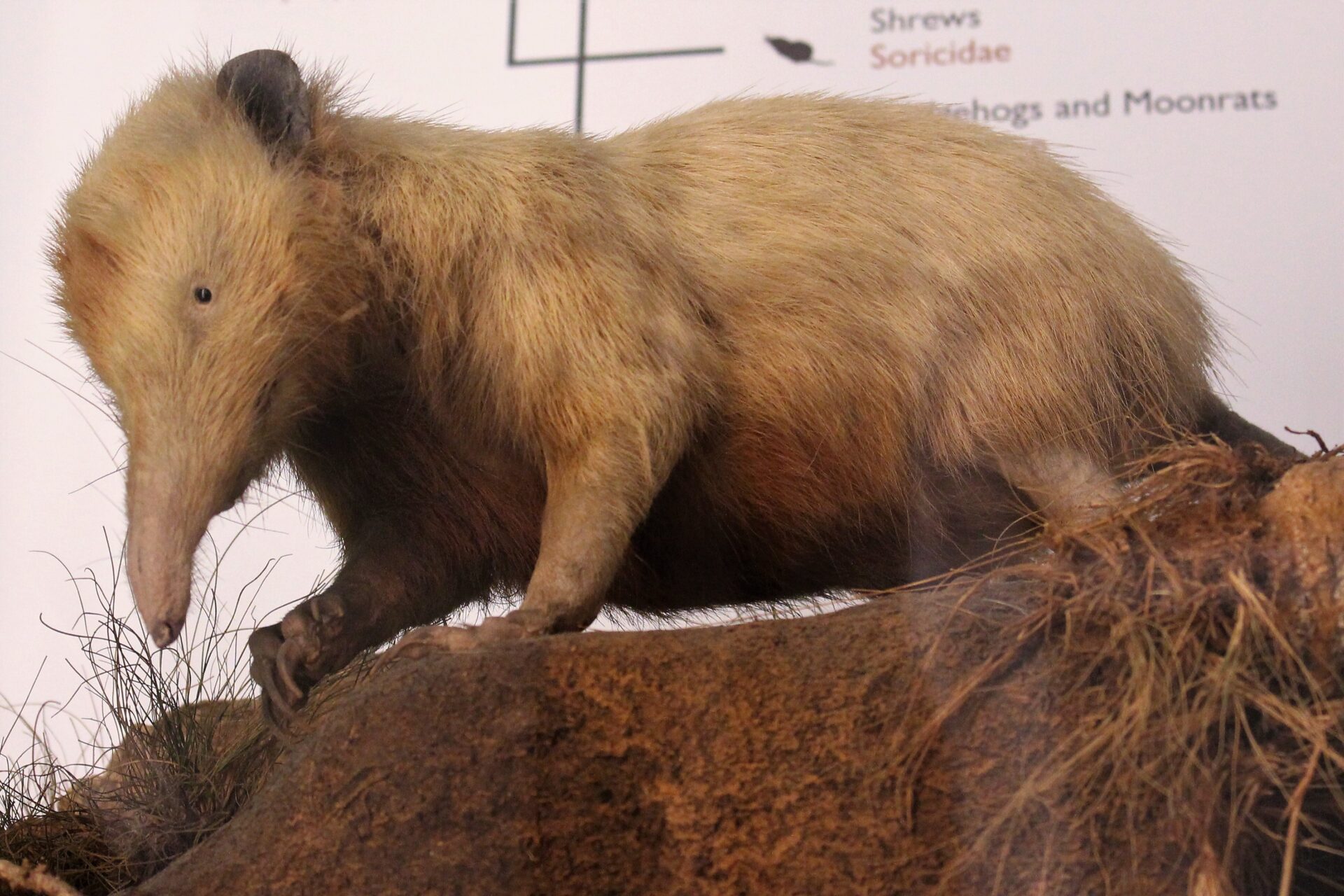
Lazarus taxa are species that disappear from the fossil record or scientific observation for significant periods, only to be rediscovered alive in the wild. These biological "resurrections" occur due to remote habitats, cryptic behaviors, or insufficient survey data, challenging our understanding of extinction and offering vital opportunities for modern conservation.
The Phenomenon of the Lazarus Effect
In paleontology and biology, the term "Lazarus taxon" refers to a group that vanishes from the known record, appearing to be extinct, but then "rises again" later. This is not a literal resurrection but a failure of detection. The phenomenon is often named after the biblical figure Lazarus, who was said to have been brought back to life.
As of 2026, our ability to identify these species has improved significantly through advanced tracking and genetic analysis, yet the fundamental reasons for their "disappearance" remain constant. Understanding why animals stay hidden is critical for biodiversity management. Often, these species exist in extremely low densities or inhabit environments that are nearly inaccessible to humans, such as deep-sea trenches, dense tropical jungles, or isolated volcanic peaks.
The Signor-Lipps effect is a key scientific principle here; it states that because the fossil record or observation data is never complete, the last known instance of a species is rarely its actual moment of extinction. This gap creates the "Lazarus" window, where a species persists in shadows until a lucky encounter or a dedicated expedition brings it back into the scientific light.
Iconic Rediscoveries: The Coelacanth
Perhaps the most famous example of an animal thought to be extinct is the Coelacanth (Latimeria chalumnae). Before 1938, the Coelacanth was known only from fossils and was believed to have perished approximately 66 million years ago, alongside the dinosaurs.
The rediscovery occurred when Marjorie Courtenay-Latimer, a museum curator in South Africa, found a strange blue fish in the catch of a local fisherman. After contacting ichthyologist J.L.B. Smith, it was confirmed that this was a living member of a lineage once thought lost to time. The Coelacanth is a "lobe-finned" fish, featuring limb-like fins that provide a glimpse into the evolutionary transition from sea-dwelling creatures to land-dwelling tetrapods.
In the decades following, a second species was discovered in Indonesia (Latimeria menadoensis). These fish live at depths of up to 700 meters, which explains how they evaded human notice for so long. By 2026, research into their genomes has provided profound insights into how certain lineages can remain relatively unchanged—morphologically speaking—for millions of years.
The Lord Howe Island Stick Insect: The "Land Lobster"
The Lord Howe Island Stick Insect (Dryococelus australis) provides a masterclass in survival against all odds. Native to a small island in the Pacific, this large, flightless insect was declared extinct in the 1920s after black rats were accidentally introduced to the island and decimated the population.
However, rumors of their survival persisted. In 2001, a team of scientists climbed Ball’s Pyramid, a sheer volcanic stack located 23 kilometers away from Lord Howe Island. There, clinging to a single Melaleuca shrub in a precarious crevice, they found a tiny colony of 24 individuals.
The recovery of the "Land Lobster" has been a focal point of captive breeding programs in Australia and the United States. As of 2026, reintroduction efforts are underway on Lord Howe Island following successful rat eradication programs, demonstrating that rediscovery is often just the first step in a long journey toward ecological stability.
Avian Recoveries: The Takahe and the Bermuda Petrel
Birds are often the subjects of Lazarus discoveries because their mobility and often-remote nesting sites can hide small populations from researchers.
The Takahe of New Zealand
The Takahe (Porphyrio hochstetteri), a large, flightless, and vibrantly blue bird, was thought to be extinct by the late 19th century due to hunting and habitat loss. In 1948, Dr. Geoffrey Orbell followed footprints into the remote Murchison Mountains of New Zealand's South Island and rediscovered a small remnant population. This discovery led to one of the most intensive conservation programs in history. By 2026, the Takahe population has grown significantly, with "sanctuary" populations established on predator-free islands to safeguard the species against localized disasters.
The Bermuda Petrel (Cahow)
The Bermuda Petrel (Pterodroma cahow) was missing for even longer—nearly 330 years. Once incredibly numerous, it was thought to have been wiped out by 1620 by early settlers and invasive hogs. In 1951, 18 nesting pairs were found on rocky islets in Castle Harbour. The survival of the Cahow is a testament to "site fidelity," where birds return to the same nesting grounds for centuries, even as the world changes around them.
The Role of Technology in Modern Rediscoveries
In the current landscape of 2026, we are finding "lost" species more frequently not just by luck, but through sophisticated technological interventions. These tools bridge the gap between human observation and animal concealment.
- Environmental DNA (eDNA): Scientists can now sequence DNA from water or soil samples to detect the presence of rare animals without ever seeing them. This has been instrumental in tracking rare aquatic species and elusive amphibians in tropical rainforests.
- Camera Traps: Autonomous cameras that trigger on motion or heat have allowed researchers to survey massive areas of wilderness 24/7. This technology was crucial in the 2023-2024 documentation of Attenborough’s Long-beaked Echidna in the Cyclops Mountains of Indonesia, a species that had not been scientifically recorded since 1961.
- Acoustic Monitoring: High-fidelity microphones and AI-driven software can now distinguish the calls of "extinct" birds or insects from background forest noise, directing researchers to specific locations for visual confirmation.
- Drones and Lidar: Aerial surveys can now penetrate thick canopy cover to map micro-habitats where small populations might persist, such as isolated springs or specific tree species.
Comparison of Notable Rediscovered Species
The following table outlines several key species that were once categorized as extinct but were later found to have surviving populations.
| Species Name | Common Name | Last Record (Before Rediscovery) | Year Rediscovered | Current IUCN Status (2026) |
|---|---|---|---|---|
| Latimeria chalumnae | Coelacanth | ~66 Million Years Ago | 1938 | Critically Endangered |
| Porphyrio hochstetteri | Takahe | 1898 | 1948 | Endangered |
| Pterodroma cahow | Bermuda Petrel | 1620 | 1951 | Endangered |
| Catagonus wagneri | Chacoan Peccary | 1900 (Fossils) | 1974 | Endangered |
| Dryococelus australis | Lord Howe Stick Insect | 1920 | 2001 | Critically Endangered |
| Chelonoidis phantasticus | Fernandina Island Tortoise | 1906 | 2019 | Critically Endangered |
| Zaglossus attenboroughi | Attenborough's Echidna | 1961 | 2023 | Critically Endangered |
Challenges Following Rediscovery
Finding a species is only the beginning. Once an animal is confirmed to exist, conservationists face immediate and daunting hurdles. These animals are often "functionally extinct" or "extinction-prone" due to several factors:
- Genetic Bottlenecks: When a species is reduced to a few dozen individuals, the lack of genetic diversity makes them highly susceptible to disease and less able to adapt to climate change. Advanced genomic sequencing in 2026 is now used to manage breeding pairs to maximize what little diversity remains.
- Habitat Degradation: Most Lazarus taxa are found in the last scraps of their original habitat. Protecting these "refugia" is difficult, especially when they are located in regions with high economic pressure for logging, mining, or agriculture.
- Invasive Species: For many island-dwelling Lazarus taxa, the original cause of their decline—rats, cats, or goats—remains a threat. Total eradication of invasive species is often required before the rediscovered animals can thrive.
- Publicity and Poaching: Ironically, the news of a rediscovery can sometimes put the species at risk. Rare animals are highly prized in the illegal pet and specimen trade. Consequently, many researchers now keep the exact GPS coordinates of rediscovery sites confidential.
Understanding Elvis Taxa
It is important to distinguish Lazarus taxa from Elvis taxa. An Elvis taxon is a species that appears in the fossil record after a mass extinction but is actually a different species that has evolved to look like the extinct one (convergent evolution). Like an Elvis impersonator, it looks the part but doesn't have the same lineage.
True Lazarus taxa are genuine survivors. Their reappearance proves that a lineage never truly died out, which has profound implications for our understanding of evolutionary resilience. If a lineage can survive for millions of years in a "hidden" state, it suggests that certain biological traits or specific types of habitat refugia are incredibly effective at buffering against global extinction events.
Practical Steps for Conservation Engagement
If you are interested in the field of rediscovery and conservation, there are several ways to contribute to the preservation of these rare species:
- Support Search Initiatives: Organizations like Re:wild run programs specifically aimed at finding "lost" species. Funding these expeditions allows scientists to deploy the technology mentioned above.
- Citizen Science: Platforms like iNaturalist allow hikers and amateur naturalists to upload photos of wildlife. Several rediscoveries have started with a single photo uploaded by a member of the public who didn't realize they had found something "extinct."
- Habitat Advocacy: Since most Lazarus taxa survive in remote pockets of wilderness, supporting global initiatives for "30x30" (protecting 30% of the Earth's land and sea by 2030) is the most effective way to ensure these species have a home to return to.
- Invasive Species Awareness: For those living in sensitive ecological zones (like islands or coastal regions), participating in local invasive species management helps create a safer environment for potentially hidden native species.
Frequently Asked Questions
What is the difference between a lost species and an extinct species?
An extinct species is one where there is no reasonable doubt that the last individual has died. A "lost" species is one that has not been seen in the wild for a long period (usually 10 to 50 years) but has not yet been formally declared extinct. Lazarus taxa are "lost" species that are eventually found.
How do scientists decide a species is extinct?
Extinction is declared based on exhaustive surveys in known and likely habitats at appropriate times (diurnal, seasonal, or annual) throughout its historic range. If these surveys fail to produce an individual over a significant timeframe relative to the species' life cycle, the IUCN (International Union for Conservation of Nature) may declare it extinct.
Can we "de-extinct" animals using DNA?
As of 2026, "de-extinction" (cloning or using CRISPR to recreate an extinct species) remains largely experimental and controversial. While some projects are working on the Woolly Mammoth and the Thylacine, it is far more efficient and ecologically sound to find and protect Lazarus taxa that are still alive.
Why are so many Lazarus species found on islands?
Islands are centers of endemism (species found nowhere else). They are also places where species can be easily wiped out by a single event, like the introduction of a predator. However, islands often have rugged interiors or neighboring uninhabited islets where small populations can hide for decades or centuries.
Is the Tasmanian Tiger (Thylacine) a Lazarus taxon?
Not yet. While there are frequent reported sightings of the Thylacine, none have been scientifically verified with photographic evidence or DNA since 1936. Until a living individual is confirmed, it remains classified as extinct.
Recommendation for Further Action
To stay informed about the latest rediscoveries, monitor the IUCN Red List updates and the "Search for Lost Species" initiative by Re:wild. If you are an outdoor enthusiast, always document unusual wildlife sightings with high-quality photographs and GPS coordinates, as your observation could be the next major breakthrough in biological science.