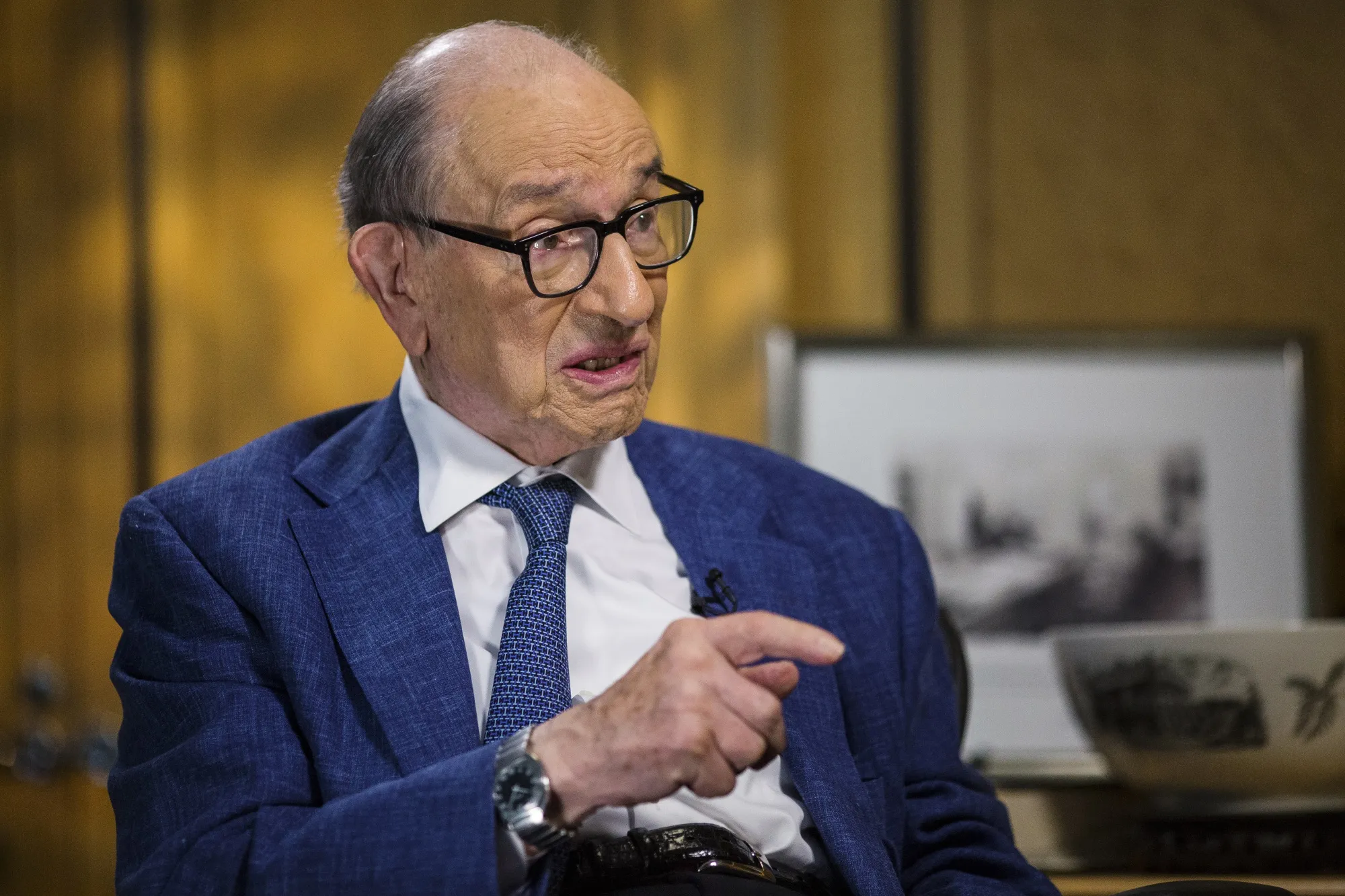
Before his appointment as Chairman of the Federal Reserve in 1987, Alan Greenspan had an estimated net worth of between $4 million and $9 million. His wealth was primarily built through his leadership of the prestigious economic consulting firm Townsend-Greenspan & Co. and his service on numerous high-profile corporate boards.
When Alan Greenspan was nominated by President Ronald Reagan to succeed Paul Volcker as the Chair of the Federal Reserve, he was not a career bureaucrat but a highly successful private-sector economist. His financial disclosures at the time revealed a man who had successfully monetized economic expertise into a multi-million dollar fortune. Understanding his wealth before 1987 requires a look at the intersection of private consulting, corporate governance, and the specific economic landscape of the mid-20th century.
The Foundation of Wealth: Townsend-Greenspan & Co.
The bedrock of Alan Greenspan’s financial status was his eponymous economic consulting firm, Townsend-Greenspan & Co., Inc. Founded in 1954 with bond trader William Townsend, the firm became a titan in the niche world of economic forecasting. By the time Townsend passed away in 1958, Greenspan took over as president and majority owner, steering the company for nearly three decades.
In the era before the widespread availability of digital data and real-time analytics, Townsend-Greenspan provided something invaluable to industrial corporations and Wall Street firms: proprietary economic models and granular data interpretation. Greenspan was known for his "encyclopedic" knowledge of industrial statistics, ranging from the throughput of steel mills to the inventory levels of various manufacturing sectors.
Clients paid significant retainers for access to these insights. The firm’s client list was a "Who’s Who" of American industry, including major utilities, manufacturing giants, and financial institutions. Because the firm was private, its exact annual revenue was not public record, but the personal income it generated for Greenspan allowed him to amass a significant portfolio of liquid assets and securities. This consulting revenue was the "active" engine of his wealth, distinguishing him from academic economists who relied on university salaries.
Corporate Board Memberships and Executive Compensation
A secondary but equally vital component of Greenspan’s pre-Fed net worth was his role as a director for several of the largest companies in the United States. In the 1970s and 1980s, serving on a corporate board was not only a mark of prestige but also a source of substantial director fees and, in some cases, stock options.
Prior to 1987, Greenspan sat on the boards of directors for:
- Alcoa (Aluminum Company of America): A leader in the industrial sector.
- Automatic Data Processing (ADP): A massive player in business services.
- Capital Cities/ABC, Inc.: One of the dominant media companies of the era.
- General Foods Corporation: A staple of the consumer goods market.
- J.P. Morgan & Co. (and Morgan Guaranty Trust): Providing him with deep ties to the banking sector.
- Mobil Corporation: One of the world’s largest oil companies.
- Pittston Co.: A major player in coal and transportation.
These positions were not merely honorary. They provided Greenspan with a diverse stream of income and a front-row seat to the operations of the global economy. For an economist, these roles offered a "feedback loop" where he could observe how economic policy affected real-world corporate strategy, which in turn informed the advice he sold through his consulting firm. Financially, the cumulative annual fees from these boards likely reached into the hundreds of thousands of dollars—a massive sum in the mid-1980s.
The 1987 Financial Disclosure: A Glimpse into the Portfolio
When a President nominates an individual for the Federal Reserve Board, the nominee must undergo a rigorous vetting process, which includes a public financial disclosure. In 1987, Greenspan’s filings provided the most concrete evidence of his wealth.
The disclosures revealed a portfolio that reflected his conservative economic outlook. He held a significant portion of his wealth in U.S. Treasury bills, which are often considered the safest asset in the world. This was a logical choice for a man who understood the nuances of interest rate risk better than almost anyone else.
His assets were categorized in ranges, which led to the widely cited estimate of $4 million to $9 million.
Asset Breakdown and Value Comparison
| Asset Category | Estimated Value (1987 USD) | Description |
|---|---|---|
| Marketable Securities | $2,000,000 – $4,500,000 | Primarily Blue Chip stocks and corporate bonds. |
| U.S. Treasuries | $1,500,000 – $3,000,000 | Highly liquid government debt instruments. |
| Real Estate | $500,000 – $1,000,000 | Primary residence and potential investment property. |
| Cash/Cash Equivalents | $250,000 – $500,000 | Liquid capital in money market accounts. |
| Consulting Interest | N/A | The value of the firm itself, which had to be liquidated. |
Adjusting for Inflation: What $9 Million Means in 2026
To understand the true scale of Greenspan’s pre-Fed wealth, one must adjust for the passage of time. The purchasing power of a dollar in 1987 was vastly different from its value in 2026.
Based on historical Consumer Price Index (CPI) data and projections into 2026, the cumulative inflation over nearly four decades has been approximately 210% to 230%. This means that $1 in 1987 is roughly equivalent to $3.10 to $3.30 in 2026.
- Low-end estimate ($4M): Equivalent to approximately $12.4 million today.
- High-end estimate ($9M): Equivalent to approximately $27.9 million today.
While these figures do not reach the "billionaire" status of some modern hedge fund managers or tech entrepreneurs, they represent a position in the top 0.1% of American wealth for that period. For an economist and consultant, it was a remarkably high level of financial success.
The Price of Public Service: Divestment and Salary Caps
Taking the job at the Federal Reserve required Greenspan to make significant financial sacrifices. To avoid conflicts of interest, he was required to:
- Liquidate Townsend-Greenspan & Co.: He had to shutter the firm that had been his primary source of income for 33 years. He could not sell it to a competitor in a way that would allow him to retain a "tail" of profits; it had to be a clean break.
- Resign from All Corporate Boards: He immediately lost the director fees and stock-based compensation from his seven board seats.
- Accept a Government Salary: In 1987, the salary for the Chairman of the Federal Reserve was approximately $82,500 per year. While a comfortable middle-class wage, it was a fraction of the seven-figure annual income he was likely generating in the private sector.
Greenspan’s willingness to walk away from a highly lucrative private career highlights the prestige and power associated with the Fed Chairmanship. He traded liquid wealth and private influence for the ability to set the monetary policy of the world's largest economy.
Influence of the Council of Economic Advisers (CEA)
It is also important to note Greenspan's earlier foray into public life. From 1974 to 1977, he served as the Chairman of the Council of Economic Advisers under President Gerald Ford. While this period did not significantly "increase" his net worth through salary—government pay was modest then as it is now—it acted as a powerful "multiplier" for his private-sector value afterward.
When he returned to his consulting firm in 1977, his status was elevated. He was no longer just a talented forecaster; he was a former cabinet-level advisor who had navigated the stagflation crises of the 1970s. This experience allowed him to command higher fees and secure the prestigious board seats that would eventually double or triple his net worth leading up to the 1987 nomination.
Common Misconceptions About His Wealth
Many people assume that Greenspan’s wealth came primarily from his time at the Fed. This is incorrect. Federal employees are subject to strict salary caps. While Greenspan’s net worth did grow during his 19-year tenure, it was largely due to the appreciation of the assets he already owned and the interest on his Treasury holdings.
The massive "wealth explosion" often associated with his name occurred after he left the Fed in 2006, when he was able to charge upwards of $250,000 per speaking engagement and received an $8.5 million advance for his memoir, The Age of Turbulence. However, the foundation of his multi-million dollar status was firmly established long before he ever moved into the Eccles Building.
Frequently Asked Questions
Was Alan Greenspan a millionaire before he became Fed Chair?
Yes. Based on his 1987 financial disclosures, Greenspan was worth at least $4 million, with some estimates placing his wealth closer to $9 million. In today's dollars (2026), this would be roughly $12 million to $28 million.
How did he make his money before 1987?
His wealth came from two primary sources: his economic consulting firm, Townsend-Greenspan & Co., and his roles as a director on the boards of major corporations like J.P. Morgan, Mobil, and Alcoa.
Did he have to sell his company to join the Fed?
Yes. To satisfy ethics requirements and avoid conflicts of interest, Greenspan had to dissolve or sell his interest in Townsend-Greenspan & Co. He also had to resign from all private-sector corporate boards.
What was his primary investment strategy before the Fed?
Greenspan was known for a conservative investment strategy, focusing heavily on U.S. Treasury bills and Blue Chip stocks. This reflected his professional focus on interest rates and macroeconomic stability.
Did he earn more money as Fed Chair than in the private sector?
No. His salary as Federal Reserve Chairman was significantly lower than his private-sector earnings. He accepted a government salary of approximately $82,500 in 1987, which was a major pay cut compared to his consulting fees and board retainers.
Summary of Financial Standing
Alan Greenspan’s pre-Fed wealth was a testament to the high demand for economic clarity during the volatile decades of the 1970s and 80s. By the time he reached the pinnacle of central banking, he had already secured a level of financial independence that allowed him to focus entirely on policy. His transition from a multi-millionaire private consultant to a public servant remains one of the most prominent examples of the "revolving door" between Wall Street, industrial boardrooms, and Washington D.C., though he was required to shut that door firmly behind him upon taking office.
For those researching the history of central banking or the personal finances of public figures, Greenspan serves as a case study in how specialized intellectual capital—in this case, economic forecasting—could be converted into significant private wealth during the late 20th century.