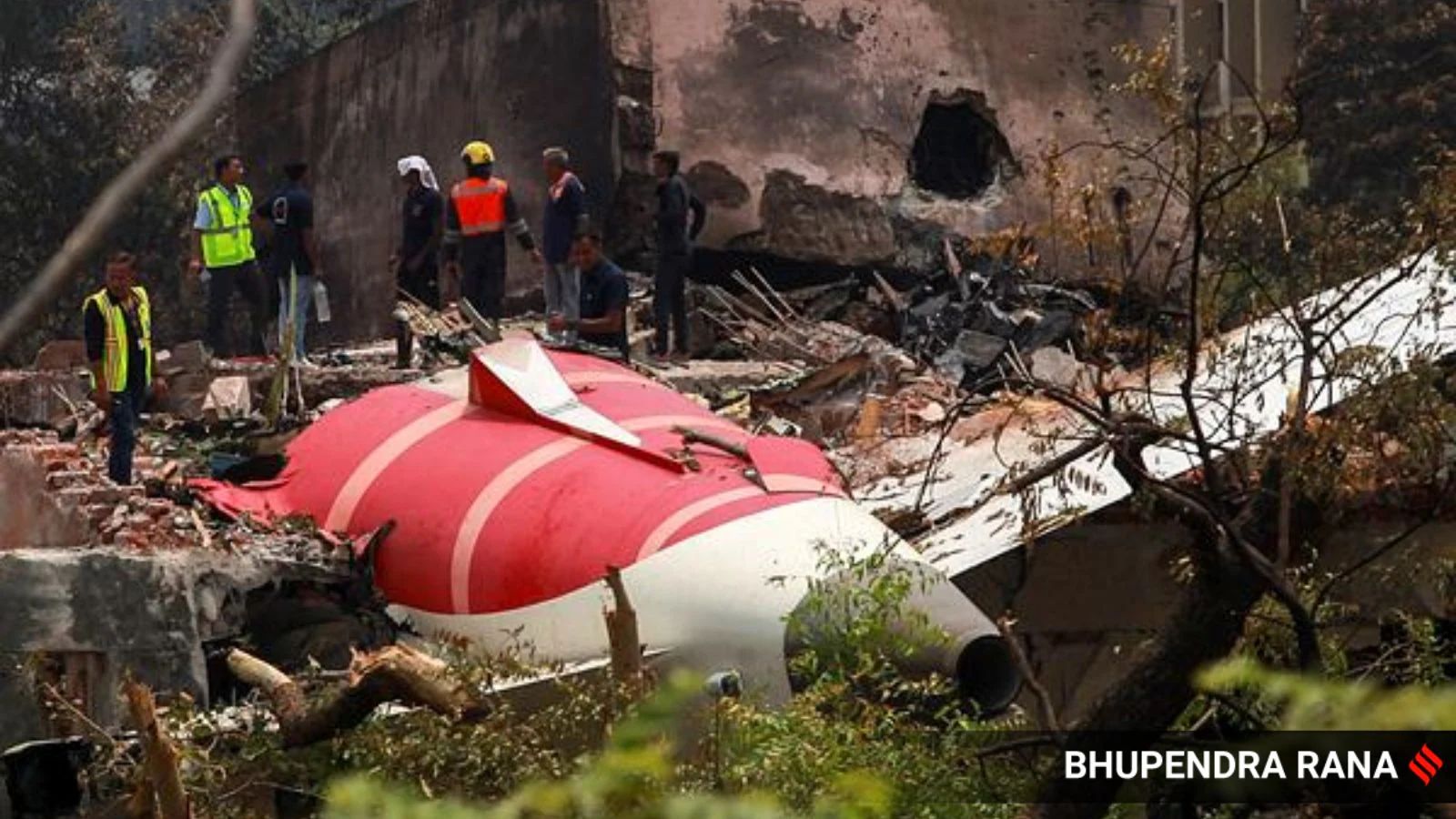
Air India and its subsidiary, Air India Express, have recorded over 900 casualties across several major aviation disasters since the mid-20th century. The most significant losses occurred during the 1985 Kanishka bombing (329 deaths), the 1978 Bandra crash (213 deaths), and the 2010 Mangalore tragedy (158 deaths), alongside several high-profile incidents in the 1950s and 1960s.
The Evolution of Air India’s Safety Record
The history of Air India is intrinsically linked to the history of civil aviation in India. Founded by J.R.D. Tata as Tata Airlines in 1932, the carrier was later nationalized and eventually returned to the Tata Group in 2022. As of 2026, the airline operates under a modernized safety framework, but its historical record is marked by several era-defining tragedies that shaped global aviation security and operational protocols.
The casualties associated with Air India are generally categorized into three distinct eras: the early propeller and piston engine era (1940s–1950s), the early jet age (1960s–1980s), and the modern low-cost carrier operations under Air India Express (2000s–present). Each era faced unique challenges, from the lack of sophisticated radar and navigation in the Mont Blanc crashes to the security failures leading to the Kanishka bombing and the pilot fatigue issues cited in recent tabletop runway accidents.
Understanding these casualties requires looking beyond the numbers. Each incident led to massive shifts in how the Directorate General of Civil Aviation (DGCA) and international bodies like the International Civil Aviation Organization (ICAO) approach safety audits, cockpit resource management (CRM), and airport infrastructure, particularly regarding "tabletop" runways.
Major Air India Disasters and Casualty Breakdowns
To grasp the scale of air India crash casualties, one must examine the specific incidents that have left the deepest impact on the industry. While flight safety has improved exponentially in the 21st century, these historical events remain the primary reference points for risk assessment.
Air India Flight 182: The Kanishka Bombing (1985)
Air India Flight 182 remains the deadliest incident in the airline’s history and the deadliest act of aviation terrorism prior to the September 11 attacks. On June 23, 1985, a Boeing 747-237B named Emperor Kanishka was en route from Montreal to Delhi via London. While flying over the Atlantic Ocean off the coast of Ireland, a bomb exploded in the forward cargo hold.
The disaster resulted in the deaths of all 329 people on board, including 307 passengers and 22 crew members. The majority of the victims were Canadian citizens of Indian descent. This tragedy highlighted massive lapses in baggage screening and security protocols, leading to the global implementation of "positive passenger-baggage reconciliation"—the rule that a bag cannot fly if the passenger who checked it is not on board.
Air India Flight 855: The Bandra Incident (1978)
On New Year’s Day in 1978, Air India Flight 855, a Boeing 747-237B, crashed into the Arabian Sea shortly after takeoff from Mumbai (then Bombay). All 213 people on board perished. The investigation revealed a terrifying scenario of "spatial disorientation."
A malfunction in the Captain’s Attitude Indicator (AI) led him to believe the aircraft was banking in one direction when it was actually level. Despite the co-pilot having a functional instrument, the crew failed to resolve the discrepancy, and the aircraft entered a steep bank and dived into the sea. This crash remains a primary case study in the importance of Cockpit Resource Management and the psychological phenomenon where pilots "lock on" to faulty data during high-stress moments.
Air India Express Flight 812: The Mangalore Tragedy (2010)
Air India Express, the low-cost subsidiary, suffered its first major disaster on May 22, 2010. Flight 812, a Boeing 737-800 arriving from Dubai, overshot the runway at Mangalore International Airport. Mangalore is a "tabletop" airport, meaning the runway is located on a plateau with steep drops at the end.
The aircraft plunged down a hillside, broke apart, and caught fire. Out of 166 people on board, 158 died, leaving only 8 survivors. The official investigation by the Court of Inquiry concluded that the crash was caused by "pilot error." The captain had been asleep for a significant portion of the flight and, upon waking, attempted a steep, unstabilized approach despite repeated warnings from the first officer and the aircraft’s automated systems.
Statistical Comparison of Significant Air India Incidents
The following table summarizes the primary disasters involving Air India and Air India Express, focusing on casualty figures and the primary causes identified by investigators.
| Flight Number | Date | Aircraft Type | Total Casualties | Survivors | Primary Cause |
|---|---|---|---|---|---|
| AI 182 | June 23, 1985 | Boeing 747-237B | 329 | 0 | Terrorist Bombing |
| AI 855 | Jan 1, 1978 | Boeing 747-237B | 213 | 0 | Instrument Failure/Pilot Error |
| AI 812 | May 22, 2010 | Boeing 737-800 | 158 | 8 | Pilot Fatigue/Unstabilized Approach |
| AI 101 | Jan 24, 1966 | Boeing 707-437 | 117 | 0 | Pilot Error (Spatial Disorientation) |
| AI 245 | Nov 13, 1950 | Lockheed Constellation | 48 | 0 | Controlled Flight Into Terrain (CFIT) |
| IX 1344 | Aug 7, 2020 | Boeing 737-800 | 21 | 169 | Weather/Landing Error (Tabletop) |
Technical Factors and Tabletop Runways
A recurring theme in modern Air India crash casualties, specifically within the Air India Express subsidiary, is the challenge posed by tabletop runways. These are runways located on the top of a hill or plateau where one or both ends terminate in a steep cliff or gorge.
In India, airports like Mangalore (IXE) and Kozhikode (CCJ) are notorious for this geography. There is no "runway safety area" (RESA) equivalent to flatland airports. If an aircraft overshoots, the results are almost always catastrophic.
- Air India Express Flight 1344 (Kozhikode, 2020): During the COVID-19 repatriation efforts, this flight crashed while landing in heavy monsoon rain. The aircraft overshot the runway and fell into a 35-foot gorge. While the casualty count was lower (21 deaths) compared to Mangalore, it included both pilots and sparked a national debate on landing SOPs during tailwind conditions on tabletop runways.
- Drainage and Friction: On tabletop runways, the accumulation of rubber deposits and standing water (hydroplaning) significantly reduces braking action. Investigators in 2020 found that the pilots' decision to land further down the runway than recommended, combined with the wet surface, left insufficient room to stop.
Compensation and Legal Framework for Victims’ Families
When an Air India crash occurs, the legal and financial repercussions are governed by international treaties and domestic laws. As of 2026, the framework is highly standardized, though historically, families have faced long battles for "fair" compensation.
The Montreal Convention (MC99)
India is a signatory to the Montreal Convention, which establishes a two-tier liability system for international flights.
- Tier 1: A "strict liability" threshold where the airline must pay a minimum amount (calculated in Special Drawing Rights or SDRs) regardless of fault.
- Tier 2: If the airline is proven negligent, there is essentially no cap on the damages that can be claimed.
For domestic crashes, the Carriage by Air Act governs the compensation. In the aftermath of the 2010 and 2020 crashes, families received interim relief payments (ex-gratia) from the government and the airline, followed by final settlements based on the victim's age, income, and number of dependents.
The Role of the Solatium
In the Indian legal context, "Solatium" refers to compensation for emotional rather than purely financial loss. However, international law often prioritizes "loss of dependency." This has led to historical discrepancies where the families of higher-earning passengers received significantly more than the families of younger or lower-earning victims, a point of significant ethical debate in the 2010 Mangalore settlement process.
Safety Transformations and Modern Oversight (2020–2026)
Following the 2020 Kozhikode crash, the Ministry of Civil Aviation and the DGCA implemented rigorous changes to prevent further casualties. By 2026, these changes have become the industry standard for Indian carriers.
- Implementation of EMAS: The Engineered Material Arresting System (EMAS) has been evaluated for tabletop airports. This is a bed of crushable concrete at the end of a runway designed to safely stop an aircraft that overshoots.
- Stricter Monsoon SOPs: Airlines are now prohibited from landing at specific tabletop airports if tailwind components exceed specific knots or if visibility falls below updated, more conservative thresholds.
- Fatigue Risk Management Systems (FRMS): Modern AI-driven scheduling ensures that pilots are not flying while their circadian rhythms are at a low point, a direct response to the "sleepy pilot" syndrome identified in the 2010 Mangalore crash.
- Fleet Modernization: Under Tata ownership, Air India has placed record-breaking orders for new Airbus and Boeing aircraft. Newer planes come equipped with advanced Runway Overrun Awareness and Alerting Systems (ROAAS), which provide real-time audio alerts if the aircraft is unlikely to stop within the remaining runway length.
Frequently Asked Questions
What was the deadliest Air India crash in history?
The deadliest incident was Air India Flight 182, known as the Kanishka bombing, which occurred on June 23, 1985. It resulted in 329 casualties. Unlike most other crashes in the airline's history, this was caused by an explosive device rather than mechanical failure or pilot error.
How many survivors were there in the Mangalore crash?
In the 2010 Air India Express Flight 812 crash at Mangalore, there were only 8 survivors out of 166 people on board. The high fatality rate was attributed to the aircraft falling off the tabletop runway and the subsequent fire that engulfed the fuselage in the gorge below.
Why are tabletop runways considered dangerous for Air India flights?
Tabletop runways, such as those at Kozhikode and Mangalore, offer no margin for error. If a pilot touches down too far along the runway or if the surface is slick from rain, there is no "overshoot area." The plane falls off a cliff, which usually leads to the fuselage breaking apart and a high risk of post-crash fire.
Has Air India’s safety record improved since the Tata takeover?
Since the Tata Group resumed control, there has been a massive investment in pilot training, safety culture, and fleet modernization. While the historical casualty figures are significant, the airline has integrated advanced safety technology and stricter operational oversight to align with global Tier-1 standards as of 2026.
Are families of crash victims entitled to international compensation?
Yes, under the Montreal Convention, families of passengers on international flights are entitled to standardized compensation. The airline is held strictly liable for a set amount (approx. $175,000 USD, fluctuating with SDR rates) and can be liable for much more if negligence is proven in court.
Recommended Next Actions for Research
For those looking for specific manifest data or detailed investigative reports on Air India crash casualties, the following resources are recommended:
- DGCA Aircraft Accident Investigation Bureau (AAIB): The official body for all final accident reports in India.
- Aviation Safety Network (ASN): A comprehensive database that tracks every recorded incident, hull loss, and fatality in Air India’s history.
- ICAO Safety Reports: For technical analysis on how Air India's historical crashes influenced global changes in aviation law and security.
If you are a relative of a victim seeking historical records for legal or genealogical purposes, contacting the Air India corporate archives or the Ministry of Civil Aviation’s grievance cell is the most direct path to obtaining verified documentation.