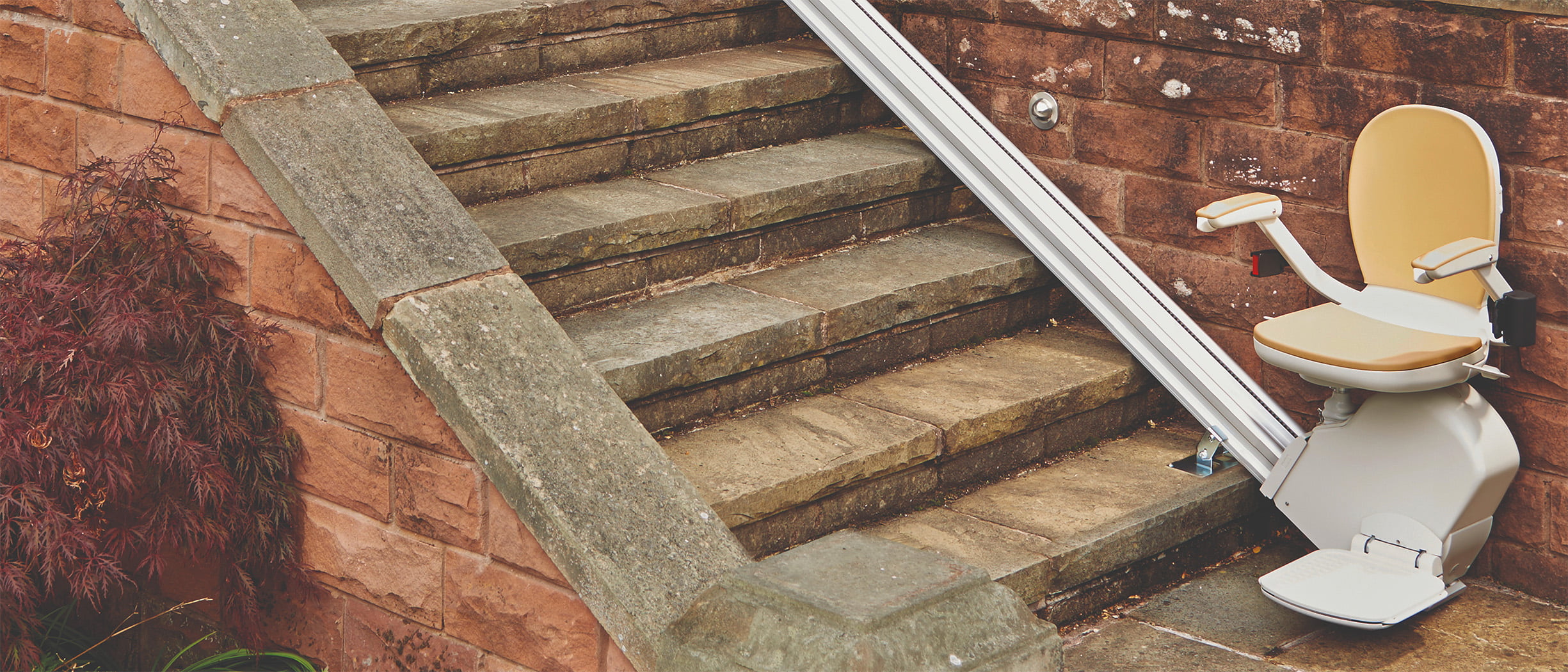
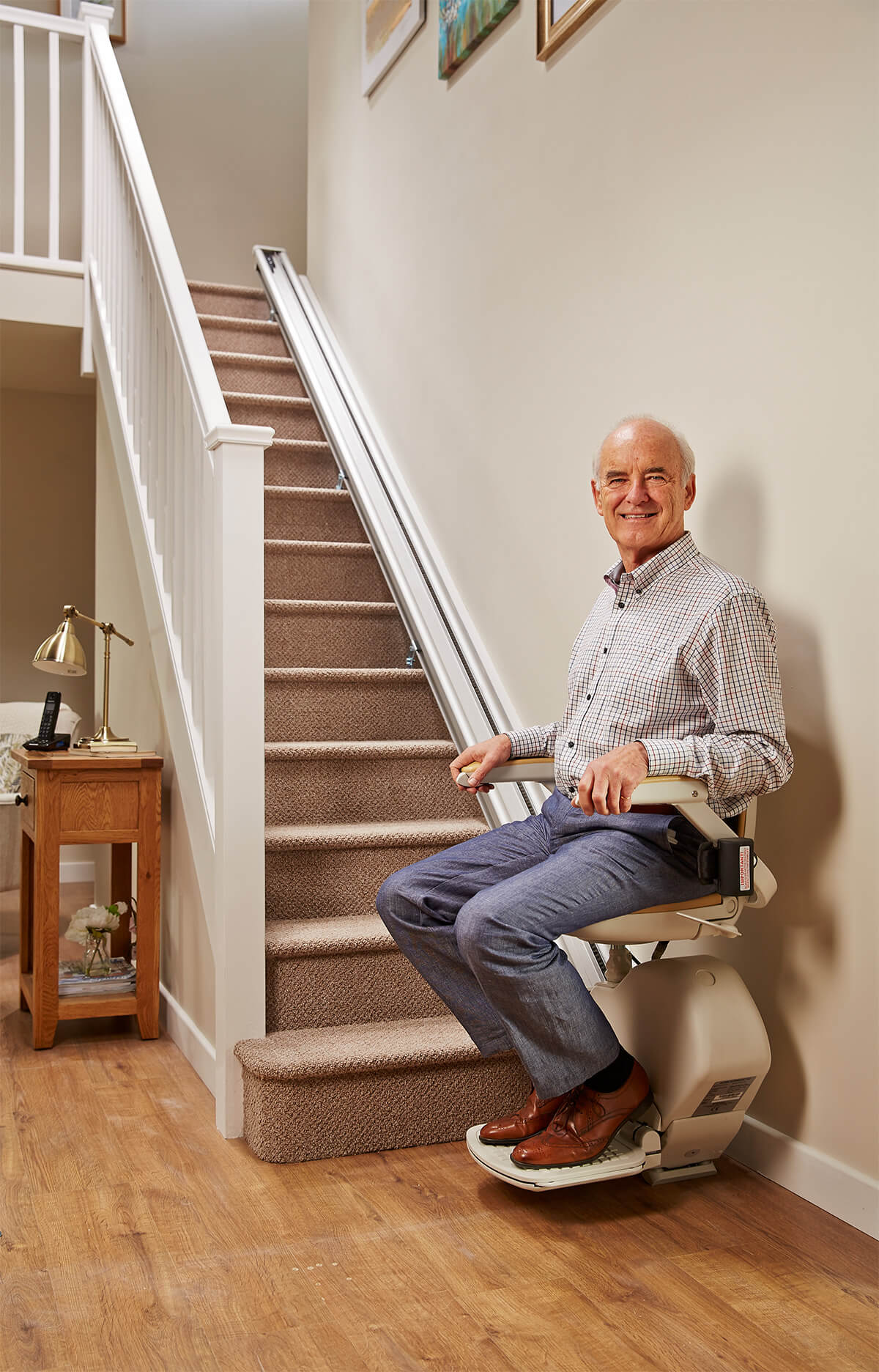
Installing an Acorn stairlift generally costs between $2,500 and $15,000, including professional measurement and installation. A standard straight indoor model typically costs $2,500 to $5,500, while complex curved staircases range from $9,500 to $15,000 or more. Outdoor models generally fall between $4,500 and $7,000. Total expenses depend on staircase length, layout complexity, optional powered accessories, and localized installation requirements.
Understanding Acorn Stairlift Costs by Model Type
Acorn Stairlifts is one of the largest manufacturers of residential mobility lifts globally. The company utilizes a direct-to-consumer sales model paired with network distributors, providing site assessments, custom track fabrication, professional installation, and ongoing maintenance. Because staircases vary significantly in length, angle, structural design, and landing configurations, price points depend on the specific model type required for the home.
| Model | Cost |
|---|---|
| Straight (Acorn 130) | $2,500 – $5,500 |
| Outdoor (Acorn 130 Outdoor) | $4,500 – $7,000 |
| Reconditioned (Straight) | $2,000 – $3,500 |
| Curved (Acorn 180) | $9,500 – $15,000+ |
Acorn 130 Straight Stairlift (Indoor)
The Acorn 130 is the manufacturer's foundational model designed for standard, single-flight staircases without turns, intermediate landings, or curved steps.
- Average Installed Cost: $2,500 to $5,500
- Weight Capacity: 280 lbs (standard) to 350 lbs (HD upgrade)
- Drive System: Rack-and-pinion driven by standard continuous DC battery power charging via a standard wall outlet.
Because straight rails are mass-produced in standardized aluminum extrusion lengths and cut on-site to match the exact stair run, manufacturing and installation costs remain low. If your staircase runs directly from one floor to another between two parallel walls without obstruction, the entry-level Acorn 130 represents the most economical configuration available.
Acorn 180 Curved Stairlift (Indoor)
The Acorn 180 is designed for staircases that include 90-degree or 180-degree turns, spiral configurations, intermediate flat landings, or pie-shaped winder steps.
- Average Installed Cost: $9,500 to $15,000+
- Weight Capacity: Up to 264 lbs
- Drive System: Rack-and-pinion utilizing Acorn’s proprietary FastTrack modular rail system.
Curved stairlifts carry a higher price tag due to the engineering involved. Unlike straight tracks, curved tracks must follow the specific contour of the staircase wall or spindle line. Acorn addresses this through its FastTrack system, a modular track setup consisting of interlocking rail sections assembled directly in the home. While this avoids the weeks-long lead time of fully custom-bent single-piece rails from other manufacturers, the complex rail components, specialized levelling joints, and extended installation labor increase the price significantly.
Acorn 130 Outdoor Stairlift
The Acorn 130 Outdoor model brings the mechanical functionality of the standard straight stairlift to exterior environments, such as porch steps, deck accesses, steep driveway stairs, or sloped garden paths.
- Average Installed Cost: $4,500 to $7,000
- Weight Capacity: Up to 280 lbs
- Weatherization Features: Marine-grade waterproof cover, UV-protected plastic components, double-coated aluminum rail, moisture-sealed electronics, and plated hardware to resist rust and freezing.
Outdoor lifts cost more than standard indoor straight models due to the thermal and moisture insulation required to protect the electric motor, circuit boards, and battery housing from rain, snow, heat, and ice.
Reconditioned and Used Acorn Units
For homeowners seeking lower upfront costs, factory-reconditioned or certified pre-owned Acorn stairlifts offer a practical alternative to new equipment.
- Average Installed Cost (Straight): $2,000 to $3,500
- Average Installed Cost (Curved): $6,000 to $9,000
- Availability: Subject to regional inventory and dealer refurbishment programs.
Refurbished units typically feature a pre-owned motor drive carriage that has undergone safety inspections, gear replacement, new battery installation, and electrical testing. For straight stairlifts, the carriage is mounted on a brand-new aluminum track cut to the buyer's home dimensions. Reconditioned curved lifts utilize refurbished carriages paired with newly configured FastTrack modules. Choosing a factory-certified reconditioned unit can yield savings of 20% to 35% compared to purchasing brand-new hardware.
Acorn Stairlift Pricing Breakdown
The following table summarizes the key financial and technical specifications across the primary Acorn stairlift product lineup.
| Model Name | Staircase Compatibility | Price Range (Installed) | Standard Weight Limit | Key Features | Typical Warranty Scope |
|---|---|---|---|---|---|
| Acorn 130 Straight | Single straight flight, no landings | $2,500 – $5,500 | 280 lbs (350 lbs HD option) | Slimfold seat/footrest, diagnostic display, soft start/stop | 12-month full warranty; extended plans available |
| Acorn 180 Curved | Winders, curves, intermediate landings | $9,500 – $15,000+ | 264 lbs | FastTrack modular rail system, narrow profile, swivel seat | 12-month full warranty; custom track coverage |
| Acorn 130 Outdoor | Exterior straight stairways | $4,500 – $7,000 | 280 lbs | Weatherproof cover, marine-grade coating, key lock switch | 12-month component protection under outdoor rating |
| Reconditioned 130 | Single straight flight | $2,000 – $3,500 | 280 lbs | Inspected carriage, new battery set, custom-cut new rail | 12-month limited dealer warranty |
Key Factors That Influence Total Acorn Stairlift Pricing
The base price of a stairlift seat mechanism reflects only part of the overall cost. Several structural, spatial, and mechanical factors influence the final quote provided during an in-home evaluation.
- Staircase Length & Geometry (Straight vs Curved)
- Rail Options (Hinged Track / Drop-Down Foot)
- Power Accessories (Swivel Seat, Powered Footrest)
- Weight Capacity Upgrades (HD Motor & Carriage)
- Electrical & Structural Modifications
1. Staircase Geometry and Track Length
The total length of the staircase dictates how much raw aluminum rail is required. Standard indoor straight pricing usually covers a basic flight of 12 to 14 steps (roughly 15 to 18 feet of rail). If a home features an unusually long staircase—such as a 20-step basement run or a three-story atrium access—additional linear track segments add to the materials and installation labor costs.
2. Manual vs. Power-Hinged Tracks
When a doorway, hallway, or emergency exit sits directly at the bottom of the staircase, a standard fixed rail extending past the bottom step creates a tripping hazard or blocks the door swing.
- Manual Hinged Track Option: Adds approximately $500 to $800.
- Powered Hinged Track Option: Adds approximately $1,200 to $1,800.
A hinged track allows the bottom section of the rail to fold upward out of the way when the stairlift is parked upstairs, keeping walkways clear.
3. Power-Assisted Features
Standard Acorn stairlifts come equipped with manual swivel seats and manual folding footrests, requiring the user to push down a lever to turn the seat or lean over to lift the footrest plate. For users with limited manual dexterity, severe arthritis, or balance conditions, mechanical upgrades are available:
- Powered Swivel Seat: Automatically rotates the seat toward the top landing so the user can stand up safely on flat ground (adds $400 – $700).
- Powered Footrest Fold: Automatically raises and lowers the footrest via a button on the armrest or remote control (adds $300 – $500).
4. Heavy-Duty Weight Capacity Upgrades
Standard Acorn straight lifts support up to 280 pounds. For users requiring higher weight capacities, Acorn offers a Heavy-Duty (HD) variant of the Acorn 130 that increases the maximum user capacity to 350 pounds. This upgrade includes a wider seat frame, reinforced chassis components, and a heavy-duty motor gear assembly, adding roughly $600 to $1,200 to the overall cost.
5. Electrical Prep and Local Building Permits
Acorn stairlifts run on internal 12-volt DC batteries that continuously trickle-charge from a standard 110V household wall outlet connected to the track charging strip. If there is no existing electrical outlet near the top or bottom of the staircase, an electrician must install one, which generally costs $150 to $400.
Additionally, certain municipalities, city jurisdictions, or state building codes mandate elevator/lift permits and post-installation inspections. Permit fees typically range between $100 and $500 depending on regional regulations.
Additional and Ongoing Costs to Consider
Purchasing a stairlift involves ongoing maintenance and periodic component replacement over the lifetime of the system. Planning for these operational expenses ensures long-term reliability and avoids sudden financial surprises.
- Annual Inspection & Tune-Up: $150 – $300 / year
- Battery Replacement (2–4 yrs): $100 – $250 set
- Extended Service Plan: $350 – $800 / year
- Professional Removal Fee: $300 – $700
Professional Installation Fees
Acorn quotes typically bundle installation labor into the final comprehensive project cost. However, if quoted separately or through an independent authorized dealer, standard indoor straight installation fees range from $300 to $600, while complex curved installation labor ranges from $800 to $1,500 due to the alignment and testing required for multi-segment FastTrack rails.
Warranties and Annual Service Contracts
New Acorn stairlifts include a standard 12-month manufacturer’s warranty covering mechanical parts, electrical components, structural rails, and warranty service labor. Once the initial year expires, extended protection options include:
- Annual Preventative Maintenance Visit: $150 to $300 per visit (includes track lubrication, gear inspection, safety sensor testing, and battery diagnostics).
- Comprehensive Extended Warranties: $350 to $800 annually, covering call-out fees, replacement motors, control boards, and mechanical repairs.
Replacement Battery Costs
Because Acorn lifts utilize rechargeable 12V sealed lead-acid (SLA) batteries inside the drive carriage, the lift remains operational during power outages. However, these batteries wear out over time.
- Battery Replacement Frequency: Every 2 to 4 years.
- Replacement Cost: $100 to $250 for a dual-battery set (plus service call charges if replaced by a technician).
Equipment Removal and Disposal
If the home is sold or the lift is no longer needed, removing the unit requires unbolting the support brackets from the stair treads and disconnecting the electrical system. Professional removal service fees generally run between $300 and $700. Unlike automobiles, standard pre-owned stairlift tracks carry little to no trade-in value due to home-specific sizing, though working motor units are occasionally repurchased by regional distributors for $100 to $500.
Financial Assistance, Insurance, and Payment Options
Navigating healthcare coverage and financial support programs can significantly offset out-of-pocket costs for accessibility equipment.
| Option / Program | Coverage Details |
|---|---|
| Original Medicare (Parts A & B) | NO COVERAGE (Home modification) |
| Medicare Advantage (Part C) | PARTIAL (Varies by plan) |
| Medicaid HCBS Waivers | POSSIBLE (State dependent) |
| VA Grants (HISA / SAH / SHA) | COVERED (For eligible veterans) |
| Long-Term Care Insurance | PARTIAL / FULL (Policy specs) |
| IRS Medical Tax Deduction | ELIGIBLE (With physician prescription) |
Medicare and Private Health Insurance
- Original Medicare (Parts A and B): Standard Medicare does not cover stairlifts. Medicare classifies stairlifts as "home modifications" or "personal comfort items" rather than Durable Medical Equipment (DME).
- Medicare Advantage (Part C): Certain Medicare Advantage plans expanded supplemental benefit packages to cover environmental accessibility adaptations. Coverage varies by insurer and location, so policyholders should consult their plan administrator directly.
- Private Health Insurance: Commercial plans rarely pay for stairlifts outright, though partial reimbursement may be granted if a physician certifies the lift as medically necessary to prevent institutional care.
Medicaid Waivers
Medicaid programs vary by state. Many states offer Home and Community-Based Services (HCBS) Waivers or Money Follows the Person (MFP) grants designed to fund home adaptations that allow seniors and individuals with disabilities to remain living at home instead of entering a nursing facility. If eligible, Medicaid waivers can cover the full cost of a basic straight stairlift.
Department of Veterans Affairs (VA) Health Benefits
Veterans may qualify for financial assistance programs through the VA:
- HISA Grant (Housing Improvements and Structural Alterations): Provides up to $6,800 for veterans with service-connected disabilities (or up to $2,000 for non-service-connected conditions) to improve home access.
- SAH Grant (Specially Adapted Housing) / SHA Grant (Special Housing Adaptation): Designed for veterans with severe service-connected disabilities, offering higher grant amounts for comprehensive accessibility modifications.
Long-Term Care Insurance and Tax Deductions
- Long-Term Care (LTC) Insurance: Many LTC policies cover home modifications that enable independent living, often reimbursing the cost of stairlift hardware and installation up to policy limits.
- Tax Deductibility (IRS Medical Expense): If prescribed by a licensed physician to accommodate a medical condition, the cost of purchasing and installing a stairlift can be claimed as an itemized medical expense deduction on U.S. federal tax returns under IRS Publication 502 (subject to adjusted gross income thresholds).
Alternative Options: Renting vs. Buying Used vs. Buying New
Determining whether to buy a new system, rent equipment, or source a certified used lift depends on how long you expect to use it and your upfront budget constraints.
| Option | Recommendation |
|---|---|
| NEW PURCHASE | Best for long-term use (3+ years) |
| RENTAL | Best for temporary recovery (<1 yr) |
| USED/REFURB | Best for moderate budgets (1-3 yrs) |
Renting an Acorn Stairlift
Renting is an practical solution for temporary mobility limitations, such as recovering from knee replacement surgery, hip reconstruction, or stroke rehabilitation.
- Monthly Rental Rate: $150 to $300 per month.
- Upfront Installation & Removal Deposit: $500 to $1,200 (covers initial assembly, track sizing, and eventual teardown).
- Limitations: Renting is generally limited to straight staircases. Curved stairlifts are rarely offered as short-term rentals due to the custom rail fitting required for individual stair profiles.
Buying New vs. Certified Pre-Owned
- Choose New If: Your staircase features turns, intermediate landings, or outdoor elements; you desire full factory warranty protection; or you require custom power-assist options.
- Choose Certified Pre-Owned If: You have a basic straight indoor staircase, need to minimize initial out-of-pocket spending, and purchase through an authorized dealer who offers an included warranty.
Step-by-Step Guide to Getting an Accurate Acorn Quote
Because stairlift prices are heavily customized to your home's layout, Acorn does not provide binding online quotes without a site survey. Following a structured purchasing process helps avoid unexpected costs.
- Initial Consultation
- In-Home Stair Assessment
- Itemized Quote Review
- Final Install & Demo
Step 1: Initial Phone Consultation
Contact Acorn or an authorized regional dealer to outline basic user mobility requirements, user weight, physical restrictions, and staircase layout. Preliminary phone consultations establish base model compatibility and ballpark expectations.
Step 2: In-Home Technical Survey and Measurement
A qualified technician visits the home to evaluate structural conditions:
- Measuring overall staircase length, tread depth, riser height, and width.
- Checking clear space at the top and bottom stair landings for smooth mounting and dismounting.
- Assessing wall material, handrail positions, and nearest electrical outlets.
- Checking overhead clearance along the entire travel path to prevent head-room obstructions.
Step 3: Reviewing the Itemized Estimate
Request a fully written, line-item proposal before committing to a purchase. The estimate should explicitly list:
- Base drive carriage model and rail system cost.
- Specific optional add-ons (hinged rail, powered swivel, heavy-duty motor).
- Delivery, labor, and installation fees.
- Local permit costs and tax assessments.
- Included warranty duration and covered components.
Step 4: Installation, Safety Testing, and User Demonstration
Once ordered, installation for a straight lift takes approximately 2 to 4 hours, while curved FastTrack installations generally take 4 to 6 hours. The technician should anchor the support feet securely into the stair treads (not the drywall), test all safety obstruction sensors, confirm battery charging, and guide the primary user through operating the remote controls and swivel mechanisms.
Frequently Asked Questions
Does Medicare cover the cost of an Acorn stairlift?
No. Original Medicare (Parts A and B) classifies stairlifts as personal comfort items or physical home modifications rather than Durable Medical Equipment (DME). Consequently, Medicare does not pay for stairlift purchases or installations. However, specific Medicare Advantage (Part C) plans, Medicaid HCBS waivers, or VA grants may offer partial or full financial assistance.
How long does an Acorn stairlift battery last, and how much does replacement cost?
Acorn stairlift batteries generally last between 2 and 4 years, depending on daily usage patterns and continuous connection to the power supply. A replacement pair of sealed lead-acid (SLA) batteries costs between $100 and $250. Replacing them typically requires opening the main carriage cover, which can be done by a service technician during an annual maintenance check.
What is the price difference between a straight and curved Acorn stairlift?
A straight Acorn stairlift (Model 130) typically costs between $2,500 and $5,500 installed, using standardized stock rail sections. A curved Acorn stairlift (Model 180) costs between $9,500 and $15,000+ installed. The higher price for curved models stems from the complex modular FastTrack rail components, custom engineering, and additional labor required for multi-flight or turning staircases.
Can I install an Acorn stairlift myself to save money?
Acorn does not sell self-installation kits directly to consumers, requiring installation by trained technicians to preserve warranty coverage. Installing a stairlift involves securing foot clamps precisely into stair treads, levelling aluminum tracks, setting torque tolerances on rack-and-pinion drives, adjusting safety edges, and calibrating electrical limit switches. Improper DIY installation poses serious safety risks and voids manufacturer warranties.
How much does it cost to remove an Acorn stairlift if it is no longer needed?
Professional removal of an Acorn stairlift generally costs between $300 and $700. Technicians disconnect the electrical supply, remove the drive carriage, disassemble the track segments, and unbolt the mounting brackets from the stair treads. Small screw holes left in wood, carpet, or tile treads can then be patched or covered.
Practical Next Steps for Prospective Buyers
- Measure Your Staircase Basics: Check whether your stairs run straight or feature turns, intermediate landings, or narrow clearance (less than 30 inches wide).
- Consult a Healthcare Provider: Obtain a written prescription or medical recommendation letter from your primary physician or physical therapist to establish medical necessity for tax deduction or insurance claims.
- Schedule In-Home Evaluations: Request on-site surveys from Acorn as well as alternative authorized stairlift dealers to compare line-item quotes, warranty coverage, and overall value.
- Explore Assistance Programs: Contact your local Area Agency on Aging (AAA), state Medicaid waiver coordinator, or VA regional office to identify local home accessibility grants before finalizing payment.
Disclaimer: Accessibility equipment pricing, warranty terms, insurance coverage rules, and municipal codes vary by region and individual home specifications. Financial guidance provided here is for informational purposes; consult a licensed financial advisor, tax professional, or local healthcare caseworker for specific guidance on tax deductions and insurance reimbursements.