American household net worth change reflects the shifting financial health of families across the United States, driven by fluctuations in real estate values, stock market performance, wage growth, and mounting debt obligations. Tracking these changes provides critical insight into economic inequality, consumer spending power, and long-term financial stability across different demographics.
Defining American Household Net Worth and Its Core Components
To understand how and why American household net worth changes over time, it is necessary to establish what net worth actually represents. At its core, household net worth is a simple financial equation: total assets minus total liabilities. Assets encompass everything of monetary value that a household owns, while liabilities represent all outstanding debts and financial obligations.
The composition of household wealth in the United States is diverse, but it is heavily weighted toward a few primary categories. Understanding these components clarifies why macroeconomic shifts have an immediate impact on everyday families.
Assets: What American Households Own
Assets are generally divided into liquid assets and non-liquid or capital assets. Liquid assets include cash, checking and savings accounts, certificates of deposit, and money market funds. These provide immediate purchasing power and financial security during emergencies.
However, for most American households, the vast majority of wealth is tied up in non-liquid assets. These include:
- Primary Residences: Real estate equity often constitutes the single largest asset for middle-class families.
- Retirement Accounts: Defined contribution plans like 401(k)s, 403(b)s, individual retirement accounts (IRAs), and traditional pensions represent significant long-term wealth.
- Direct and Indirect Investments: Stocks, bonds, mutual funds, and exchange-traded funds (ETFs) held outside of retirement vehicles.
- Business Equity: Ownership stakes in private businesses, partnerships, and self-employed ventures.
- Personal Property: Vehicles, valuable collectibles, jewelry, and household goods, though these typically depreciate over time rather than build wealth.
Liabilities: What American Households Owe
Liabilities counteract assets, and changes in debt levels directly influence net worth calculations. Household debt generally falls into two categories: secured debt and unsecured debt.
- Secured Debt: Mortgages, home equity lines of credit (HELOCs), and auto loans are tied to collateral. While mortgages represent a massive liability, they also fund an appreciating asset (real estate), making them distinct from pure consumption debt.
- Unsecured Debt: Credit card balances, personal loans, and student loans carry no collateral. These liabilities reduce net worth dollar-for-dollar without directly acquiring a corresponding capital asset, though student loans theoretically invest in human capital and future earning potential.
Historical Context and Recent Trends in Household Wealth
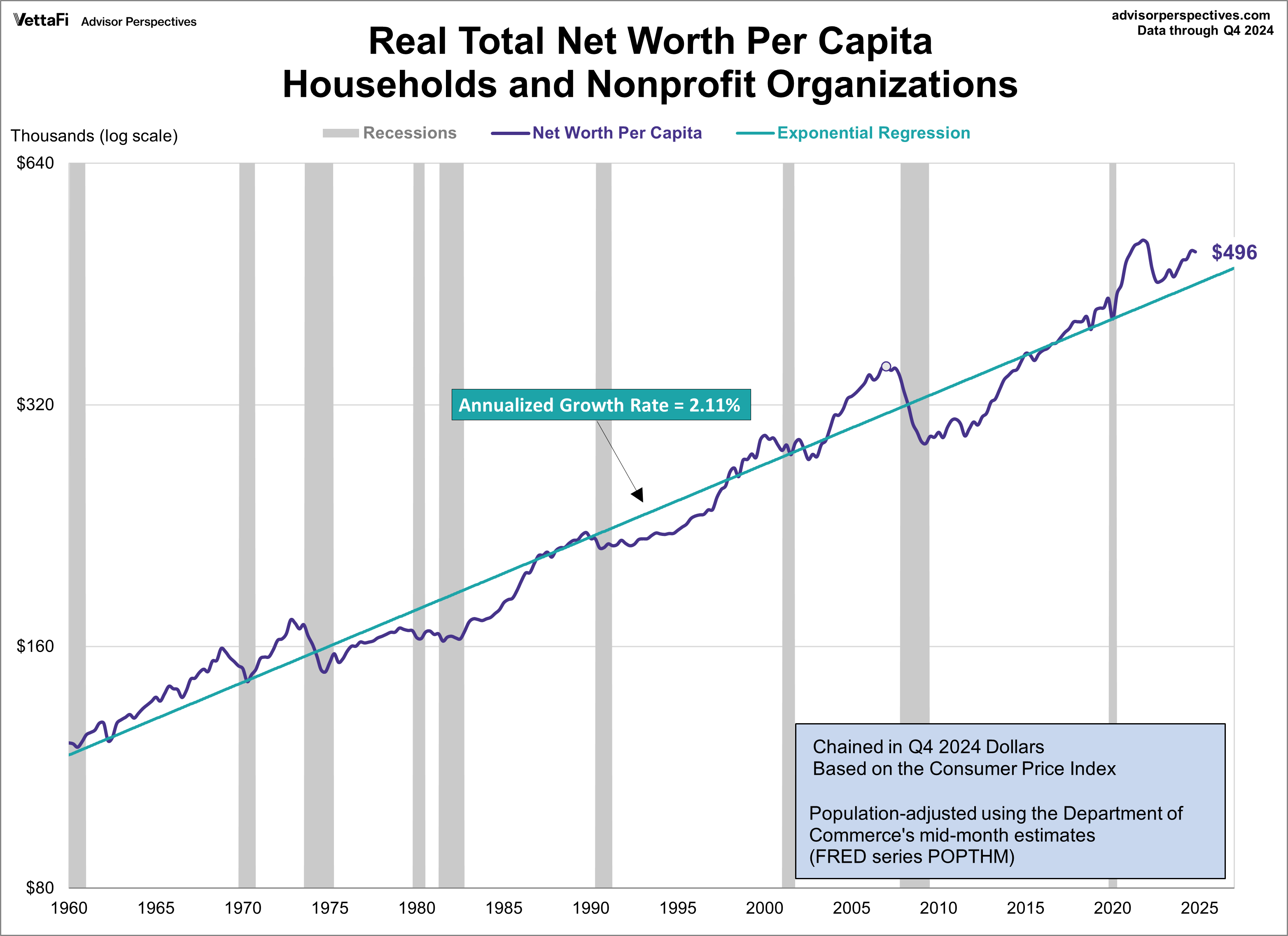
Household net worth in the United States does not grow in a straight line; it fluctuates in response to business cycles, monetary policy, and structural economic shifts. According to data tracking from the Federal Reserve's Distributional Financial Accounts, aggregate household wealth has experienced significant volatility over past decades, punctuated by major milestones and downturns.
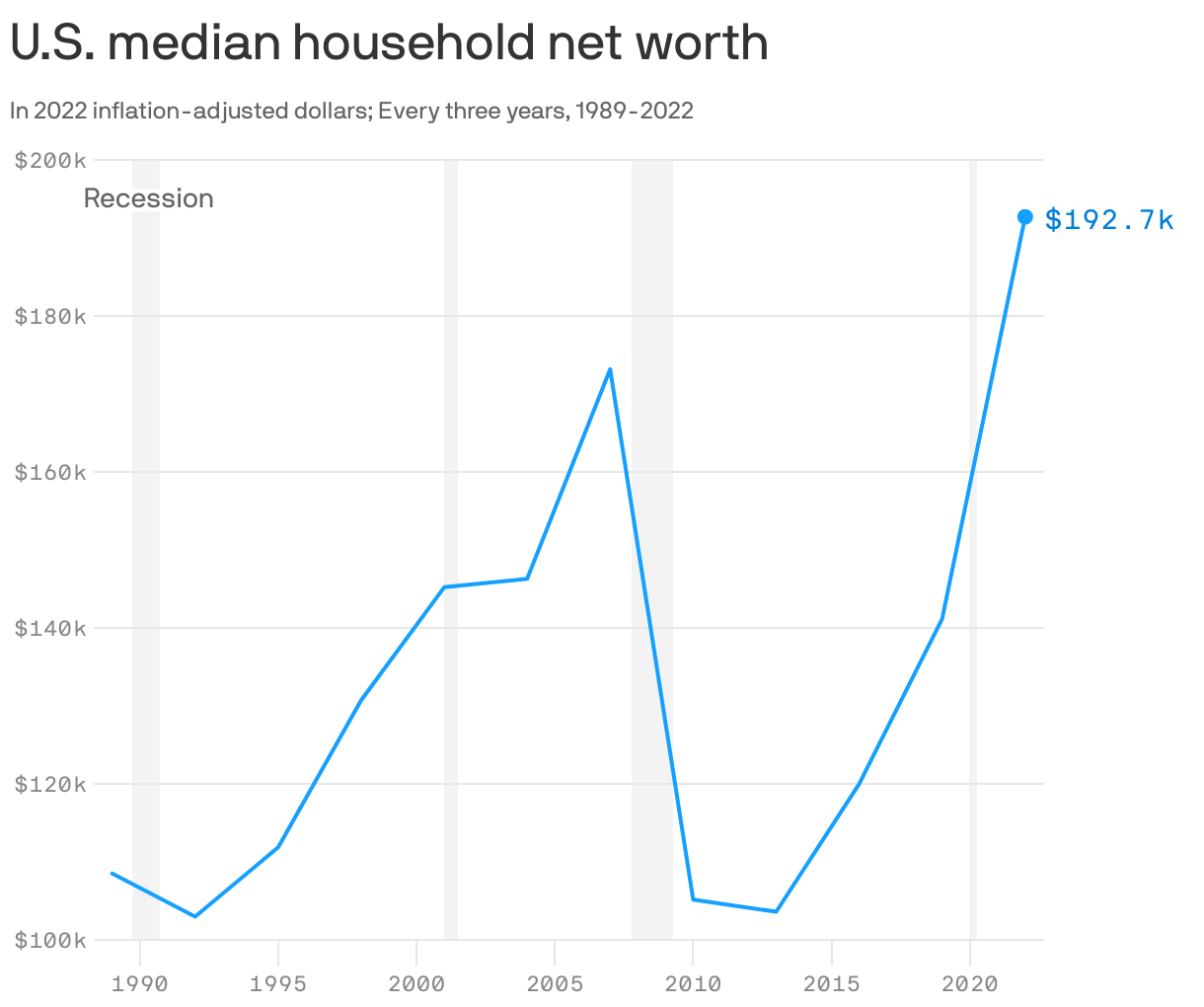
Following the 2008 financial crisis, which devastated real estate values and decimated retirement portfolios, American household net worth underwent a prolonged rebuilding phase. Throughout the 2010s, a sustained bull market in equities combined with a gradual recovery in housing prices pushed aggregate wealth to new heights.
The economic disruption of the early 2020s introduced unprecedented variables. Massive fiscal stimulus, historic low interest rates, explosive housing demand, and a surging stock market triggered a sharp spike in nominal net worth. However, this growth was accompanied by high inflation, which eroded purchasing power, and subsequent interest rate hikes by the Federal Reserve designed to cool the economy.
| Economic Driver | Positive Impact on Net Worth | Negative Impact on Net Worth |
|---|---|---|
| Real Estate Markets | Rising home valuations increase primary residence equity. | Falling home prices reduce aggregate household assets. |
| Stock Market Performance | Bull markets expand retirement portfolios and investment accounts. | Bear markets erode paper wealth and investment values. |
| Interest Rate Policy | Low rates encourage borrowing, refinancing, and asset acquisition. | High rates increase borrowing costs and can depress asset valuations. |
| Inflationary Pressures | Real assets often maintain value during inflationary periods. | High inflation reduces real wages and liquid savings values. |
Primary Drivers of Household Net Worth Change
Changes in American household net worth are governed by two main forces: active wealth accumulation (saving and paying down debt) and passive wealth fluctuations (asset price appreciation and depreciation). Dissecting these drivers reveals why certain households pull ahead while others fall behind.
Asset Appreciation Versus Active Saving
Economists frequently distinguish between active saving—putting a portion of earned income into savings or paying down the principal on a mortgage—and passive capital gains, such as an increase in the market value of a home or stock portfolio.
For many middle- and upper-middle-class households, passive asset appreciation often outpaces active saving during periods of economic expansion. When housing markets surge or equity indexes climb, households see their net worth increase simply by holding those assets. Conversely, when markets correct, passive losses can wipe out years of dedicated saving in a matter of months.
The Role of Real Estate Equity
Real estate is the cornerstone of middle-class wealth in America. As homeowners pay down their mortgages every month, a portion of each payment shifts from an expense to equity. When multiplied across decades and combined with structural appreciation in property values, homeownership acts as a forced savings mechanism.
However, access to this driver is unequal. Households that do not own real estate miss out entirely on housing appreciation and forced equity building, leaving them heavily reliant on wage income and liquid savings.
Investment Portfolios and Retirement Readiness
Participation in equity markets is another major divider in net worth trajectories. Households with employer-sponsored retirement plans or taxable brokerage accounts benefit directly from corporate earnings and market growth. As retirement assets compound over time, they form a substantial portion of older Americans' net worth. Households lacking access to workplace retirement plans or facing chronic cash-flow constraints struggle to build this pillar of financial security.
Wealth Disparities and Demographic Variations
Aggregate national net worth figures can mask stark inequalities in how wealth is distributed and how different demographics experience net worth changes. Federal Reserve data consistently demonstrates a high concentration of wealth at the top of the economic spectrum, alongside notable disparities across race, age, and education levels.
The Wealth Gap by Income and Percentiles
The distribution of net worth in the United States is heavily skewed. The top 10% and top 1% of households hold a majority of the nation's total wealth, driven largely by ownership of privately held businesses, large equity portfolios, and multiple real estate holdings.
In contrast, the bottom 50% of households hold a very small fraction of total net worth. For these households, net worth changes are acutely sensitive to emergency expenses, job security, and inflation. A single medical emergency or vehicle repair can exhaust liquid savings and push a household into negative net worth via unsecured debt.
Generational Wealth Dynamics
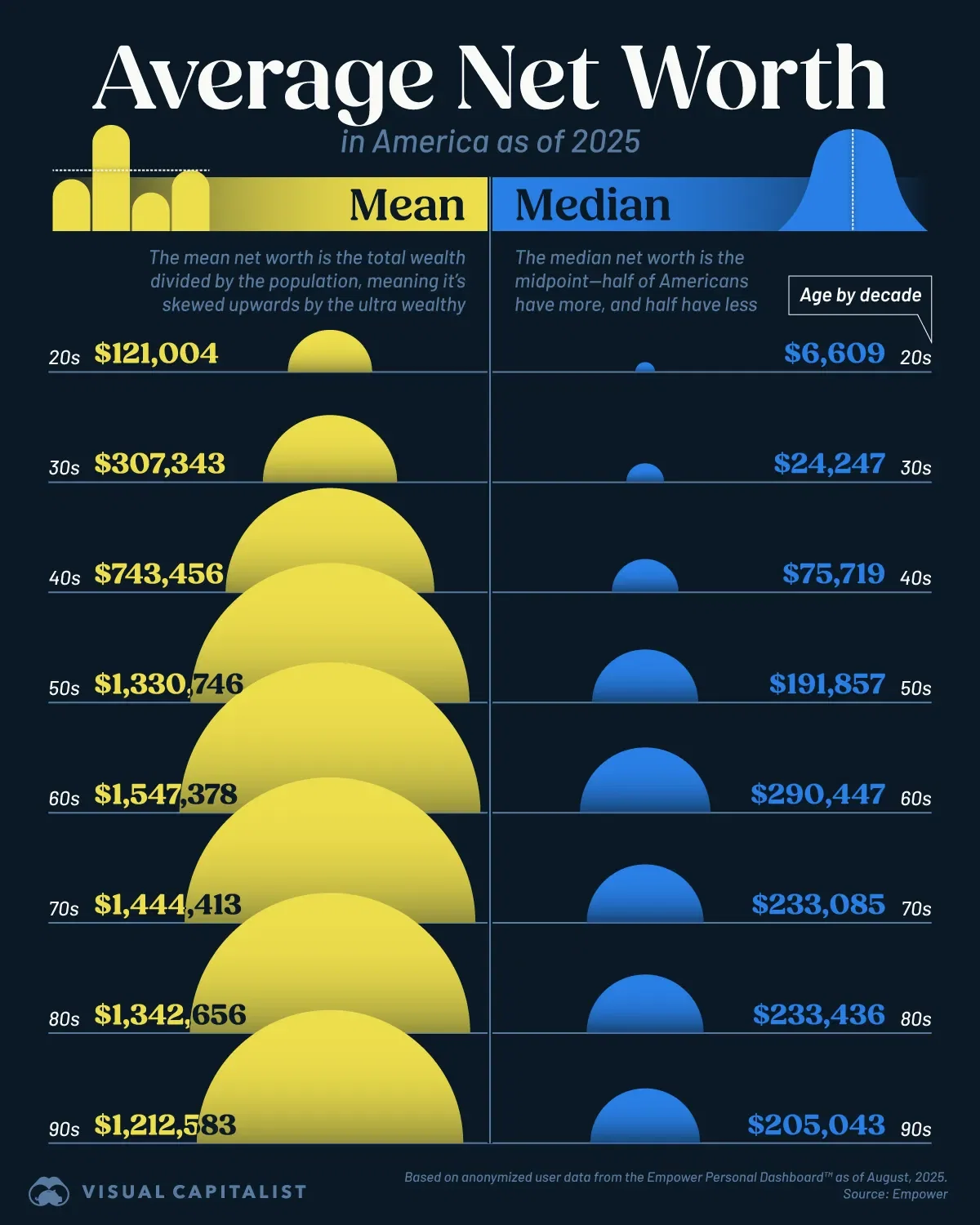
Age plays a predictable yet critical role in household net worth. Younger households typically start their financial lives with low or negative net worth due to student loans and vehicle financing, paired with minimal accumulated savings. As individuals progress through their working years, peak earning power, mortgage paydown, and compounding investments drive net worth upward, typically peaking near retirement age.
However, generational wealth transfers—inheritances and financial gifts—significantly accelerate net worth accumulation for recipients. Households without access to generational wealth must rely entirely on earned income and personal savings to achieve financial milestones.
Practical Implications for Personal Financial Planning
Understanding the macroeconomic forces behind American household net worth change allows individuals to make informed, strategic decisions to protect and grow their personal balance sheets. While individuals cannot control Federal Reserve interest rate policy or global stock market indices, they can manage the internal levers of their own financial households.
- Prioritize Asset Accumulation Over Consumption: Focus on acquiring appreciating assets, such as real estate or tax-advantaged retirement accounts, rather than depreciating consumer goods financed by high-interest debt.
- Manage Leverage Wisely: Distinguish between productive debt (such as a low-fixed-rate mortgage or education loans that enhance earning potential) and destructive debt (high-interest credit card balances used for lifestyle consumption).
- Build Liquidity Buffers: Maintain an emergency fund of three to six months' worth of living expenses in liquid, high-yield accounts to prevent unexpected shocks from forcing the liquidation of long-term investments or the accumulation of high-interest debt.
- Diversify Portfolios: Avoid overexposure to a single asset class, whether it is company stock, local real estate, or cash. Diversification cushions the blow when specific sectors experience downturns.
Frequently Asked Questions
What is the difference between income and net worth?
Income represents the money flowing into a household over a specific period, such as wages, salaries, business profits, and investment dividends. Net worth is a snapshot of total accumulated wealth at a specific moment, calculated by subtracting total liabilities from total assets. A high-income earner can have a low net worth if their spending matches or exceeds their earnings, while a moderate earner can build substantial net worth over time through consistent saving and asset appreciation.
How does inflation affect household net worth?
Inflation erodes the purchasing power of liquid cash and fixed-income assets, meaning money sitting in low-interest savings accounts loses real value over time. However, inflation can positively impact physical assets like real estate and equities, as the nominal value of these assets often rises alongside general price levels, provided the household holds manageable or fixed-rate debt against them.
Why is real estate such a major factor in American net worth?
Real estate is a primary driver of household net worth because it combines leverage (mortgages) with long-term appreciation and a forced savings mechanism (monthly principal paydown). For most middle-class American families, home equity represents their largest single store of wealth and provides stability over generations.
How do rising interest rates impact household net worth?
Rising interest rates increase the cost of borrowing for mortgages, auto loans, and credit cards, which can slow down consumer spending and depress real estate activity as purchasing power declines. Additionally, higher interest rates can put downward pressure on stock market valuations as the cost of corporate capital increases, temporarily slowing the growth of investment-based net worth.
Can a household have a negative net worth and still be financially stable?
A negative net worth—where total liabilities exceed total assets—is common among young adults carrying student loans or mortgages on newly purchased homes. While long-term negative net worth driven by unsecured consumer debt indicates financial distress, negative net worth driven by student loans or early-stage mortgages is often a normal phase of the wealth-building lifecycle, provided the household maintains positive cash flow and earning potential.