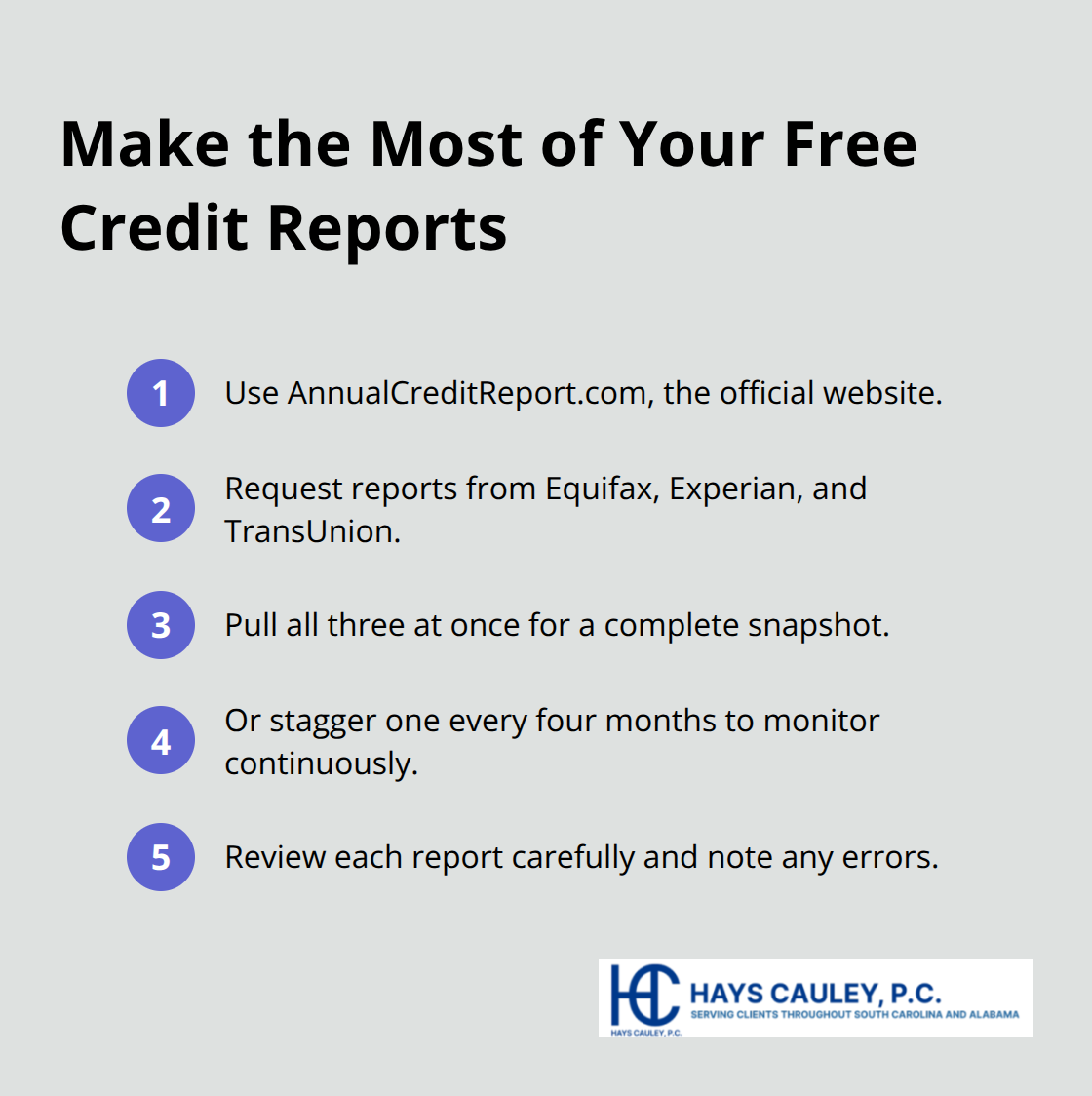
You can obtain an absolutely free annual credit report from each of the three major nationwide consumer reporting agencies—Equifax, Experian, and TransUnion—by visiting AnnualCreditReport.com. This centralized portal is the only government-authorized website for requesting your free reports under the Fair Credit Reporting Act, ensuring you can monitor your credit data without incurring costs or risking identity exposure.
Understanding the Importance of Your Credit Report
Your credit report is essentially your financial resume. It acts as a detailed record of your borrowing history, payment patterns, and existing debt obligations. Financial institutions, landlords, insurance companies, and even potential employers may use the information contained in these reports to gauge your financial reliability. Because inaccuracies in these documents can lead to denied loan applications, higher interest rates, or even the rejection of a housing rental application, auditing your reports regularly is a vital component of personal financial maintenance.
While many third-party websites market "free" credit monitoring services, these platforms often operate under a lead-generation business model, requiring you to enroll in a subscription service or subjecting you to significant advertising. The federally mandated "absolutely free" reports are distinct because they are provided without strings, hidden fees, or the requirement to purchase any supplementary product.
The Legal Framework: Fair Credit Reporting Act
The right to an absolutely free annual credit report is enshrined in the Fair Credit Reporting Act (FCRA). This federal law regulates the collection, dissemination, and use of consumer information. By law, each of the three nationwide credit bureaus—Equifax, Experian, and TransUnion—must provide you with a copy of your credit report once every 12 months, upon request, at no cost.
In 2026, the mandate remains a critical protection for consumers. It is important to note that the law mandates access to the report itself; it does not necessarily guarantee a free credit score from every bureau, although many bureaus and third-party tools provide supplementary score access. The core requirement is the transparency of the data being used to calculate your creditworthiness.
Navigating the Authorized Source: AnnualCreditReport.com
To ensure your information remains secure, you must use the official, government-sanctioned portal. There are many "imposter" websites that use similar terminology to lure users into providing sensitive data.
- Direct Access: Navigate exclusively to AnnualCreditReport.com. Verify the URL in your browser before entering any personal information.
- Verification Process: To access your report, you will be required to provide personally identifiable information, including your full name, address, Social Security number, and date of birth. You may also be asked security questions based on your specific credit history to verify your identity.
- Bureau Selection: You have the option to request reports from one, two, or all three bureaus at once. While it is often recommended to pull all three simultaneously for a comprehensive view, you can also stagger them throughout the year to monitor your file more frequently.
Comparison of Credit Report Acquisition Methods
When choosing how to receive your reports, consider the trade-offs between speed, security, and document format.
| Method | Accessibility | Security Level | Best For |
|---|---|---|---|
| Online Portal | Immediate | High (when official) | Rapid review and digital archiving |
| Telephone | Moderate | High (if verified) | Those without internet access |
| Mail-in Request | Slow (weeks) | High (physical) | Verifying data via hard copy |
Step-by-Step Guide to Reviewing Your Report
Once you have obtained your free report, do not simply glance at the score. A credit report contains granular data that requires careful examination.
1. Personal Information Verification Check your name, current and former addresses, and Social Security number. Identity thieves sometimes use stolen information to open accounts in your name at addresses where you have never lived. If you see an unfamiliar address, it may be a red flag for fraud.
2. Account History Audit Review every open and closed account listed. Ensure that the balances, credit limits, and payment statuses are accurate. A common error is a "late payment" mark for a bill that was actually paid on time. If you find an account you do not recognize, it must be investigated immediately.
3. Inquiry Review Your report lists "inquiries" from companies that have checked your credit. There are two types: "hard" inquiries (triggered by your applications for credit) and "soft" inquiries (typically from companies making promotional offers or your own personal checks). If you see multiple hard inquiries for accounts you did not open, this is a significant warning sign of identity theft.
Resolving Inaccuracies
If you discover an error on your credit report, you have the right to dispute it. The process is standardized:
- Contact the Bureau: You must contact the specific credit bureau that is reporting the incorrect information. You can do this online, by phone, or via certified mail.
- Provide Documentation: Submit copies of documents that support your claim, such as a billing statement showing a payment was made or a letter from a lender confirming an account is closed.
- The Investigation Period: Under the FCRA, bureaus generally have 30 to 45 days to investigate your claim. They must review the information provided and either correct, delete, or verify the disputed data.
- Notification: Once the investigation is complete, the bureau is required to provide you with the results and a free copy of your updated report if the dispute leads to a change.
The Role of Security Freezes and Fraud Alerts
If you discover that you are a victim of identity theft, or if you simply wish to be proactive in 2026, you should utilize security tools.
- Fraud Alert: This is a notice placed on your credit file that warns creditors that you may be a victim of fraud. It requires creditors to verify your identity before opening new accounts in your name.
- Security Freeze: This is a more robust measure that prevents any new creditors from accessing your credit report entirely. Because creditors need to see your report to approve loans, a freeze makes it extremely difficult for identity thieves to open new accounts. You can place and remove a freeze at any time, usually at no cost.
Common Misconceptions Regarding Credit Reports
Many consumers believe that checking their own credit report will damage their credit score. This is false. Checking your own report—what is known as a "soft inquiry"—has zero impact on your credit score. Only "hard" inquiries initiated by lenders when you apply for credit can affect your score.
Another misconception is that the information across the three bureaus is identical. Because lenders are not required to report information to all three bureaus, it is common to find discrepancies. This is precisely why obtaining your reports from all three agencies is a necessary step in maintaining your financial health.
Protecting Your Data During Retrieval
While obtaining your absolutely free annual credit report is a safe practice, you must be vigilant about your digital environment.
- Avoid Public Wi-Fi: Never access your credit reports or input your Social Security number while connected to public or unsecured Wi-Fi networks, such as those in coffee shops or airports.
- Device Security: Ensure your computer or mobile device has updated antivirus software and that your operating system is patched to the latest version.
- Phishing Awareness: Official government or credit bureau communications will never ask you to provide your password or full account details via unsolicited email. If you receive a request, it is likely an attempt to harvest your data.
Troubleshooting Potential Access Issues
If you are unable to access your reports online, it is often due to an inability to verify your identity. The bureaus use public record data to create "out-of-wallet" questions. If you have recently moved, changed your name, or have a "thin" credit file (meaning you do not have much credit history), the automated system may fail to verify you.
If this happens, the website will typically provide instructions on how to request your report by mail. This involves printing a request form and sending copies of identifying documents, such as a government-issued ID and a utility bill. While this process takes longer, it is equally effective and ensures you still receive your mandated free report.
Next Steps for Financial Wellness
Securing your absolutely free annual credit report is a recurring task. To maximize its utility, mark your calendar for a specific date each year—such as the start of a new quarter—to request your reports. By building this into your routine, you move from a reactive stance to a proactive one. If you find your reports are clean, take the time to set up a credit freeze as an extra layer of protection against the rising tide of digital identity theft. Consistent monitoring is the most effective weapon in your financial arsenal.