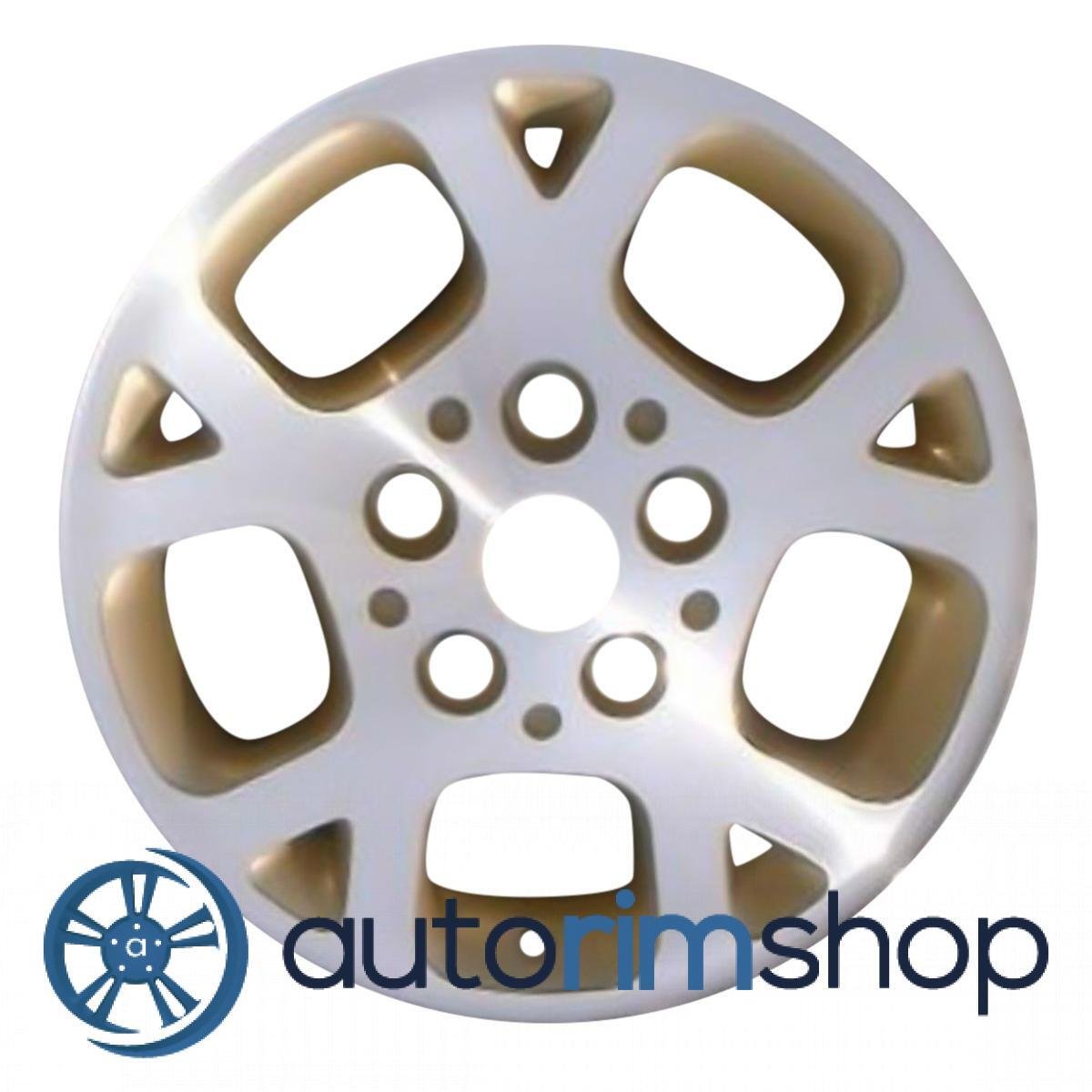
The 1998 Jeep Cherokee (XJ) uses a lug pattern of 5x4.5 inches, which is equivalent to 5x114.3 mm in metric measurements. This specific configuration features five wheel studs arranged in a circular pattern with a diameter of 4.5 inches, a standard for the Jeep XJ platform throughout its entire production run.
The 1998 Jeep Cherokee remains a cornerstone of the off-roading community. As we move through 2026, these vehicles are increasingly viewed as classic "youngtimer" SUVs. Whether you are performing a restoration, upgrading to larger off-road tires, or simply replacing a damaged rim, understanding the technical nuances of the wheel assembly is critical. The lug pattern is only the beginning; you must also consider the hub bore, thread pitch, and backspacing to ensure a safe and functional fitment.
Detailed Technical Specifications for 1998 Jeep Cherokee Wheels
When sourcing wheels for a 1998 Cherokee, the lug pattern is the most vital measurement, but several other factors determine if a wheel will actually bolt up and rotate without interference. The XJ platform is notoriously sensitive to wheel offset and hub-centricity, especially when modified with suspension lifts.
| Specification | Measurement (Imperial) | Measurement (Metric) |
|---|---|---|
| Lug Pattern | 5 x 4.5" | 5 x 114.3 mm |
| Thread Pitch | 1/2" x 20 RH | N/A |
| Center Hub Bore | 2.815" | 71.5 mm |
| Stock Wheel Offset | +25 mm to +31.75 mm | +25 mm to +31.75 mm |
| Stock Backspacing | 5.25" | 133 mm |
| Standard Wheel Size | 15 x 7.0" | 38.1 x 17.8 cm |
| Lug Nut Torque | 85–115 lb-ft | 115–155 Nm |
Decoding the 5x4.5 Lug Pattern
The "5" in 5x4.5 refers to the number of lugs (or studs) protruding from the wheel hub. The "4.5" refers to the diameter of the theoretical circle formed by the center of those lugs. On a five-lug hub, measuring this can be tricky because the lugs are not directly across from one another.
To measure a 5-lug pattern manually, you measure from the back of one hole to the center of the second hole away from it. This provides the most accurate estimation of the 4.5-inch diameter. While 5x114.3 mm is the exact metric conversion used by many modern manufacturers (including Ford, Toyota, and Honda), in the Jeep community, the imperial 5x4.5 designation is the standard terminology used by parts suppliers and enthusiasts.
The Importance of Center Hub Bore
A common mistake when purchasing aftermarket wheels for a 1998 Cherokee is focusing solely on the bolt pattern while ignoring the center bore. The 1998 XJ uses a 71.5 mm hub-centric design. This means the center of the wheel is designed to fit snugly over the machined lip of the axle hub.
The hub-centric lip carries the weight of the vehicle and ensures the wheel remains perfectly centered during rotation. Many aftermarket wheels are "lug-centric," meaning they have a larger center bore (often 73 mm or 82 mm) to fit multiple vehicle types. If you install a wheel with a bore larger than 71.5 mm, the entire weight of the vehicle rests on the wheel studs rather than the hub. This can lead to:
- Increased vibration at highway speeds.
- Shearing of wheel studs under heavy off-road stress.
- Uneven tire wear.
If you choose wheels with a larger center bore, it is highly recommended to use hub-centric rings to bridge the gap between the 71.5 mm Jeep hub and the wheel’s larger bore.
Thread Pitch and Hardware Requirements
The 1998 Jeep Cherokee uses 1/2" x 20 thread pitch wheel studs. This is a fine-thread imperial measurement. It is essential to verify that your lug nuts match this pitch. Using metric lug nuts (such as M12x1.5, common on newer Jeeps) will strip the threads of the studs, leading to a dangerous mechanical failure.
Furthermore, the "seat" of the lug nut must match the wheel. Most factory and aftermarket wheels for the Cherokee use a 60-degree conical seat (also known as an acorn seat). If you are installing heavy-duty steel wheels or certain specialty racing rims, they may require a flat flange or a ball seat. Always inspect the wheel's lug holes before selecting hardware.
Backspacing and Offset Considerations
For XJ owners, backspacing is often a more practical measurement than offset. Backspacing is the distance from the mounting surface of the wheel to the innermost edge of the rim.
The factory 1998 Cherokee wheels typically have 5.25 inches of backspacing. This keeps the tire tucked inside the fender flares, providing a narrow profile that is aerodynamic and protects the bodywork from road debris. However, this high backspacing becomes a problem when installing wider tires.
If you upgrade to 31-inch or 33-inch tires, the inside sidewall of the tire will likely rub against the lower control arms or the sway bar end links when the steering wheel is turned to "full lock." To prevent this, off-roaders typically move to a wheel with 3.75 to 4.5 inches of backspacing. This pushes the wheel further out from the vehicle body, providing the necessary clearance for suspension components and larger rubber.
Vehicle Compatibility and "Junkyard Swaps"
Because the 5x4.5 lug pattern was so prevalent during the 1990s and early 2000s, 1998 Cherokee owners have a wide variety of OEM wheel options from other vehicles. This "cross-compatibility" is a major advantage for budget-conscious builders.
Compatible Jeep Models
Wheels from the following Jeep models will generally bolt directly onto a 1998 Cherokee XJ, provided the backspacing is appropriate for your tire size:
- Jeep Wrangler (YJ) 1987–1995: Shares the 5x4.5 pattern and similar hub bore.
- Jeep Wrangler (TJ) 1997–2006: A direct match for the XJ; many TJ "Rubicon" or "Canyon" wheels are popular upgrades for the Cherokee.
- Jeep Grand Cherokee (ZJ) 1993–1998: These wheels are identical in fitment.
- Jeep Liberty (KJ/KK) 2002–2012: Uses the 5x4.5 pattern, though offsets may vary slightly.
Non-Compatible Jeep Models
It is a common misconception that all Jeep wheels are interchangeable. The following models do NOT fit a 1998 Cherokee without adapters:
- Jeep Wrangler (JK/JL) 2007–Present: Uses a 5x5 lug pattern.
- Jeep Grand Cherokee (WJ) 1999–2004: Shifted to a 5x5 pattern.
- Jeep Grand Cherokee (WK/WK2): Also uses 5x5.
Other Manufacturers
The 5x4.5 pattern is also found on many Ford vehicles. The Ford Ranger and Ford Explorer (1991–2010) wheels are popular swaps because they share the same lug pattern. However, the Ford center bore is often slightly larger than the Jeep's 71.5 mm, requiring hub-centric rings for a perfect fit.
Installation and Safety Procedures
Properly mounting wheels on a 1998 Cherokee is a matter of safety. Because the XJ is a live-axle vehicle, wheel imbalances or improper torquing can lead to a phenomenon known as "death wobble," where the front end vibrates violently after hitting a bump.
The Star Pattern Torque Method
When tightening the lug nuts, always use a star (crisscross) pattern. This ensures that the wheel is pulled flush against the hub surface evenly. If you tighten the nuts in a circular sequence, the wheel may seat at a slight angle, causing a permanent wobble and potentially warping the brake rotors.
- Snug all nuts by hand.
- Tighten to 50 lb-ft in a star pattern.
- Lower the vehicle until the tires touch the ground.
- Perform the final torque to 100 lb-ft (the middle of the 85–115 lb-ft range).
Maintenance of Wheel Studs
Given that the 1998 Cherokee is nearly three decades old in 2026, the wheel studs may suffer from fatigue or corrosion. Before installing new wheels, inspect the studs for:
- Stretched threads: If a lug nut becomes difficult to turn halfway down the stud, the stud may be stretched and prone to snapping.
- Rust pitting: Surface rust is normal, but deep pitting weakens the metal.
- Fractures: Use a bright light to check the base of the stud where it meets the hub for hairline cracks.
Replacing wheel studs on an XJ is a straightforward process. The front studs can be pressed out with a C-clamp tool or hammered out (carefully) once the brake caliper and rotor are removed. The rear studs on the Chrysler 8.25 or Dana 35 axles are similarly accessible once the brake drum is pulled.
Wheel Spacers vs. Adapters
If you find a set of modern Jeep Wrangler (JL) wheels with a 5x5 pattern that you absolutely must have, you will need wheel adapters.
- Adapters: These bolt onto your 5x4.5 studs and provide a new set of studs in a 5x5 pattern. These are usually 1.25 to 1.5 inches thick.
- Spacers: These retain the 5x4.5 pattern but push the wheel further out. These are used when your tires rub against the suspension but you want to keep your current wheels.
When using either, ensure they are hub-centric. Cheap, universal "sandwich" spacers that slide over the studs without their own integrated studs are dangerous and should be avoided on any vehicle that sees highway speeds or off-road use. High-quality, bolt-on aluminum spacers from reputable brands are generally considered safe if torqued correctly and checked periodically.
FAQ: 1998 Jeep Cherokee Lug Pattern
What is the bolt pattern for a 1998 Jeep Cherokee?
The bolt pattern is 5x4.5 inches. In metric units used by many modern wheel manufacturers, this is expressed as 5x114.3 mm. This pattern consists of five lugs spaced evenly around a 4.5-inch diameter circle.
Will wheels from a 2018 Jeep Wrangler fit my 98 Cherokee?
No, not directly. The 2018 Wrangler (JL) uses a 5x5 inch (5x127 mm) lug pattern, whereas the 1998 Cherokee uses 5x4.5. To make these work, you would need to install lug pattern adapters that convert the 5x4.5 hub to a 5x5 mounting surface.
What size are the lug nuts on a 1998 Jeep Cherokee?
The factory lug nuts have a thread pitch of 1/2" x 20. The hex size for the factory lug nut tool is typically 3/4 inch or 19 mm. If you are using aftermarket "tuner" wheels, you may need a thin-walled socket or a specific key provided with the lug nuts.
Can I use 5x115 wheels on a 5x4.5 Jeep?
No. While 115 mm is very close to 114.3 mm (5x4.5), they are not the same. Attempting to force a 5x115 wheel onto a 5x114.3 hub will put lateral tension on the wheel studs, which can cause them to snap while driving. Always match the bolt pattern exactly.
What is the stock wheel size for a 1998 Jeep Cherokee?
The most common factory wheel size for the 1998 XJ was 15x7 inches. Some base models came with 15x6 steel wheels, while higher trims like the Limited or Classic sometimes featured various 15-inch alloy designs such as the "Lace" or "Five-Spoke" patterns.
Practical Recommendation
If you are upgrading the wheels on your 1998 Jeep Cherokee in 2026, the best balance of aesthetics and performance is typically a 15x8 or 16x8 wheel with 4.0 inches of backspacing. This setup allows you to run a 30-inch or 31-inch tire with minimal rubbing, even on a stock or lightly lifted suspension. Always ensure any aftermarket wheel you purchase is hub-centric to 71.5 mm or use high-quality hub-centric rings. Prioritize safety by using a calibrated torque wrench to set your lug nuts to 100 lb-ft, and re-torque them after the first 50 miles of driving to account for any settling.