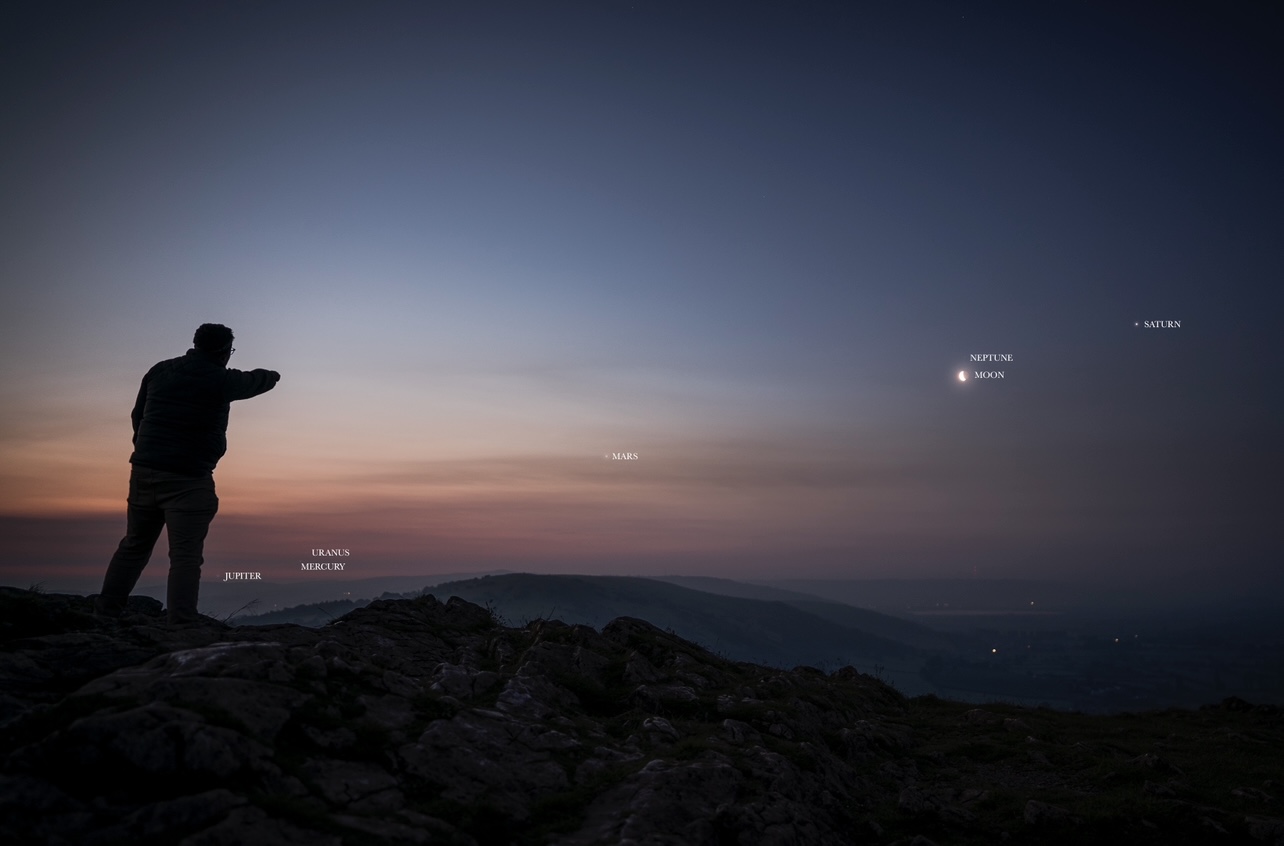
Whether 6 planets are aligned today depends on your definition of "alignment" and the specific calendar date in 2026. While planets are rarely in a perfectly straight line, they often cluster in the same region of the sky. In 2026, major planetary "parades" involving six or more planets occur during specific windows in mid-January and August.
Understanding the Concept of Planetary Alignment
In the world of astronomy, the term "planetary alignment" is more of a colloquialism than a strict scientific definition. When people ask if planets are aligned, they are usually referring to one of two phenomena: an appulse or a conjunction. An appulse occurs when celestial bodies appear at their closest point from the perspective of an observer on Earth. A conjunction is more specific, occurring when two or more objects share the same right ascension or ecliptic longitude.
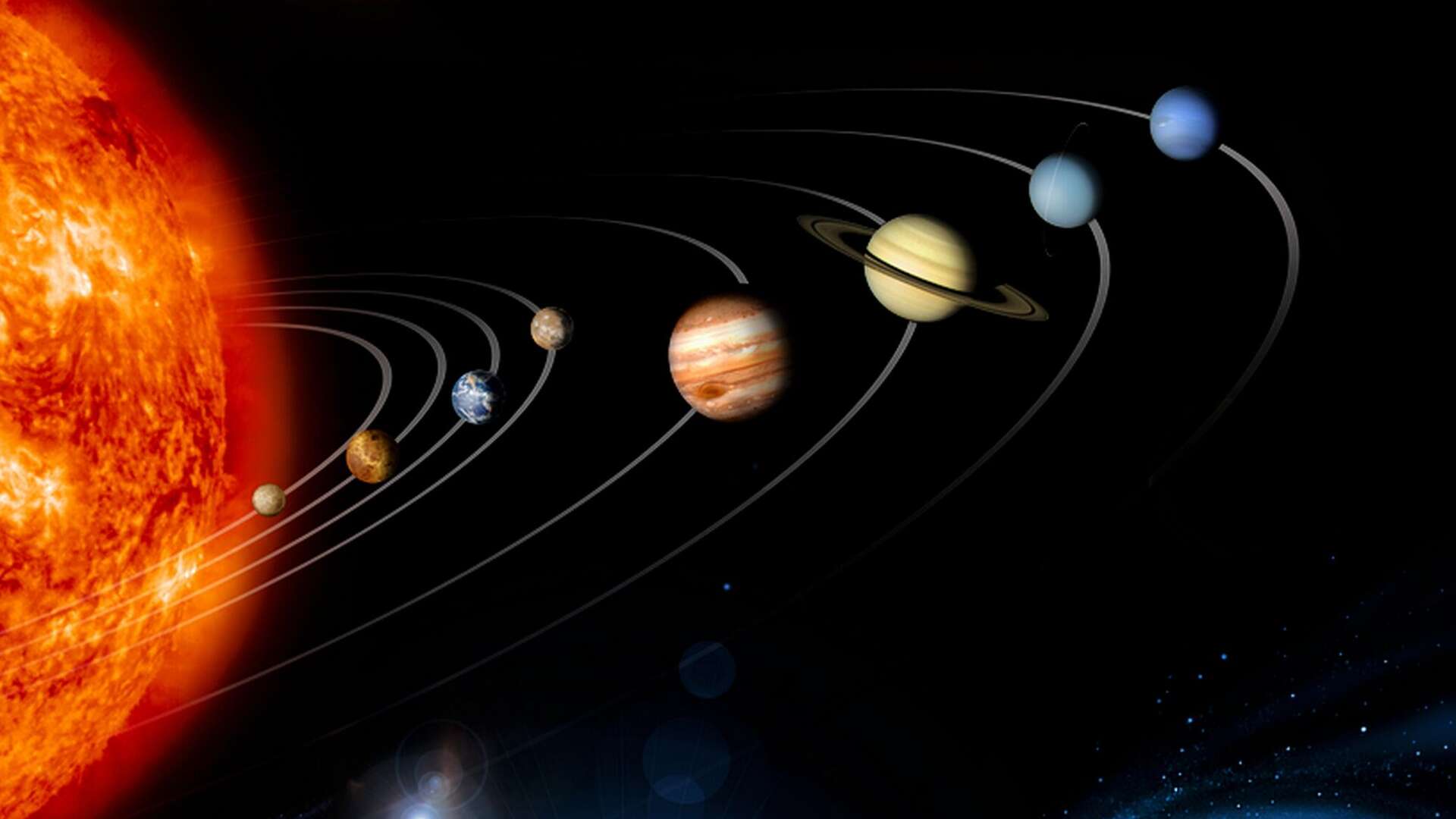
From a three-dimensional perspective in the solar system, the planets never actually form a perfectly straight line. Because each planet orbits the Sun on a slightly different orbital plane, they are scattered across a narrow band of the sky known as the ecliptic. When we see a "6-planet alignment," we are actually seeing six planets positioned within the same 90-degree to 160-degree sector of the sky as viewed from Earth. To the naked eye, this creates the illusion of a celestial parade marching across the horizon.
In 2026, the configuration of the outer and inner planets provides several opportunities to see these clusters. However, seeing all six at once—Mercury, Mars, Jupiter, Saturn, Uranus, and Neptune—requires precise timing, clear horizons, and, in the case of the latter two, optical assistance.
Major Planetary Alignments Scheduled for 2026
The year 2026 is a remarkable time for stargazers, highlighted not just by planetary groupings but also by the highly anticipated Total Solar Eclipse in August. The orbital mechanics of the "Gas Giants" (Jupiter and Saturn) and the "Ice Giants" (Uranus and Neptune) move slowly, meaning they remain in relatively similar positions for months. It is the faster-moving inner planets—Mercury, Venus, and Mars—that dictate exactly when a "6-planet" event occurs.
The Mid-January 2026 Morning Parade
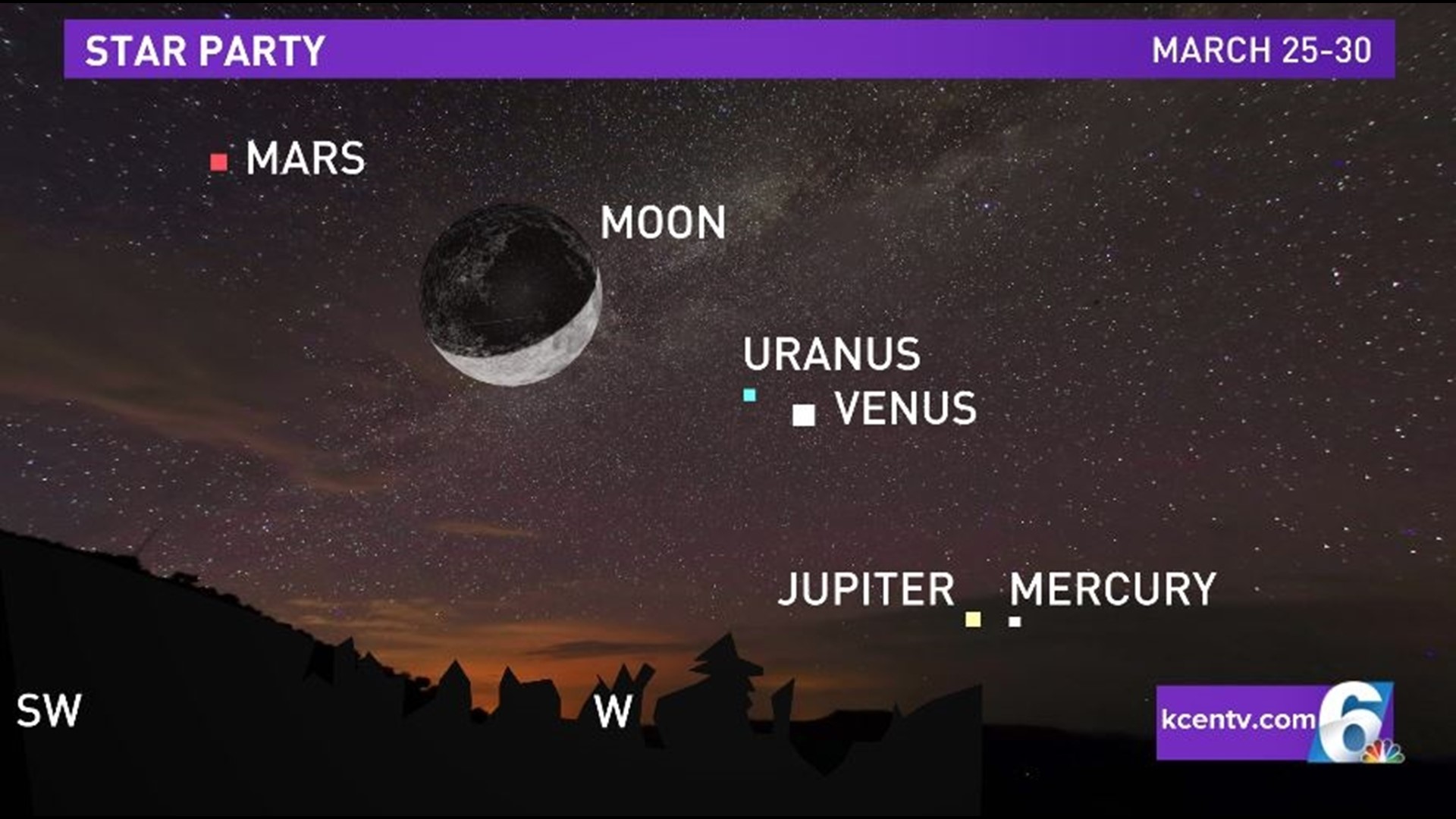
In mid-January 2026, early risers have the best chance to witness a multi-planet alignment. During this period, Mars, Jupiter, and Saturn are prominent fixtures in the pre-dawn sky. When Mercury swings into its greatest western elongation, it joins the visible lineup. While Uranus and Neptune are technically part of this sector, they remain invisible to the naked eye.
During this window, the planets stretch across a wide arc. Jupiter remains the "king" of the alignment due to its immense brightness, followed by the steady, golden light of Saturn. Mars, approaching its own period of interest, appears as a distinct reddish "star" in the constellation Leo or Virgo, depending on the exact week.
The August 2026 Eclipse Alignment
The most spectacular planetary gathering of 2026 coincides with the Total Solar Eclipse on August 12, 2026. During the moments of totality, when the Sun is completely obscured by the Moon, the sudden darkness allows several planets to become visible during the day.
While not a traditional "alignment" in a single line, the proximity of Mercury, Venus, Mars, and Jupiter to the darkened Sun creates a rare celestial cluster. This event is unique because it allows observers to see planets that are usually lost in the Sun's glare. Following the eclipse, into late August, these planets emerge in the evening sky, creating a visible sequence that spans from the western horizon toward the zenith.
Technical Breakdown of the 6 Planets
To successfully identify the planets in an alignment, one must understand their visual characteristics and how they differ from distant stars. Planets generally do not "twinkle" because they are closer to Earth and appear as tiny disks rather than point sources of light. Their light is less affected by atmospheric turbulence.
1. Mercury: The Elusive Messenger
Mercury is the most difficult of the six to spot. Because it orbits so close to the Sun, it is only visible during brief windows during twilight—either just after sunset or just before sunrise. In 2026, look for Mercury during its greatest elongations. It will appear as a bright, yellowish-white dot very low on the horizon. If you have any buildings or trees in your line of sight, you will likely miss it.
2. Mars: The Red Planet
In 2026, Mars moves through a period of increasing brightness as it heads toward a future opposition. It is easily identifiable by its distinct orange-red hue. Unlike the steady white light of Jupiter, Mars has a "warm" tone that stands out against the backdrop of the constellations.
3. Jupiter: The Brightest Giant
Jupiter is usually the second brightest object in the night sky after the Moon (and occasionally Venus). In 2026, Jupiter remains a brilliant, cream-colored beacon. Even modest binoculars will reveal its four largest moons—Io, Europa, Ganymede, and Callisto—strung out in a line flanking the planet.
4. Saturn: The Ringed Wonder
Saturn appears to the naked eye as a steady, golden-yellow star. In 2026, an interesting phenomenon occurs: the rings of Saturn are tilted nearly edge-on from Earth's perspective. This makes the planet appear slightly dimmer than usual and makes the rings look like a thin needle piercing the planet through a telescope.
5. Uranus: The Ice Giant
Uranus is technically visible to the naked eye under extremely dark, "Bortle Class 1" skies, but for most observers, it requires binoculars. It appears as a tiny, pale blue-green dot. In an alignment, Uranus serves as the technical "fifth or sixth" planet that completes the count for serious amateur astronomers.
6. Neptune: The Distant Outpost
Neptune is the only planet in the solar system that is absolutely invisible without optical aid. Even with binoculars, it appears as a very faint blue star. To see it as part of a 6-planet alignment today, you will need a telescope with at least 4 inches of aperture and a detailed star chart to distinguish it from the background stars of the constellation Pisces.
Visibility Comparison Table for 2026
| Planet | Magnitude (Brightness) | Color Profile | Best Viewing Tool | Difficulty Level |
|---|---|---|---|---|
| Mercury | -0.5 to +1.5 | Yellowish-White | Binoculars | High (due to Sun) |
| Mars | +1.2 to -0.1 | Orange-Red | Naked Eye | Easy |
| Jupiter | -2.2 to -2.6 | Brilliant Cream | Naked Eye | Very Easy |
| Saturn | +0.7 to +1.0 | Golden-Yellow | Naked Eye | Easy |
| Uranus | +5.7 to +5.9 | Pale Blue-Green | Binoculars | Moderate |
| Neptune | +7.8 to +8.0 | Deep Blue | Telescope | High |
Note: Magnitude is a logarithmic scale where lower numbers represent brighter objects. Negative numbers are the brightest.
How to View a Planetary Alignment Today
If the 6 planets are currently positioned for viewing, your success depends heavily on your environment and preparation. Astronomical events are often ruined by light pollution or poor weather, so following a checklist is essential.
1. Check the "Sky Sector"
A planetary alignment doesn't mean the planets are stacked on top of each other. They are spread across the ecliptic plane. To find them, locate the Moon's path; the planets will generally follow that same imaginary line across the sky. Use a mobile app like Stellarium or SkySafari to see exactly which constellations the planets are currently inhabiting.
2. Manage Light Pollution
While Jupiter, Saturn, and Mars are bright enough to be seen from most suburban backyards, Mercury, Uranus, and Neptune are not. To see all six, you must move away from city lights. Use the Light Pollution Map to find a "dark sky" site near you. A Bortle Scale rating of 4 or lower is recommended for the best experience.
3. Timing is Everything
The inner planets (Mercury and Venus) follow the Sun. If the alignment is an "evening" event, you have a very narrow window—usually 30 to 60 minutes after sunset—before Mercury sinks below the horizon. If it is a "morning" event, you must be in position about an hour before sunrise.
4. Essential Equipment
- Binoculars: A pair of 7x50 or 10x50 binoculars is the single best tool for viewing an alignment. They provide a wide enough field of view to see the planets in context while gathering enough light to reveal Uranus.
- Telescope: If you want to see the rings of Saturn or the blue disk of Neptune, a telescope with at least 100x magnification is required.
- A Clear Horizon: Because alignments often include Mercury, you need a view that is not obstructed by mountains, trees, or buildings toward the east or west.
Common Misconceptions About Planetary Alignments
Social media often sensationalizes these events, leading to disappointment. It is important to separate astronomical fact from viral "hype."
"The Planets will look like a string of pearls"
In reality, the planets are usually spread out over a vast area. A "6-planet alignment" might cover 120 degrees of the sky—more than you can see in a single glance without turning your head. They appear as particularly bright stars that happen to fall along the same curved line.
"Alignments cause natural disasters"
There is no scientific evidence that planetary alignments affect Earth's geology or climate. While the planets do exert gravitational pulls on Earth, the effect is negligible compared to the gravitational influence of the Moon and the Sun. The "combined" gravity of 6 planets is far too weak to trigger earthquakes or volcanic eruptions.
"You can see all of them with the naked eye"
This is the most common myth. While five planets (Mercury, Venus, Mars, Jupiter, and Saturn) have been known since antiquity because they are visible to the naked eye, Uranus is at the very limit of human vision, and Neptune is impossible to see without a telescope. A "6-planet" event is almost always a hybrid event requiring at least some optical assistance.
Expert Tips for Stargazing in 2026
To maximize your experience when searching for aligned planets, consider the following technical advice:
- Avert Your Vision: When trying to spot a faint planet like Uranus through binoculars, use "averted vision." Look slightly to the side of where you think the planet is. This uses the more light-sensitive rods in your eyes rather than the cones in the center, making the faint object pop into view.
- Allow for Dark Adaptation: It takes about 20 to 30 minutes for your eyes to fully adjust to the dark. Avoid looking at your smartphone screen during this time unless you have a red light filter enabled. Red light does not ruin your night vision.
- Monitor the Moon: A full moon can wash out the sky, making it impossible to see Uranus or Neptune. The best time for a 6-planet alignment is during the New Moon phase or when the Moon is in a different part of the sky.
Frequently Asked Questions
Is there a 6-planet alignment tonight?
To confirm if 6 planets are aligned tonight in 2026, you should consult a real-time astronomical calendar or sky chart app. Major groupings typically occur in mid-January and late August 2026. If today falls outside those windows, you may still see 2 or 3 planets, but a full 6-planet parade is a rare event that lasts only a few weeks.
Which 6 planets are usually involved in an alignment?
The 6 planets typically cited in these events are Mercury, Mars, Jupiter, Saturn, Uranus, and Neptune. Venus is often included as well, sometimes replacing Neptune to make a "visible" 5-planet alignment. Earth is excluded from the count because it is our observation platform.
Can I see the planetary alignment from the Northern Hemisphere?
Yes, most planetary alignments in 2026 are visible from both the Northern and Southern Hemispheres. However, the angle of the ecliptic varies by latitude. In the Northern Hemisphere, the planets may appear lower in the sky during certain seasons, requiring a very clear southern horizon.
At what time of night is the alignment most visible?
This depends on whether the planets are currently in "morning" or "evening" positions. In 2026, many of the best groupings are morning events, occurring roughly 45 to 60 minutes before sunrise. Check the specific "rise times" for Jupiter and Saturn to find your starting window.
Do I need a telescope to see 6 planets?
You do not need a telescope for the four brightest planets (Mars, Jupiter, Saturn, and often Mercury/Venus). However, to see Uranus and Neptune—which are necessary to reach the "6-planet" count—you will need high-quality binoculars or a telescope.
Final Recommendations for 2026 Observers
If you are looking for 6 planets aligned today, your first step should be to download a reputable sky-mapping app to verify the current positions of the planets relative to your location. For the best experience in 2026, prioritize the August 12th Total Solar Eclipse window, as the unique atmospheric conditions provide a once-in-a-decade opportunity to see planets in a grouping that is usually hidden by daylight. Always check the local weather forecast for "transparency" and "seeing" conditions, as clear skies are the most critical factor in successful planetary observation.