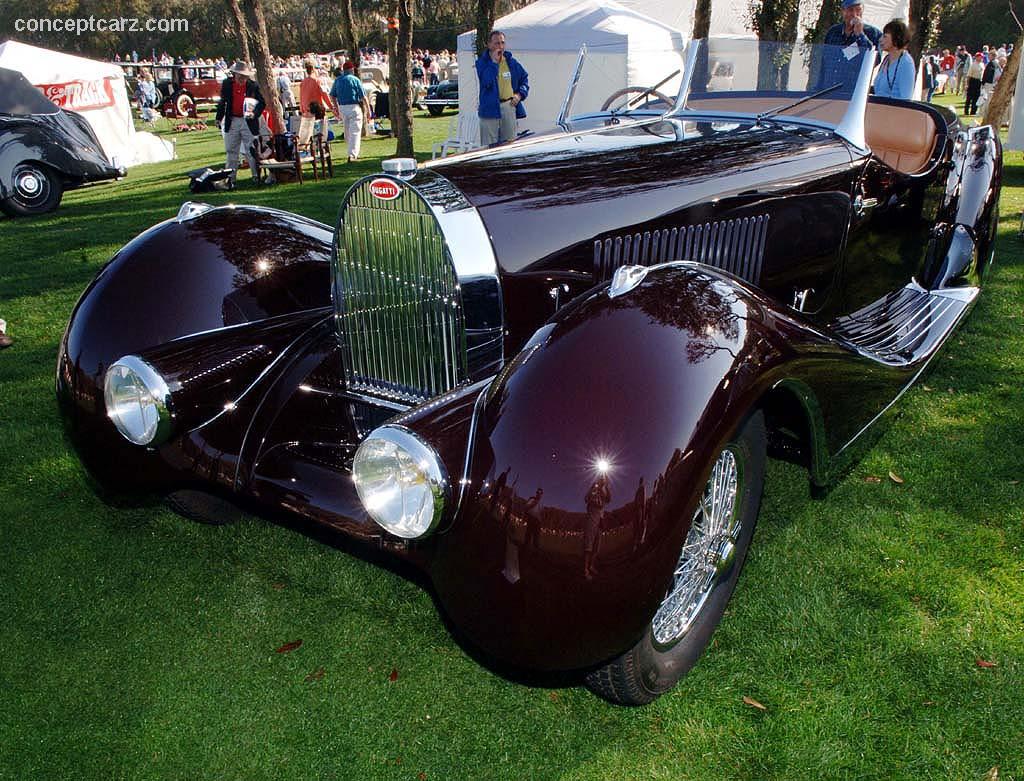
The 1937 Bugatti Type 57 represents the pinnacle of Jean Bugatti’s design, featuring a 3.3-liter straight-eight engine and the introduction of the lowered "S" (Surbaissé) and supercharged "SC" variants. Renowned for its Art Deco elegance and Le Mans-winning performance, it remains one of the most coveted pre-war luxury automobiles for collectors in 2026.
The Significance of the 1937 Production Year
In the history of the Bugatti marque, 1937 stands out as a watershed moment. While the Type 57 series began production in 1934, it was during 1937 that the model achieved its most significant technical and competitive milestones. This was the year that Bugatti dominated the 24 Hours of Le Mans with the Type 57G "Tank," proving that the chassis and engine architecture were capable of world-class endurance and speed.
For collectors and historians, a 1937 model often signifies the transition from the "Series 1" designs to the more refined "Series 2" and "Series 3" specifications. By this time, the initial teething problems of the early 3.3-liter engines had been resolved. The 1937 production line benefited from improved engine mounting systems, which reduced vibration, and more robust electrical systems compared to the 1934–1935 units.
Furthermore, 1937 was the primary delivery window for the legendary Type 57S. These cars featured a chassis that was physically lower, with the rear axle passing through the frame rather than under it. This lowered center of gravity, combined with the "V-front" radiator, created the aggressive, sleek silhouette that defined the era's grand touring aesthetics.
Technical Specifications: The Heart of the Type 57
The 1937 Bugatti Type 57 is powered by an engine that was, for its time, a masterpiece of high-revving efficiency. Unlike many of its contemporaries that used pushrod valves, the Type 57 utilized a Double Overhead Camshaft (DOHC) arrangement. This allowed for better valve timing and higher performance without the weight and complexity of larger displacement engines used by American or German competitors.
Engine and Drivetrain
The 3,257cc straight-eight engine is the soul of the vehicle. In its standard form for 1937, it produced approximately 135 horsepower. However, the introduction of the "C" (Compresseur) designation changed the landscape. By adding a Roots-type supercharger, Bugatti pushed the output to 160–175 horsepower, and in some specialized "S" tunes, it approached 200 horsepower.
The engine features a fixed cylinder head (monobloc) design, which was a Bugatti hallmark to ensure structural rigidity under high compression. In 2026, maintaining these engines requires specialized knowledge, as the lack of a head gasket means the mating surfaces between the block and the crankcase must be perfectly machined to prevent leaks.
The Surbaissé (S) Chassis
The "S" in Type 57S stands for "Surbaissé," French for "lowered." This chassis was not just a modified standard frame; it was a complete redesign. The wheelbase was shortened, and the rear axle was integrated through the frame rails. To accommodate the lower stance, Bugatti utilized a dry-sump lubrication system for the engine, which allowed the motor to sit lower in the frame without the risk of the oil pan hitting the ground.
This technical choice was revolutionary for a road car, as dry-sump systems were typically reserved for dedicated racing machines like those found at the Bugatti Trust archives. The result was a car that handled with significantly more precision than the standard Type 57, making it a favorite for the sporting elite of the late 1930s.
Iconic Body Styles of 1937
Bugatti offered several "factory" body styles, many of which were designed by Jean Bugatti himself and executed by the coachbuilder Gangloff in Colmar. However, the 1937 model year is most famous for the "Atalante" and the exceedingly rare "Atlantic."
The Atalante Coupe
The Atalante is a two-door coupe characterized by its distinct side profile and often two-tone paint schemes. In 1937, the Atalante body was refined to include more integrated fenders and optional "kidney" shaped side windows. Because it was built on both the standard and the "S" chassis, the Atalante remains the most recognizable "sport" Bugatti of the period.
The Galibier and Ventoux
For the owner who required more practicality, Bugatti offered the Galibier (a four-door saloon) and the Ventoux (a four-seat, two-door coach). While these are often seen as less "glamorous" than the Atalante, the 1937 versions of these cars are highly prized for their Art Deco interior appointments. The woodwork and instrumentation in a 1937 Galibier are often compared to fine jewelry, featuring turned aluminum or high-grade walnut dashboards.
The 57G "Tank"
Though not a production road car for the public, the 1937 Type 57G "Tank" is essential to the 1937 narrative. With its fully enveloped aerodynamic body, it broke multiple world speed records and won Le Mans. The victory cemented the Type 57's reputation for reliability, a factor that still influences its high market value in 2026.
Comparing 1937 Bugatti Type 57 Variants
The following table provides a technical comparison of the three primary configurations available during the 1937 production cycle.
| Feature | Type 57 (Standard) | Type 57S (Surbaissé) | Type 57SC (Supercharged) |
|---|---|---|---|
| Engine Type | 3.3L Straight-8 DOHC | 3.3L Straight-8 DOHC | 3.3L Straight-8 DOHC |
| Induction | Naturally Aspirated | Naturally Aspirated | Roots-Type Supercharger |
| Horsepower | ~135 hp | ~170 hp | 175 - 200 hp |
| Top Speed | ~95 mph (153 km/h) | ~115 mph (185 km/h) | ~125+ mph (200+ km/h) |
| Chassis Style | Standard High Frame | Lowered (Axle through frame) | Lowered (Axle through frame) |
| Lubrication | Wet Sump | Dry Sump | Dry Sump |
| Production Count | ~600 (Total 57 series) | 43 (Total S/SC series) | Most "C" were retrofitted |
Ownership, Restoration, and Authenticity in 2026
Purchasing a 1937 Bugatti Type 57 in 2026 is an exercise in forensic history. Because these cars were often modified during their lives—engines swapped, bodies replaced, or superchargers added—verifying the "matching numbers" status is paramount.
The Importance of Provenance
For a 1937 model, the "Chassis Number" is the primary identifier. Collectors look for documentation that links the chassis, engine, and gearbox numbers to the original factory ledger. In 2026, digital archives and high-resolution scanning of original Bugatti factory records have made it harder to pass off "bitsas" (cars built from bits and pieces) as original examples.
Mechanical Maintenance
Owning a Type 57 is a commitment to specialized engineering. The cable-operated brakes, while effective if properly adjusted, require significantly more maintenance than modern hydraulic systems. Furthermore, the De Ram shock absorbers found on the 1937 "S" models are notoriously complex. These shocks use a system of internal clutches and oil to provide damping, and very few specialists globally are capable of rebuilding them to original specifications.
The Market Landscape in 2026
The valuation of 1937 Bugattis remains at the top of the collector market. While a standard Ventoux or Galibier might command between $600,000 and $1,000,000 depending on condition, an authentic 1937 Type 57S or SC can easily exceed $10 million at prestigious auctions held by RM Sotheby's or Gooding & Company. The "survivor" status—cars with original paint and upholstery—has seen a massive surge in value over the last decade, often outpacing perfectly restored "concours" cars.
Common Challenges and Considerations
- Braking Systems: Bugatti famously resisted hydraulic brakes for years, believing cables were more reliable. For a 1937 driver, this means a firmer pedal and a need for regular tension inspections.
- Engine Cooling: The straight-eight is a long engine, and the rear cylinders can run hot. Ensuring the radiator is clear and the water pump is efficient is critical for summer driving.
- Fuel Requirements: These high-compression engines, especially the supercharged SC models, require high-octane fuel and modern lead substitutes to protect the valve seats, which were designed for 1930s fuels.
- Transmission: The four-speed manual gearbox is non-synchromesh on first and second gears. Double-clutching is a required skill for any 1937 Bugatti pilot.
Frequently Asked Questions
How many 1937 Bugatti Type 57s still exist?
Out of the approximately 685 Type 57s produced between 1934 and 1940, it is estimated that about 70% have survived in some form. For the specific 1937 model year, which was a high-volume year, several hundred examples are accounted for in various registries, though many have non-original coachwork.
Can a standard 1937 Type 57 be converted to an "SC"?
Yes, and historically, many were. Many owners in the late 1930s returned their cars to the Molsheim factory to have a supercharger installed. In the modern collector market, a "factory-fitted" supercharger is worth significantly more than a modern reproduction, though the performance gain is similar.
What is the most expensive 1937 Bugatti ever sold?
While the 1936 Atlantic often holds the record for the model line, 1937 Type 57S Atalantes have consistently broken the $10 million barrier. A specific 1937 Type 57S that had been hidden in a garage for decades sold for over $4 million even in unrestored condition, highlighting the premium placed on 1937 "S" chassis cars.
Is the 1937 Bugatti Type 57 suitable for modern rallies?
Absolutely. The Type 57 was designed as a Grand Tourer. Many 1937 examples participate in the "Mille Miglia" retrospective and the "International Bugatti Rally." Their 3.3-liter engines provide enough torque to keep up with modern traffic, provided the cooling and braking systems are well-maintained.
What should I look for in a pre-purchase inspection (PPI)?
Beyond the engine and chassis numbers, inspect the "wood" of the body frame. Most 1937 Bugattis used an ash-wood frame under the aluminum or steel body panels. If this wood has rotted, the car will lose its structural integrity, leading to door-fit issues and body cracks.
Practical Recommendation for Collectors
If you are entering the market for a 1937 Bugatti Type 57 in 2026, prioritize originality and documentation over shiny paint. A car with a known history and its original engine block is a much safer investment than a "re-bodied" car with a replacement engine. Seek a professional appraisal from a specialist familiar with the Molsheim factory records. For those who intend to drive their Bugatti, a standard 1937 Ventoux offers the best balance of the legendary straight-eight experience and manageable maintenance costs compared to the hyper-expensive and temperamental "S" models.