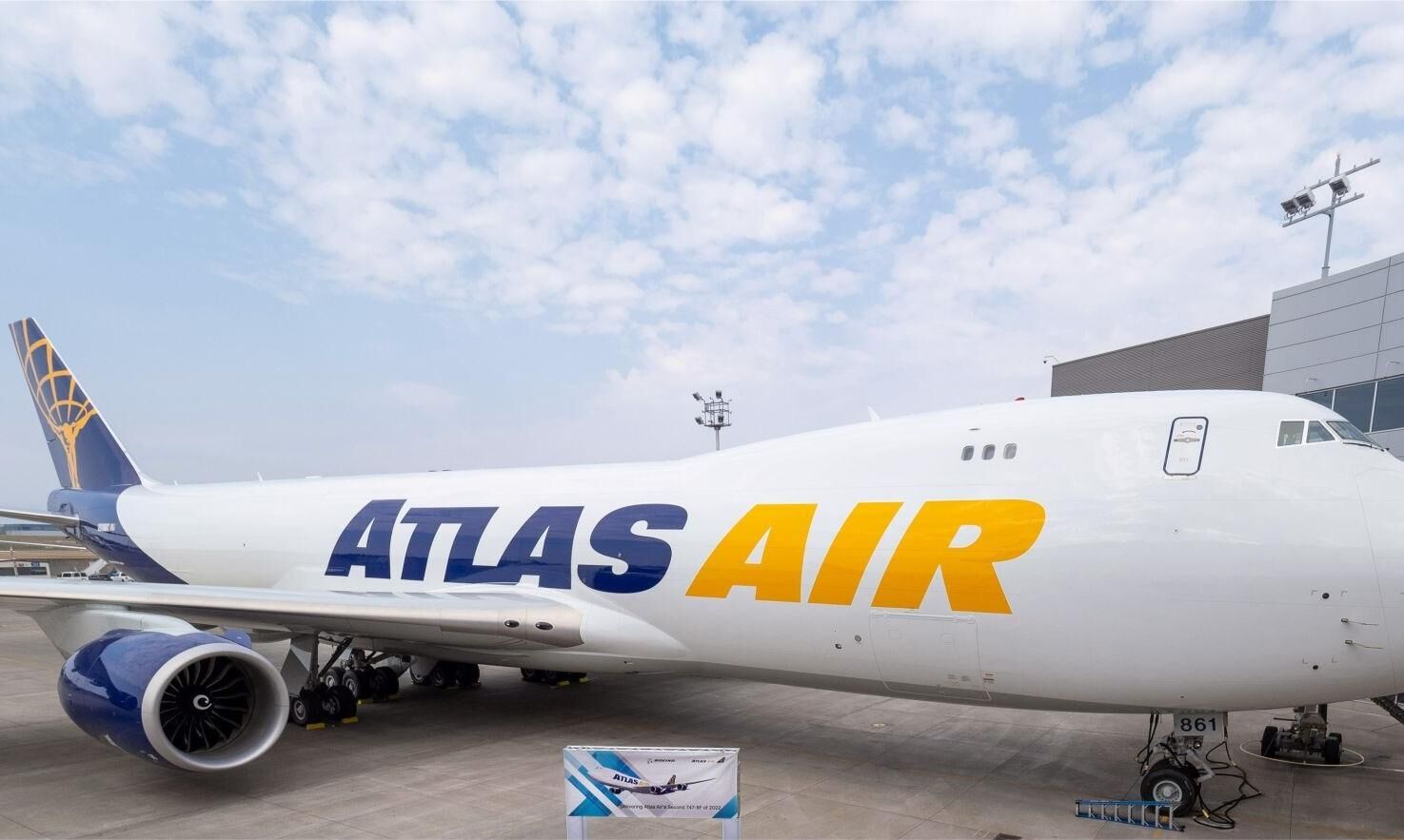
Atlas Air Worldwide is currently valued at approximately $5.2 billion, a figure established by its 2023 acquisition by an investor group led by Apollo Global Management. As a private entity in 2026, its net worth is anchored in its massive fleet of Boeing 747 and 777 freighters and its dominant position in global ACMI (Aircraft, Crew, Maintenance, and Insurance) leasing.
The Foundation of Atlas Air Worldwide’s Valuation
To understand the net worth of Atlas Air Worldwide in 2026, one must look back at the pivotal transition the company made from a publicly traded entity to a private powerhouse. In March 2023, the company was acquired for approximately $5.2 billion, including the assumption of debt. This transaction effectively set the "floor" for the company's valuation.
Unlike public companies whose net worth (market capitalization) fluctuates daily based on stock market sentiment, Atlas Air’s value in 2026 is determined by its enterprise value. This encompasses its equity value plus its total debt, minus cash and cash equivalents. Under the ownership of Apollo Global Management, alongside J.F. Lehman & Company and Hill City Capital, the company has focused on aggressive fleet modernization and long-term contract stability, which analysts suggest has maintained or increased its intrinsic value despite the volatile nature of the aviation industry.
The valuation is not merely a reflection of bank balances but is heavily weighted by physical assets. Atlas Air operates the world’s largest fleet of Boeing 747 freighter aircraft. In a global economy where "main-deck" cargo capacity is scarce, the ownership of these specialized assets provides a massive "moat" that protects the company's net worth.
From Public to Private: The 2023 Acquisition Explained
The journey to Atlas Air’s current financial status began with the 2023 take-private deal. The investor group paid $102.50 per share in cash, representing a 57% premium over the 30-day volume-weighted average price prior to the announcement. This move was strategic; by moving away from the quarterly scrutiny of the stock market, Atlas Air gained the flexibility to invest in long-term capital-intensive projects, such as purchasing the final Boeing 747-8 freighters ever produced.
As of 2026, being a private company means Atlas Air does not disclose its full balance sheet to the public. However, the nature of private equity ownership implies a focus on EBITDA growth (Earnings Before Interest, Taxes, Depreciation, and Amortization). By optimizing operations and securing long-term wet-lease contracts with giants like Amazon, DHL, and various global governments, the company has solidified its revenue predictable, which is a primary driver of institutional valuation.
The Business Model: Generating Billion-Dollar Revenue
The net worth of Atlas Air Worldwide is sustained by a diversified and robust business model. They do not just fly planes; they provide the infrastructure for global trade. Their revenue streams are divided into three primary categories, each contributing differently to the company’s overall value.
ACMI (Wet Leasing)
ACMI stands for Aircraft, Crew, Maintenance, and Insurance. In this model, Atlas Air provides the aircraft and all operational components to a customer, who then pays for the flight hours and provides the fuel. This is the "bread and butter" of the company. It provides high-margin, predictable cash flow because the contracts often span several years. In 2026, the demand for ACMI remains high as e-commerce companies seek to control their own logistics chains without the overhead of operating an airline.
CMI (Charter, Maintenance, and Insurance)
In CMI agreements, the customer provides the aircraft (often their own branded planes), and Atlas Air provides the operational expertise. This is most notably seen in their relationship with DHL. This model is capital-light for Atlas because they do not have to own the planes, which improves their Return on Invested Capital (ROIC) and boosts the company’s net worth by reducing debt exposure related to aircraft purchases.
Cargo Charter
Charter services are more volatile but offer significant upside during "peak seasons" or global supply chain disruptions. When sea freight is congested or urgent medical/technological supplies need to move, charter rates skyrocket. Atlas Air’s ability to deploy the 747-8F, with its unique nose-loading capability, allows them to charge a premium for outsized cargo that competitors cannot carry.
Asset Valuation: The Power of the Boeing 747 Fleet
A significant portion of Atlas Air Worldwide’s net worth is tied to its fleet. In the world of aviation, aircraft are depreciating assets, but certain models hold their value better than others due to utility and scarcity.
Atlas Air is the definitive leader in 747 operations. While many passenger airlines retired the "Queen of the Skies," it remains the gold standard for freight. The 747-8F and 747-400F models allow for "nose-loading," enabling the transport of exceptionally long pieces of equipment—such as oil pipes, aircraft wings, or large machinery—that cannot fit through the side doors of a Boeing 777 or Airbus A350 freighter.
| Aircraft Type | Estimated Market Value (2026) | Role in Portfolio |
|---|---|---|
| Boeing 747-8F | $150M - $180M (Newer units) | Flagship long-haul, nose-loading capability |
| Boeing 747-400F | $30M - $50M (Age dependent) | Workhorse of the global fleet |
| Boeing 777F | $140M - $160M | Fuel-efficient, twin-engine long-haul |
| Boeing 767-300F | $25M - $35M | Regional and e-commerce (Amazon) |
By 2026, Atlas Air has continued to transition its fleet toward more fuel-efficient twin-engine aircraft like the Boeing 777F to mitigate rising fuel costs and environmental regulations. However, the retention of the 747-8F fleet ensures they maintain a monopoly-like grip on specific heavy-lift market segments, which is a major component of their $5.2 billion+ valuation.
Market Factors Influencing Net Worth in 2026
The valuation of a global logistics firm is never static. Several external factors have shaped Atlas Air's financial standing as we move through 2026:
- E-commerce Dominance: The continued growth of cross-border e-commerce, driven by platforms like Temu, Shein, and Amazon, has created a "perpetual peak season" for air cargo. Atlas Air’s long-term contracts with these entities provide a "valuation floor."
- Geopolitical Stability and Supply Chain Shifts: As companies move manufacturing away from a "China-only" strategy to "China Plus One" (investing in Vietnam, India, and Mexico), the complexity of logistics increases. Atlas Air thrives on this complexity, providing the flexible capacity needed to bridge new trade lanes.
- Fuel Prices and Sustainability: While fuel is often a "pass-through" cost in ACMI contracts, high fuel prices can dampen overall demand. Atlas Air’s investment in Sustainable Aviation Fuel (SAF) and more efficient 777 freighters helps protect its margins.
- Interest Rates: As a private equity-backed company, Atlas Air carries significant debt used to fund the 2023 acquisition. In the interest rate environment of 2026, the company’s ability to service this debt while maintaining capital expenditures (CAPEX) for new planes is a critical metric for its "net worth" from an investor's perspective.
The Role of Subsidiaries: Polar Air Cargo and Titan Aviation
Atlas Air Worldwide Holdings is more than just one airline. Its net worth is a composite of several entities:
- Atlas Air, Inc.: The primary operating airline.
- Polar Air Cargo: A joint venture with DHL Express. Polar provides a scheduled service network that links major economic hubs. This partnership is vital because it guarantees high utilization rates for the aircraft assigned to it.
- Titan Aviation: The company’s dry-leasing wing. Unlike ACMI, dry leasing involves only the aircraft without the crew or maintenance. This allows Atlas to generate passive income from aircraft assets, further diversifying its revenue base and protecting its valuation against labor strikes or pilot shortages.
Financial Risk Management
For a company with a multi-billion dollar valuation, risk management is synonymous with value preservation. In 2026, Atlas Air faces several financial hurdles that its leadership must navigate to maintain its net worth:
- Pilot Labor Agreements: Labor is the largest controllable expense after fuel. Ensuring stable, long-term contracts with the pilots' union (ALPA) is essential to prevent operational disruptions that could devalue the brand.
- Regulatory Compliance: New carbon emissions standards in Europe and North America require significant investment. Companies that fail to adapt see their valuations slashed as "brown" assets become liabilities. Atlas Air's proactive fleet renewal strategy is a direct response to this risk.
- Debt Covenants: Under private ownership, the company must meet specific financial ratios. A failure to do so could give creditors more control, potentially impacting the equity value held by Apollo and its partners.
Professional Financial Disclosure
Disclaimer: The financial figures and valuations discussed regarding Atlas Air Worldwide are based on the 2023 acquisition price, historical financial filings prior to the company going private, and current 2026 market analysis for the air cargo industry. Because Atlas Air is a private company, these figures represent estimated enterprise values and are intended for informational purposes only. This analysis does not constitute investment advice or an offer to buy or sell securities.
Frequently Asked Questions
Is Atlas Air Worldwide still a public company?
No, Atlas Air Worldwide was taken private in March 2023. It was acquired by a group led by Apollo Global Management, J.F. Lehman & Company, and Hill City Capital. It no longer trades on the NASDAQ, and as of 2026, it remains a private entity.
Who is the CEO of Atlas Air in 2026?
Following the retirement of long-time leaders, Atlas Air has been managed by executive leadership appointed by the private equity owners. Michael Steen, who took over as CEO around the time of the acquisition, has been a central figure in steering the company through its private phase, focusing on strategic partnerships and fleet modernization.
How does Atlas Air’s net worth compare to FedEx or UPS?
While Atlas Air has a significant valuation of over $5 billion, it is much smaller than integrated giants like FedEx or UPS, which have market capitalizations in the tens or hundreds of billions. However, Atlas Air is a "niche" leader; while FedEx and UPS focus on small parcels and "last-mile" delivery, Atlas focuses on heavy "mid-mile" international bulk freight and ACMI leasing, where it often outperforms the giants in specialized capacity.
Does Amazon own part of Atlas Air?
Amazon has historically held warrants to acquire equity in Atlas Air Worldwide as part of their operating agreement. While the 2023 take-private deal changed the structure of these holdings, Amazon remains one of Atlas Air's most significant customers. The relationship is symbiotic: Atlas provides the heavy lifting for Amazon Air's global expansion.
Why is the Boeing 747 so important to Atlas Air's value?
The 747 is unique because of its payload capacity and nose-loading door. Since Boeing has ceased production of the 747, the existing fleet has become "finite." This scarcity makes the aircraft more valuable over time for specific types of cargo, such as large aerospace components or emergency relief supplies, giving Atlas a competitive edge that directly inflates its net worth.
Summary Recommendation for Interested Parties
For those tracking the financial health and net worth of Atlas Air Worldwide in 2026, the primary metric to follow is global air freight ton-kilometers (FTKs). As long as global trade remains robust and e-commerce continues its upward trajectory, Atlas Air’s valuation is likely to remain stable or grow.
Investors or analysts looking for a deeper understanding of this sector should monitor the quarterly reports of DHL (Deutsche Post DHL Group), as their partnership with Atlas through Polar Air Cargo and CMI agreements serves as a bellwether for Atlas's own performance. Additionally, tracking the secondary market prices for Boeing 777 freighters will provide insight into the "liquid" value of Atlas’s evolving fleet.