Atlas Energy in the power market refers primarily to two major entities: Atlas Renewable Energy, a leading developer of utility-scale wind and solar projects, and Atlas Corp (specifically its subsidiary APR Energy), which focuses on fast-track mobile power solutions. These organizations provide critical grid stability, sustainable energy generation, and rapid-response electricity infrastructure across global energy markets.
Navigating the Disambiguation: Who is "Atlas Energy" in Power?
To understand the role of "Atlas Energy" in the power market as of 2026, it is essential to distinguish between several companies that share the name but operate in different verticals. The energy sector is often crowded with similar branding, which can lead to confusion regarding investment profiles and operational capabilities.
Atlas Renewable Energy
This is the most prominent entity when discussing the "power market" in terms of generation and the transition to clean energy. Founded in 2017 and later acquired by Global Infrastructure Partners (GIP), Atlas Renewable Energy operates as an Independent Power Producer (IPP). They specialize in the development, financing, and operation of renewable energy projects, primarily in Latin America, but with increasing influence in North American and European advisory circles. Their focus is on long-term Power Purchase Agreements (PPAs) with large industrial consumers.
Atlas Corp (and APR Energy)
Formerly listed on the NYSE before being taken private by Poseidon Acquisition Corp, Atlas Corp is the holding company for APR Energy. Unlike renewable developers, APR Energy operates in the "fast-track" power market. This involves the rapid deployment of mobile gas turbines and power plants to regions experiencing energy crises, natural disasters, or temporary supply-demand imbalances. When the power market requires immediate capacity to prevent blackouts, this Atlas entity is the primary responder.
Atlas Energy Solutions (AESI)
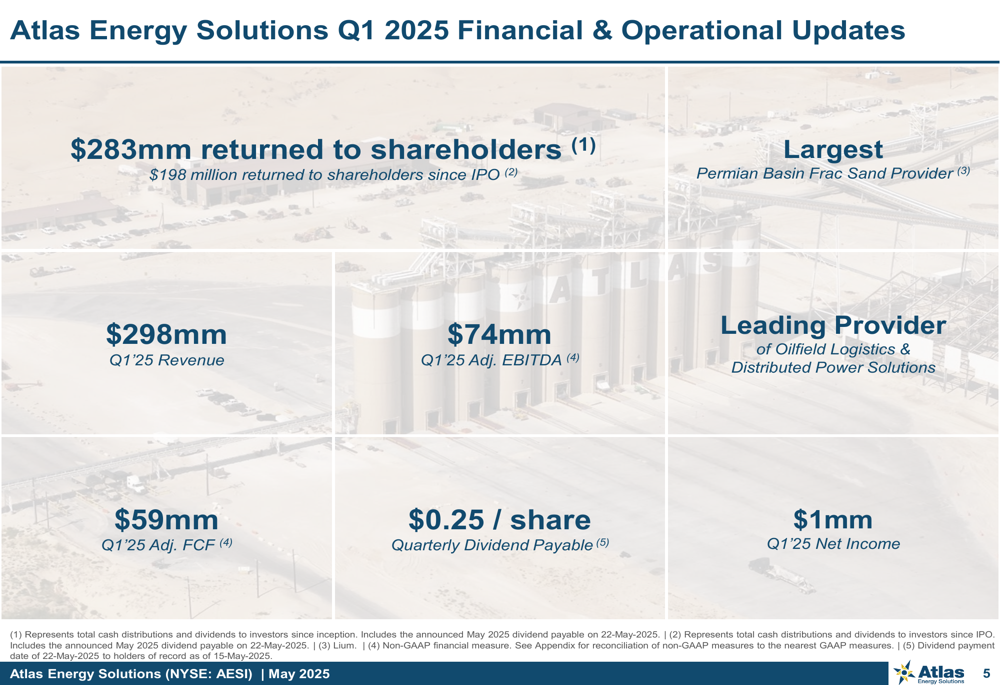
It is vital to note that Atlas Energy Solutions Inc. (ticker: AESI) is a distinct entity primarily focused on the proppant (sand) and logistics side of the oil and gas industry, specifically in the Permian Basin. While they are a massive player in the broader "energy" sector, their participation in the "power market" is indirect—principally as a consumer of high-voltage power for their automated sand plants and electric dredging operations rather than a seller of electricity to the grid.
Atlas Renewable Energy: Driving the Low-Carbon Transition
In the 2026 power market, Atlas Renewable Energy has solidified its position as a dominant force in the decarbonization of industrial supply chains. The company’s strategy revolves around the "Green PPA," a financial and physical contract that allows large-scale enterprises to hedge against volatile electricity prices while meeting ESG (Environmental, Social, and Governance) mandates.
Core Market Strategy and Industrial PPAs
Most traditional power players focus on government-led auctions. Atlas Renewable Energy, however, pioneered the shift toward the Corporate and Industrial (C&I) sector. By 2026, the demand for green energy from data centers, mining operations, and heavy manufacturing has reached an all-time high. Atlas addresses this by providing bespoke energy solutions that include:
- Price Certainty: Long-term contracts (often 15–20 years) that protect corporations from the price spikes seen in merchant power markets.
- Additionality: Ensuring that the corporate investment directly leads to the construction of new renewable capacity, rather than just buying credits from existing plants.
- 24/7 Carbon-Free Energy: Utilizing hybrid solar-plus-storage configurations to provide a more consistent energy profile that mimics baseload power.
Geographical Footprint and Key Projects
While headquartered in the United States, Atlas Renewable Energy’s operational heart remains in Latin America, specifically in Brazil, Chile, and Mexico.
- Brazil: Atlas operates some of the largest solar parks in the country, such as the Lar do Sol project, which supplies energy to multinational mining giants. The Brazilian market's high solar irradiation makes it a cornerstone of their portfolio.
- Chile: In the Atacama Desert, Atlas utilizes bifacial module technology to capture reflected light from the ground, significantly increasing the yield of their utility-scale plants.
- Expansion into BESS: By 2026, nearly all new Atlas projects include a Battery Energy Storage System (BESS). This allows the company to participate in ancillary services markets, providing frequency regulation and voltage support to national grids.
Technical Specifications and Infrastructure
The technical prowess of Atlas Energy entities defines their reliability in the power market. Whether it is the efficiency of a solar cell or the heat rate of a mobile turbine, these metrics dictate their competitiveness in competitive bidding processes.
| Feature | Atlas Renewable Energy (Solar/Wind) | Atlas Corp (APR Energy - Mobile Power) |
|---|---|---|
| Primary Technology | Bifacial PV Modules, 1P/2P Trackers | GE TM2500 Mobile Gas Turbines |
| Response Time | Milliseconds (with BESS integration) | 30–90 days for full plant commissioning |
| Typical Capacity | 50MW to 500MW+ per site | 20MW to 500MW (scalable units) |
| Market Role | Long-term decarbonization & baseload | Emergency capacity & grid bridging |
| Fuel Source | Solar, Wind, Lithium-Ion Storage | Natural Gas, LPG, Diesel, Hydrogen-ready |
| Key Metric | LCOE (Levelized Cost of Energy) | Availability and "Time-to-Power" |
The Role of Bifacial Modules and Tracking Systems
In their solar installations, Atlas utilizes bifacial technology. Unlike standard panels, bifacial modules capture sunlight on both sides. When paired with horizontal single-axis trackers (HSAT), these systems follow the sun's trajectory throughout the day. In the high-albedo environments where Atlas operates (such as the sandy regions of Chile), this can result in a 15–25% increase in total energy harvest compared to fixed-tilt monofacial systems.
Atlas Corp & APR Energy: The "Bridge" to Grid Stability
While the world moves toward renewables, the power market of 2026 still faces significant intermittency challenges. This is where Atlas Corp’s APR Energy provides value. They operate in the "Fast-Track Power" niche, which is essential for several reasons:
Emergency Response and Disaster Recovery
When hurricanes, earthquakes, or conflicts disrupt permanent infrastructure, the power market needs immediate replacement capacity. APR Energy’s fleet of trailer-mounted turbines can be transported via sea or air and synchronized with a local grid in a fraction of the time it takes to repair a traditional coal or nuclear plant.
Bridging the Gap for Renewables
As more renewable energy enters the grid, there is often a "generation gap" during the construction of permanent transmission lines or large-scale storage. APR Energy provides "bridge power"—temporary gas-to-power solutions that ensure the lights stay on while the long-term green infrastructure is being finalized.
The Hydrogen Transition
As of 2026, APR Energy has begun upgrading its mobile turbine fleet to be hydrogen-capable. This allows the company to offer "temporary green power" by burning green hydrogen or a hydrogen-natural gas blend, reducing the carbon footprint of emergency power interventions.
Market Dynamics: How Atlas Energy Navigates 2026 Regulations
The power market in 2026 is governed by stricter carbon border adjustment mechanisms (CBAM) and localized renewable energy mandates. Atlas Energy entities must navigate complex regulatory landscapes to remain profitable.
- Merchant Market Participation: In many jurisdictions, Atlas sells excess power directly into the spot market. This requires sophisticated AI-driven forecasting tools to predict weather patterns and price fluctuations, ensuring that battery discharge occurs during peak pricing windows.
- Renewable Energy Certificates (RECs): Atlas leverages the sale of RECs and I-RECs (International Renewable Energy Certificates). These are liquid assets in the power market that allow corporations to claim "green" status even if they are not physically connected to an Atlas power plant.
- Grid Code Compliance: As the percentage of inverter-based resources (IBRs) increases, grid operators have tightened "grid code" requirements. Atlas has invested heavily in smart inverters and synchronous condensers to ensure their plants provide the necessary inertia to keep the grid stable during frequency excursions.
Financial Structures and Investment Profile
Understanding "Atlas Energy" also requires a look at the financial vehicles powering these projects. In the 2026 power market, capital intensive energy projects rely on varied financing models:
- Project Finance: Most Atlas Renewable Energy sites are "non-recourse" project-financed, meaning the debt is secured by the project's assets and the PPA revenue stream rather than the parent company’s balance sheet.
- The GIP Influence: Being owned by Global Infrastructure Partners gives Atlas Renewable Energy access to vast "dry powder" (available capital). This allows them to outbid smaller developers who may struggle with the higher interest rates of the mid-2020s.
- Tax Equity and Incentives: In the U.S. market, Atlas utilizes Investment Tax Credits (ITC) and Production Tax Credits (PTC) to lower the total cost of deployment, making their power more competitive against traditional gas-fired generation.
Common Challenges and Troubleshooting in Power Market Integration
Despite their success, Atlas entities face operational hurdles that are common in the modern power market:
- Transmission Bottlenecks: A project may be completed, but the grid lacks the capacity to "evacuate" the power. Atlas often has to build its own substations and high-voltage transmission lines to connect to the national backbone.
- Supply Chain Volatility: The cost of lithium for BESS and silver for solar cells remains a risk. Atlas manages this through multi-year procurement frameworks with Tier-1 manufacturers.
- Regulatory Shifts: Changes in "wheeling charges" (the cost of moving power across a third-party grid) can significantly impact the net revenue of a PPA. Atlas employs massive legal and regulatory teams to lobby for and adapt to these changes.
Frequently Asked Questions
Is Atlas Energy a public company?
In 2026, the status depends on which "Atlas" you refer to. Atlas Energy Solutions (AESI) is a publicly traded company on the NYSE. However, Atlas Renewable Energy is privately held by Global Infrastructure Partners (GIP). Atlas Corp (parent of APR Energy) was taken private in 2023. Investors looking for exposure to Atlas in the power market typically do so through the infrastructure funds that own them.
What is the difference between Atlas Energy and Atlas Renewable Energy?
"Atlas Energy" is a broad term often used interchangeably with several companies. Historically, Atlas Energy was a name associated with oil and gas E&P (Exploration and Production). Today, the "Atlas" most relevant to the power market is Atlas Renewable Energy, which focuses exclusively on wind, solar, and battery storage.
Does Atlas Energy provide residential solar?
No. Both Atlas Renewable Energy and APR Energy operate exclusively in the utility-scale and industrial markets. They do not offer rooftop solar for homes or small business retail electricity plans. Their clients are typically national grids or massive corporations like Google, BHP, or Dow Chemical.
How does Atlas Energy support grid reliability?
They support reliability through two different methods: Atlas Renewable Energy uses Battery Energy Storage Systems (BESS) to smooth out the intermittency of solar and wind. APR Energy (Atlas Corp) provides mobile gas turbines that can be deployed within weeks to provide large-scale backup power during grid failures or peak demand seasons.
Where is Atlas Energy most active in 2026?
Atlas Renewable Energy is most active in Brazil and Chile, with a growing presence in the United States and Spain. APR Energy maintains a global fleet, with significant operations in Southeast Asia, Africa, and the Caribbean, where grid infrastructure is often in need of temporary reinforcement.
Practical Recommendations for Stakeholders
For those looking to engage with "Atlas Energy" in the power market, the following actions are recommended:
- For Corporate Energy Buyers: If your goal is to decarbonize operations in Latin America or the Southern US, Atlas Renewable Energy is a primary candidate for a long-term PPA. Ensure your legal team is familiar with "Take-or-Pay" structures common in their contracts.
- For Grid Operators: APR Energy should be kept on the "shortlist" for contingency planning. Their ability to deploy 100MW+ of capacity in under 90 days is a vital tool for managing seasonal deficits or aging infrastructure risks.
- For Investors: Monitor the movements of Global Infrastructure Partners (GIP) and BlackRock (which acquired GIP in 2024). The strategic direction of Atlas Renewable Energy is now dictated by these mega-managers, focusing on "Total Energy Solutions" rather than just simple generation.
The 2026 power market is defined by the tension between the need for rapid decarbonization and the absolute requirement for grid reliability. Through its various entities, "Atlas" addresses both sides of this equation—driving the transition with renewables while securing the present with mobile, fast-track power solutions.