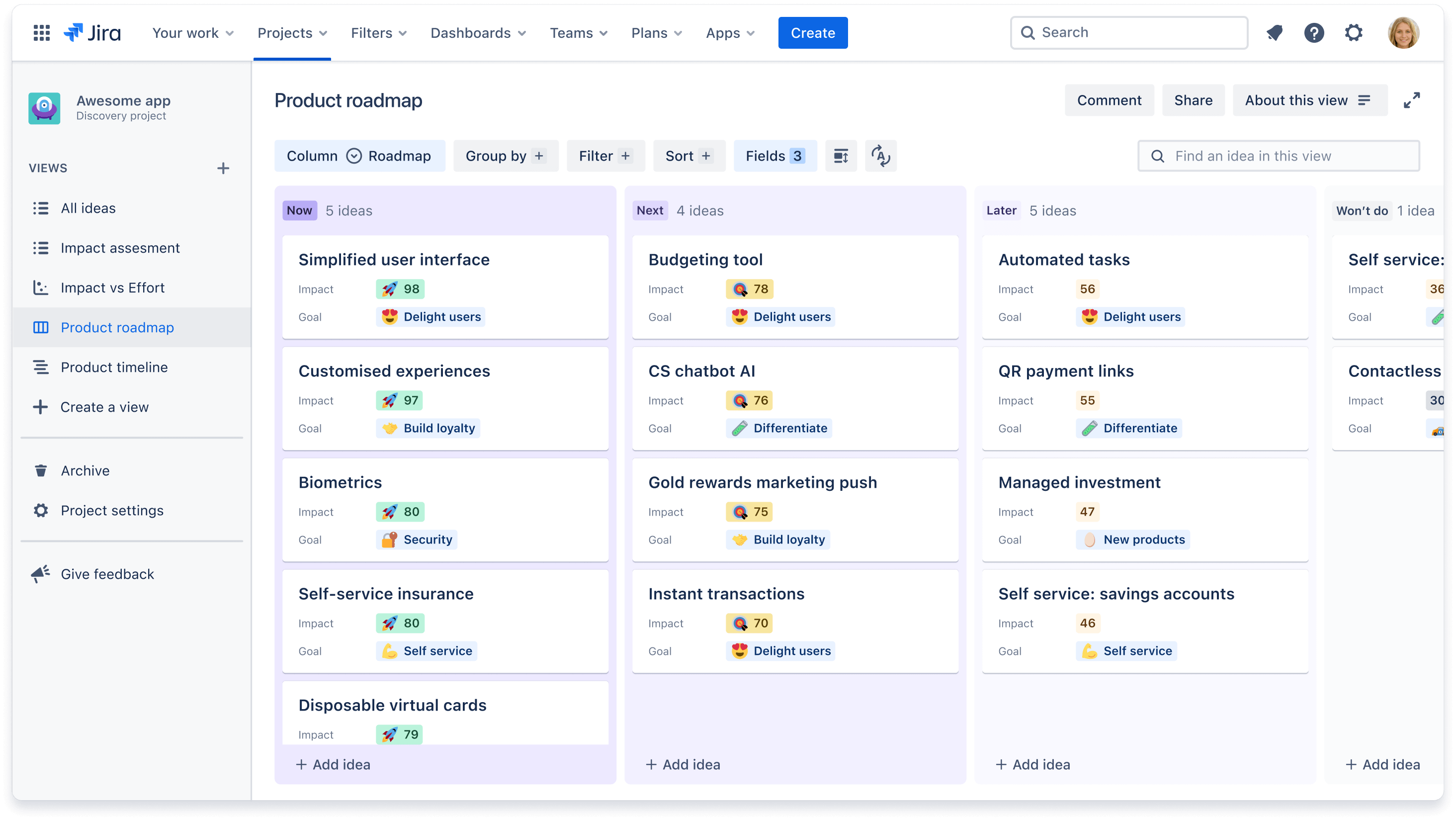
Atlassian product management is a holistic methodology that integrates specific Agile frameworks with a suite of interconnected tools like Jira Product Discovery, Confluence, and Jira. It focuses on bridging the gap between high-level strategy and technical execution, enabling teams to prioritize outcomes over outputs through data-driven discovery and transparent collaboration.
For modern product managers (PMs), the Atlassian ecosystem represents more than just a set of applications; it is a philosophy of "open work." By 2026, this ecosystem has evolved into an AI-augmented environment where product discovery, requirement gathering, and delivery are no longer siloed activities. Instead, they form a continuous loop supported by automation and centralized intelligence. Understanding Atlassian product management requires a deep dive into how these tools facilitate the product lifecycle from initial ideation to post-launch optimization.
The Philosophy of the Atlassian Product Management Lifecycle
At the core of the Atlassian approach is the "Team Playbook," a collection of strategies designed to improve team health and project clarity. Unlike traditional product management, which often relies on top-down directives, the Atlassian way emphasizes shared understanding and iterative learning.
Moving from Output to Outcome
The primary shift in the Atlassian framework is the focus on outcomes. In many legacy systems, success is measured by how many features are shipped (output). In the Atlassian ecosystem, the focus is on the value those features provide to the user (outcome). This is facilitated by Jira Product Discovery (JPD), which allows PMs to capture ideas and rank them based on custom impact-versus-effort scores. By decoupling the "discovery" phase from the "delivery" phase, teams avoid the trap of building features that no one wants.
The Power of Open Work
Atlassian advocates for "open work," meaning that documentation, roadmaps, and progress are visible to everyone in the organization. This transparency reduces the need for status meetings and fosters an environment where cross-functional teams—engineering, design, and marketing—can contribute to the product vision early in the cycle. Confluence serves as the "source of truth," where the "why" behind every product decision is documented and accessible.
The Core Software Stack for Product Managers in 2026
To manage a product effectively within this ecosystem, PMs must master a specific set of tools. By 2026, these tools have become deeply integrated through the Atlassian Intelligence (AI) layer, which automates routine tasks and provides predictive insights.
Jira Product Discovery (The Ideation Hub)
Jira Product Discovery is the dedicated workspace for the "upstream" part of product management. It is where PMs manage their backlog of ideas rather than their backlog of tasks.
- Idea Capture: PMs use browser extensions and integrations (like Slack or Microsoft Teams) to funnel feedback directly into JPD.
- Prioritization Matrix: Teams use weighted scoring models to objectively compare different opportunities.
- Roadmapping: Unlike delivery roadmaps, discovery roadmaps in JPD are often theme-based, focusing on problems to be solved in the "Now," "Next," and "Later."
Confluence (The Strategic Documentation Center)
If Jira is the engine, Confluence is the cockpit. For a PM, Confluence is where the Product Requirements Document (PRD) lives.
- Collaborative Editing: Stakeholders can comment directly on requirements, ensuring alignment before a single line of code is written.
- Decision Logs: A critical component of the Atlassian Way, decision logs track why certain paths were taken, preventing "circular arguments" months later.
- Whiteboards: Integrated visual brainstorming tools allow teams to map user journeys and flowcharts that sync directly with Jira issues.
Jira (The Execution Engine)
Jira remains the industry standard for task management and execution. In the context of product management, it transforms high-level ideas into actionable Epics, User Stories, and Tasks.
- Dynamic Links: An idea in JPD can be converted into a Jira Epic with one click, maintaining a permanent link between the "why" (discovery) and the "how" (delivery).
- Advanced Roadmaps: This feature allows PMs to plan across multiple teams, managing dependencies and capacity to ensure realistic launch dates.
Atlassian Rovo and AI Integration
New for the 2026 landscape is Atlassian Rovo, an AI-powered agent that acts as a specialized assistant for PMs. Rovo can search across disparate data sources (SaaS apps, Google Drive, Slack) to find relevant product context, draft release notes, and even identify potential risks in a project timeline based on historical team velocity.
Step-by-Step: The Atlassian Product Management Workflow
Navigating the lifecycle requires a disciplined transition between phases. Following this verified workflow ensures that the product remains aligned with user needs while maintaining technical feasibility.
Phase 1: Continuous Discovery
Discovery is not a one-time event but a continuous process. PMs gather qualitative data from user interviews and quantitative data from analytics.
- Capture: All feedback is sent to Jira Product Discovery.
- Cluster: Similar feedback points are grouped into "Ideas."
- Validate: Using the Team Playbook's "Pre-mortem" or "Customer Interview" plays, PMs validate the most promising ideas.
Phase 2: Strategic Definition
Once an idea is validated, it moves into Confluence. The PM drafts a PRD using standardized templates. This document includes the problem statement, goals, user stories, and success metrics (KPIs). At this stage, the Atlassian Whiteboard is often used to visualize the user flow, which is then embedded directly into the Confluence page.
Phase 3: Delivery Planning
With the PRD finalized, the PM creates an Epic in Jira. This Epic is linked back to the original Discovery idea to ensure the development team understands the context. The PM then works with the engineering lead to break the Epic into manageable User Stories and Sprints.
Phase 4: Execution and Monitoring
During the build phase, the PM monitors progress through Jira Dashboards. These dashboards provide real-time visibility into sprint health, cycle time, and potential bottlenecks. If a delay occurs, the PM updates the Roadmap, which automatically notifies stakeholders via Atlas, Atlassian’s teamwork directory.
Phase 5: Launch and Feedback Loop
Post-launch, the team uses Jira Service Management (JSM) to track incoming bugs and feature requests. This feedback is funneled back into the Discovery phase, starting the cycle over again.
Comparing Atlassian Tools for Product Management Roles
The following table outlines how different tools within the ecosystem serve specific product management functions.
| Function | Primary Tool | Key Benefit | Integration Point |
|---|---|---|---|
| Ideation & Prioritization | Jira Product Discovery | Objective scoring and feedback centralisation. | Links to Jira Epics for execution. |
| Strategy & Specs | Confluence | Centralized knowledge and PRD management. | Embeds Jira issues for live status updates. |
| Execution & Tracking | Jira | Granular task management and sprint planning. | Links to GitHub/Bitbucket for code visibility. |
| Cross-team Alignment | Atlas | High-level status reporting and "looping." | Aggregates data from Jira and Confluence. |
| Knowledge Discovery | Atlassian Rovo | AI-driven search and automated insights. | Accesses data across the entire Atlassian Cloud. |
| Visual Brainstorming | Atlassian Whiteboards | Collaborative mapping and journey flows. | Converts sticky notes directly into Jira issues. |
Advanced Strategies: Utilizing the Atlassian Team Playbook
One of the most overlooked aspects of "Atlassian Product Management Explained" is the human element. The Atlassian Team Playbook provides "plays" that are essential for high-performing product teams.
- Health Monitors: This is a self-assessment for teams to evaluate their performance against eight attributes of high-performing teams, such as "Balanced Team" and "Shared Understanding."
- Project Posters: A lean version of a PRD, a Project Poster helps define the problem space before committing to a full documentation cycle. It is highly effective for early-stage stakeholder buy-in.
- DACI Framework: PMs use this to clarify roles during a project: Driver, Approver, Contributors, and Informed. This prevents decision-making paralysis, a common hurdle in complex product environments.
Common Pitfalls in Atlassian Product Management
Despite the robustness of the tools, many teams fail due to preventable tactical errors.
- Tool Over-Configuration: Jira is highly customizable, but many PMs make the mistake of adding too many mandatory fields or complex workflows. This creates friction for developers and leads to "tool fatigue." Keep workflows as simple as possible.
- Siloed Discovery: Using Jira Product Discovery without involving the engineering team early on leads to "over-the-fence" handoffs. Engineers should have access to discovery insights to provide technical feasibility feedback during the ideation phase.
- Ignoring Documentation Debt: Confluence can quickly become a "data graveyard" if pages are not curated. PMs should use the "Archive" feature for outdated PRDs and maintain a strict page hierarchy to ensure information remains findable.
- Neglecting AI Accuracy: While Atlassian Intelligence (AI) is powerful in 2026, it is not infallible. PMs must verify AI-generated summaries of user feedback to ensure subtle nuances in customer sentiment are not lost.
Frequently Asked Questions
What is the difference between Jira and Jira Product Discovery?
Jira is designed for delivery—tracking the tasks, bugs, and sprints required to build software. Jira Product Discovery is designed for discovery—prioritizing ideas, gathering feedback, and deciding what to build next. While Jira manages the "How," JPD manages the "Why."
Can Atlassian tools support non-Agile product management?
Yes. While the ecosystem is built with Agile/Scrum in mind, tools like Jira and Confluence are flexible enough to support Waterfall, Kanban, or hybrid methodologies. The "Advanced Roadmaps" feature in Jira is particularly useful for long-term planning associated with Waterfall projects.
How does Atlassian Intelligence (AI) help Product Managers?
By 2026, Atlassian Intelligence assists PMs by summarizing long Confluence pages, drafting user stories based on PRDs, and identifying "blockers" in Jira by analyzing team communication patterns. It significantly reduces the administrative burden of the PM role.
Is Confluence necessary if we already use Jira?
While not strictly "necessary," it is highly recommended. Jira is excellent at tracking status, but it is poor at hosting long-form narrative content. Confluence provides the context, strategy, and research that Jira lacks, creating a complete picture for the team.
How do I manage a product roadmap across multiple teams in Atlassian?
The best way to do this is through Jira Plans (formerly Advanced Roadmaps). This allows you to pull issues from multiple boards and projects into a single timeline, visualize dependencies, and perform "what-if" scenario planning to see how changes affect the overall release date.
Expert Recommendation for 2026
To master Atlassian product management, start by auditing your current "Discovery-to-Delivery" pipeline. Most teams suffer from a "delivery-only" mindset where they move from idea to Jira ticket too quickly.
Your next action: Implement Jira Product Discovery as the mandatory entry point for all new features. Force every idea to earn its place in the delivery backlog through a standardized scoring model. Combine this with a monthly Team Health Monitor from the Playbook to ensure your processes are as healthy as the code you are shipping. By 2026, the competitive advantage lies not in who uses the most tools, but in who uses the Atlassian ecosystem to create the most transparent and data-backed decision-making process.