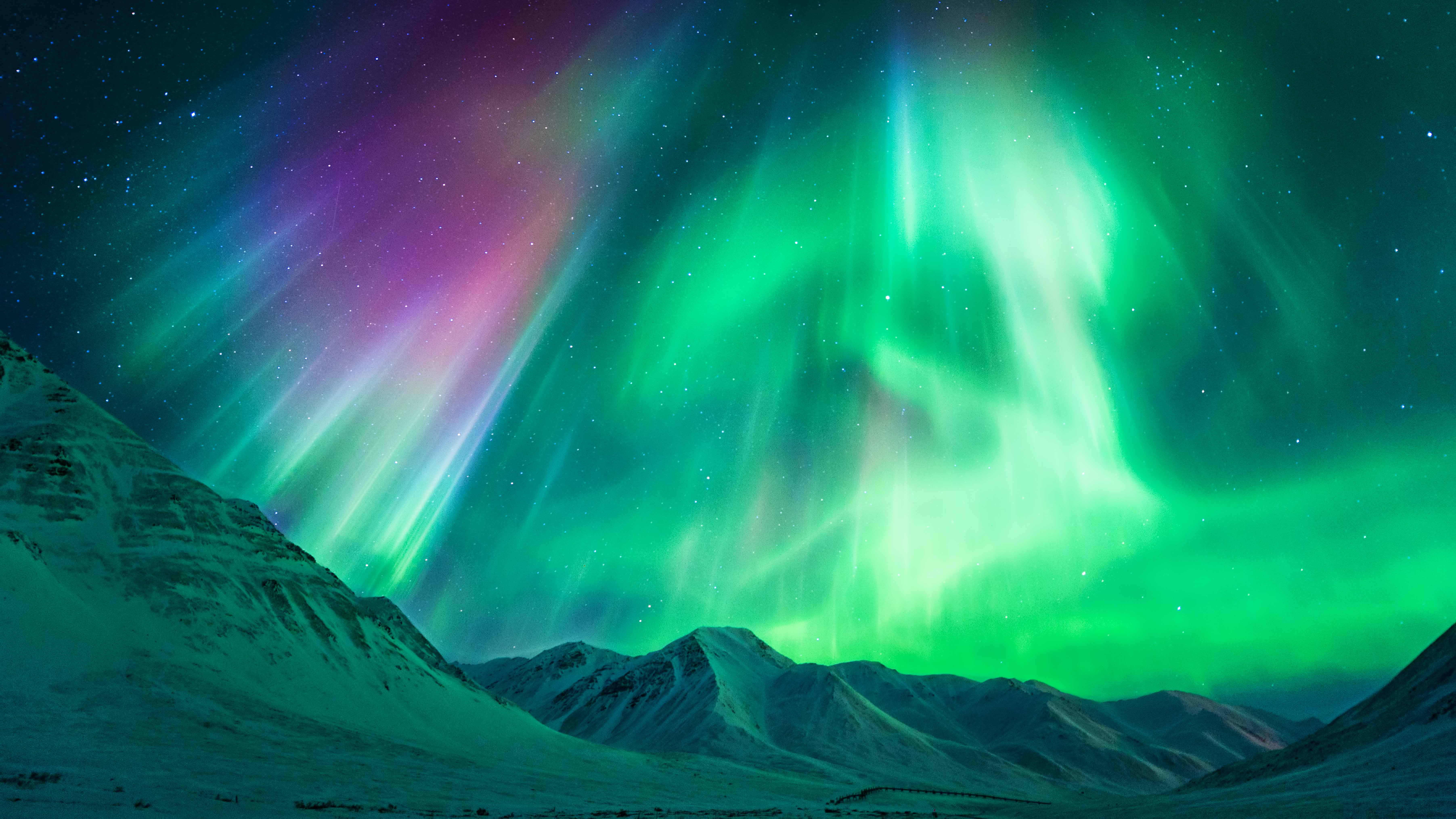
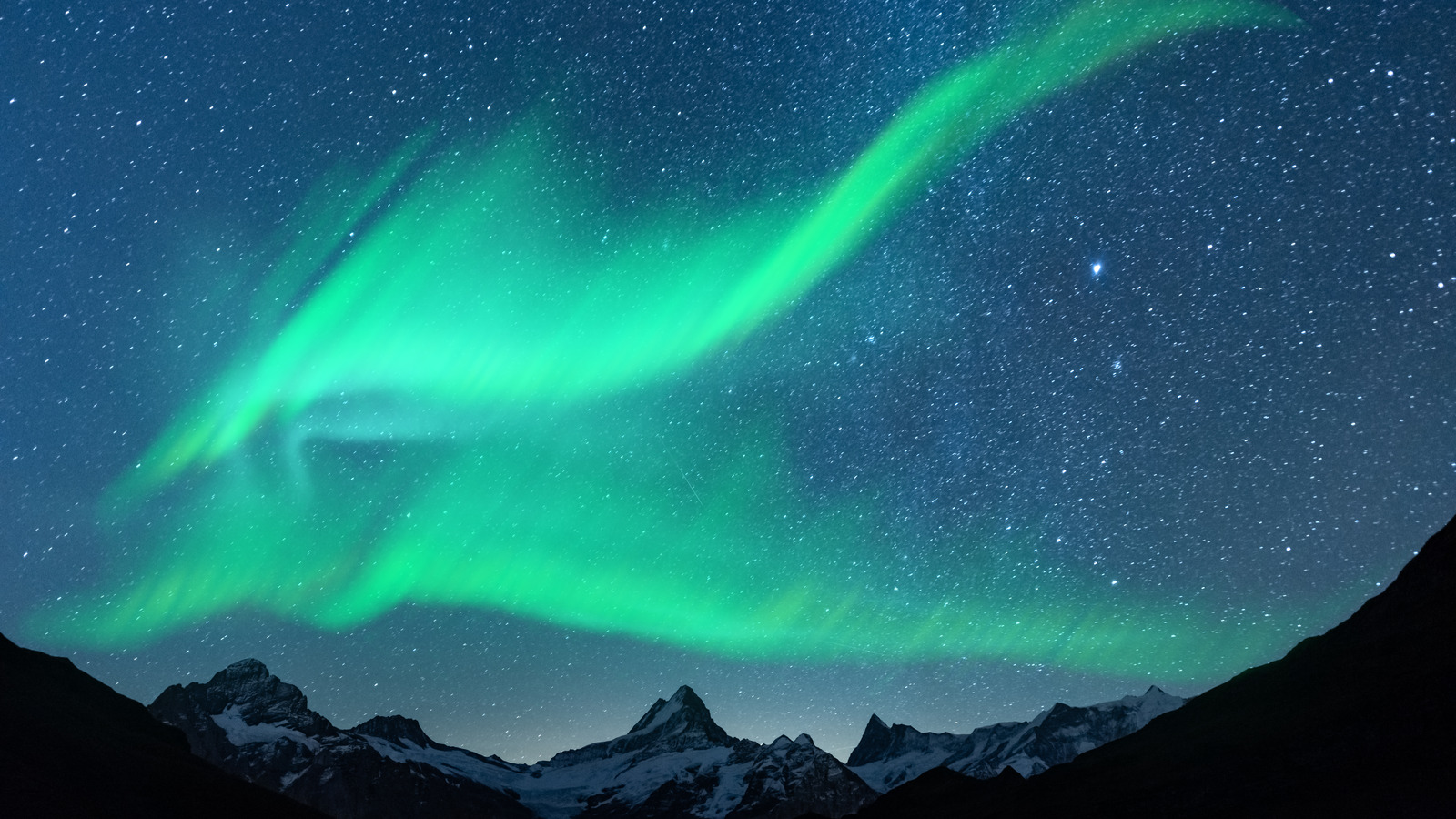
To experience the Arctic northern lights, travelers must position themselves within the "Auroral Oval"—typically between 65° and 72° North latitude—during the dark months from late September to early April. Success requires a combination of high solar activity, cloudless skies, and a location far from urban light pollution. In 2026, as we move into the post-maximum phase of Solar Cycle 25, the frequency of displays remains high, offering significant opportunities for observers across the circumpolar North.
The Aurora Borealis, or northern lights, represents one of the most profound interactions between our planet and the sun. While often viewed as a bucket-list travel item, the phenomenon is a complex geophysical event driven by solar wind and Earth’s magnetosphere. For those planning an expedition into the Arctic circle, understanding the mechanics, timing, and geographic nuances of the lights is essential for a successful sighting.
The Science of the Aurora: Solar Wind and Atmospheric Chemistry
The journey of the northern lights begins approximately 93 million miles away on the surface of the sun. The sun constantly emits the solar wind, a stream of charged particles (mostly electrons and protons). Periodically, more intense bursts of energy occur via Coronal Mass Ejections (CMEs) or solar flares. When these particles reach Earth, they are largely deflected by our magnetic field, but some become trapped and are funneled toward the magnetic poles.
As these high-energy particles enter the upper atmosphere in the Arctic, they collide with gas atoms and molecules. These collisions "excite" the atoms, causing them to release energy in the form of light. The specific color of the aurora depends on the type of gas being struck and the altitude at which the collision occurs:
- Green: This is the most common color. It is produced by oxygen molecules located roughly 60 to 150 miles above the Earth. Our eyes are most sensitive to green light, which is why even faint displays often appear green first.
- Red: Also produced by oxygen, but at much higher altitudes (above 150 miles). Red auroras are rarer and typically only appear during periods of intense solar activity.
- Blue and Purple: These hues are created by collisions with nitrogen. They are often seen in the lower fringes of the auroral curtains, usually below 60 miles.
- Pink/Yellow: These are often "mixed" colors, occurring when red and green auroras overlap or when nitrogen activity is particularly high during a geomagnetic storm.
In 2026, the sun is in the waning portion of Solar Cycle 25. While the "Solar Maximum" (the peak of the 11-year cycle) occurred around 2024–2025, the years immediately following the peak are historically excellent for aurora viewing. During this phase, "coronal holes" become more frequent, which produce high-speed solar wind streams that can trigger long-lasting and vibrant auroral displays even without major solar flares.
Prime Arctic Locations for Observation
The "Arctic" is a vast region, but not every northern location is equally suited for aurora chasing. To maximize your chances, you must be within the Auroral Oval, a permanent ring-shaped zone around the geomagnetic North Pole.
Scandinavia: Norway, Sweden, and Finland
Northern Scandinavia is perhaps the most popular region for aurora tourism due to the warming influence of the Gulf Stream, which keeps coastal temperatures more manageable than in the interior of Canada or Siberia.
- Tromsø, Norway: Often called the "Capital of the Arctic," Tromsø sits directly under the Auroral Oval. Its coastal location means weather can be volatile, but a vast network of inland valleys provides "micro-climates" where skies may be clear even if the city is cloudy.
- Abisko, Sweden: Home to the Abisko Sky Station, this location is famous for the "Blue Hole of Abisko." The surrounding mountains create a rain shadow, resulting in some of the clearest skies in the Arctic region.
- Finnish Lapland (Rovaniemi and Ivalo): Known for its glass igloo resorts, Finland offers a more forest-centric experience. The lack of mountains makes for wide, expansive horizons, ideal for capturing the scale of the lights.
North America: Alaska and Northern Canada
For those in the Western Hemisphere, Alaska and the Canadian territories provide some of the highest-frequency viewing opportunities in the world.
- Fairbanks, Alaska: Located in the "interior" of Alaska, Fairbanks is far from the coast, meaning it experiences very cold but very stable, clear weather throughout the winter. It is widely considered one of the best places in North America for consistent sightings.
- Yellowknife, Northwest Territories: Canada’s "Aurora Capital" boasts incredibly flat terrain and a high percentage of clear nights. The persistence of the lights here is legendary, with sightings occurring on more than 240 nights a year.
Iceland
While technically just south of the Arctic Circle (except for the island of Grímsey), the entire country of Iceland sits within the Auroral Oval. Iceland’s main challenge is its maritime climate; cloud cover is frequent, and wind speeds can be extreme. However, its dramatic volcanic landscapes provide unparalleled foregrounds for photography.
Timing Your Expedition: Seasons and Solar Cycles
The northern lights are technically active year-round, but they are only visible when the sky is sufficiently dark. This rules out the Arctic summer (May through August), when the "Midnight Sun" keeps the sky bright 24 hours a day.
The Best Months
The optimal viewing window spans from late September to early April. Within this window, the Equinoxes (late September and late March) are statistically the best times for geomagnetic activity. This is due to the "Russell-McPherron effect," where the orientation of Earth’s magnetic field aligns more favorably with the solar wind, making it easier for solar particles to enter our atmosphere.
The Role of the Moon
A common misconception is that you need a New Moon to see the aurora. While a dark sky makes faint auroras more visible, a partial moon can actually enhance the experience by illuminating the landscape (mountains, snow, trees) for photography. However, a Full Moon can wash out subtle colors, so most dedicated "chasers" prefer the weeks surrounding the New Moon.
Technical Requirements: Forecasting and the Kp-Index
Successful aurora hunting in 2026 relies heavily on real-time data. The primary metric used is the Kp-Index, which measures geomagnetic activity on a scale from 0 to 9.
- Kp 0-2: Quiet activity. Lights are usually confined to high latitudes (Northern Norway, Alaska).
- Kp 3-4: Moderate activity. Auroras become brighter, more active, and may move further south.
- Kp 5+: A geomagnetic storm. This is when the "dancing" curtains and coronas (overhead bursts) are most likely to occur.
Observers should monitor the NOAA Space Weather Prediction Center for three-day forecasts and thirty-minute "nowcasts." Additionally, local weather apps are vital. In the Arctic, "clear skies" are more important than a high Kp-index; you cannot see a Kp 9 storm through 100% cloud cover, but you can see a Kp 1 glow on a perfectly clear night.
Essential Gear and Survival in the Arctic
The Arctic environment in winter is unforgiving. Temperatures in places like Fairbanks or interior Lapland can drop to -30°C (-22°F) or lower. Proper preparation is a safety requirement, not just a comfort choice.
Clothing: The Layering System
- Base Layer: Moisture-wicking wool or synthetic (never cotton).
- Mid Layer: Heavy wool or fleece for insulation.
- Outer Layer: A high-quality, windproof, and waterproof parka and insulated trousers.
- Extremities: Liners inside heavy mittens (mittens are warmer than gloves), wool socks, and rated Arctic boots (e.g., Baffin or Sorel).
Photography Equipment
If you intend to document the lights, a smartphone is often insufficient unless the display is exceptionally bright. You will need:
- Camera with Manual Mode: A DSLR or mirrorless camera allows for long exposures.
- Wide-Angle, Fast Lens: A lens with an aperture of f/2.8 or wider (f/1.4 or f/1.8 is ideal) to let in maximum light.
- Sturdy Tripod: Long exposures (2 to 15 seconds) require the camera to be perfectly still.
- Spare Batteries: Cold weather drains lithium-ion batteries rapidly. Keep spares in an inner pocket close to your body heat.
Comparison of Top Arctic Aurora Destinations
| Destination | Typical Weather | Accessibility | Unique Feature |
|---|---|---|---|
| Tromsø, Norway | Volatile/Maritime | High (International Airport) | High-end infrastructure and fjords. |
| Fairbanks, USA | Very Cold/Stable | Moderate (Domestic flights) | Highest consistency in North America. |
| Abisko, Sweden | Clear/Dry | Moderate (Train/Small Airport) | The "Blue Hole" micro-climate. |
| Reykjavík, Iceland | Windy/Cloudy | High (International Hub) | Volcanic terrain and hot springs. |
| Yellowknife, Canada | Extreme Cold/Flat | Low (Regional flights) | 90%+ viewing success over 3 nights. |
Common Challenges and Troubleshooting
The most frequent obstacle to seeing the northern lights is cloud cover. Arctic weather systems move quickly. If your location is cloudy, the best course of action is "mobile chasing"—using satellite imagery to find gaps in the clouds and driving to those locations. Many professional tour operators specialize in this, often driving 100+ miles to find clear sky.
Another challenge is light pollution. Even a small village's streetlights can diminish the vibrancy of the aurora. Always aim for a north-facing view away from artificial light. Finally, patience is mandatory. The aurora can "switch on" for ten minutes and then vanish for three hours. Sustained observation is the only way to ensure you don't miss the peak of the display.
Frequently Asked Questions
Can I see the northern lights in the summer?
No. While the solar activity causing the aurora occurs year-round, the Arctic region experiences the "Midnight Sun" during the summer months. The sky remains too bright for the aurora to be visible to the naked eye from approximately May through August. The darkness required for viewing only returns in late August or early September.
What is the best month to see the aurora in 2026?
Statistically, March and September are the best months due to the equinox effect, which increases geomagnetic activity. However, for the most reliable snow conditions and dark skies, January and February are also excellent choices, provided you are prepared for the extreme cold of the deep Arctic winter.
Do I need a high Kp-index to see anything?
Not necessarily. In the heart of the Auroral Oval (like Tromsø or Fairbanks), a Kp-index of 1 or 2 is often enough to see a green arc in the sky. A high Kp-index (5 or higher) simply means the lights will be more active, potentially more colorful, and visible further south from the poles.
Are the lights always green?
To the naked eye, faint auroras often appear as a milky grey or light green "cloud." This is because human night vision is not optimized for color. However, during stronger displays, the green becomes vivid, and pinks or purples can become visible. Modern cameras are much more sensitive than the human eye and will capture colors that you might not perceive directly.
Does the cold weather make the lights better?
The temperature on the ground has no physical effect on the aurora, which occurs 60+ miles high in the thermosphere. However, extremely cold weather is often associated with high-pressure systems and clear skies. Therefore, while the cold doesn't "create" the lights, it often provides the clear conditions necessary to see them.
Final Recommendation for 2026 Travelers
For those planning a trip in 2026, prioritize flexibility. Book a stay of at least 4 to 5 nights to account for potential weather disruptions. Utilize professional forecasting tools like the Space Weather Live app and prioritize locations with known "micro-climates" like Abisko or the inland valleys of Northern Norway. Most importantly, dress for temperatures 10 degrees colder than the forecast suggests, as standing still for hours in the Arctic night requires exceptional thermal protection.