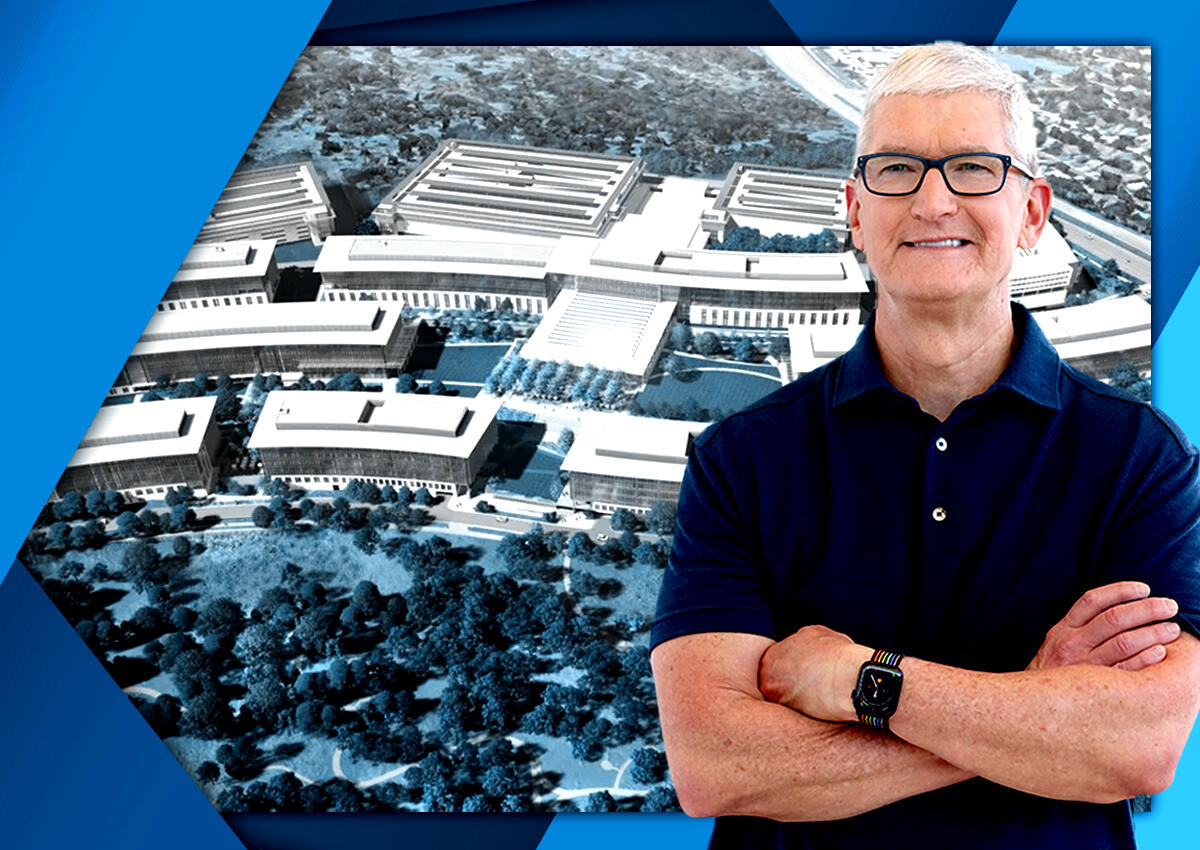
Apple has the physical capacity and long-term hiring plans to become one of Austin’s largest private employers, aiming for up to 20,000 local employees over time. However, reaching the absolute top position remains a competitive challenge due to rapid expansion by Tesla and the massive, established workforces of regional retail and healthcare leaders like H-E-B and Ascension Seton.
Apple’s Austin Footprint: From Early Operations to a $1 Billion Campus
Apple’s operational relationship with Austin, Texas, spans more than three decades. The company established its initial presence in the capital city in 1992 with a modest customer support footprint. Over the following years, Austin evolved into Apple’s largest operational hub outside of its Cupertino headquarters, expanding from support services into hardware engineering, chip design, finance, supply chain operations, and artificial intelligence development.
In late 2019, Apple broke ground on a $1 billion, 133-acre campus in Northwest Austin near the Parmer Lane corridor (adjacent to Robinson Ranch). Designed to accommodate up to 3 million square feet of office space upon full phase completion, the facility officially welcomed employees in 2022. The campus was planned with sustainability in mind, operating on 100% renewable energy and incorporating native landscaping, dedicated green spaces, and high-efficiency LEED-certified architectural design.
| Apple Austin Expansion Timeline |
|---|
| 1992: Initial customer service hub opened in Austin |
| 2012: Major expansion announcement for Parmer Lane operational center |
| 2019: Groundbreaking on the $1B, 133-acre Northwest Austin Campus |
| 2022: Initial occupancy of the main campus buildings |
| 2026: Campus scaling toward long-term capacity targets of 15,000-20,000 |
The scale of this facility reflects Apple’s commitment to central Texas. The campus includes advanced engineering labs, team workspaces, logistics hubs, and employee amenities such as wellness centers, dining halls, and integrated transit facilities. While the physical infrastructure is designed to house a massive corporate presence, physical capacity alone does not guarantee immediate dominance in overall local headcount.
Headcount Analysis: Current Apple Employment vs. Growth Targets
Understanding whether Apple will claim the title of Austin’s largest private employer requires comparing its existing staff counts against its long-term scaling targets.
- Current Estimated Headcount: Apple currently employs between 7,000 and 10,000 workers in the Austin metropolitan area. This figure includes staff distributed across the new Parmer Lane campus, existing facilities on Riata Vista Circle, and peripheral office spaces.
- Stated Phase One Targets: The initial phase of the $1 billion campus was engineered to house 5,000 employees, bringing the company’s total regional baseline up toward 12,000 workers.
- Maximum Campus Capacity: Apple’s master development plan for the site allows for expansion up to 15,000 employees on the primary campus, with additional regional facilities bringing total potential local employment to approximately 20,000 workers.
- Current Austin Baseline [7,000 - 10,000 Employees]
- Phase One Target [~12,000 Total Regional Staff]
- Full Site Capacity [15,000 - 20,000 Total Regional Staff]
Reaching the upper limit of 20,000 employees depends heavily on broader technology market dynamics. During the broader industry recalibrations in recent years, major tech firms shifted from hyper-accelerated hiring to disciplined, strategic growth. Consequently, while Apple continues to post high-value engineering, operational, and software roles in Austin, its trajectory toward maximum site capacity is proceeding at a measured, sustainable pace rather than a rapid hiring sprint.
Comparative Landscape: Major Private Employers in the Austin Metro Area
To evaluate Apple’s likelihood of becoming the number one private employer in Austin, it is necessary to examine the current heavyweights operating in the Austin-Round Rock metropolitan statistical area (MSA).
1. H-E-B Grocery Co.
As Texas’s dominant supermarket chain, H-E-B is consistently one of the largest private employers in the region. Employing over 20,000 individuals across dozens of retail stores, distribution centers, and digital tech hubs in the Austin metro area, H-E-B’s labor footprint is deeply tied to regional population growth. Because retail and logistics demand physical, in-person staffing at scale, H-E-B presents a high barrier for any corporate tech company seeking the top employer ranking.
2. Tesla, Inc.
Tesla moved its corporate headquarters to Travis County and opened Gigafactory Texas (Giga Texas) in 2022. The 10-million-square-foot facility east of Austin rapidly expanded its workforce to support Model Y assembly, Cybertruck production, cell manufacturing, and engineering. Tesla’s local workforce scaled past 20,000 employees rapidly, making it Apple’s primary corporate technology rival for headcount dominance in Central Texas.
3. Dell Technologies
Headquartered in neighboring Round Rock, Dell Technologies has historically been the tech anchor of Central Texas. Although remote work flexibility and corporate restructuring have altered its localized daily office population, Dell continues to maintain a substantial workforce in the Austin metro area, estimated between 12,000 and 14,000 regional employees.
4. Healthcare Systems (Ascension Seton & St. David’s)
Regional healthcare providers represent another massive segment of private employment. Ascension Seton operates a network of hospitals, specialty facilities, and clinics employing over 14,000 to 15,000 regional workers. Similarly, St. David’s HealthCare maintains a network supporting more than 11,000 staff members. These organizations expand continuously alongside Central Texas’s overall population growth.
Summary Comparison Table
The following table outlines the competitive baseline for major private employers in the Austin metro area:
| Employer | Estimated Local Headcount | Primary Industry | Main Footprint in Austin MSA | Growth Trajectory |
|---|---|---|---|---|
| Tesla, Inc. | 20,000+ | Automotive & Energy | Giga Texas (Del Valle / Travis County) | High volume manufacturing scale |
| H-E-B Grocery Co. | 20,000+ | Retail & Logistics | MSA-wide stores, distribution, & tech hubs | Steady alignment with metro population |
| Ascension Seton | 14,000 - 15,000 | Healthcare | Regional hospital networks & clinics | Steady healthcare demand expansion |
| Dell Technologies | 12,000 - 14,000 | Technology | Round Rock Corporate Headquarters | Strategic restructuring & hybrid focus |
| St. David’s HealthCare | 11,000 - 12,000 | Healthcare | Regional healthcare system | Steady healthcare demand expansion |
| Apple Inc. | 7,000 - 10,000 | Technology | Parmer Lane Campus & Riata Vista Hub | Measured scaling toward 15,000–20,000 |
Note: Headcount estimates reflect aggregated regional data from public filings, municipal economic reports, and regional employment surveys.
Factors Influencing Apple’s Trajectory Toward the Top Spot
Whether Apple eventually surpasses Tesla or H-E-B to claim the top private employer position depends on several operational and macroeconomic drivers.
- High-Value Engineering & Silicon R&D Focus
- Local Talent Pipeline (UT Austin & Relocation)
- Apple's Scaling Trajectory
- Competition from Tesla & Manufacturing Giants
- Macroeconomic Pacing & Hybrid Work Models
High-Value Job Mix vs. Volume Hiring
Unlike manufacturing plants or retail chains that require large operational workforces for daily output, tech campuses often focus on higher-compensation engineering, management, and research positions. Apple’s Austin operations house major hardware engineering teams, chip design groups (Apple Silicon), AI development teams, and operations specialists. Because these roles require specialized skill sets, hiring velocity is naturally more selective than high-volume assembly or retail staffing.
The UT Austin and Regional Talent Pipeline
Apple benefits directly from the proximity of the University of Texas at Austin (UT Austin) and the broader Texas university system. The Cockrell School of Engineering and Department of Computer Science produce top-tier talent in computer architecture, VLSI design, software engineering, and data science. This steady local talent supply allows Apple to grow its headcount organically without relying solely on out-of-state relocations.
Hybrid Work Models and Physical Real Estate Utilization
Like many global tech companies, Apple operates under a hybrid workplace model. The necessity for physical campus presence is highest for hardware engineers, lab technicians, and security-sensitive R&D teams, whereas certain software and operational roles utilize flexible schedules. The speed at which Apple fills its physical square footage depends partly on how its office utilization strategies evolve over time.
Economic and Infrastructure Impact on Northwest Austin
Apple’s investment has significantly impacted the urban and economic environment of Northwest Austin and neighboring municipalities like Round Rock and Cedar Park.
Real Estate and Commercial Development
The establishment of the Parmer Lane campus triggered substantial commercial and residential development along the State Highway 45 and Loop 1 (Mopac) corridors. Residential communities, master-planned developments, retail centers, and mixed-use space have expanded to accommodate tech professionals moving into the area. This influx has supported high property values in Williamson and Travis counties while accelerating demand for local services.
- [Cedar Park] / [Round Rock] (State Highway 45)
- (Parmer Lane / Mopac Expressway)
- [Apple Parmer Lane Campus Hub]
- [North Central Austin]
- [Apple Parmer Lane Campus Hub]
- (Parmer Lane / Mopac Expressway)
Infrastructure and Transit Infrastructure
To accommodate increased commuter traffic, regional transportation authorities and local government bodies expanded road capacity along Parmer Lane and enhanced connections to major thoroughfares. Additionally, local public transit discussions have regularly addressed first-mile/last-mile connectivity between commuter rail lines (such as CapMetro Rail) and major corporate employers in the northern tech corridor.
Public Incentives and Tax Base Growth
Apple’s expansion involved agreements with local taxing entities, including Travis County and local school districts, designed to incentivize capital investment while securing commitments for local hiring, minimum wage standards, and community contributions. The resulting capital investment added hundreds of millions of dollars to the local taxable property base, benefiting municipal services and school funding structures over the long term.
Key Challenges to Reaching the Top Employer Ranking
While Apple’s long-term plan allows for up to 20,000 employees in Austin, several challenges could prevent or delay it from becoming the single largest private employer in the city:
- High Competition for Specialized Talent: Austin’s tech ecosystem includes major operations from Google, Meta, Amazon, AMD, NXP Semiconductors, and Oracle. Competing for top-tier silicon and software engineers creates a constrained talent market, slowing sheer headcount growth.
- Rapid Scaling of Industrial Rivals: Tesla’s industrial model requires thousands of production line workers, technicians, and supervisors alongside its engineering staff. Manufacturing operations generally scale headcount faster than pure design, software, and corporate support facilities.
- Housing Affordability and Living Costs: Although Austin remains competitive compared to the San Francisco Bay Area, rising housing costs and property taxes in Central Texas present real relocation considerations for prospective mid-level employees.
- Global Corporate Footprint Diversification: Apple continues to invest in multiple regional hubs across North America and internationally. Capital and headcount allocations are balanced globally rather than concentrated in a single expansion market.
Frequently Asked Questions
How many employees currently work at Apple’s Austin campus?
Apple currently employs between 7,000 and 10,000 workers in the Austin metropolitan area across its Parmer Lane campus, Riata Vista hub, and secondary office sites.
Who is currently the largest private employer in Austin, Texas?
Tesla and H-E-B Grocery Co. are currently the largest private employers in the Austin metro area, with each employing more than 20,000 local workers.
What types of jobs are located at Apple’s Austin facility?
Apple’s Austin operations focus heavily on hardware engineering, Apple Silicon chip design, software engineering, artificial intelligence development, finance, supply chain management, and online customer support services.
When did Apple open its $1 billion campus in Austin?
Groundbreaking for Apple’s 133-acre Parmer Lane campus occurred in late 2019, and the company began occupying the initial phase of buildings in 2022.
Will Apple surpass Tesla as Austin’s largest private tech employer?
While Apple has the physical infrastructure to scale up to 20,000 employees, Tesla’s rapid manufacturing expansion at Giga Texas makes it difficult for Apple to surpass Tesla in overall localized headcount in the near term.
Strategic Guidance for Job Seekers and Real Estate Investors
- For Tech Professionals & Job Seekers: Monitor Apple’s career listings specifically within hardware technologies, silicon engineering, and enterprise software engineering. Applicants with background experience in VLSI architecture, machine learning systems, or complex supply chain operations will find the highest density of roles located at the Austin campus.
- For Real Estate & Local Business Investors: Focus market research on the Northwest Austin corridor, specifically areas surrounding Parmer Lane, Round Rock, and Cedar Park. The steady influx of high-earning corporate employees provides sustained demand for multi-family residential housing, medical facilities, and retail services in these sub-markets.
- For Economic Analysts: Track municipal employment disclosures, county tax roll updates, and corporate filings rather than site office capacity alone. Actual headcount growth will depend on broader tech sector conditions and physical office attendance trends across the region.