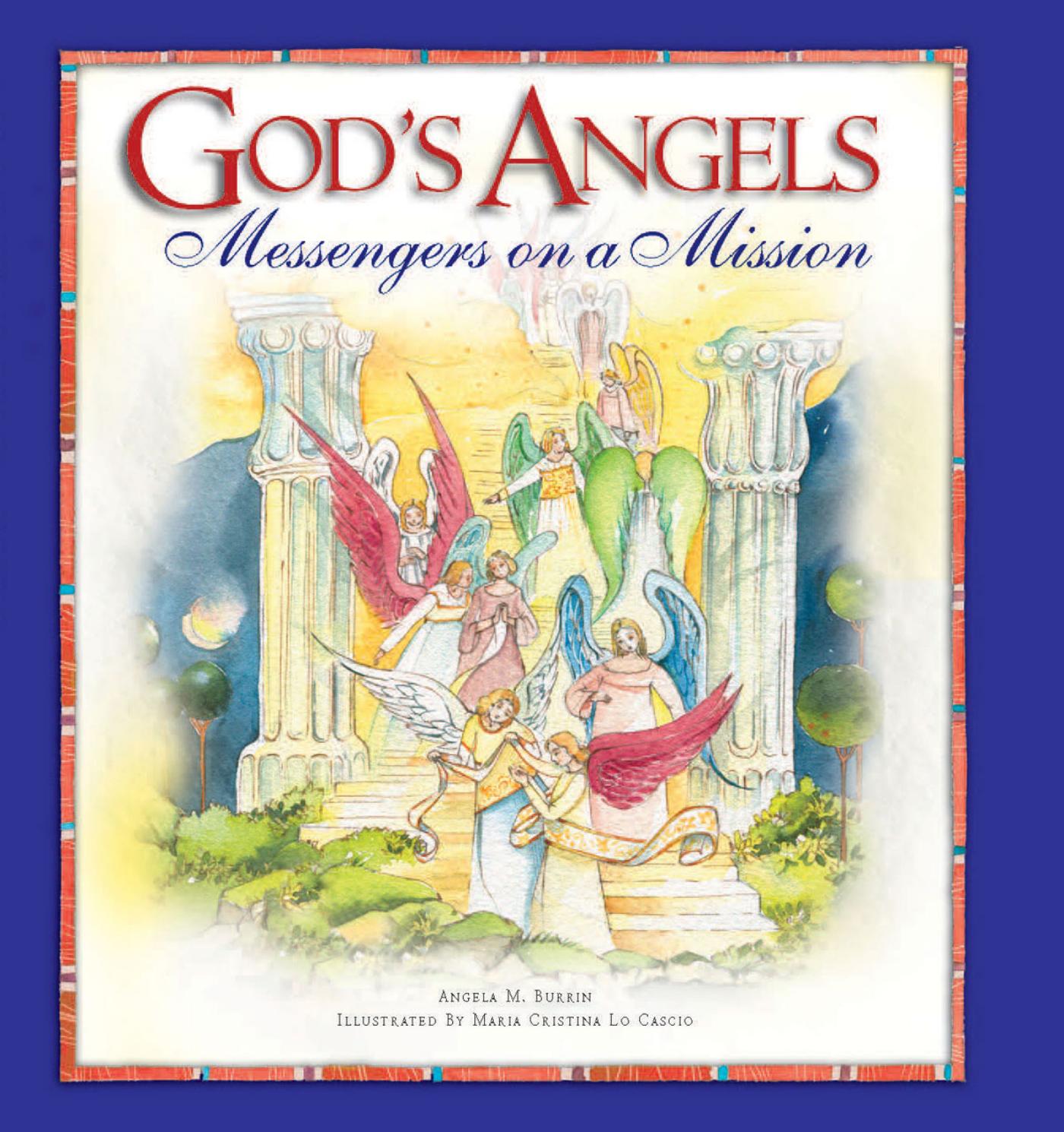
In theology and sacred scripture, angels are primarily defined as celestial beings who serve as intermediaries between the divine and humanity. The term "angel" originates from the Greek angelos and the Hebrew malakh, both of which literally translate to "messenger," establishing their fundamental identity as agents who carry out the will, instructions, and revelations of God to the physical world.
The Etymological and Functional Identity of Angels
To understand angels as God's messengers, one must first look at the linguistic roots of the word. In the Hebrew Bible (the Tanakh), the word used is malakh. This term does not inherently describe a supernatural being with wings; rather, it describes a function. A malakh is an envoy or an agent sent to perform a specific task. In early Semitic contexts, this could refer to a human messenger or a divine one. However, as religious thought evolved, the term became increasingly reserved for the spiritual entities populating the "Heavenly Host."
The transition to the Greek angelos in the Septuagint and the New Testament preserved this functional definition. An angel is not defined by what it is (its ontological nature) so much as by what it does (its vocational mission). While these beings are described as spiritual, immortal, and powerful, their primary reason for interaction with humanity is the delivery of a message. This message can take many forms: a verbal prophecy, a physical intervention, a dream-based warning, or a silent guidance.
As of 2026, theological discourse emphasizes that angels represent the bridge between the infinite nature of the Creator and the finite capacity of the created. Because most religious traditions posit that the full presence of the Divine is too overwhelming for human senses, the messenger serves as a "filtered" interface, allowing communication to occur without the recipient being destroyed by the sheer magnitude of the divine presence.
The Role of Messengers in Abrahamic Traditions
The concept of the angel as a messenger is most robustly developed in the three major Abrahamic faiths. While each tradition has unique nuances, they share a core belief that God utilizes these spiritual agents to guide human history.
Judaism: The Malakh as Divine Extension
In Jewish thought, angels are often seen as temporary manifestations of God's will. They do not possess free will in the same way humans do; they are more like "programmed" agents sent for a singular purpose. In the Torah, when an angel appears to Hagar or Abraham, the distinction between the angel’s voice and God’s voice often blurs. This suggests that the messenger is so perfectly aligned with the message that they become a literal extension of the Divine.
Historical Jewish texts, such as those found in the Jewish Encyclopedia, detail how angels were instrumental in the delivery of the Law and the protection of the people of Israel. They act as guardians of the covenant, ensuring that the messages delivered to the patriarchs are fulfilled through the generations.
Christianity: Proclamation and Incarnation
In Christianity, the role of the messenger takes on a pivotal historical significance, particularly surrounding the birth of Jesus. The New Testament depicts angels as the primary announcers of the "Good News." This is best exemplified by the Archangel Gabriel, who serves as the preeminent messenger.
Gabriel’s role in the Annunciation to Mary is perhaps the most famous instance of angelic messaging in history. Here, the messenger provides not just information, but the invitation for human cooperation in a divine plan. Christian theology also posits that angels will serve as messengers of judgment and gathering during the end times, as described in the Book of Revelation.
Islam: The Mala'ika and Revelation
In Islam, belief in angels (Mala'ika) is one of the six articles of faith. The Quran was revealed to the Prophet Muhammad through the agency of the Archangel Jibril (Gabriel). In this context, the angel is the "Trusted Spirit" who ensures that the divine word is transmitted with 100% accuracy from the preserved tablet in heaven to the human heart.
Islam provides a very structured view of these messengers. Jibril is the bringer of revelation, Mikail (Michael) is the provider of sustenance and rain, and Israfil is the messenger who will blow the trumpet to signal the Day of Resurrection. The role of the messenger is so vital that to deny the existence of angels is to deny the mechanism by which God communicated the Quran to humanity.
The Nature and Delivery of Divine Messages
Angels do not deliver messages in a vacuum; the manner of their delivery is often as significant as the content itself. Throughout scriptural history, we see several distinct modes of communication used by these divine envoys.
1. The Physical Visitation
In many accounts, such as the story of Lot in Sodom or the appearance of the "three men" to Abraham at Mamre, angels appear in a form that is indistinguishable from human beings. This suggests that the message sometimes requires a physical presence to be understood or acted upon. These messengers may eat, walk, and speak as humans do, revealing their true nature only when the task is complete.
2. Visions and Dreams
Often, the human mind is unable to process a direct angelic visitation while awake. In these cases, the messenger enters the subconscious. Joseph, the earthly father of Jesus, received several critical warnings via angelic messages in dreams—first to take Mary as his wife, and later to flee to Egypt to escape Herod. This mode of messaging bypasses the skepticism of the rational mind and speaks directly to the spirit.
3. The "Theophany" Interface
Sometimes, an angel appears in a terrifying, radiant form. This is why the most common opening line for an angelic messenger is: "Do not be afraid." The sheer power and light associated with the heavenly realm are naturally overwhelming to humans. When the message is of cosmic importance—such as the birth of a savior or the destruction of a city—the messenger often appears in their "native" celestial glory.
Comparative Overview of Angelic Messenger Roles
The following table compares the primary characteristics and examples of angelic messengers across different religious and historical frameworks as understood in current 2026 theological scholarship.
| Tradition | Key Messenger Entity | Primary Function | Notable Scriptural Instance |
|---|---|---|---|
| Judaism | Metatron / Malakh Adonai | Guidance and Covenant Protection | Leading the Israelites through the wilderness. |
| Christianity | Gabriel | Proclamation of the Gospel | The Annunciation to the Virgin Mary. |
| Islam | Jibril (Gabriel) | Revelation of Sacred Text | Delivering the Quran to Prophet Muhammad. |
| Zoroastrianism | Amesha Spentas | Maintaining Cosmic Order | Communicating the "Good Mind" to Zarathustra. |
| General Spirituality | Guardian Angels | Personal Guidance/Protection | Providing intuitive "nudges" or warnings to individuals. |
Why Does God Use Messengers?
A common question in philosophical theology is why an omnipotent and omnipresent God would require an intermediary. If God is everywhere, why send a messenger? Several theories address this:
- The Mediation of Glory: As mentioned previously, the direct presence of the Divine is often described as "consuming fire." The angel acts as a transformer that steps down the high-voltage energy of the Divine so that a human can perceive and survive the interaction.
- The Order of Creation: Many traditions believe in a "Great Chain of Being." Just as there are animals, humans, and the Divine, the celestial hierarchy (angels) fills the gap. This maintains a structured order in the universe where different levels of existence interact through established channels.
- The Honor of Service: By using messengers, God allows created beings to participate in the divine plan. Being a messenger gives the angel a role and a purpose, reflecting a universe that is collaborative rather than solitary.
- Validation of the Message: The appearance of a supernatural messenger provides a "sign" to the recipient. It validates that the message is not just a personal thought or a hallucination, but a verified communication from an outside, higher source.
Angels in the Modern Era (2026 Perspective)
In 2026, the fascination with angels as messengers has not diminished; if anything, it has shifted from purely liturgical settings to broader spiritual contexts. While formal religious attendance has seen fluctuations, "angelology" remains a significant area of interest for those seeking a connection with the transcendent.
Modern interpretations often view these messengers as "divine synchronicity." For some, the "message" isn't delivered by a winged being in a white robe but through a timely encounter, a sudden insight, or a protective "coincidence." However, traditionalists argue that reducing angels to mere metaphors strips away the objective reality of these beings as described for millennia.
Scholars today also look at the psychological impact of the messenger. The "messenger" archetype represents the part of the human experience that receives wisdom from beyond the ego. Whether one views them as literal entities or symbolic representations of divine communication, their role remains the same: to tell us that we are not alone and that there is a purpose directed from a higher plane.
Common Misconceptions About Angelic Messengers
Despite their prominence, several misconceptions persist regarding the nature of these divine envoys:
- Humans become angels when they die: In most classical theology (Christian, Jewish, and Islamic), humans and angels are entirely different species. Humans do not "earn their wings"; angels were created as a separate order of beings before or during the creation of the world.
- All angels are messengers: While "angel" means messenger, traditional hierarchies (like those of Dionysius the Areopagite) suggest that only the lower ranks (Angels and Archangels) regularly interact with humanity. Higher ranks like Seraphim and Cherubim are focused primarily on the direct worship and presence of God.
- Angels have wings and harps: These are largely artistic conventions used to represent speed (wings) and the harmony of heaven (harps). In many scriptural accounts, angels have no wings or possess multiple sets of wings that look nothing like bird feathers.
- Messengers only bring "good" news: Scriptural history shows that angels also deliver messages of judgment, destruction, and stern rebuke. The "message" is whatever God deems necessary, whether it is comfort or a call to repentance.
Frequently Asked Questions
Can anyone receive a message from an angel?
In traditional scripture, angelic visitations are usually reserved for individuals at pivotal moments in religious history (prophets, saints, or those with a specific role to play). However, many contemporary spiritual practices suggest that "guardian angels" provide subtle messages to everyone in the form of intuition, dreams, or signs. The key requirement is usually a state of spiritual receptivity or a dire need for divine intervention.
Do angels still deliver messages in the 21st century?
Most religious groups believe that while the "public revelation" (like the Bible or Quran) is complete, "private revelations" or personal guidance through angels continue. In 2026, many people report experiences of "angelic intervention" during crises, though these are typically viewed through the lens of personal faith rather than universal doctrine.
How can you distinguish a divine messenger from a hallucination?
Theological discernment usually involves three criteria: consistency, fruit, and clarity. A message from a divine source will not contradict established spiritual truths (consistency), will lead to positive spiritual growth or safety (fruit), and will usually be accompanied by a sense of "supernatural peace" or authority that distinguishes it from common thoughts (clarity).
Why do some angels have different names?
Names like Gabriel, Michael, and Raphael are significant because they reveal the type of message or work the angel does. For example, "Gabriel" means "God is my strength," reflecting his role in delivering messages of empowerment and new beginnings. "Michael" means "Who is like God?", reflecting his role as a messenger of divine authority and protection against evil.
Are angels male or female?
Theologically, angels are pure spirits and do not have biological gender. However, they almost always appear in masculine form in ancient texts, likely due to the cultural contexts of the time where "messengers" and "authoritative figures" were typically male. In modern spiritual art, they are often depicted with androgynous or feminine features to emphasize their grace and gentleness.
Do all religions have angels?
Most major religions have a concept of "shining beings" or "divine intermediaries." While the term "angel" is specific to the Abrahamic traditions, Buddhism has Devas, Hinduism has Gandharvas and Apsaras, and ancient Greek religion had daemons (not necessarily evil) and the messenger god Hermes. The core idea of a middle-man between heaven and earth is nearly universal.
Practical Recommendations for Further Study
If you are interested in exploring the depth of angelic roles as messengers, the following steps are recommended:
- Read Primary Source Texts: Start with the Book of Tobit (for Raphael), the Gospel of Luke (for Gabriel), and Surah Maryam in the Quran. Seeing the messengers "in action" provides a better understanding than reading summary articles.
- Study Hierarchies: Look into The Celestial Hierarchy by Pseudo-Dionysius. It provides a foundational framework for how different types of angels relate to God and the physical world.
- Consult Historical Art: Visit museums or digital archives to see how artists like Fra Angelico or Caravaggio depicted the "moment of the message." Art often captures the emotional weight of these encounters that text alone cannot.
- Practice Discernment: If you are exploring this for personal spiritual reasons, maintain a balanced perspective. Most traditions warn against "worshipping" the messenger; the goal of the angel is always to point the recipient back toward the Source—God.