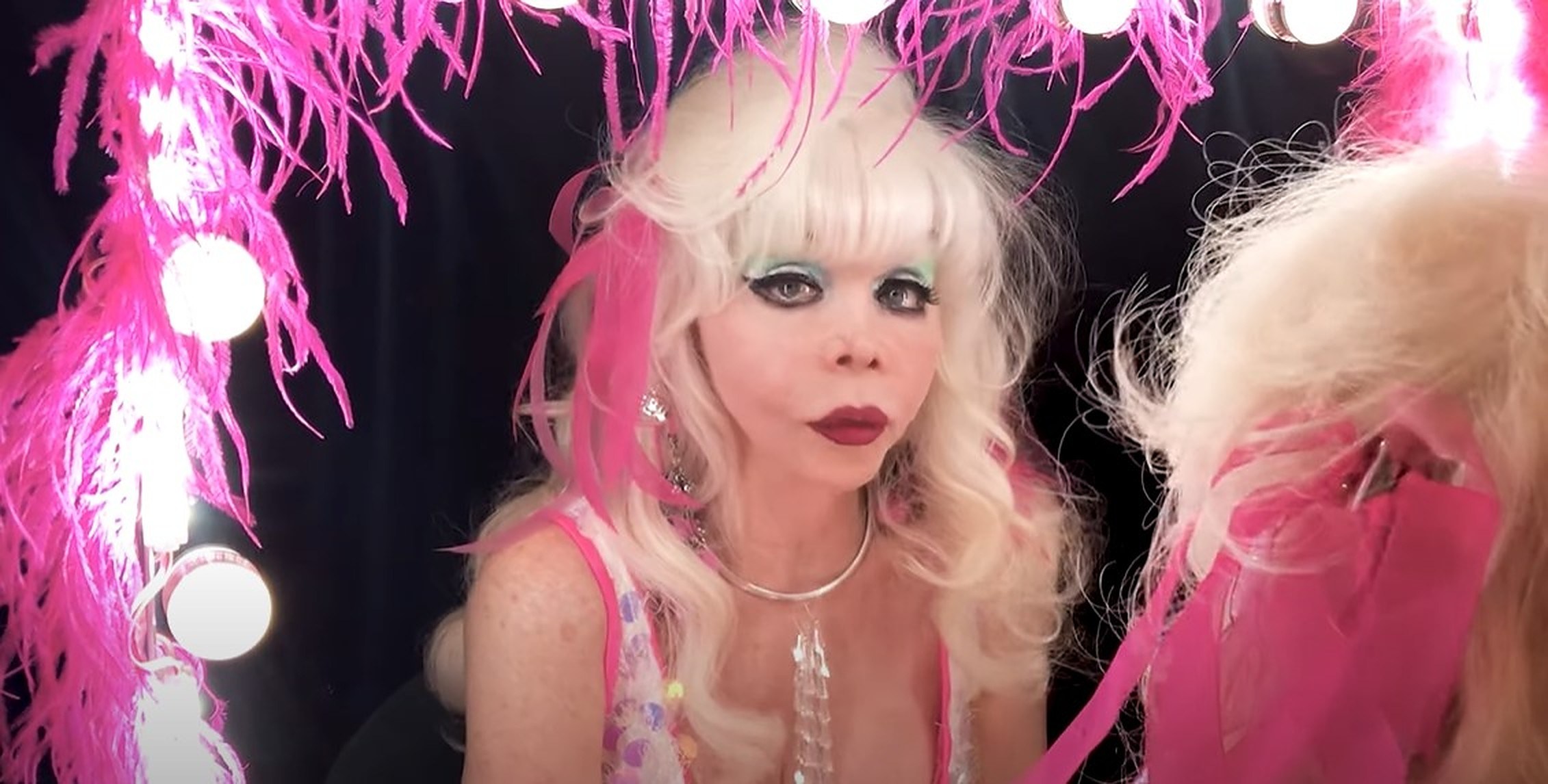
In the 1980s, Angelyne became a cultural icon in Los Angeles by pioneering the "famous for being famous" phenomenon. Through a massive self-funded billboard campaign, a signature pink Corvette, and a mysterious persona, she transformed herself into a local legend, defining the era's intersection of glamour and self-promotion.
The 1980s represented a transformative decade for celebrity culture, moving away from traditional talent-based fame toward the concept of the "persona" as a product. At the heart of this shift was Angelyne, a woman whose image dominated the Los Angeles skyline and whose presence on the Sunset Strip became as synonymous with the city as the Hollywood sign itself. To understand Angelyne in the 1980s is to understand the birth of modern influencer culture, decades before the advent of social media.
The Genesis of the Billboard Campaign
The story of Angelyne in the 1980s begins in earnest in 1984. While she had been active in the L.A. punk and new wave scenes in the late 1970s, it was the first massive billboard featuring her image that solidified her place in the public consciousness. This first billboard appeared on Sunset Boulevard, featuring a provocative pose, her name in a stylized script, and no other information—no movie to promote, no product to sell, and no explanation for her existence.
The Partnership with Hugo Maisnik
The logistics of these billboards were managed through a partnership with Hugo Maisnik, the owner of a local display and printing company. Maisnik became an essential collaborator in Angelyne's quest for visibility. Together, they navigated the expensive world of Los Angeles outdoor advertising. In the 1980s, billboard space on the Sunset Strip was among the most coveted real estate in the world, typically reserved for major motion pictures or international brands. By inserting herself into this space, Angelyne subverted the traditional gatekeepers of Hollywood fame.
The Psychology of Minimalist Advertising
The brilliance of Angelyne’s 1980s campaign lay in its minimalism. By providing only an image and a name, she invited the public to project their own fantasies and questions onto her. This created a feedback loop of curiosity. Passersby would see the billboards and ask, "Who is Angelyne?" The more they asked, the more famous she became, which in turn justified the existence of more billboards. By the mid-1980s, there were reportedly dozens of these signs scattered across the Los Angeles basin, from Hollywood to the San Fernando Valley.
The Visual Identity: Pink Corvettes and Platinum Blonde
Angelyne's brand in the 1980s was built on a hyper-feminine, meticulously maintained aesthetic. She adopted a look that blended 1950s pin-up glamour with 1980s neon excess. Her signature platinum blonde hair, heavy makeup, and form-fitting outfits were designed for maximum visual impact, ensuring she was never missed in a crowded room—or a crowded street.
The Signature Pink Corvette
Nothing symbolized Angelyne’s 1980s presence more than her pink Corvette. While she owned several over the decade, the car was more than a vehicle; it was a mobile billboard. She was frequently spotted driving along Sunset Boulevard, often stopping to sign autographs or sell merchandise from her trunk. The car served to bridge the gap between the distant, untouchable image on the billboards and the tangible, living person on the street. It was an early form of "engagement" with her audience.
The Sunset Strip as a Stage
During the 1980s, the Sunset Strip was the epicenter of global hair metal and burgeoning pop culture. Angelyne leveraged this location perfectly. By making the Strip her primary "office," she ensured she was seen by the power players of the music and film industries, as well as the thousands of tourists who flocked to the area. Her presence became a reliable landmark, a "sighting" that tourists sought out alongside the Walk of Fame.
Musical Ventures and Discography of the 1980s
Though often dismissed as a "billboard queen," Angelyne used her 1980s fame to fuel a legitimate, if cult-classic, music career. Her music reflected the synth-pop and new wave trends of the decade, characterized by high-pitched vocals and danceable beats.
"Angelyne" (1982)
Her self-titled debut album, released in 1982, preceded the height of the billboard craze. It featured tracks that leaned into the quirky, post-punk energy of the Los Angeles underground. While not a massive commercial success, it established her as a recording artist and provided the soundtrack for her burgeoning persona.
"Driven to Fantasy" (1986)
By 1986, Angelyne released Driven to Fantasy, an album that more closely aligned with her billboard image. The cover featured her signature aesthetic, and the music was more polished synth-pop. This album was promoted heavily through her outdoor advertising, marking one of the few times her billboards actually pointed toward a specific commercial product. The single "Kiss Me L.A." became a minor local anthem, capturing the aspirational, sun-drenched vibe of the city during that era.
Film and Television: The Cameo Culture
In the 1980s, Hollywood began to take notice of the woman on the billboards. Rather than casting her in leading roles that required traditional acting range, directors utilized her as a symbol of Los Angeles itself.
"Earth Girls Are Easy" (1988)
Perhaps her most famous 1980s film appearance was in the cult classic Earth Girls Are Easy. In the film, she essentially plays herself—the blonde bombshell in the pink Corvette. This appearance was a meta-commentary on her own fame. It signaled that the industry recognized her as a shorthand for "Hollywood Glamour" or "L.A. Weirdness."
Television Interviews and the Enigma
Angelyne’s appearances on talk shows during the 1980s, such as The Merv Griffin Show or local news segments, were masterclasses in image maintenance. She rarely gave straight answers about her past, her age, or her funding. When asked about her goals, she would often speak in platitudes about "sending out good vibrations" or "loving the world." This refusal to be pinned down only heightened the mystery, preventing the public from losing interest in her.
Analyzing the Impact: 1980s Context vs. Modern Fame
To understand why Angelyne was so radical in the 1980s, we must compare her to the celebrities of the time. In an era where fame was usually the byproduct of a specific skill (acting, singing, sports), Angelyne made fame the primary objective.
| Feature | Traditional 1980s Celebrity | Angelyne in the 1980s |
|---|---|---|
| Path to Fame | Studio system, talent agencies, labels. | Self-funded billboards and personal branding. |
| Primary Product | Films, albums, or athletic performance. | The "Angelyne" image and persona. |
| Geographic Focus | Global or national distribution. | Hyper-local (Los Angeles/Sunset Strip). |
| Interactivity | Limited to fan mail and press junkets. | Direct interaction via her pink Corvette. |
| Monetization | Salaries, royalties, and endorsements. | Merchandise sales and self-promotion. |
The Economics of Angelyne’s 1980s Empire
A common question during the 1980s was how Angelyne afforded her lifestyle and her billboards. While rumors swirled about wealthy benefactors or secret inheritances, the reality was a mix of savvy business and focused branding.
- Merchandise Sales: Angelyne was a pioneer in direct-to-consumer sales. She sold posters, t-shirts, and calendars directly to fans she met on the street or through mail-order advertisements.
- Strategic Partnerships: Her relationship with Hugo Maisnik allowed her to access billboard space that might otherwise have gone unused or been offered at a "friend's rate," maximizing her visibility for a fraction of the market cost.
- The Mystery Premium: By keeping her life private, she maintained a level of "exclusive" fame. People were willing to pay for a piece of the mystery, whether it was a $20 poster or a brief conversation at a stoplight.
Maintaining the Mystery: The "Ronia Goldberg" Revelation
In the 1980s, the public did not know that Angelyne was born Ronia Tamar Goldberg to Polish Jewish survivors of the Holocaust. This information only became widely known decades later, following a 2017 investigative piece by Gary Baum in The Hollywood Reporter. In the 1980s, however, Angelyne successfully reinvented herself as a quintessential California girl. This reinvention was central to her success; she embodied the "American Dream" of self-creation, where one's past could be erased and replaced with a neon-pink future.
Cultural Legacy and the Precursor to Modern Media
Angelyne in the 1980s was the blueprint for the 21st-century influencer. She understood that in a media-saturated environment, attention is the most valuable currency. By capturing the eyes of Los Angeles, she captured the imagination of the world.
- The Kardashian Connection: Before reality TV stars became famous for their lifestyle, Angelyne proved that a personality could be a brand.
- Outdoor Advertising as Art: Her billboards are now viewed as a form of performance art, a commentary on the vacancy and allure of Hollywood.
- The Queen of Self-Promotion: She taught future generations that you do not need a permission slip from a studio to be a star; you just need a platform and a persistent image.
Frequently Asked Questions
How many billboards did Angelyne have in the 1980s?
At the peak of her 1980s campaign, there were reportedly over 200 billboards throughout the Los Angeles area. While the exact number fluctuated based on available space and funding, her presence was ubiquitous, particularly on the Sunset Strip and Hollywood Boulevard.
Who paid for Angelyne’s billboards in the 1980s?
The billboards were largely a result of her partnership with Hugo Maisnik, an entrepreneur who owned a billboard company. While Angelyne contributed her image and branding, Maisnik provided the physical infrastructure. She also generated revenue through merchandise sales to sustain her personal brand.
What kind of music did Angelyne release in the 1980s?
Angelyne's 1980s music was primarily synth-pop and new wave. Her two major releases of the decade were her self-titled album in 1982 and Driven to Fantasy in 1986. Her music featured breathy vocals and electronic arrangements typical of the Los Angeles underground scene.
Was Angelyne in any movies during the 1980s?
Yes, her most notable appearance was in the 1988 film Earth Girls Are Easy, starring Geena Davis and Jeff Goldblum. She also appeared in several smaller films and documentaries, usually playing herself or a character heavily based on her "billboard queen" persona.
What was the significance of the pink Corvette?
The pink Corvette served as a mobile extension of her billboards. In the 1980s, it became her trademark vehicle, allowing her to be "seen" in motion. It facilitated direct fan interaction and helped bridge the gap between her static billboard image and her real-life presence in Hollywood.
Practical Recommendation for Historians and Fans
For those looking to explore the legacy of Angelyne in the 1980s, the best approach is to view her work through the lens of performance art and urban history. While many of the original billboards are gone, her impact remains visible in the way modern celebrities use social media "real estate" much like she used the Sunset Strip. To truly understand her 1980s peak, one should research the history of the Sunset Strip during that decade, specifically the role of the Sunset Strip Music Festival and the outdoor advertising archives of Los Angeles. Additionally, her 1986 album Driven to Fantasy remains the best sonic representation of her 1980s brand and is a must-listen for fans of synth-pop history.