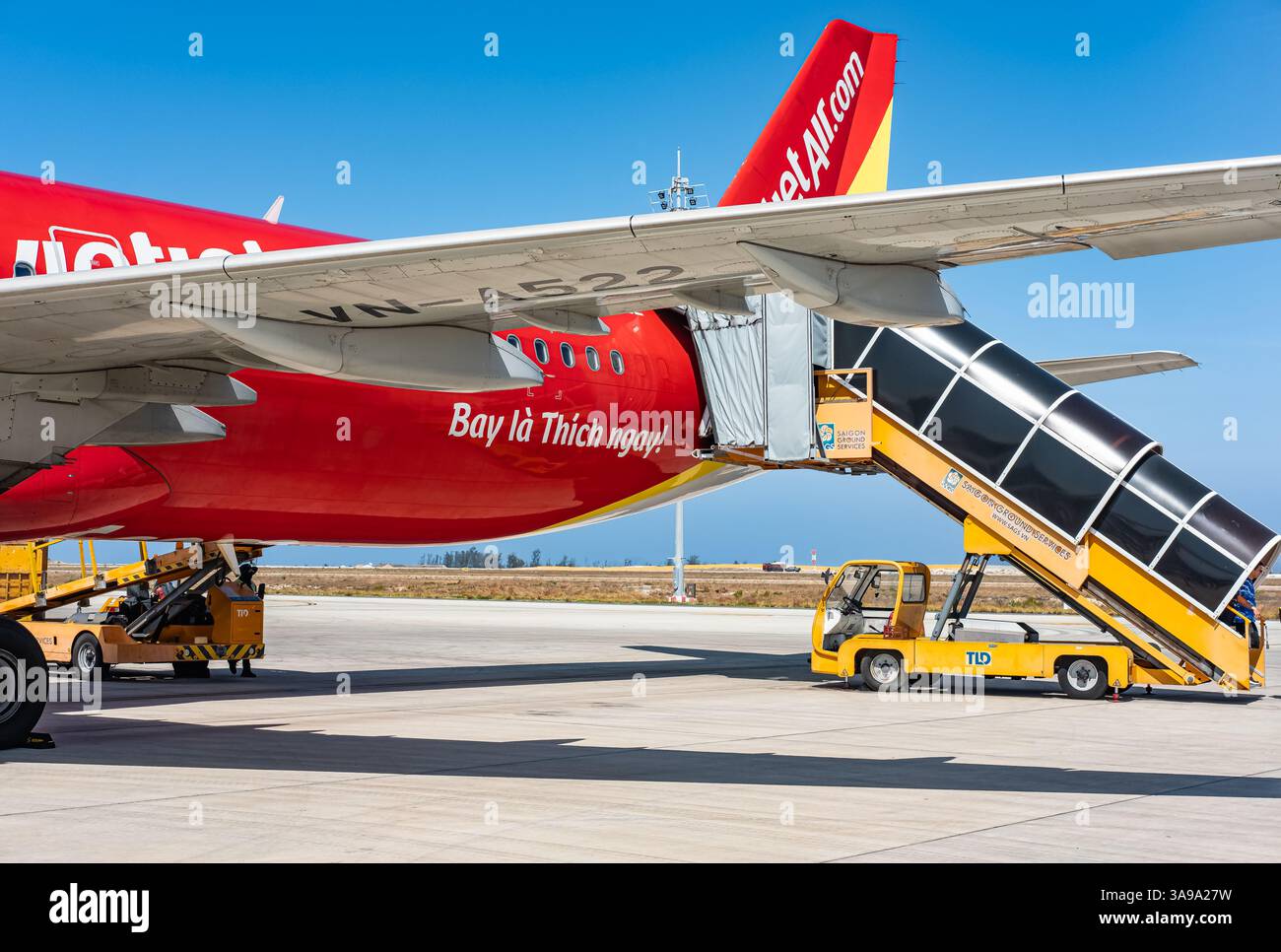
Airplane boarding stairs, often referred to in the industry as passenger steps or boarding ramps, are a critical component of Ground Support Equipment (GSE). Their primary function is to provide a safe, stable, and efficient bridge between the airport apron and the aircraft cabin door. While jet bridges (passenger boarding bridges) are standard at major terminal gates, boarding stairs remain indispensable for remote stand operations, low-cost carrier models, secondary airports, and emergency egress procedures. As of 2026, the technology behind these units has evolved significantly, focusing on electrification, enhanced safety sensors, and improved accessibility for passengers with reduced mobility (PRM).
The Essential Role of Boarding Stairs in Aviation Logistics
In the complex ecosystem of an airport, boarding stairs serve as the primary point of physical contact between the passenger and the aircraft during "walk-boarding" scenarios. Their importance extends beyond mere convenience; they are vital for operational flexibility. When a terminal is at full capacity, airlines utilize remote stands—parking spots away from the terminal—to maintain flight schedules. In these instances, boarding stairs are the only way to facilitate embarkation and disembarkation.
For regional aviation and private charter operations, boarding stairs are a permanent fixture of the ground experience. Smaller aircraft, such as the Bombardier CRJ series or the Embraer E-Jet family, often sit lower to the ground, requiring specific step configurations that differ vastly from those needed for a Boeing 787 or Airbus A350. Furthermore, stairs are a mandatory safety requirement for aircraft parked on maintenance hangars or in storage, ensuring technicians and safety inspectors can access the fuselage without the need for fixed terminal infrastructure.
Classification of Airplane Boarding Stairs
Not all boarding stairs are designed equally. They are categorized based on their mobility, power source, and the specific aircraft types they are intended to serve. Understanding these distinctions is crucial for ground handling agencies and fleet managers when procuring equipment for 2026 operations.
Towed Boarding Stairs
Towed stairs are non-motorized units that must be positioned using a tug or pushback tractor. These are the most cost-effective solutions and are commonly found at smaller regional airports or used as backup units.
- Mechanism: They typically feature a hydraulic hand pump or a small battery-powered electric motor to adjust the height of the top platform.
- Stability: Once in place, they rely on manual stabilizers or "jacks" to ensure the unit does not shift under the weight of passengers.
- Use Case: Ideal for low-frequency operations where the cost of a self-propelled unit cannot be justified.
Self-Propelled Boarding Stairs
Self-propelled units feature an integrated chassis and engine (or motor), allowing an operator to drive the stairs directly to the aircraft. In 2026, the industry has seen a massive shift toward electric self-propelled units (eGSE) to meet "Net Zero" airport emissions targets.
- Control: Operators maneuver the unit from a small cab or a standing platform, using precision controls to align the stairs with the aircraft’s "sill height" (the height of the door from the ground).
- Safety Features: Modern units are equipped with ultrasonic sensors and "soft-dock" bumpers to prevent the stairs from accidentally impacting and damaging the aircraft's aluminum or composite skin.
- Efficiency: These units are significantly faster to deploy than towed stairs, making them the preferred choice for high-turnover "low-cost carrier" (LCC) operations.
Integrated Airstairs
Some aircraft are designed with "built-in" stairs, known as airstairs. These are stored within the aircraft fuselage and deploy automatically when the door opens.
- Examples: The Boeing 737 often features an optional telescoping airstair under the forward entry door. Most regional turboprops, like the ATR 72 or Dash 8, have stairs integrated into the door itself (stair-door combo).
- Operational Benefit: Integrated stairs allow an aircraft to operate at "unimproved" or remote airfields without any ground support equipment, providing total independence for the flight crew.
Technical Specifications and Aircraft Compatibility
The most critical technical factor in boarding stair design is the Sill Height Range. Every aircraft model has a specific door height that changes slightly depending on the aircraft's weight (fuel and passenger load). Boarding stairs must be versatile enough to cover these ranges.
Common Aircraft Sill Heights
For a ground handler to be effective, their fleet of stairs must accommodate the following approximate heights:
- Regional Jets (CRJ, E-Jet): 1.5 to 2.5 meters.
- Narrow-body Aircraft (A320, B737): 2.8 to 3.9 meters.
- Wide-body Aircraft (A330, B777, B787): 4.5 to 5.5 meters.
- A380 Upper Deck: Up to 8.0 meters.
Load Capacity and Width
International standards, such as those set by the International Air Transport Association (IATA) in the Airport Handling Manual (AHM), dictate the load-bearing requirements. Standard boarding stairs are generally designed to support a minimum of 75-100 kg per step, with a total platform capacity that can accommodate several adults simultaneously. Step width is also standardized—usually between 1.0 and 1.5 meters—to allow for "bi-directional" flow in emergencies or to let passengers with small carry-on bags pass one another.
Comparison of Boarding Stair Types
| Feature | Towed Manual Stairs | Self-Propelled (Electric) | Boarding Ramps (Universal) |
|---|---|---|---|
| Mobility | Requires Tug/Tractor | Independent Drive | Towed or Manual |
| Height Range | Fixed or Semi-Adjustable | Highly Telescopic | Variable Gradient |
| Power Source | Manual/Hydraulic | Lithium-Ion Battery | None/Solar Lighting |
| Operational Speed | Slow (Manual Setup) | Fast (Driven to Aircraft) | Moderate |
| PRM Accessibility | Low (Stairs only) | Moderate (Standard steps) | High (No steps) |
| Cost (Approx. 2026) | $15,000 - $35,000 | $80,000 - $150,000+ | $40,000 - $90,000 |
Operational Safety and Regulatory Standards
Safety is the paramount concern when operating boarding stairs. Because the stairs are a mobile structure placed against a multi-million dollar aircraft, the margin for error is slim.
The IATA AHM 920 Standard
The IATA AHM 920 is the primary directive for the design and safety of passenger boarding stairs. It covers everything from the friction coefficient of the step surface (to prevent slipping in rain or ice) to the required illumination levels for night operations. In 2026, compliance with these standards often requires:
- Interlock Systems: Preventing the stairs from moving while the stabilizers are retracted or the platform is at an unsafe height.
- Emergency Stop Buttons: Located both at the ground level and on the top platform.
- Telescopic Side Railings: Ensuring there are no gaps between the stairs and the aircraft fuselage where a passenger could fall.
Proximity Detection and "No-Touch" Policies
A major trend in 2026 is the implementation of "No-Touch" technology. High-end self-propelled stairs use laser-guided docking systems. These systems automatically slow the unit to a crawl as it approaches the aircraft, stopping it exactly 2-5 centimeters from the fuselage. A protective rubber "bellows" or bumper then extends to close the gap, ensuring the rigid metal structure of the stairs never actually touches the aircraft. This significantly reduces the risk of "ground rash"—expensive structural damage caused by GSE.
Advancements in Passenger Accessibility (PRM)
Standard stairs present a significant barrier to passengers with reduced mobility (PRM), the elderly, and families with strollers. Historically, airports used separate "Ambulifts" (trucks with a hydraulic lifting cabin) to board these passengers. However, 2026 has seen the rise of Universal Boarding Ramps.
Companies like Aviramp have revolutionized the industry by creating non-stepped, multi-switchback ramp systems. These ramps provide a continuous slope from the ground to the aircraft door.
- Dignity and Inclusion: Ramps allow wheelchair users to board alongside other passengers rather than being separated and lifted in a specialized vehicle.
- Safety: Ramps eliminate the tripping hazard of traditional steps and are much easier to navigate in inclement weather.
- Efficiency: For airlines, a ramp can often facilitate faster boarding because passengers find it easier to carry luggage up a slope than up steep stairs.
Procurement and Maintenance Considerations
For airport authorities and ground handlers, the decision to purchase airplane boarding stairs involves calculating the Total Cost of Ownership (TCO).
Maintenance Cycles
Boarding stairs are exposed to harsh environments, from de-icing fluids and jet blast to extreme UV radiation and salt air at coastal airports. Maintenance protocols include:
- Hydraulic System Inspections: Checking for leaks in the cylinders that control the height and stabilizers.
- Tire and Brake Maintenance: Ensuring the unit can be safely locked in position.
- Electrical Systems: For eGSE, regular battery health monitoring and software updates for the docking sensors are essential.
Environmental Impact and eGSE
As of 2026, many major European and North American airports have introduced "Green GSE" mandates. These regulations often penalize the use of diesel-powered stairs. Transitioning to electric stairs involves an initial capital expenditure increase of 20-30%, but the long-term savings in fuel and engine maintenance usually result in a "break-even" point within 4 to 6 years of operation.
Frequently Asked Questions
What is the difference between boarding stairs and a jet bridge?
A jet bridge (or passenger boarding bridge) is a permanent, movable tunnel that connects a terminal gate directly to an aircraft. Boarding stairs are mobile units used primarily on the apron (tarmac) when an aircraft is parked away from the terminal. Stairs offer more flexibility for different aircraft types but expose passengers to the weather, whereas jet bridges provide a climate-controlled environment.
Can boarding stairs be used for all types of aircraft?
Most modern self-propelled stairs are "universal," meaning their telescopic design allows them to reach heights for everything from a small Boeing 737 to a large Airbus A350. However, very small regional planes may require specialized "low-profile" stairs, and the upper deck of an Airbus A380 requires ultra-high-reach stairs that are not commonly found at smaller airports.
How do boarding stairs stay stable in high winds?
Boarding stairs are equipped with hydraulic or manual stabilizers (outriggers) that extend from the base of the unit to the ground. These increase the "footprint" of the stairs, providing a wider base of support. Most units are rated to remain stable in winds up to 40-50 knots. In extreme weather or "hurricane-force" winds, ground handlers are required to move the stairs to a sheltered area or secure them with heavy-duty tie-downs.
Why do some airlines prefer stairs over jet bridges?
Low-cost carriers (LCCs) often prefer boarding stairs because they allow for simultaneous boarding and deplaning through both the front and rear doors of the aircraft. This "dual-door" operation significantly reduces the "turnaround time" (the time the plane spends on the ground), allowing the airline to fly more segments per day. Additionally, parking at a remote stand with stairs is often cheaper for the airline than renting a gate with a jet bridge.
Are boarding stairs equipped with weather protection?
Many boarding stairs can be fitted with optional "canopies" or "bellows." These are retractable roofs and side curtains that protect passengers from rain, snow, and wind during the walk between the ground and the cabin. In 2026, these canopies are increasingly made from lightweight, translucent materials that allow natural light in while providing a complete seal against the aircraft fuselage.
Selecting the Right Equipment for Your Operations
When choosing airplane boarding stairs, the primary objective should be a balance between safety, aircraft compatibility, and long-term sustainability. For high-volume hubs, investing in electric self-propelled units with advanced anti-collision sensors is the most prudent path to minimize aircraft damage and meet environmental regulations. For regional operators, boarding ramps offer the best return on investment by combining stair functionality with PRM accessibility in a single unit.
Before finalizing any procurement, ensure that the equipment meets the latest IATA AHM and ISO 6966-2 standards for aircraft ground support equipment. Proper training for ground crews remains the final, most critical piece of the puzzle; even the most advanced "No-Touch" system is only as effective as the technician operating it.