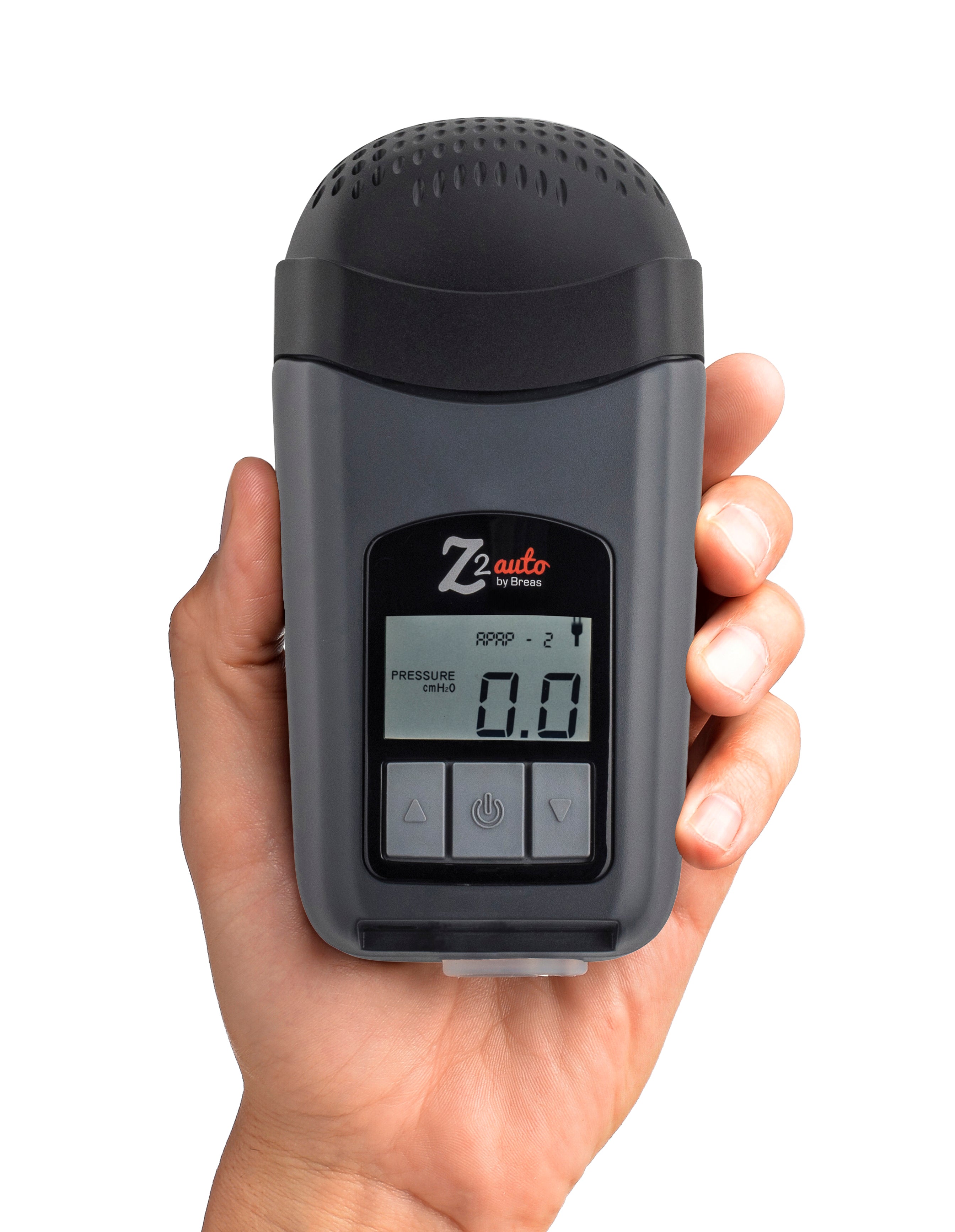
The Breas Z2 Auto is a premium, ultra-portable continuous positive airway pressure (CPAP) machine designed for travelers who require sleep apnea therapy without the bulk of bedside units. It features a proprietary Z-Breathe algorithm for pressure relief, integrated Bluetooth for data tracking, and a compact 10.4-ounce frame that fits in the palm of a hand.
Navigating the world of portable medical devices often involves balancing performance against size. For individuals managing obstructive sleep apnea (OSA), the transition from a robust home unit to a travel-sized device can be met with concerns regarding noise, comfort, and reliability. As of 2026, the Breas Z2 Auto remains a cornerstone in the travel CPAP market, offering a unique set of features that distinguish it from competitors like the ResMed AirMini or the Transcend Micro.
To help you determine if this device is the right companion for your journeys, we have compiled seven comprehensive insights into the technical specifications, real-world performance, and operational nuances of the Breas Z2 Auto.
1. Industry-Leading Portability and Form Factor
The primary draw of the Breas Z2 Auto is its remarkably small footprint. Weighing in at just 10.4 ounces (approx. 295 grams) and measuring 6.48” x 3.30” x 2.02”, it is one of the lightest and most compact Auto-CPAP machines available. This form factor is specifically engineered for users who prioritize "light and fast" travel, whether that involves backpacking, frequent business flights, or off-grid camping.
Unlike traditional CPAP machines that require a dedicated carrying case the size of a small briefcase, the Z2 Auto can easily be tucked into a corner of a carry-on bag or even a large coat pocket. This portability extends beyond the machine itself; because the Z2 utilizes a standard 22mm hose connection, users are not forced to carry proprietary masks or adapters, further reducing the "equipment tail" often associated with travel therapy.
In 2026, where airline carry-on restrictions have become increasingly stringent, the ability to consolidate medical equipment is a significant advantage. The Z2 is FAA-approved for in-flight use, meaning it can be operated during long-haul flights provided you have an appropriate power source or the optional PowerShell battery integrated into your setup.
2. Advanced Comfort with the Z-Breathe Algorithm
One of the most common complaints among CPAP users is the feeling of "fighting" the machine during exhalation. The Z2 Auto addresses this through its proprietary Z-Breathe algorithm. This technology is designed to detect the user's breathing pattern and temporarily reduce the pressure during the exhalation phase of the breath cycle.
The Z-Breathe feature offers three distinct settings, allowing for a high degree of customization:
- CPAP 1: Offers mild pressure swing relief. This is ideal for users who are already accustomed to high-pressure therapy and do not feel significant discomfort during exhalation.
- CPAP 2: The "standard" setting, providing a moderate reduction in pressure that mimics natural breathing more closely.
- CPAP 3: The most aggressive relief setting. This is frequently recommended for new users or those with sensitive airways who find it difficult to breathe out against the incoming air stream.
By reducing the work of breathing, the Z2 Auto helps minimize sleep disturbances and prevents the "suffocation" sensation that can occur with fixed-pressure travel devices. This makes the transition from a high-end home APAP (Auto-CPAP) to a travel unit much more seamless.
3. Addressing the "Noise" Factor: The Q-Lite Muffler
Historically, small CPAP machines were criticized for being louder than their larger counterparts. This is due to the smaller blowers having to spin at higher RPMs to maintain therapeutic pressure. Breas has tackled this issue in the Z2 Auto through a combination of motor dampening and the inclusion of the Q-Lite Inline Muffler.
The Z2 Auto operates at approximately 26 dBA, which is technically within the range of a "whisper." However, noise in CPAP therapy is often categorized into two types: ambient noise (the sound the machine makes in the room) and conducted noise (the sound that travels through the tube to the mask).
The Q-Lite muffler is a lightweight accessory that attaches between the machine and the hose. It uses a series of foam baffles to break up the acoustic energy of the airflow, significantly reducing the conducted noise that the user hears. While no travel CPAP is truly silent, the Z2 Auto, when paired with the Q-Lite, is widely considered one of the quietest options for light sleepers and their partners.
4. Waterless Humidification via HME Technology
Traditional CPAP humidifiers rely on a water chamber and a heating element, which are heavy, require distilled water, and are prone to spilling. For travel, this is often impractical. The Breas Z2 Auto utilizes a "waterless" system called a Heat Moisture Exchanger (HME).
The HME is a small, disposable cartridge that sits between the mask and the hose. It contains a specialized filter material that captures the heat and moisture from your exhaled breath. When you inhale, that stored moisture is returned to the incoming air stream.
Benefits of HME Humidification:
- No Distilled Water Needed: Eliminates the need to find or pack distilled water while traveling.
- Spill-Proof: Since there is no water reservoir, there is zero risk of water damage to the machine's internal electronics.
- Lightweight: The HME adds negligible weight to the setup.
It is important to note that HME technology is generally less powerful than a heated water humidifier. In extremely arid environments or for users who require high levels of humidity to prevent nasal dryness, the HME may feel insufficient. However, for most travelers, it provides a "just right" level of comfort for 3–7 days per cartridge.
5. Integration with the Nitelog App
In the modern healthcare landscape of 2026, data-driven therapy is the standard. The Breas Z2 Auto features integrated Bluetooth connectivity that syncs directly with the Nitelog app, available for both iOS and Android devices.
The Nitelog app serves as a digital sleep diary. It tracks essential metrics such as:
- AHI (Apnea-Hypopnea Index): The number of events per hour.
- Usage Hours: Ensuring compliance with insurance or DOT requirements.
- Leak Rate: Helping users identify if their mask is fit correctly.
- Pressure Trends: Monitoring how the Auto-algorithm is adjusting to your needs throughout the night.
Beyond personal tracking, the app allows users to generate "Compliance Reports" in PDF format. These reports can be emailed directly to a physician or sleep coach, making remote monitoring easy even while you are halfway across the globe. This level of connectivity ensures that traveling does not result in a "black hole" in your clinical data.
6. Versatile Power Options and the PowerShell Integrated Battery
Power flexibility is a critical "insight" for anyone planning to use a CPAP off the grid. The Breas Z2 Auto is designed with a DC power input, making it naturally compatible with various battery solutions.
The most seamless option is the PowerShell with Extended Life Battery. The PowerShell is a "sled" that the Z2 Auto slides into, turning the machine and battery into a single, cohesive unit. This is particularly useful for camping or for use as a backup power source during hotel power outages.
Technical Power Specifications:
| Feature | Detail |
|---|---|
| Input Voltage | 100–240V AC, 50–60Hz (International Compatibility) |
| Battery Type | Lithium-ion rechargeable |
| Runtime | Approximately 8–12 hours (depending on pressure/leak) |
| Charging Time | 4–6 hours via the Z2 power adapter |
| In-Flight Use | FAA Compliant; requires no special airline approval in most cases |
For those who do not wish to use the PowerShell, the Z2 can also be powered by third-party "CPAP batteries" using a 15V DC power cord. This versatility makes it a favorite for van-lifers and international travelers who may encounter inconsistent power grids.
7. Universal Mask Compatibility and Maintenance
A significant limitation of some competing travel CPAPs is the requirement for proprietary masks or connectors. For example, the ResMed AirMini requires specific ResMed masks to function with its humidification system. The Breas Z2 Auto avoids this pitfall by utilizing a standard 22mm outlet.
This means you can use your favorite mask—whether it’s a full-face, nasal, or nasal pillow mask from any manufacturer—without needing an adapter. This is a vital consideration for users who have spent months finding the "perfect" mask and do not want to switch to a different model just for travel.
Maintenance Requirements:
- Air Filters: The Z2 uses small, disposable polyester filters located at the air intake. These should be checked weekly and replaced every 30 days or sooner if they appear grey or dusty.
- Tube Cleaning: Standard CPAP cleaning protocols apply. Use mild soap and water, ensuring the tube is completely dry before reconnecting it to the device.
- Firmware Updates: Occasionally, Breas releases firmware updates to improve the Z-Breathe algorithm or app connectivity. These can usually be applied via a USB connection to a computer.
Comparison: Z2 Auto vs. Leading Travel CPAP Alternatives
To help contextualize where the Z2 Auto sits in the 2026 market, the following table compares it to its two primary rivals.
| Feature | Breas Z2 Auto | ResMed AirMini | Transcend Micro |
|---|---|---|---|
| Weight | 10.4 oz | 10.6 oz | 7.7 oz |
| Humidification | Waterless HME | Waterless HumidX | Waterless HME |
| Mask Compatibility | Universal (22mm) | Proprietary | Universal (22mm) |
| Noise Level | ~26 dBA (with Q-Lite) | ~25-27 dBA | ~27 dBA |
| Integrated Battery | Yes (via PowerShell) | No (Third-party only) | No (Third-party only) |
| Data Tracking | Bluetooth / Nitelog App | Bluetooth / AirMini App | Bluetooth / MyTranscend |
Frequently Asked Questions
Is the Breas Z2 Auto too loud for a partner?
The Z2 Auto produces about 26 dBA of sound. While the machine itself is quiet, the "conducted noise" through the tube can be noticeable. Using the included Q-Lite muffler and placing the machine on a non-resonant surface (like a towel or a padded nightstand) typically makes the sound levels acceptable for most bed partners.
Can I use the Z2 Auto as my primary every-day machine?
While the Z2 Auto is clinically capable of providing nightly therapy, it is designed as a travel unit. Travel CPAPs have smaller motors that may not have the same 5-to-7-year lifespan as a full-sized bedside unit if used 365 days a year. Most clinicians recommend using the Z2 for travel and a more robust unit like the Breas Z1 or a ResMed AirSense for home use.
Does the Z2 Auto work with a full-face mask?
Yes. Because the Z2 Auto uses a standard 22mm connection, it is compatible with all mask types, including full-face masks. However, be aware that full-face masks often require higher pressures and may have higher leak rates, which could deplete the optional PowerShell battery faster than a nasal pillow mask would.
How often do I need to change the HME?
The Heat Moisture Exchanger (HME) is designed for single-use cycles lasting up to 7 days. After 7 days, the moisture-capturing material becomes less effective and may harbor bacteria. If you are traveling for two weeks, you should pack at least two HME cartridges.
Can I use the Z2 Auto on a plane?
Yes, the Breas Z2 Auto is FAA-approved. You should carry a copy of the FAA compliance letter (usually found in the user manual or on the Breas website) to show flight attendants if questioned. It is also recommended to use the battery (PowerShell) rather than relying on in-seat power, which can be unreliable on many aircraft.
Professional Guidance and Final Recommendation
When choosing a travel CPAP in 2026, the Breas Z2 Auto stands out as a "purist's" choice. It does not lock you into a proprietary ecosystem of masks, and it provides a high level of control over your comfort settings through the Z-Breathe algorithm.
Our Recommendation: The Breas Z2 Auto is best suited for the experienced CPAP user who already has a preferred mask and wants a secondary device that is as small as possible without sacrificing data tracking or auto-adjusting pressure capabilities. If you frequently find yourself in situations without reliable power, the addition of the PowerShell makes this one of the most versatile "all-in-one" portable units on the market.
Before purchasing, ensure your prescription is updated for an "Auto-CPAP" and consult with your sleep specialist to determine if the Z-Breathe settings (1, 2, or 3) are appropriate for your specific respiratory needs.