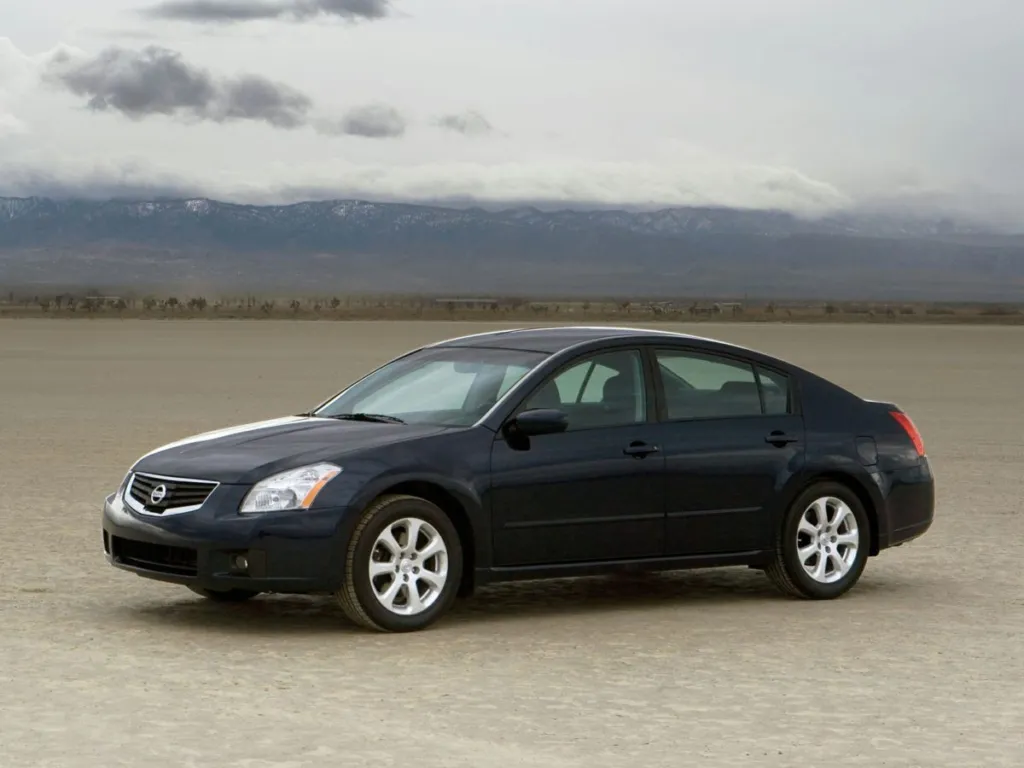
The 2008 Nissan Maxima marked a pivotal transition period for Nissan's flagship sedan, sitting at the intersection of traditional automatic transmissions and the aggressive industry-wide integration of Continuously Variable Transmissions (CVTs). While the 2008 Maxima (the final year of the sixth-generation A35 platform) famously utilized a 5-speed conventional automatic transmission paired with its 3.5-liter VQ35DE V6 engine, its sister vehicles and the immediately succeeding seventh-generation 2009 Maxima revolutionized the lineup by fully adopting the Xtronic CVT. Understanding the technological evolution, operational mechanics, long-term reliability outlook, and maintenance realities of Nissan's CVT era provides crucial context for automotive enthusiasts, technicians, and prospective buyers navigating the legacy of this powertrain generation.
Understanding the Powertrain Landscape of the 2008 Nissan Maxima
To fully grasp the evolution surrounding the 2008 Nissan Maxima transmission, one must first look at what sat beneath the center console of the 2008 model year. Unlike the Altima and Murano of the same era, which were rapidly transitioning to Jatco-manufactured Continuously Variable Transmissions, the 2008 Maxima retained a conventional 5-speed automatic transmission with manual shift mode (Sequential SportShift).
However, 2008 was the swan song for this configuration. Nissan had already committed to the CVT as the cornerstone of its corporate fuel economy and smoothness strategy. The decision to keep the traditional automatic in the 2008 Maxima was largely platform-dependent, as the seventh-generation redesign slated for 2009 was engineered from the ground up to accommodate the advanced Xtronic CVT coupled with a revised V6 powerplant.
The primary driver behind Nissan's aggressive push toward CVTs during this era was the pursuit of strict federal Corporate Average Fuel Economy (CAFE) standards and consumer demand for seamless acceleration. Unlike stepped automatic transmissions that rely on fixed gear ratios, a CVT utilizes a steel push-belt running between two variable-width pulleys. This allows the engine to operate continuously at its most efficient RPM range regardless of vehicle speed, creating an unbroken stream of power delivery.
The Engineering Evolution of Jatco CVTs in Nissan Flagships
The evolution of Nissan's CVT technology—often referred to commercially as Xtronic CVT—was spearheaded by Jatco (Japanese Automatic Transmission Company), a major transmission supplier partially owned by Nissan. During the mid-to-late 2000s, Jatco developed iterations capable of handling higher torque outputs to accommodate larger V6 engines, moving away from smaller four-cylinder applications.
Generation Milestones in the CVT Timeline
- Early Iterations (Mid-2000s): Introduced primarily in compact and mid-size platforms like the Murano and Altima, these early units faced steep learning curves regarding thermal management and belt durability.
- V6 High-Torque Integration (Late 2000s to Early 2010s): The launch of the seventh-generation Maxima in 2009 brought a heavily revised CVT designed specifically to manage the 290 horsepower and 261 lb-ft of torque generated by the VQ35DE engine.
- Advanced Electronic Control Units (ECUs): Software integration evolved rapidly, introducing "step-shifting" simulations to mimic traditional automatic transmissions under heavy acceleration, mitigating the "rubber-band" sensation that alienated traditionalists.
This rapid hardware evolution meant that while the 2008 model relied on legacy planetary gearsets, vehicles rolling off the assembly line mere months later were serving as testbeds for high-horsepower CVT applications. The engineering hurdles overcome during this era laid the groundwork for modern multi-mode transmissions, though not without significant growing pains that impacted long-term reliability perceptions.
Technical Comparison: 2008 Traditional Automatic vs. Successor CVT
Evaluating the transition from the 2008 Maxima's traditional automatic to the subsequent CVT era highlights distinct engineering compromises between mechanical simplicity and continuous efficiency optimization.
| Feature / Metric | 2008 Nissan Maxima (5-Speed Automatic) | Successor Generations (Xtronic CVT) |
|---|---|---|
| Transmission Type | Planetary gearset, torque converter | Steel belt, variable-diameter pulleys |
| Gear Ratios | 5 fixed forward ratios | Infinite ratios within operational range |
| EPA Fuel Economy (City/Hwy) | 19 / 26 MPG (estimated historical) | 19 / 26 to 20 / 30 MPG (depending on year) |
| Torque Capacity Handling | High mechanical robustness, fixed limits | High thermal sensitivity, torque-clamped protection |
| Fluid Requirements | Standard Nissan Matic J or K ATF | Proprietary Nissan NS-2 / NS-3 CVT Fluid |
| Common Failure Points | Valve body wear, solenoid failure | Pulley scoring, belt slip, overheating, bearing wear |
The table above illustrates that while fuel economy saw marginal improvements in subsequent model years, the mechanical complexity shifted dramatically. The traditional automatic in the 2008 model traded infinite gear ratios for mechanical predictability, whereas the subsequent CVTs prioritized continuous optimization at the cost of heightened sensitivity to fluid degradation.
Operational Realities and Maintenance Challenges
For owners of vehicles from this transitional era, understanding the operational requirements of Nissan's powertrain technology is vital for longevity. CVT technology demands strict adherence to maintenance schedules that many motorists historically neglected with conventional automatics.
The Critical Role of Fluid Integrity
Unlike traditional automatic transmission fluid (ATF), which primarily acts as a hydraulic medium and lubricant for clutch packs, CVT fluid must also provide high friction coefficients to prevent the steel push-belt from slipping against the polished steel conical pulleys.
- Thermal Stress: High-torque V6 engines generate substantial heat. Without proper cooling, CVT fluid breaks down rapidly, leading to varnish buildup and reduced hydraulic pressure.
- Fluid Exchange Intervals: While early manufacturer guidelines sometimes suggested "lifetime fluid," real-world operational experience proved that changing Nissan NS-2 (and later NS-3) fluid every 30,000 to 45,000 miles is mandatory to prevent catastrophic internal wear.
Diagnostic Indicators of CVT Distress
Recognizing early warning signs can prevent total transmission failure. Common symptoms in Nissan's high-torque CVT lineage include:
- Whining or Droning Noise: A high-pitched hydraulic whine that typically scales with vehicle speed, often indicating failing primary or secondary pulley bearings.
- Limp Mode: The transmission control module (TCM) locks the vehicle into a single safe gear ratio due to overheating or excessive pressure drops, severely restricting acceleration.
- Delayed Engagement: Hesitation or severe shuddering when shifting between Park, Reverse, and Drive.
Long-Term Reliability Outlook and Modern Perspective
Looking at the 2008 Nissan Maxima transmission and its immediate CVT successors from a 2026 perspective reveals a nuanced legacy. The 2008 model's conventional 5-speed automatic has generally proven to be mechanically durable, often outlasting the engine itself if the transmission fluid has been serviced periodically. Valve body wear and minor electronic solenoid faults are the primary issues associated with this specific unit, both of which are serviceable without a complete transmission overhaul.
Conversely, the subsequent seventh-generation Maxima CVTs developed a polarized reputation. While units equipped with updated auxiliary fluid coolers and maintained with strict fluid hygiene can achieve substantial mileage, neglected units suffered from premature belt wear and pulley scoring.
For prospective buyers evaluating used vehicles from this era, the 2008 model stands out as a safer bet for avoiding complex CVT-specific overhauls, provided the vehicle inspection confirms healthy shifting and clean fluid color. Modern rebuilding techniques, aftermarket valve body upgrades, and a better understanding of thermal management have also made legacy CVTs more manageable for second and third owners, provided they budget for preventative maintenance.
Frequently Asked Questions
Does the 2008 Nissan Maxima have a CVT transmission?
No. The 2008 Nissan Maxima features a traditional 5-speed automatic transmission with manual shift mode, paired with a 3.5-liter V6 engine. Nissan transitioned the Maxima lineup to the Xtronic CVT starting with the redesigned seventh generation in the 2009 model year.
What fluid does a Nissan CVT require, and why is it important?
Nissan CVTs require proprietary fluid formulations, specifically Nissan NS-2 for older generations or NS-3 for later models. Using standard automatic transmission fluid (ATF) will cause immediate, catastrophic belt slip and destroy the internal pulleys due to incorrect friction characteristics.
What are the main symptoms of CVT failure in Nissan vehicles from this era?
Common symptoms include a loud metallic whining noise at highway speeds, severe shuddering or jerking during acceleration, delayed engagement when shifting into Drive or Reverse, and the vehicle entering "limp mode" due to overheating.
Can a Nissan CVT be repaired, or does it always require complete replacement?
While minor issues such as pressure control solenoids or external valve bodies can sometimes be replaced individually, internal damage to the steel belt, conical pulleys, or primary bearings typically requires a complete transmission replacement or a specialized professional rebuild.
How can I maximize the lifespan of a Nissan CVT?
The single most effective preventative measure is changing the CVT fluid every 30,000 to 45,000 miles, avoiding aggressive towing or excessive payload weights, and ensuring the auxiliary transmission cooling system is clean and fully functional.
Practical Next Actions and Recommendations
For current owners of 2008 Nissan Maximas, maintaining the conventional 5-speed automatic involves periodic fluid inspection, replacing the external filter if accessible, and addressing minor solenoid or gasket leaks promptly before they lead to low fluid pressure. For those exploring or maintaining vehicles from the subsequent CVT era, prioritize a thorough service history check, verify that only OEM-spec fluid was utilized, and consider installing an aftermarket auxiliary fluid cooler if driving in heavy traffic or hot climates. Always consult certified transmission technicians specializing in Japanese drivetrains for diagnostic scans rather than relying solely on generic OBD-II fault codes.