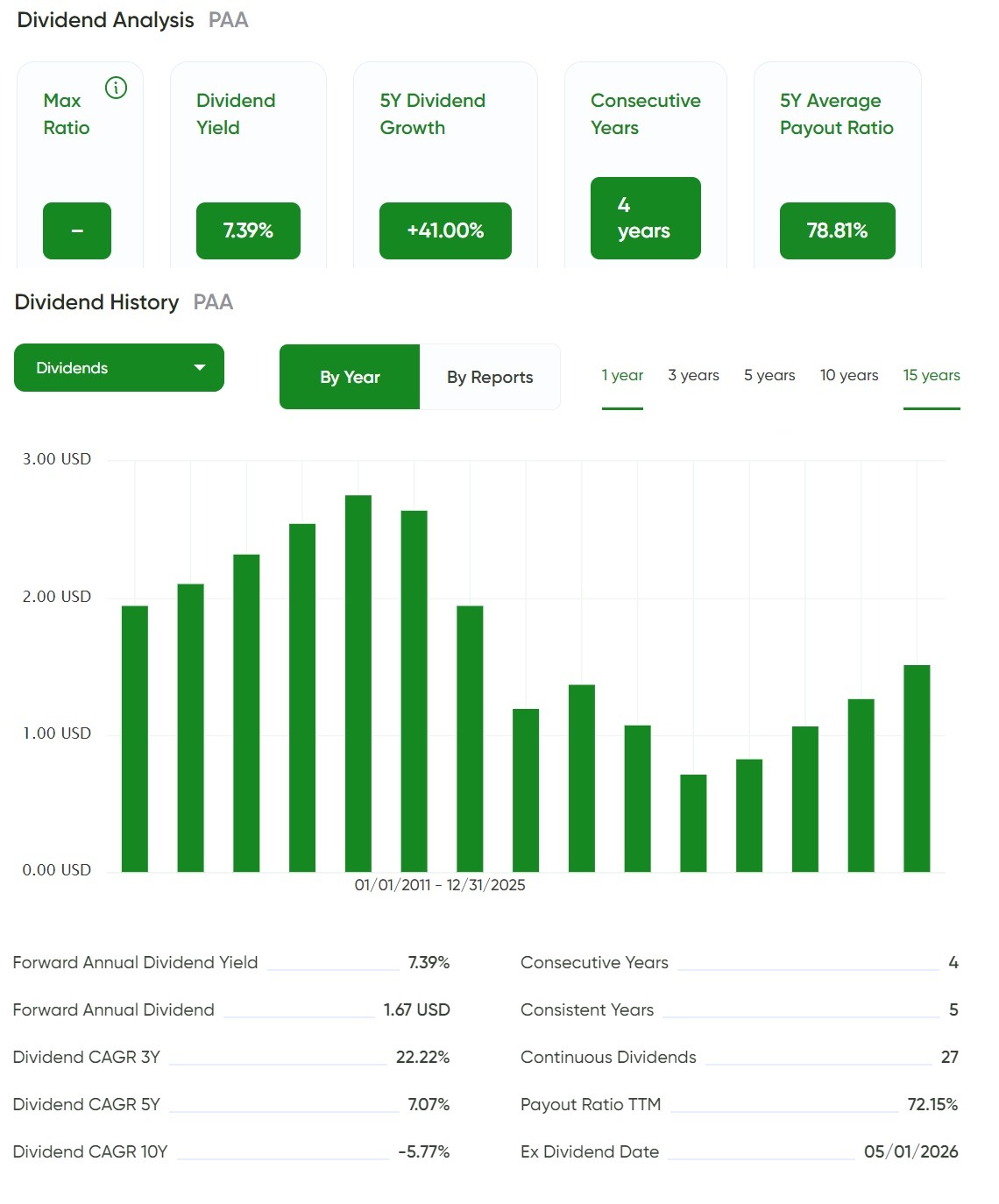
Master Limited Partnerships (MLPs) can be effective tools for income-focused investors, offering historically high yields and specific tax advantages, provided you are prepared for the complex tax reporting requirements and the unique regulatory structure of these entities. While they provide exposure to critical energy infrastructure, they are not suitable for every investor, particularly those prioritizing simplicity or tax-deferred accounts.
Understanding the MLP Structure
A Master Limited Partnership is a publicly traded entity that combines the tax benefits of a private partnership with the liquidity of a publicly traded stock. To qualify as an MLP, a partnership must generate at least 90% of its income from qualifying sources, which typically include the exploration, development, mining, processing, or transportation of natural resources—most commonly oil, natural gas, and refined petroleum products.
Unlike a standard corporation, an MLP is structured as a pass-through entity. It does not pay federal income tax at the entity level. Instead, all income, gains, losses, and deductions are passed directly through to the partners (the shareholders). This structure is designed to encourage investment in the capital-intensive infrastructure—such as pipelines and storage facilities—that is essential to the energy sector.
The Tax Implications of MLP Ownership
The most significant distinction between an MLP and a traditional equity investment is how you report your income. Because the entity pays no corporate taxes, you receive a Schedule K-1 form annually instead of the standard 1099-DIV form.
The distributions you receive from an MLP are generally treated as a return of capital rather than as dividend income. This has a two-fold effect:
- Tax Deferral: The distribution reduces your cost basis in the investment. You do not pay immediate taxes on the portion of the distribution classified as a return of capital.
- Capital Gains Impact: When you eventually sell your units, the difference between your sale price and your adjusted cost basis—which will be lower due to the distributions—will likely result in a higher capital gain.
Investors must be aware that this process complicates annual tax filings. If you hold MLPs in a taxable brokerage account, you will need to wait for the K-1, which often arrives later than typical 1099 forms, potentially delaying your tax filing process.
Strategic Advantages of MLPs
Investors frequently turn to MLPs for their high yield, which often exceeds that of the broader S&P 500 or standard utility stocks. Because these companies primarily operate "midstream" infrastructure—gathering, processing, storing, and transporting energy—their revenue is often fee-based. This means they are generally less sensitive to the volatile fluctuations of daily commodity prices compared to "upstream" exploration and production companies.
As long as the volume of energy moving through their pipes remains steady, MLPs can often maintain consistent cash flows. For income-oriented portfolios, this reliability serves as a primary draw, provided the management team maintains a sustainable distribution coverage ratio.
Potential Risks and Limitations
Despite their yield potential, MLPs carry distinct risks:
- Tax Complexity: The requirement to process K-1 forms across multiple states (where the partnership has assets) can be cumbersome. Some investors find the additional accounting costs or the complexity of tax software integration outweigh the benefits.
- Interest Rate Sensitivity: Because MLPs are high-yield instruments, they often compete with bonds for investor capital. If interest rates rise, the relative attractiveness of MLP yields may decline, leading to downward pressure on unit prices.
- Sector Concentration: Investing in MLPs is an investment in energy infrastructure. Changes in energy policy, environmental regulations, or a long-term transition away from fossil fuels present existential risks to the business model of many midstream partnerships.
- Unrelated Business Taxable Income (UBTI): MLPs are generally considered unsuitable for tax-advantaged accounts like IRAs or 401(k)s. If an IRA holds assets that generate significant UBTI, the account itself may owe taxes, negating the tax-shielded nature of the retirement account.
Comparing Investment Vehicles
| Feature | Master Limited Partnership (MLP) | Dividend-Paying Corporation |
|---|---|---|
| Tax Reporting | Schedule K-1 | Form 1099-DIV |
| Primary Benefit | Return of Capital / Tax Deferral | Predictable Taxation |
| Account Suitability | Taxable Brokerage | Any (IRA, 401k, Taxable) |
| Income Nature | Partnership Distribution | Qualified/Ordinary Dividend |
| Liability | Limited Partner | Limited Shareholder |
Prerequisites for MLP Investing
Before purchasing units in an MLP, ensure your financial situation aligns with the requirements of this asset class:
- Account Choice: Prioritize using a standard taxable brokerage account. Avoid IRAs or 401(k) accounts to prevent complications with UBTI and potential tax liabilities for your retirement funds.
- Tax Proficiency: Ensure you are comfortable with—or have professional assistance for—the K-1 reporting process. If your taxes are prepared by an accountant, inform them early that you intend to hold MLPs, as this may increase your preparation fees.
- Time Horizon: MLPs are rarely "buy and forget" investments. They require monitoring of the energy sector, interest rate environments, and the specific distribution history of the partnership.
Addressing Common Questions (FAQ)
1. Can I hold MLPs in an IRA? While you technically can, it is generally discouraged. MLPs can generate Unrelated Business Taxable Income (UBTI). If your IRA generates more than $1,000 of UBTI in a year, the trust may be required to pay taxes, which defeats the tax-advantaged purpose of the IRA.
2. Why are MLP distributions sometimes called "Return of Capital"? In the MLP structure, the distribution is not technically a "dividend" paid from earnings, but a distribution of partnership cash flow. This is treated as a return of your original investment, lowering your tax basis rather than being taxed as immediate income.
3. Are MLPs safe during recessions? While their fee-based models provide some buffer, they are not immune to market downturns. During significant economic shocks or periods of extreme energy market volatility, MLP unit prices can be volatile, and some partnerships may be forced to cut distributions if their debt levels are too high.
4. What happens if I sell my MLP units? When you sell, you will realize a capital gain or loss. A significant portion of your gain may be "recaptured" as ordinary income due to the depreciation deductions passed through to you over the years you held the units. Your broker usually provides a supplemental breakdown to help calculate this.
5. How do I know if an MLP is financially healthy? Examine the "Distribution Coverage Ratio." This measures the cash available for distribution against the actual amount distributed. A ratio above 1.0 indicates that the company is generating enough cash to cover its payouts without relying on debt.
Next Steps for the Prospective Investor
If you are considering adding MLPs to your portfolio, start by auditing your current tax situation. If your portfolio is primarily composed of tax-advantaged accounts, you may prefer an MLP Exchange Traded Fund (ETF) or an Exchange Traded Note (ETN). These vehicles provide exposure to the energy infrastructure sector while delivering a 1099 form instead of a K-1, effectively bypassing the partnership tax complexity at the cost of management fees.
Should you decide to invest directly in individual partnerships, select those with strong balance sheets, investment-grade credit ratings, and a proven history of maintaining or growing distributions even during energy sector downturns. Monitor your tax reporting deadlines closely, and ensure your tax software or CPA is prepared for the specifics of partnership taxation.