In Denver, Colorado, homeowners are not legally required to carry auto insurance simply because they own a home. However, Colorado state law mandates that every owner of a motor vehicle operated on public roads must maintain specific minimum levels of liability insurance. While the two requirements are legally distinct, homeownership often influences insurance decisions due to asset protection needs and multi-policy financial incentives.
The confusion regarding whether homeowners must have auto insurance often stems from how these two separate financial products interact. In the Denver metro area, the legal landscape in 2026 remains clear: your status as a property owner does not trigger a statutory requirement for vehicle coverage. Instead, your status as a vehicle owner or operator is the sole trigger for mandatory auto insurance. However, for most Denver residents, maintaining both is not just a matter of law, but a critical strategy for safeguarding the equity in their homes.
The Legal Framework: Colorado Mandatory Auto Insurance Laws
To understand why homeowners are not specifically targeted by auto insurance mandates, one must look at the Colorado Revised Statutes. Under C.R.S. § 10-4-619, Colorado operates as a "tort" state. This means the person at fault in an accident is responsible for the damages. To ensure drivers can meet this financial responsibility, the state requires "Compulsory Liability Insurance."
As of 2026, the minimum liability requirements in Denver and throughout Colorado include:
- $25,000 for bodily injury or death to any one person in an accident.
- $50,000 for bodily injury or death to all persons in any one accident.
- $15,000 for property damage in any one accident.
These mandates apply to the vehicle, not the residence. If you own a home in Washington Park or Five Points but do not own or operate a motor vehicle, you have no legal obligation to purchase an auto insurance policy. Conversely, if you rent an apartment but own a car, you must comply with the state's auto insurance requirements.
Why Homeowners Often Think Auto Insurance is Required
The perceived link between homeownership and auto insurance is often driven by three primary factors: lender requirements, umbrella insurance prerequisites, and bundling marketing.
1. Mortgage Lender Requirements
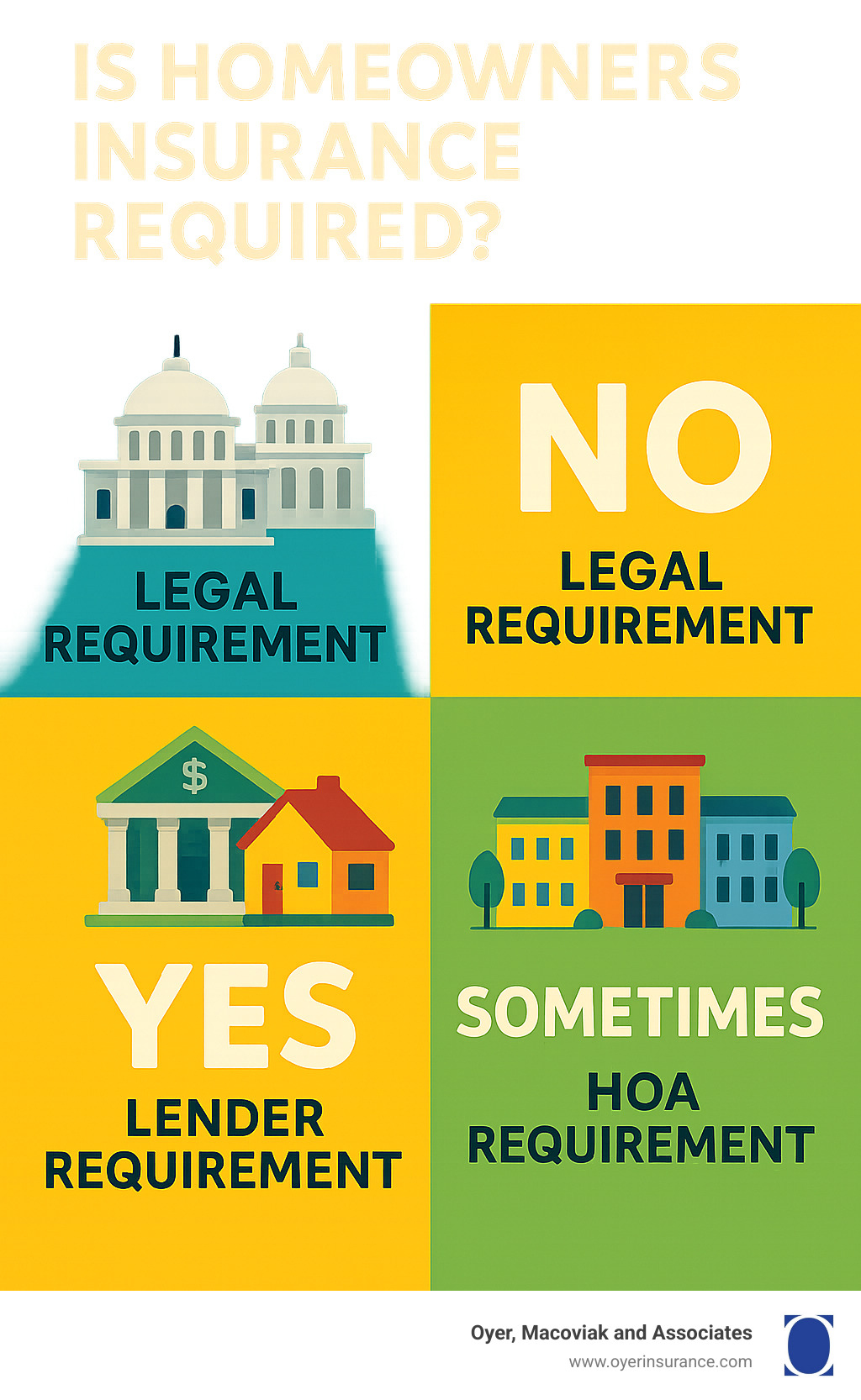
While the state of Colorado does not require homeowners insurance by law, almost all mortgage lenders in Denver require it as a condition of the loan. This creates a scenario where the "requirement" is contractual rather than statutory. Some homeowners mistakenly believe that since they are required to have one form of protection (home), they are required to have the other (auto).
2. The Role of Umbrella Insurance
For many Denver homeowners, particularly those with significant equity in their property, an Umbrella Liability policy is essential. However, insurance carriers in Colorado generally will not issue an umbrella policy unless the homeowner carries high limits on both their homeowners insurance and their auto insurance. In this context, if a homeowner wants the extra layer of protection that an umbrella policy provides for their home, they are effectively "required" by the insurance company to maintain an active auto policy with specific coverage levels.
3. Multi-Policy Bundling
Insurance agencies in the Denver area heavily promote "bundling" home and auto insurance. In 2026, the competitive nature of the Colorado insurance market means that homeowners can often save 15% to 25% on their total premiums by holding both policies with the same carrier. This financial pressure creates a functional environment where it is rarely logical for a Denver homeowner to have one without the other, even if the law does not strictly demand it.
Asset Protection: Why Denver Homeowners Need Auto Insurance
For a homeowner in Denver, auto insurance serves a purpose far beyond legal compliance. It acts as a shield for the home itself. Because Colorado is a tort state, if you are at fault in a major traffic accident and your liability limits are exhausted, the injured party can pursue your personal assets to satisfy a judgment.
In a high-value real estate market like Denver—where median home prices in neighborhoods like Cherry Creek or Hilltop remain substantial—the equity in your home is a primary target in a lawsuit. If you do not have adequate auto insurance, a court could potentially place a lien on your property or force a sale to pay for the medical expenses or property damage of another driver. Therefore, while the law only requires $25,000/$50,000/$15,000, most financial advisors in Denver recommend that homeowners carry at least $100,000/$300,000/$100,000 to prevent an auto-related accident from resulting in the loss of their home.
Comparing Insurance Requirements in Denver
The following table outlines the differences between the types of insurance a Denver resident might encounter and who or what mandates them.
| Insurance Type | Legally Required by State? | Required by Lenders? | Primary Purpose |
|---|---|---|---|
| Auto Insurance | Yes (for vehicle owners) | No (usually) | Liability for bodily injury and property damage to others. |
| Homeowners Insurance | No | Yes (if you have a mortgage) | Protection for the physical structure and personal liability. |
| Umbrella Insurance | No | No | Excess liability protection above home and auto limits. |
| SR-22 Insurance | Yes (for high-risk drivers) | No | A certificate proving the state-mandated coverage is active. |
Denver-Specific Considerations for 2026
The insurance environment in Denver has unique characteristics that homeowners should consider when evaluating their coverage needs.
Weather-Related Risks
Denver is prone to severe hailstorms and heavy winter snowfall. While liability insurance is the only legal requirement, most homeowners find that "Comprehensive" coverage on their auto policy is vital. Hail damage claims in the Denver metro area are among the highest in the nation. For a homeowner, paying for a car repair out-of-pocket after a storm can drain funds intended for home maintenance or mortgage payments.
Uninsured and Underinsured Motorists
Colorado has historically seen a significant percentage of uninsured drivers. If you are a homeowner in Denver and are hit by an uninsured motorist, you may be forced to use your own funds for medical bills or vehicle replacement. This financial strain can jeopardize your ability to keep up with property taxes or HOA fees. Consequently, "Uninsured Motorist" (UM) and "Underinsured Motorist" (UIM) coverage are highly recommended for property owners in the city.
Penalties for Lacking Mandatory Auto Insurance in Colorado
If you are a homeowner who also owns a vehicle but fails to maintain the state-required auto insurance, the penalties in 2026 are severe. Colorado law does not grant leniency based on property ownership status.
- Fines and Fees: Initial convictions for driving without insurance can result in minimum fines of $500.
- License Suspension: The Colorado Department of Revenue may suspend your driving privileges until you can provide proof of insurance.
- SR-22 Requirement: You may be required to file an SR-22 form for up to three years. This is a document filed by your insurance company with the state to prove you have the required coverage. It significantly increases your premium costs.
- Points on Record: Convictions typically add 4 points to your Colorado driving record.
- Community Service: Courts in Denver often mandate 40 hours of community service for first-time offenders.
The Interaction Between Home and Auto Liability
It is a common misconception that homeowners insurance covers car accidents if they happen on your property. For example, if you back out of your driveway in Denver and hit a neighbor's car, your auto insurance liability coverage handles the claim, not your homeowners insurance.
Conversely, if a guest trips on your sidewalk and sues you, your homeowners insurance handles the claim. The only place these two often meet is in the aforementioned umbrella policy, which sits on top of both to provide a unified "safety net" for your total net worth, including your Denver real estate holdings.
How to Verify Your Coverage Requirements
If you are unsure of your current obligations as a Denver resident, follow these steps to ensure you are compliant and protected:
- Check Vehicle Registration: If you have a vehicle registered in Denver County, you must have insurance. The state’s "Insurance Identification Database" tracks this and can trigger a registration suspension if coverage lapses.
- Review Mortgage Documents: Look for the "Insurance Disclosure" section to see what your lender requires. While they rarely require auto insurance, they may require specific types of hazard insurance.
- Consult a Local Agent: Because Denver has specific risks (hail, high traffic volume on I-25 and I-70), an agent can help you determine if your auto limits are high enough to protect your home's equity.
- Evaluate Your Assets: If the value of your Denver home has increased significantly (as many have by 2026), your 10-year-old auto policy limits may no longer be sufficient to protect your increased net worth.
Common Mistakes Homeowners Make with Auto Insurance
Many homeowners in the Denver area fall into traps that leave them financially vulnerable. One major error is opting for "Minimum Liability Only." While this satisfies the law, it is rarely enough for a homeowner. If you cause a multi-car pile-up on a snowy Denver morning, $15,000 in property damage coverage will not even cover the cost of one modern electric vehicle, leaving your personal assets—including your home—exposed to the remaining balance.
Another mistake is failing to update the garaging address. If you move from a rental in Aurora to a home you purchased in Denver, you must notify your auto insurer. Insurance rates are calculated by zip code. Failure to update this information could lead to a claim denial, which again puts your personal finances at risk.
Frequently Asked Questions
Can I be sued for my home if I cause a car accident without enough insurance?
Yes. In Colorado, if your auto insurance limits do not cover the total damages you caused in an accident, the other party can sue you personally. A judgment against you can lead to a lien on your home, garnished wages, or the seizure of non-exempt bank accounts. This is why Denver homeowners should view auto insurance as a form of home protection.
Is auto insurance cheaper for homeowners in Denver?
Generally, yes. Statistically, homeowners are viewed by insurance companies as more stable and lower-risk than renters. Most major insurers in Colorado offer a "homeowner discount" on auto policies, regardless of whether you bundle the two policies together.
What if I own a home but don't own a car in Denver?
If you do not own a car and do not drive, you are not required to have auto insurance. However, if you occasionally use car-sharing services or rent vehicles, you might consider a "Non-Owner Auto Insurance" policy. This provides liability protection that follows you as a driver, protecting your assets (like your home) if you are involved in an accident in a vehicle you do not own.
Does my homeowners insurance cover my car if it's stolen from my garage?
No. Homeowners insurance typically covers the contents of your garage (tools, bikes, etc.), but it specifically excludes motor vehicles. You need "Comprehensive" coverage on your auto insurance policy to be protected against theft, even if the theft occurs inside your locked Denver home.
Are there any Denver-specific insurance requirements?
No, insurance requirements are set at the state level by the Colorado Division of Insurance. However, Denver residents may face higher premiums than those in rural Colorado due to higher theft rates and traffic density, making the search for homeowner-based discounts even more important.
Practical Recommendation
If you own a home in Denver, your primary goal should be asset preservation. While you are not legally required to have auto insurance simply because you are a homeowner, you are legally required to have it if you own a car.
Next Step: Contact a local Denver insurance advisor to perform a "Gap Analysis." Ensure that your auto liability limits are at least equal to your home's equity. If your home is worth $600,000 and you only have $50,000 in auto liability, you have a $550,000 "gap" where your home is vulnerable. Consider increasing your auto limits and adding a $1 million umbrella policy; in the 2026 market, the peace of mind is well worth the relatively low monthly cost.