Humans are multicellular organisms composed of an estimated 30 to 37 trillion cells. Unlike unicellular organisms, which perform all life functions within a single cell membrane, human cells are highly specialized and organized into complex tissues and organ systems that work together to maintain the body’s survival and homeostasis.
Defining the Biological Structure of Humans
To understand why humans are classified as multicellular, we must first look at the fundamental unit of life: the cell. In the biological landscape of 2026, our understanding of cellular complexity has never been more refined. All living things are categorized based on their cellular composition. Unicellular organisms, such as bacteria and amoebas, consist of only one cell that carries out every necessary function—metabolism, reproduction, and waste management—independently.
Humans, however, belong to the kingdom Animalia and the domain Eukaryota. We are complex multicellular organisms, meaning our existence relies on the coordinated effort of trillions of individual cells. These cells do not function in isolation; they are part of a vast, integrated network. While a single human cell contains the genetic blueprint for the entire person, it cannot survive on its own outside the controlled environment of the body or a specialized laboratory setting.
The shift from unicellularity to multicellularity was a pivotal moment in evolutionary history. It allowed for an increase in size and the development of specialized functions that a single cell simply cannot manage. In humans, this complexity is visible from the moment of conception, where a single fertilized egg (a unicellular zygote) begins a rapid process of division and differentiation to eventually form a multi-layered, functional human being.
The Hierarchy of Biological Organization
A defining characteristic of multicellular organisms like humans is the presence of a structural hierarchy. This organization ensures that the trillions of cells in our bodies perform their roles efficiently without interfering with one another. This hierarchy is typically divided into five distinct levels: cells, tissues, organs, organ systems, and the organism.
The Cellular Level
The cell is the basic building block. Even though humans are multicellular, each individual cell is a powerhouse of activity. Human cells are eukaryotic, meaning they contain a nucleus and membrane-bound organelles such as mitochondria (for energy) and ribosomes (for protein synthesis). In a multicellular system, these cells are not identical; they are specialized.
Tissues
When groups of similar cells work together to perform a specific function, they form tissues. Humans have four primary types of tissue:
- Epithelial Tissue: Covers the body surface and lines internal organs and cavities.
- Connective Tissue: Supports and binds other tissues, such as bone, blood, and cartilage.
- Muscle Tissue: Responsible for movement through contraction.
- Nervous Tissue: Facilitates communication by transmitting electrical impulses.
Organs and Organ Systems
Tissues combine to form organs, such as the heart, lungs, or brain. Each organ performs a complex task that contributes to the body's overall health. These organs then group into organ systems—such as the circulatory, respiratory, and nervous systems. This high degree of division of labor is a hallmark of multicellularity and is entirely absent in unicellular life forms.
Cellular Specialization and Differentiation
In a unicellular organism, the single cell is a "jack of all trades." It must find food, defend itself, and reproduce all on its own. In humans, cells are "specialists." This process, known as cellular differentiation, occurs during embryonic development when stem cells receive chemical signals to transform into specific cell types.
There are over 200 different types of cells in the human body. For example, red blood cells are shaped like biconcave discs to maximize their surface area for carrying oxygen, and they lack a nucleus to make more room for hemoglobin. In contrast, neurons (nerve cells) have long, wire-like extensions called axons that allow them to transmit signals over long distances, such as from the brain to the tip of a toe.
This specialization allows for much greater efficiency. Muscle cells can focus entirely on contraction and movement because they don't have to worry about filtering toxins; that is the specialized job of the cells in the liver and kidneys. However, this interdependence also means that if one system fails, the entire organism is at risk. This is a fundamental trade-off of the multicellular strategy: increased capability and size at the cost of the total independence of individual cells.
How Human Cells Communicate
For a multicellular organism to function as a single unit, its cells must be able to communicate. If 37 trillion cells acted randomly, the organism would cease to function. Humans utilize two primary communication systems to coordinate cellular activity: the nervous system and the endocrine system.
The nervous system uses electrical impulses and neurotransmitters to send rapid-fire messages throughout the body. This allows for nearly instantaneous reactions, such as pulling a hand away from a hot surface. The endocrine system, on the other hand, uses hormones—chemical messengers secreted into the bloodstream—to regulate long-term processes like growth, metabolism, and reproductive cycles.
At a more granular level, cells communicate through direct contact or by releasing signaling molecules that bind to receptors on the surfaces of neighboring cells. This "cell signaling" ensures that tissues grow to the correct size, that the immune system recognizes "self" from "non-self," and that cells programmed for death (apoptosis) do so without damaging surrounding tissue. This level of sophisticated coordination is what separates a truly multicellular organism from a mere colony of unicellular organisms.
Comparing Multicellular and Unicellular Organisms
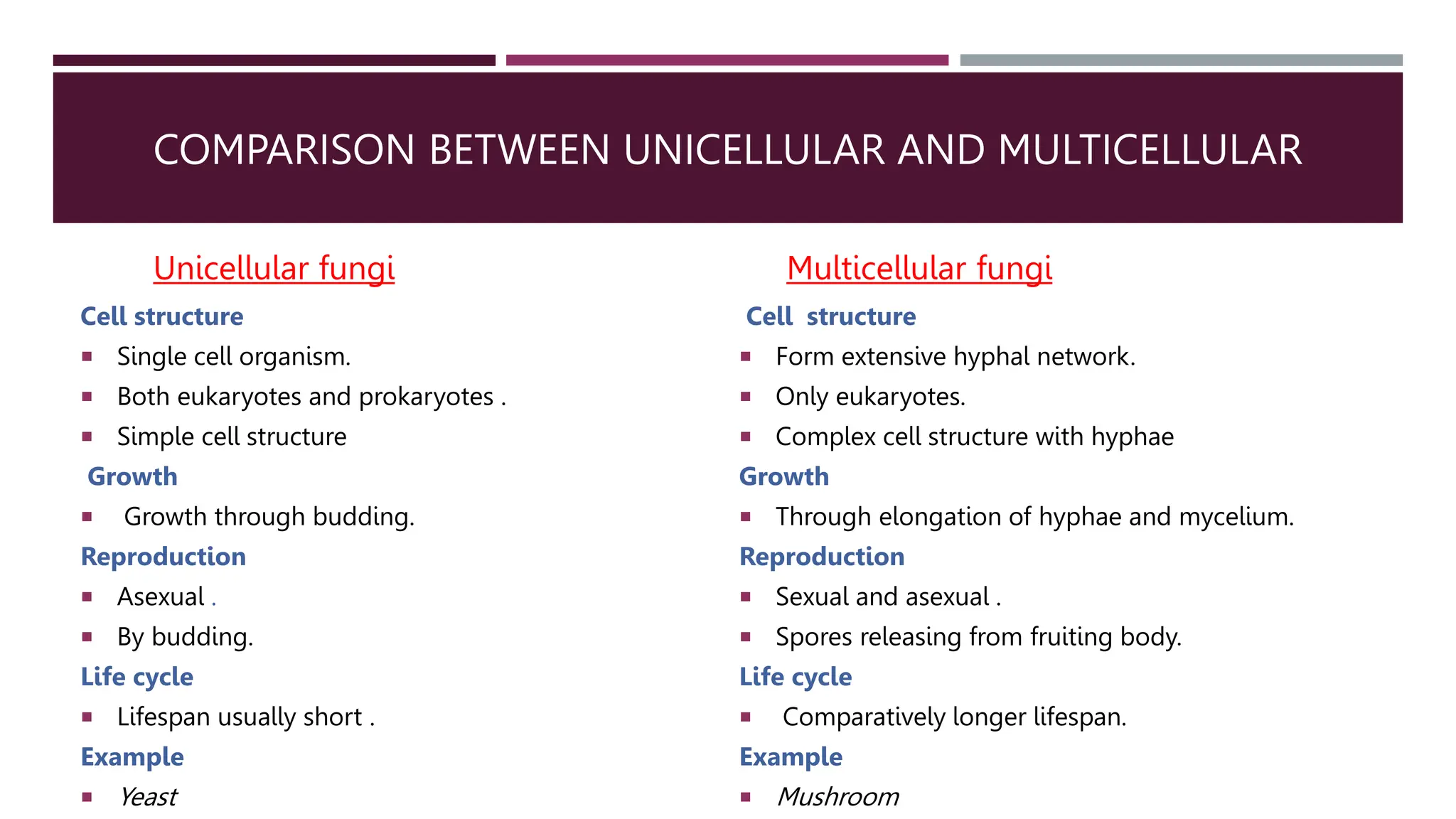
The differences between these two life strategies are profound, affecting everything from life span to reproductive methods. The following table highlights the primary distinctions between unicellular organisms and multicellular humans.
| Feature | Unicellular Organisms | Multicellular Humans |
|---|---|---|
| Cell Count | Single cell | Trillions of cells |
| Complexity | Low; one cell does everything | High; specialized cells and systems |
| Size | Microscopic | Macroscopic (visible to the naked eye) |
| Life Span | Generally short | Long; cells are replaced regularly |
| Reproduction | Primarily asexual (binary fission) | Sexual reproduction (meiosis/gametes) |
| Injury Response | Death of the cell is death of the organism | Individual cells die, but the organism survives |
| Energy Needs | Low | High; requires complex nutrient intake |
| Evolutionary Goal | Rapid reproduction and adaptation | Stability, complexity, and longevity |
The Evolutionary Journey to Multicellularity
Humans did not simply appear as multicellular beings; our biological lineage stretches back billions of years to unicellular ancestors. The transition to multicellularity is believed to have occurred multiple times independently across different branches of the tree of life. For the ancestors of humans, this transition likely began with individual cells forming colonies for protection or improved foraging.
Over millions of years, these colonies developed "division of labor," where some cells focused on movement while others focused on digestion. This specialization eventually became permanent and genetically encoded. The move to multicellularity allowed organisms to occupy new ecological niches, grow larger to avoid predation, and develop complex sensory organs to interact with their environment.
In 2026, genomic research continues to uncover the specific genes that allow cells to "stick" together and communicate. These "adhesion molecules" and "signaling pathways" are the biological glue that makes human life possible. Understanding these pathways is not just of academic interest; it is crucial for medical science, as many diseases, including cancer, involve a breakdown in the rules of multicellularity where cells begin to act selfishly rather than as part of the whole.
The Microbiome: A Unicellular World Within Us
An interesting nuance in the discussion of whether humans are multicellular is the presence of the human microbiome. While the human body itself is multicellular, it is home to trillions of unicellular organisms, including bacteria, archaea, and fungi. In fact, some estimates suggest that the number of microbial cells in and on our bodies is roughly equal to the number of human cells.
These unicellular residents are vital to our health. They help digest food, produce essential vitamins like B12 and K, and educate our immune systems. However, even though we carry trillions of unicellular organisms, humans remain classified as multicellular. The bacteria in our gut are separate species with their own distinct DNA. They are symbionts—partners in a biological relationship—but they are not part of the human cellular structure itself. This distinction is important for understanding human biology as an ecosystem as well as an individual organism.
Life Cycles and the Single-Cell Stage
Every human begins their life as a single cell. This occurs during fertilization, when a unicellular sperm cell from the father fuses with a unicellular egg cell from the mother to create a zygote. This zygote is, for a very brief moment, a unicellular human stage.
However, the zygote is inherently programmed for multicellularity. Through a process called mitosis, the zygote begins to divide: one cell becomes two, two become four, and so on. As the number of cells increases, they begin to organize into a hollow ball called a blastocyst, and eventually, the process of gastrulation begins, creating the different layers that will become the skin, nervous system, gut, and muscles. This rapid transition from a single cell to a complex organism is one of the most remarkable processes in biology and confirms our status as multicellular beings.
Common Misconceptions About Cellularity
A frequent point of confusion is the idea that because humans have specialized cells, they might be "collections" of unicellular organisms. This is incorrect. A collection of unicellular organisms, like a bacterial biofilm or a Volvox colony, lacks the deep tissue integration and total interdependence found in humans. If you separate a cell from a Volvox colony, it can often survive and start a new colony. If you separate a human heart cell or a neuron from the body, it will quickly die because it lacks the support systems (oxygen, nutrients, waste removal) provided by other specialized cells.
Another misconception involves viruses. People sometimes ask if viruses are unicellular. Viruses are actually acellular—they are not cells at all and lack the machinery to reproduce without a host cell. Humans, by contrast, are at the opposite end of the complexity spectrum, representing one of the most advanced forms of multicellular life on Earth.
Frequently Asked Questions
Can a human ever be unicellular?
No. While humans start as a single-celled zygote, that cell is a developmental stage, not a complete, functioning human organism. A single human cell lacks the organs and systems necessary to perform the biological functions we define as human life, such as breathing, thinking, or complex movement.
What happens if human cells start acting like unicellular organisms?
This is essentially what happens in cancer. Cancer occurs when a cell's regulatory mechanisms fail, and it begins to grow and divide uncontrollably, ignoring the signals from the rest of the body. In a sense, the cancer cell reverts to a "selfish" unicellular-like behavior, which ultimately threatens the life of the multicellular host.
Are all animals multicellular?
Yes, all organisms classified under the kingdom Animalia are multicellular. While some animals, like sponges, are very simple and lack true tissues or organs, they are still composed of multiple specialized cells that work together, distinguishing them from unicellular protozoa.
How do humans maintain so many cells?
The body uses a process called homeostasis to monitor and maintain the cellular environment. This involves the constant delivery of oxygen and glucose via the circulatory system and the removal of carbon dioxide and urea. Additionally, the body constantly replaces old or damaged cells through mitosis to ensure the total cell count remains stable.
Is the number of cells in a human always the same?
No, the number varies based on age, size, and health. A newborn has fewer cells than an adult, and a larger adult will have more cells than a smaller adult. Furthermore, the body is in a constant state of "cell turnover," where billions of cells die and are replaced every single day.
Summary of Next Actions
Understanding that humans are multicellular is the first step in exploring the complexities of anatomy, physiology, and health. If you are interested in learning more about how your multicellular body works, consider the following:
- Study Human Anatomy: Look into how different organ systems, like the respiratory and circulatory systems, provide the necessary environment for your trillions of cells to survive.
- Explore the Microbiome: Research how the unicellular organisms living in your gut interact with your multicellular systems to influence your mood, weight, and immunity.
- Learn About Cell Biology: Investigate the structures inside a single human cell, such as the mitochondria and the nucleus, to see how each "specialist" performs its job.
- Stay Informed on Medical Research: In 2026, regenerative medicine and stem cell therapy are leading fields that utilize our knowledge of multicellularity to heal damaged tissues and organs.