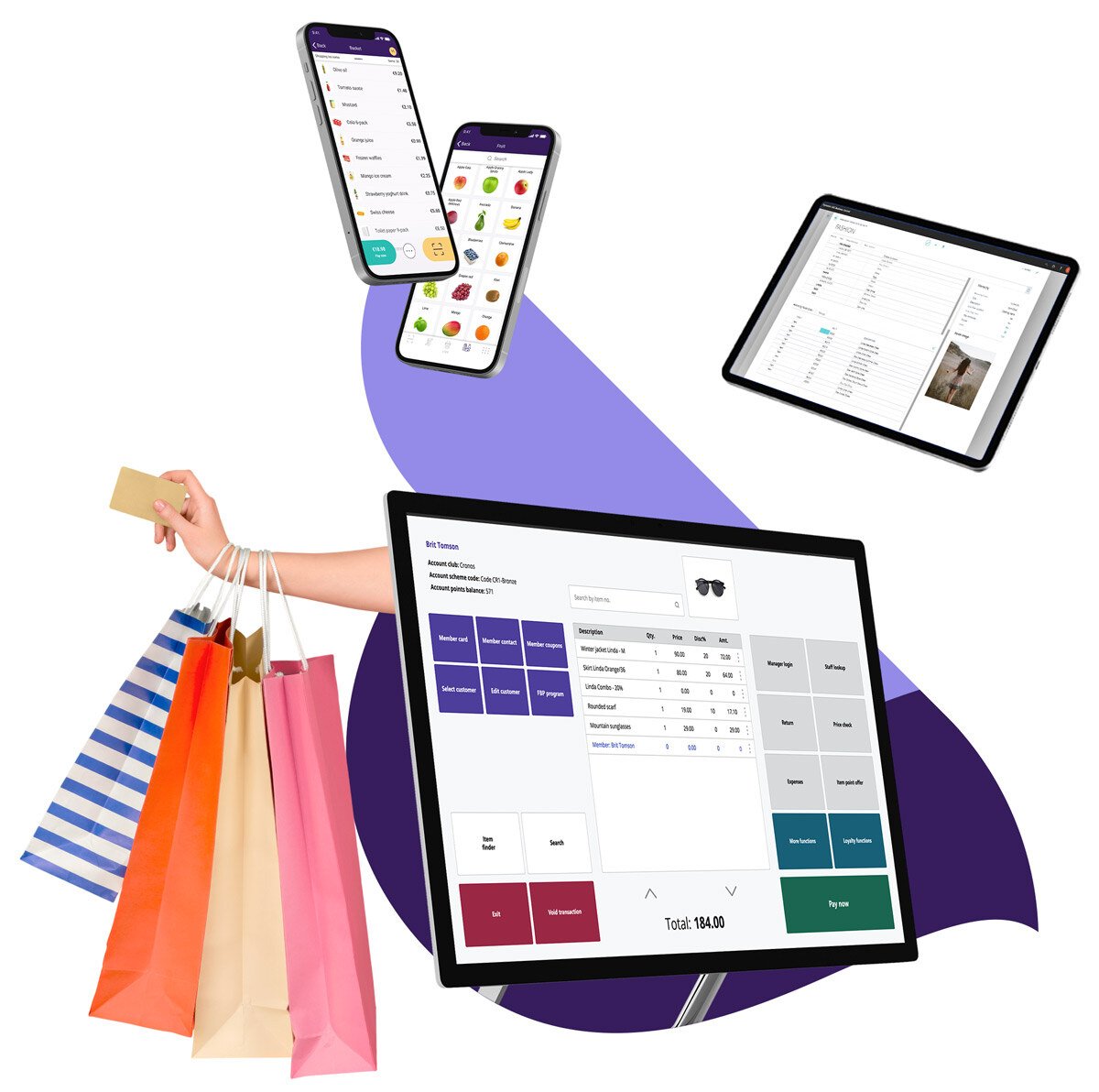
Aptos Software powers unified retail POS by consolidating commerce functions into a single, cloud-native architecture. By bridging the gap between digital and physical storefronts, it allows retailers to execute complex fulfillment strategies, maintain real-time inventory accuracy, and personalize customer interactions, effectively turning the traditional point of sale into a comprehensive point of service.
The retail landscape has undergone a fundamental shift where the distinction between "online" and "offline" shopping has essentially vanished in the eyes of the consumer. As of 2026, the demand for high-velocity, frictionless commerce requires more than just a cash register; it demands a sophisticated ecosystem capable of handling global transactions across various touchpoints. Aptos Software has positioned itself as a leader in this space, specifically through its focus on unified commerce and the evolution of the Point of Sale (POS).
The Evolution from Omni-channel to Unified Commerce
For years, the industry focused on "omni-channel" retailing. This approach involved connecting disparate systems—e-commerce platforms, brick-and-mortar POS, and backend warehouses—to create a somewhat cohesive experience. However, omni-channel often relied on "bolted-on" integrations that led to data lag, inventory inaccuracies, and a fragmented view of the customer.
Aptos Software drives unified retail POS by moving beyond these silos. In a unified commerce environment, there is only one platform. The data for inventory, customers, and orders resides in a single "source of truth." When a customer buys an item online to pick up in-store (BOPIS), the Aptos POS in that physical location is notified instantly, and the enterprise-wide inventory is updated in real-time. This eliminates the risk of overselling and ensures that store associates have the most current information available at their fingertips.
The Architecture of Aptos ONE POS
The technical backbone of the Aptos offering is Aptos ONE, a microservices-based, cloud-native platform designed specifically for the rigors of modern high-volume retail. Understanding the technical depth of this architecture is crucial for IT leaders and retail executives evaluating the platform.
Microservices and API-First Design
Unlike legacy monolithic POS systems where a single update could potentially break the entire software stack, Aptos ONE utilizes microservices. This means the software is broken down into small, independent services (e.g., pricing, taxes, promotions, inventory). Each service can be updated or scaled independently. This modularity ensures that the POS remains agile, allowing retailers to deploy new features—such as a new payment method or a specialized loyalty program—without a total system overhaul.
Cloud-Native Resiliency and Offline Capabilities
One of the primary concerns with cloud-based POS systems is what happens when the internet connection fails. Aptos addresses this through a "resilient" architecture. While the software is cloud-native, it utilizes local processing capabilities to ensure that transactions can continue even during a network outage. Once the connection is restored, the system automatically synchronizes the data with the central cloud environment. This is critical for maintaining store operations and preventing lost sales during peak traffic periods.
Key Functional Pillars of Aptos Unified POS
To understand how Aptos drives unified retail, one must look at the specific functional areas where it bridges the gap between different parts of the business.
1. Enterprise-Wide Inventory Visibility
Inventory is the most significant asset for any retailer, yet managing it across hundreds of locations is notoriously difficult. Aptos Software provides a real-time view of inventory across the entire enterprise—including stores, distribution centers, and even items currently in transit. This visibility allows store associates to perform "save the sale" actions. If a customer cannot find their size in-store, the associate can use the POS to locate the item at another branch or a warehouse and have it shipped directly to the customer’s home.
2. Enhanced Customer Engagement and Clienteling
The POS is no longer just for scanning barcodes; it is a tool for building relationships. Aptos integrates deep Customer Relationship Management (CRM) capabilities directly into the POS interface. When a customer identifies themselves at checkout, the associate can see:
- Purchase history across all channels.
- Loyalty tier and available rewards.
- Personalized recommendations based on past behavior.
- "Wish list" items saved on the retailer’s website.
This level of insight, often referred to as "clienteling," empowers associates to provide a high-touch, personalized service that was previously reserved for luxury boutiques.
3. Sophisticated Order Management (OMS) Integration
The integration of POS and Order Management Systems (OMS) is what truly enables unified commerce. Aptos facilitates complex fulfillment workflows such as:
- BOPIS (Buy Online, Pick Up In Store): Streamlining the staging and pickup process for store staff.
- BORIS (Buy Online, Return In Store): Handling returns of online purchases in a way that immediately returns the item to local sellable inventory.
- Ship from Store: Turning retail locations into mini-fulfillment centers to reduce shipping times and costs.
Comparison: Legacy POS vs. Aptos Unified POS
To highlight the advantages of a unified approach, the following table compares traditional retail systems with the modern Aptos ecosystem.
| Feature | Legacy POS Systems | Aptos Unified POS (2026) |
|---|---|---|
| Architecture | Monolithic / On-premise | Microservices / Cloud-native |
| Data Synchronization | Batch processing (often overnight) | Real-time synchronization |
| Inventory View | Store-specific silos | Enterprise-wide visibility |
| Updates/Upgrades | Disruptive, infrequent, and costly | Continuous delivery, modular updates |
| Customer Data | Limited to in-store history | Holistic view (online + offline) |
| Offline Functionality | Limited or manual workarounds | Native resiliency with auto-sync |
| Mobile Integration | Often a separate, limited app | Full functionality on mobile/handhelds |
The Impact of Mobility on the Retail Floor
Aptos Software places a heavy emphasis on mobile POS (mPOS). In the current retail environment of 2026, tethering associates to a fixed cash wrap is often seen as a bottleneck. Aptos ONE POS is designed to run natively on mobile devices, including tablets and specialized handheld scanners.
This mobility enables "line-busting," where associates can check out customers anywhere in the store during busy periods. More importantly, it facilitates a "side-by-side" selling model. An associate can walk the floor with a customer, look up product specifications, check stock levels, and complete the transaction without ever leaving the customer's side. This reduces friction and increases the likelihood of conversion and upsell.
Global Scalability and Compliance
For Tier-1 and Tier-2 retailers, global expansion is a primary growth lever. Aptos drives unified retail by providing a platform that is built for international complexity. This includes:
- Multi-Currency and Multi-Tax Support: Automatically calculating VAT, GST, or local sales taxes based on the store's jurisdiction.
- Localization: Support for dozens of languages and local fiscal requirements (e.g., specialized receipt formatting required in certain European or Latin American countries).
- Regulatory Compliance: Ensuring adherence to data privacy laws like GDPR and CCPA, as well as PCI-DSS standards for secure payment processing.
By centralizing these global requirements into a single software platform, retailers can expand into new territories faster and with significantly less technical debt.
Technical Prerequisites and Implementation
Implementing a unified POS system like Aptos is a significant undertaking that requires careful planning. Retailers generally need to ensure the following are in place:
- Network Infrastructure: While the system has offline capabilities, a robust, high-speed internet connection is required for real-time data sync and optimal performance.
- Hardware Compatibility: While Aptos is flexible, retailers must select hardware (terminals, printers, scanners) that is certified to run the software.
- Data Cleansing: For a unified system to work, the existing product and customer data must be clean and standardized before migration.
- Integration Mapping: Retailers must map how the POS will communicate with existing ERP (Enterprise Resource Planning) or warehouse management systems.
Future-Proofing with AI and Data Analytics
As we look at the state of retail in 2026, Artificial Intelligence (AI) is no longer a buzzword but a core component of the Aptos ecosystem. The massive amount of data generated by a unified POS—every click, every swipe, and every return—is fed into analytics engines.
Aptos utilizes this data to provide "Prescriptive Analytics." Instead of just showing what happened in the past, the system can suggest actions for the future. For example, it might alert a store manager that a specific item is trending in their local area based on online searches, suggesting they move that stock to the front of the store. It can also optimize labor scheduling by predicting peak traffic times based on historical transaction volume across the unified platform.
Frequently Asked Questions
Does Aptos POS work for small businesses?
Aptos is primarily engineered for mid-to-large-scale retailers (Tier-1 and Tier-2) with complex, high-volume operations and often multi-national footprints. While small businesses can use advanced POS systems, the enterprise-grade features and infrastructure of Aptos are tailored for organizations with significant scaling and integration needs.
How does Aptos handle payment security?
Aptos maintains high standards of security by utilizing point-to-point encryption (P2PE) and tokenization. This ensures that sensitive credit card data never enters the retailer's actual network in an unencrypted state, significantly reducing the scope of PCI-DSS compliance audits and protecting customers from data breaches.
Can Aptos integrate with third-party e-commerce platforms?
Yes. Aptos is designed with an API-first approach, meaning it is built to communicate with other software. It commonly integrates with major e-commerce platforms like Salesforce Commerce Cloud, Adobe Commerce (Magento), and Shopify Plus to ensure that the "unified" aspect of the commerce extends to the digital storefront.
What is the typical timeframe for a POS migration to Aptos?
The timeframe varies significantly based on the number of stores and the complexity of existing integrations. A phased rollout—starting with a pilot program in a few stores before a full-chain deployment—is common. Typically, an enterprise-level implementation can take anywhere from six months to over a year to fully execute.
Is training provided for store associates?
Aptos and its implementation partners typically provide comprehensive training modules. Because the modern POS interface is designed to be intuitive (similar to consumer smartphone apps), the learning curve for basic transactions is generally short, though deeper training is required for advanced clienteling and fulfillment tasks.
Practical Recommendation for Retailers
For retailers looking to modernize their operations in 2026, the transition to a unified POS should be viewed as a strategic business transformation rather than a simple hardware upgrade. To succeed with Aptos Software, it is recommended to first audit your current inventory accuracy and data hygiene. A unified system is only as effective as the data it processes.
Furthermore, retailers should prioritize the "Associate Experience." Even the most advanced software will fail to deliver ROI if the store staff finds it difficult to use. Focus on mobile-first deployments that allow your team to engage with customers on the floor, using the Aptos platform's real-time insights to drive higher basket sizes and improved brand loyalty.