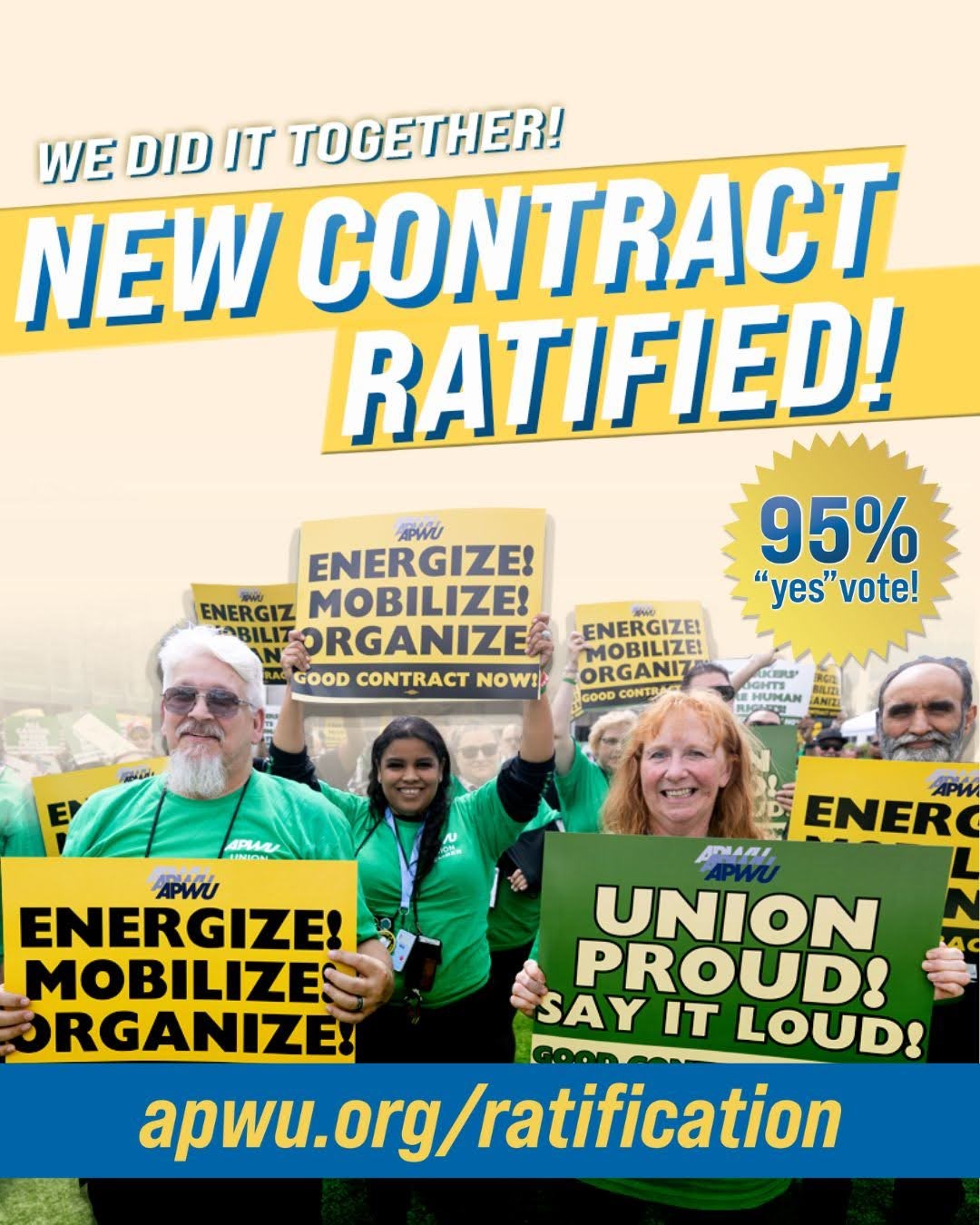
The new APWU-USPS contract, effective following the 2024 expiration, provides a restructured wage schedule, continued Cost-of-Living Adjustments (COLA), and significant changes to health benefit administration. Key updates for 2025 include the mandatory transition to the Postal Service Health Benefits (PSHB) Program and revised career conversion timelines for Postal Support Employees (PSEs). These provisions aim to address inflationary pressures while stabilizing the workforce through enhanced job security and path-to-career clarity.
The Evolution of the APWU-USPS Collective Bargaining Agreement
The labor relationship between the American Postal Workers Union (APWU) and the United States Postal Service (USPS) reached a pivotal juncture with the expiration of the 2021-2024 Collective Bargaining Agreement (CBA) on September 20, 2024. As we move through 2026, the details of the subsequent contract cycles—often referred to collectively by the membership as the "2025 contract details"—have become the operational standard for hundreds of thousands of postal workers.
The negotiation of these terms focused heavily on the economic volatility of the early 2020s. The union’s primary objectives were to preserve the purchasing power of its members through robust COLA provisions and to shorten the time required for non-career employees to reach career status. The resulting framework for 2025 and beyond reflects a compromise that acknowledges the USPS’s "Delivering for America" 10-year plan while ensuring that the "backbone" of the service—the clerks, maintenance workers, and motor vehicle operators—receives compensation commensurate with their essential role.
Comprehensive Wage Increases and General Wage Adjustments (GWA)
For 2025, the wage structure is defined by General Wage Increases (GWIs) applied to the base salary of all career employees. Historically, these increases have averaged approximately 1.3% annually, though specific contract years may see variations based on the negotiated economic package.
Understanding the Step Increase System
In 2025, the "Step" system continues to be the primary method for wage progression within a specific grade. Each step represents a predetermined period of service—typically 36 to 44 weeks, depending on the grade and the specific craft. The 2025 details emphasize the importance of "waiting periods." For many members, reaching the "top step" remains the goal for maximum retirement benefit calculations under the Federal Employees Retirement System (FERS).
Cost-of-Living Adjustments (COLA)
One of the most critical components of the APWU contract is the uncapped COLA. These adjustments are calculated twice a year based on the Consumer Price Index for Urban Wage Earners and Clerical Workers (CPI-W).
- The 2025 COLA Impact: Given the inflation trends observed in the preceding years, the 2025 COLA payments have been essential in offsetting the rising costs of housing, fuel, and consumer goods.
- Calculation Method: The COLA is typically calculated by comparing the CPI-W of a specific month (e.g., January or July) against the base index established at the start of the contract. For every 0.4-point increase in the index, career employees receive a one-cent-per-hour increase.
The 2025 Postal Service Health Benefits (PSHB) Program
Perhaps the most significant administrative shift in 2025 is the full implementation of the Postal Service Health Benefits (PSHB) Program. Mandated by the Postal Service Reform Act of 2022, this transition moved postal employees and retirees from the broader Federal Employees Health Benefits (FEHB) Program into a postal-specific pool.
Key Features of the PSHB
The transition, which became effective January 1, 2025, required all APWU members to select new plans during the 2024 Open Season.
- Medicare Integration: For retirees, the PSHB introduces new requirements regarding Medicare Part B enrollment, which was a point of intense education and advocacy by the APWU during the 2024-2025 period.
- Employer Contribution: The USPS continues to pay a substantial portion of the weighted average of premiums, similar to the previous FEHB structure, ensuring that the move to a smaller pool did not result in an immediate spike in member costs.
- Plan Continuity: Most major carriers (such as Blue Cross Blue Shield) created specific "Postal" versions of their existing plans to ensure that members could keep their current doctors and specialists.
Career Conversions and Postal Support Employee (PSE) Rights
The 2025 contract details further solidify the "path to career" for non-career employees. Building on the landmark gains of the 2021-2024 contract, the current rules maintain the 24-month automatic conversion policy.
The 24-Month Rule
Under current provisions, a PSE working in a 200-man-year installation is automatically converted to career status (either as a Full-Time Flexible or Part-Time Flexible) after reaching 24 months of relative standing. In 2025, the union has pushed for more stringent enforcement of these timelines, ensuring that the USPS cannot use "administrative delays" to circumvent conversion.
PSE Wage Increases
PSEs do not receive COLA; instead, they receive higher GWIs to compensate. In 2025, PSEs saw structured increases on the anniversary of the contract and additional adjustments designed to keep postal wages competitive with private-sector logistics and retail employers. This "PSE premium" is a critical tool for retention in a tight labor market.
Craft-Specific Provisions: Clerk, Maintenance, and MVS
The APWU is a multi-craft union, and the 2025 details include specific language tailored to the unique demands of each division.
Clerk Craft
The focus for Clerks in 2025 revolves around staffing levels in retail units and the protection of work hours. The contract limits the ability of postmasters and supervisors in small offices (Level 18 and below) to perform bargaining unit work. Furthermore, the 2025 guidelines provide clearer definitions for "clerical duties" to prevent the encroachment of other crafts or management into clerk territory.
Maintenance Craft
Maintenance remains one of the most technical segments of the APWU. 2025 details highlight:
- Staffing Formulas: Updated MS-47 guidelines for custodial staffing.
- Training Opportunities: Enhanced access to the National Center for Employee Development (NCED) for ET (Electronics Technician) and MPE (Mechanic, Payroll/Equipment) training.
- Subcontracting Protections: Stronger language preventing the USPS from outsourcing facility maintenance to private contractors when the work can be performed by the existing bargaining unit.
Motor Vehicle Service (MVS)
For MVS members, 2025 is characterized by the struggle to keep "wheels on the road." The contract emphasizes the "Article 32" protections, which require the USPS to perform a cost comparison before subcontracting highway contract routes (HCRs). The 2025 focus has been on the transition to electric delivery vehicles and ensuring that MVS mechanics are properly trained and equipped to maintain the new fleet.
Comparison of Contractual Key Terms (2021 vs. 2025 Era)
| Feature | 2021-2024 Contract Period | 2025+ Implementation Period |
|---|---|---|
| Health Insurance | Federal Employees Health Benefits (FEHB) | Postal Service Health Benefits (PSHB) |
| Career Conversion | Established 24-month PSE path | Refined and enforced 24-month path |
| COLA | Uncapped, semi-annual | Uncapped, semi-annual (higher index base) |
| General Wage Increase | ~1.3% Annually | Continued ~1.3% (subject to arbitration/ratification) |
| Step Increases | 36-44 Week Waiting Periods | Maintained with potential for top-step adjustments |
| Night Differential | Fixed hourly rates by grade | Structured percentage-based or updated flat rates |
| Uniform Allowance | Annual allotments with specific vendors | Increased allotments to match inflation |
Work Rules and Leave Provisions
Beyond pay and benefits, the 2025 details cover the day-to-day realities of life on the workroom floor. This includes the management of the "Overtime Desired List" (OTDL) and the administration of the Family and Medical Leave Act (FMLA).
Overtime and Work Hour Guarantees
For career employees, the contract guarantees a certain number of hours. Full-time regulars are guaranteed 40 hours per week and 8 hours per day. In 2025, the enforcement of "Article 8" remains a priority, ensuring that management cannot force "non-OTDL" employees to work overtime when OTDL employees are available at the straight-time or time-and-a-half rate.
Annual and Sick Leave
The 2025 contract continues the generous leave accrual rates based on years of service:
- 0-3 Years: 13 days of annual leave.
- 3-15 Years: 20 days of annual leave.
- 15+ Years: 26 days of annual leave. Sick leave continues to accrue at a rate of 4 hours per pay period for all career employees, with no limit on the amount of sick leave that can be carried over. This remains one of the strongest "disability insurance" features of the APWU contract.
Frequently Asked Questions
What happens if a new contract is not ratified by 2025?
If the APWU and USPS fail to reach a negotiated agreement and the membership does not ratify a tentative deal, the parties move to mediation and, eventually, binding interest arbitration. During this time, the terms of the previous contract remain in full force and effect. Any wage increases or COLA payments eventually decided by an arbitrator are typically applied retroactively to the date the previous contract expired.
How does the 2025 PSHB transition affect my current coverage?
The transition was designed to be seamless. If you were enrolled in an FEHB plan that offered a PSHB equivalent, and you did not make a choice during the 2024 Open Season, you were generally "cross-walked" into the most similar postal plan. However, for those in 2026 looking back, it is important to verify that your "Year-to-Date" (YTD) deductibles were correctly credited during the transition year.
Are PSEs eligible for the same 2025 health benefits as career employees?
PSEs are eligible for the USPS Health Benefit (USPSHB) Plan immediately upon hire, with the Postal Service paying a significant portion of the premium. After one year of service, PSEs can also access certain PSHB plans, though the employer contribution may differ from that of career employees until they are converted to career status.
Is the "No Layoff" clause still in the 2025 contract?
The "No Layoff" provision is a cornerstone of the APWU agreement. Career employees with at least six years of continuous service are protected from layoffs for the duration of their careers. For those with less than six years, the protection is often negotiated into each specific contract cycle. In the 2025 period, preserving this protection was a "non-negotiable" item for the union leadership given the USPS's facility consolidations.
How are "Retroactive Payments" handled in 2025?
Because contract negotiations often extend past the expiration date, members often receive "back pay." This is a lump-sum payment covering the difference between the old wage rate and the new wage rate for all hours worked (including overtime) since the contract expiration. In 2025, these payments are typically processed through the GATS (Grievance Arbitration Tracking System) or standard payroll adjustments once the new scales are programmed into the Eagan Accounting Service Center.
Practical Recommendations for APWU Members
For employees navigating the 2025 contract landscape, several actions are recommended to ensure full benefit utilization:
- Monitor Your Pay Stubs: With the 2025 COLA and GWI adjustments, verify that your "Step" and "Level" are correctly reflected on your PS Form 1230 (Earnings Statement). Pay close attention to the "RSC" (Rate Schedule Code) to ensure you are on the correct pay table.
- Review PSHB Portals: Use the 2026 Open Season to evaluate the performance of your PSHB plan. Since the program is still relatively new, carriers may adjust their provider networks or drug formularies.
- Update Your Virtual Personnel Folder (eOPF): Ensure that your "Relative Standing" date is correct, especially if you are a PSE approaching the 24-month conversion mark.
- Stay Informed via Local Meetings: Contract details are often interpreted differently at the local level through Local Memorandums of Understanding (LMOU). Attending local union meetings is the best way to understand how 2025 work rules apply to your specific facility.
The 2025 APWU contract details represent a significant effort to modernize the postal workforce's benefits while maintaining the traditional protections that have made postal employment a standard for the American labor movement. Whether you are a veteran clerk or a newly hired PSE, understanding these provisions is essential for maximizing your career longevity and financial security.