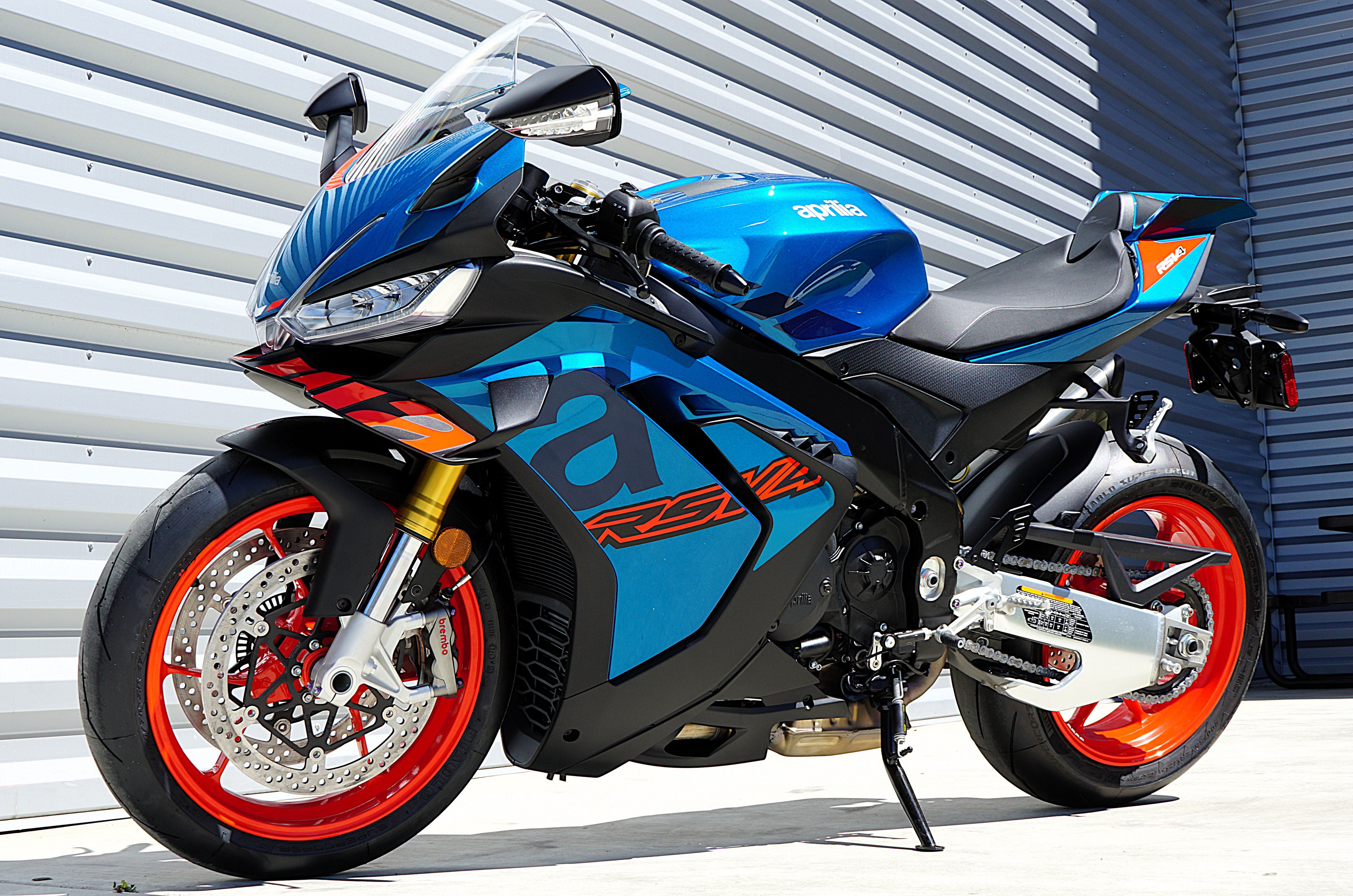
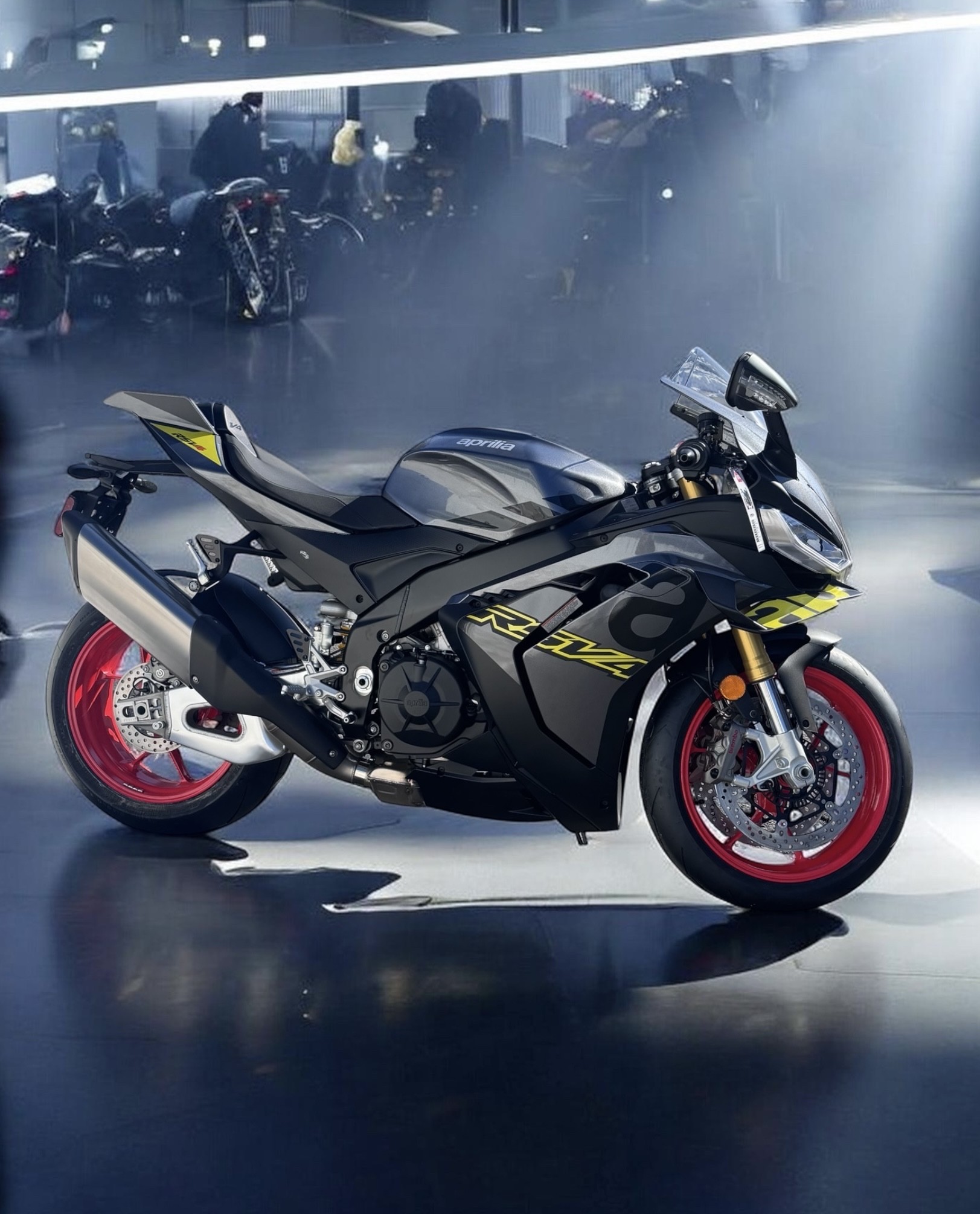
The Aprilia RSV4, particularly in its 1100 Factory trim, consistently achieves a 0-60 mph acceleration time of 2.9 to 3.1 seconds. This elite performance is the result of its 217-horsepower V4 engine, advanced Aprilia Performance Ride Control (APRC) electronics, and integrated aerodynamic winglets that maximize front-wheel contact during aggressive launches.
The Aprilia RSV4 has long been heralded as one of the most balanced and technologically advanced superbikes in the world. Since its inception, the RSV4’s identity has been inextricably linked to its unique 65-degree V4 engine architecture—a configuration that provides a slim profile and a distinct power delivery that favors both high-end speed and manageable low-end torque. As of 2026, the RSV4 continues to represent the pinnacle of Noale’s racing heritage, translating MotoGP-derived technology into a production machine that can blur the landscape in the blink of an eye.
The Engineering Behind the Numbers: The 1099cc V4 Engine
At the core of the Aprilia RSV4’s 0-60 performance is the 1099cc V4 engine. While early iterations of the bike utilized a 999cc displacement to comply with Superbike racing regulations, the current generation has expanded its displacement to prioritize "rideability" and torque on the street and track.
This engine produces a staggering 217 horsepower and approximately 92 lb-ft of torque. However, horsepower is a measure of work over time; for a 0-60 sprint, torque and the "curve" of that power are far more critical. The 65-degree angle of the cylinders is a masterstroke of engineering. Unlike a traditional 90-degree V4, which is physically wider, or an inline-four, which is broader across the frame, the 65-degree V4 allows for a more compact engine block. This enables engineers to place the engine perfectly within the frame to optimize the center of gravity, which is essential for keeping the front wheel down during a hard launch.
Furthermore, the engine uses a counter-rotating crankshaft. This mechanical choice offsets the gyroscopic effect of the wheels, making the bike more agile and helping to counteract the natural tendency of the motorcycle to wheelie under heavy acceleration. By reducing the "rotational inertia" that wants to lift the front end, the RSV4 can translate more of its 217 horses into forward momentum rather than vertical lift.
APRC: The Electronic Mastery of Traction
Raw power is useless if the rear tire is merely spinning or the front wheel is pointing at the sky. The Aprilia RSV4 utilizes a suite of electronics known as Aprilia Performance Ride Control (APRC), which is widely considered one of the most sophisticated systems in the industry. For a 0-60 mph attempt, three specific components of APRC are vital:
- Aprilia Launch Control (ALC): This system is designed specifically for standing starts. It allows the rider to pin the throttle wide open while the ECU manages the power delivery to the rear wheel. The system monitors wheel speed, engine RPM, and lean angle to ensure the maximum amount of torque is applied without inducing excessive wheelspin or a flip-over wheelie.
- Aprilia Wheelie Control (AWC): Integrated with the 6-axis IMU (Inertial Measurement Unit), AWC detects the exact moment the front tire leaves the ground. It doesn't just "cut" power, which would cause the bike to jerk; it gently modulates ignition and fueling to keep the front wheel hovering just millimeters off the tarmac, maintaining the most efficient acceleration geometry possible.
- Aprilia Traction Control (ATC): This system manages the relationship between the tire and the road surface. On a 0-60 run, the ATC ensures that the Pirelli Diablo Supercorsa SP tires remain within their optimal slip ratio.
In 2026, these systems have evolved to be "predictive" rather than just reactive. By analyzing the rate of change in engine RPM and wheel speed, the ECU can anticipate a loss of traction before it occurs, allowing for a much smoother and faster 0-60 time compared to older, purely reactive systems.
The Role of Aerodynamics and Winglets
One cannot discuss the modern Aprilia RSV4 performance without mentioning its aerodynamics. The RSV4 was one of the first production superbikes to integrate winglets directly into the fairing design, rather than as an afterthought.
In a 0-60 mph sprint, air resistance is less of a factor than it is at 180 mph, but "downforce" remains critical. The winglets on the RSV4 are designed to use the oncoming airflow to press the front end of the motorcycle into the ground. At speeds approaching 60 mph, these wings generate significant kilograms of downforce. This aerodynamic pressure works in tandem with the electronic Wheelie Control, allowing the engine to stay at a higher power output for a longer duration without the safety systems needing to intervene. The result is a more linear and aggressive acceleration curve.
Physical Limits: Why 0-60 Times Plateaus
While the Aprilia RSV4 is a marvel of engineering, it—like all motorcycles—faces the physical limitations of two-wheeled travel. You will notice that many superbikes, whether they have 180 hp or 220 hp, all hover around the 2.9 to 3.2-second mark for 0-60 mph.
The primary limitation is the wheelbase and center of gravity. On a motorcycle, the center of gravity is relatively high compared to the wheelbase. Under extreme acceleration, the weight transfers almost entirely to the rear wheel. If more power is applied than the geometry can handle, the bike will rotate around the rear axle (a wheelie). Even with the best electronics, a bike cannot accelerate faster than the point at which the front wheel leaves the ground, unless it is a dedicated "stretched" drag bike.
Additionally, tire technology plays a role. The RSV4 comes equipped with high-performance rubber, but the contact patch of a motorcycle tire is roughly the size of a credit card. No matter how much power the V4 produces, the 0-60 time is ultimately governed by the friction coefficient between that small patch of rubber and the asphalt.
Comparative Performance Metrics
To understand where the Aprilia RSV4 stands in the 2026 landscape, it is helpful to compare its performance data with its primary rivals in the liter-bike and superbike categories.
| Motorcycle Model | Engine Type | Peak Horsepower | 0-60 MPH (Estimated) | Weight (Kerb) |
|---|---|---|---|---|
| Aprilia RSV4 Factory | 1099cc V4 | 217 hp | 2.9 - 3.1s | 445 lbs |
| Ducati Panigale V4 S | 1103cc V4 | 210 hp | 3.0 - 3.2s | 437 lbs |
| BMW S1000RR | 999cc Inline-4 | 205 hp | 3.1 - 3.3s | 434 lbs |
| Yamaha R1M | 998cc Inline-4 | 197 hp | 3.2 - 3.4s | 448 lbs |
| Kawasaki ZX-10RR | 998cc Inline-4 | 201 hp | 3.1 - 3.3s | 456 lbs |
Note: Times vary based on rider weight, ambient temperature, and surface conditions.
The Aprilia RSV4 often edges out its competitors in the 0-60 sprint due to the torque-rich nature of the 1100cc engine compared to the smaller 1000cc inline-four engines found in the Japanese and German offerings. While the BMW S1000RR is legendary for its top-end speed, the RSV4’s displacement advantage gives it a slight "grunt" advantage off the line.
Factors Influencing Real-World Acceleration
Achieving a sub-3-second 0-60 time on an Aprilia RSV4 is not a simple task for the average rider. Several external factors can significantly alter these results:
Rider Skill and Weight
The RSV4 is a lightweight machine. A rider weighing 200 lbs adds nearly 45% more weight to the total package. Furthermore, the rider's ability to manage the clutch—even with launch control—is paramount. Launch control handles the throttle and ignition, but the rider still manages the initial "friction zone" of the clutch. A poor clutch release can bog the engine or cause an uncontrolled wheelie that forces the electronics to cut power aggressively.
Tire Temperature and Pressure
High-performance tires like the Pirelli Diablo Supercorsa SP are designed to operate within a specific temperature window. If the tires are cold, they will spin, triggering the Traction Control and slowing the 0-60 time. Professionals often use tire warmers to ensure the rubber is "sticky" enough to handle the 217 horsepower launch.
Road Surface
A prepared drag strip with "track bite" (a sticky resin) will yield much faster times than standard street asphalt. On a dusty or worn road, the RSV4’s electronics will spend more time limiting power to prevent sliding than they will pushing the bike forward.
Evolution of the RSV4: 1000cc vs. 1100cc
Historically, the Aprilia RSV4 1000cc models were slightly slower in the 0-60 mph department, often clocking in at 3.3 to 3.5 seconds. The transition to the 1077cc and eventually the 1099cc engine was a turning point for Aprilia's performance metrics.
The increased stroke and bore provided a much meatier torque curve. In the older 1000cc models, the engine needed to scream at high RPMs to find its peak power. The 1100cc engine allows the bike to "get into the meat" of the powerband much earlier in the rev range. This is particularly noticeable when launching from a standstill; the bike moves with significantly more urgency from 2,000 to 7,000 RPM than its predecessors did.
Maintenance for Peak Performance
To maintain the RSV4's blistering 0-60 capabilities, specific maintenance areas cannot be overlooked. The clutch is the most stressed component during a standing start. Frequent hard launches can glaze the clutch plates, leading to "slip" where the engine RPMs rise but the bike doesn't accelerate.
Additionally, the chain and sprockets must be in top condition. A stretched chain or worn sprockets can lead to power loss and inconsistent power delivery. For those seeking the absolute best 0-60 times, many owners opt for a "520 conversion," which uses a narrower, lighter chain to reduce parasitic power loss, though this is generally recommended for track use only as it reduces the chain's lifespan.
Common Mistakes During Launch
Even with the world-class ALC (Aprilia Launch Control), riders often make mistakes that hamper their performance:
- Over-reliance on Electronics: Some riders expect the bike to do everything. If you dump the clutch too fast, the physics will override the electronics, resulting in a "choppy" launch as the bike tries to save itself from a loop.
- Improper Body Position: To get a sub-3-second time, the rider must be hunched as far forward as possible, putting their chin on the tank. This moves the center of gravity forward, allowing the bike to apply more torque before the front wheel lifts.
- Inconsistent Throttle: Even with launch control, a smooth, pinned throttle is required. Rolling off the throttle mid-launch confuses the IMU and can lead to a loss of momentum.
Frequently Asked Questions
Can the Aprilia RSV4 reach 60 mph in first gear?
Yes, the Aprilia RSV4 is geared very "tall." In its factory configuration, first gear can reach approximately 80-85 mph before hitting the rev limiter. This is a major advantage for 0-60 mph testing, as it eliminates the need for a gear shift, which would add tenths of a second to the final time.
How does the RSV4 0-60 compare to a Tesla Model S Plaid?
The Tesla Model S Plaid is one of the few production vehicles that can consistently beat an RSV4 to 60 mph, often clocking in at 2.0 to 2.1 seconds. This is due to the Tesla's all-wheel-drive system and the instant torque of electric motors, which allow it to bypass the wheelie limitations that a motorcycle faces.
Is the RSV4's launch control safe for beginners?
While Aprilia Launch Control is a safety feature, the RSV4 is not a beginner motorcycle. The sheer force of acceleration can be disorienting. Beginners should practice throttle control and low-speed maneuvers before attempting full-throttle launches, even with electronic aids.
Does the RSV4 Factory accelerate faster than the standard RSV4?
The RSV4 Factory and the standard model share the same 1099cc engine and electronics suite. However, the Factory model features lighter forged aluminum wheels. Reduced "unsprung weight" and rotational inertia allow the Factory model to accelerate slightly more efficiently, though the difference in a 0-60 sprint is often marginal (less than 0.1 seconds).
How often should I check the tires for performance riding?
For peak acceleration performance, tire pressure should be checked before every ride. High-performance tires are sensitive to pressure changes; even a 2-3 psi difference can alter the size of the contact patch and the amount of traction available for a launch.
Final Recommendation for Owners
If you are looking to maximize the 0-60 mph performance of your Aprilia RSV4, prioritize suspension tuning and tire condition over engine modifications. The RSV4 already has more power than the chassis can easily handle from a dead stop. Ensuring your rear shock is properly dialed in to prevent "squat"—which can unweight the front end—will do more for your 0-60 times than an aftermarket exhaust. Always utilize the APRC settings to match your current environment, and remember that on a bike this powerful, smooth inputs are the key to extreme speed.